
What digital healthcare solutions buyers compare first
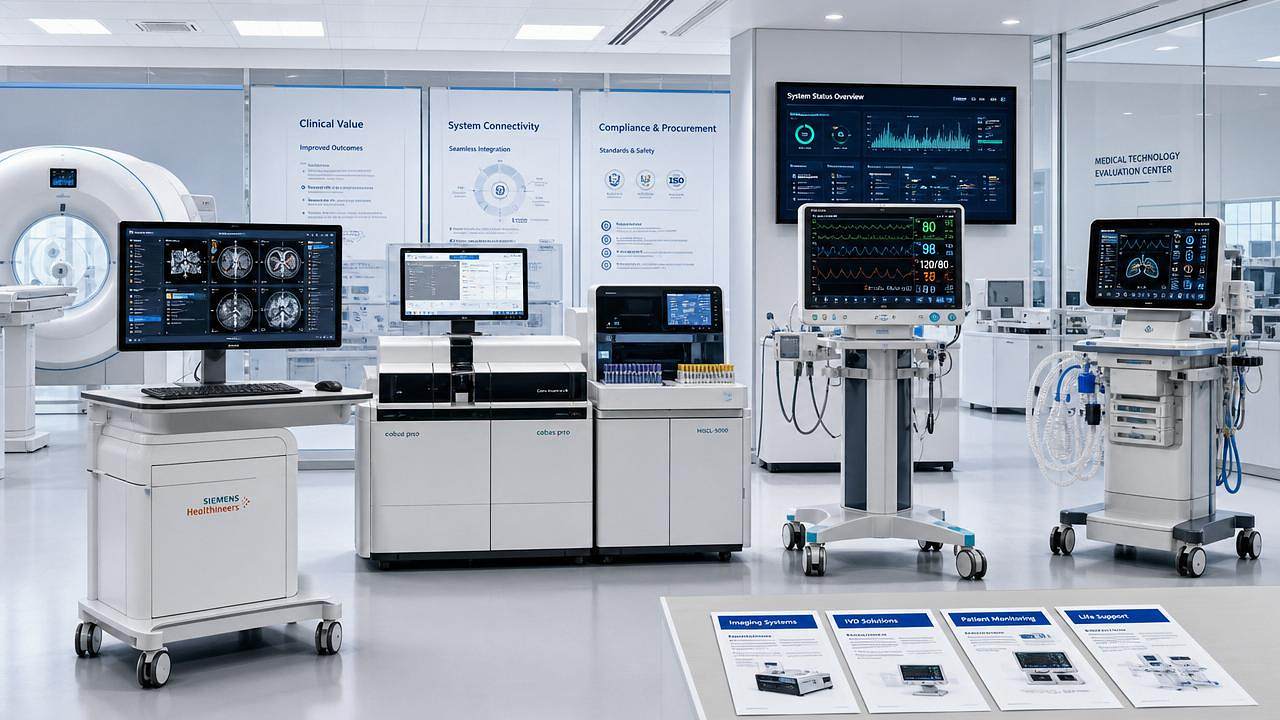




For procurement teams, comparing digital healthcare solutions usually starts with clinical impact, compliance readiness, interoperability, and long-term ROI. From imaging and IVD platforms to life support and minimally invasive systems, buyers need clear intelligence before making high-stakes decisions. This guide explores what purchasing professionals evaluate first when narrowing vendors in a fast-moving, regulation-heavy healthcare market.
What do buyers compare first in digital healthcare solutions?
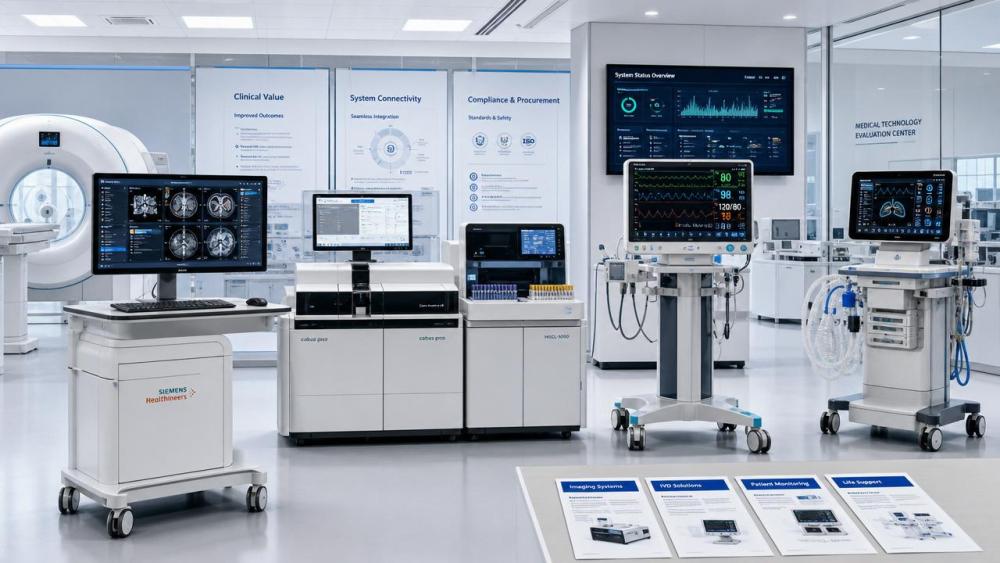
When procurement teams review digital healthcare solutions, they rarely begin with brochure claims. They begin with risk. In hospitals, diagnostic labs, surgical centers, and cross-border MedTech supply chains, the first comparison point is whether a solution can improve care without creating hidden operational, regulatory, or financial exposure.
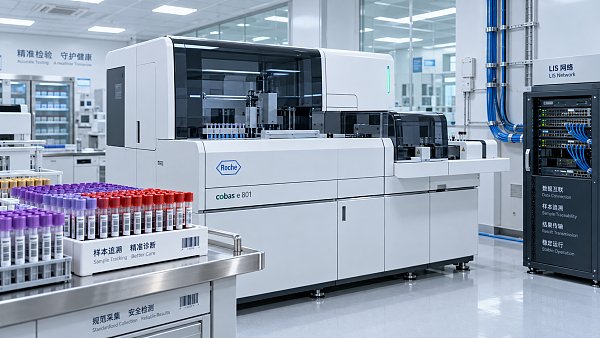
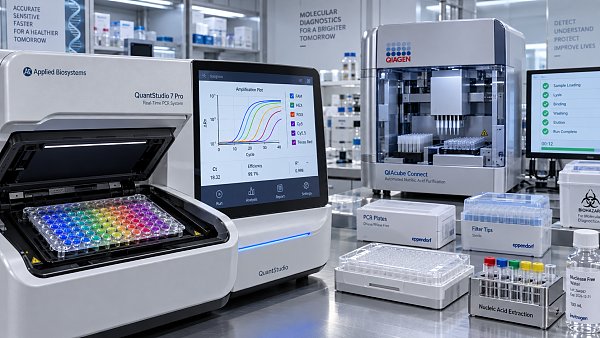
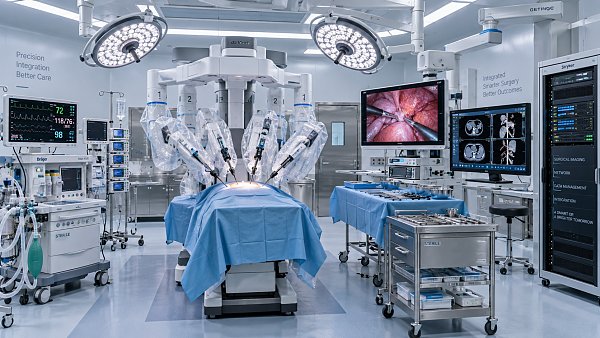
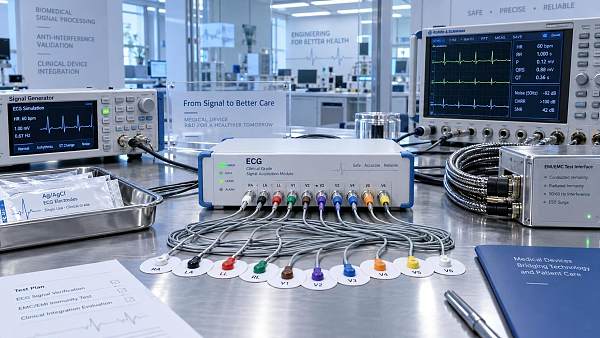
That is especially true across advanced medical imaging, IVD, life support, operating room systems, and endoscopy platforms. These categories are not standard office technologies. They affect diagnostic confidence, patient throughput, clinician workflow, service downtime, and market access obligations under frameworks such as FDA requirements, CE MDR expectations, cybersecurity rules, and local data governance policies.
For many buyers, the real challenge is not finding vendors. It is reducing complexity. Different suppliers promote AI features, cloud connectivity, remote service functions, and analytics dashboards, yet procurement teams still need to answer a simpler set of questions before moving forward.
- Will this solution improve clinical workflow in a measurable way for radiology, laboratory, ICU, OR, or minimally invasive departments?
- Can it integrate with existing HIS, RIS, LIS, PACS, EMR, device networks, and security protocols without expensive customization?
- Does the vendor understand compliance, documentation, traceability, and post-market obligations in the target geography?
- Is the total cost justified by uptime, efficiency gains, reimbursement support, and long-term scalability?
This is where AMDS brings practical value. Its intelligence focus connects engineering depth, compliance analysis, and health economics across the most demanding categories of digital healthcare solutions, helping buyers move from vague comparisons to decision-ready evaluation.
Which evaluation dimensions matter most before vendor shortlisting?
Before issuing an RFP or entering technical review, procurement teams usually compare digital healthcare solutions across a small number of critical dimensions. The table below reflects the criteria that often shape early elimination or shortlisting.
These dimensions are interconnected. A strong imaging platform may offer impressive image reconstruction, but if interface mapping to PACS is weak, the operational benefit can collapse. A lab automation module may look economical upfront, but reagent lock-in and calibration frequency may change the real business case.
Why clinical impact is usually the first screen
In digital healthcare solutions, procurement is rarely independent from clinical leadership. Radiologists want better workflow and image usability. Pathology and lab teams want reproducibility, assay menu fit, and turnaround time. ICU teams want reliability under continuous use. Surgeons want visualization, ergonomics, and device coordination inside tight procedure windows.
If the solution does not address those frontline realities, buyers know implementation risk will rise. Adoption slows, training burdens increase, and expected ROI slips.
Why compliance is not a late-stage detail
Many purchasing teams learn too late that compliance documentation is not simply a legal appendix. For connected medical platforms, documentation quality shapes import clearance, hospital approval, tender eligibility, data handling, service protocols, and post-market monitoring expectations. AMDS pays close attention to this intersection because compliance and access can determine whether a technically attractive product is commercially usable.
How do comparisons differ by clinical application?
Not all digital healthcare solutions are compared the same way. Imaging, IVD, life support, OR infrastructure, and endoscopy systems each carry different risk profiles, usage intensity, and value drivers. Buyers should avoid using one generic scorecard across all categories.
The table below shows how early comparison criteria shift by application area.
This is why experienced buyers often ask vendors to explain use-case fit before they discuss price. A system that performs well in a tertiary hospital may be oversized for a regional center. A digital platform built for high-complexity oncology workflows may not deliver acceptable economics in a lower-volume setting.
Scenario-based questions procurement should ask
- For imaging: How does the platform handle high-volume screening versus advanced specialty exams?
- For IVD: What throughput remains realistic after calibration, maintenance, and quality control steps?
- For ICU equipment: What service response plan applies if failure occurs during continuous patient use?
- For OR and endoscopy: How much staff retraining and room adjustment will implementation require?
What technical and interoperability checks should happen early?
Buyers often underestimate how quickly a promising digital healthcare solution can become a difficult project if technical discovery starts too late. Early-stage technical review should be practical, not overly theoretical. The goal is to identify friction points before procurement commits budget or contract structure.
Core technical checks
- Data standards and interface readiness. Confirm support for formats and workflows relevant to imaging, lab, or device telemetry environments.
- Cybersecurity controls. Review user access management, patching responsibility, audit logging, remote access governance, and data encryption policies.
- Infrastructure dependency. Clarify whether the solution depends on cloud availability, local server capacity, network latency, or specialized hardware.
- Upgrade path. Ask whether software updates affect validated workflows, connected devices, or regulatory status.
AMDS is particularly relevant here because advanced healthcare procurement is no longer just about device purchase. It is about the stitched relationship between algorithms, optics, biochemical detection, mechanical reliability, and regulated clinical use. Buyers need a partner or intelligence source that can interpret that full stack.
Interoperability warning signs
If a vendor provides vague answers about interface ownership, implementation milestones, or third-party system responsibility, procurement should slow down. In digital healthcare solutions, weak integration can lead to duplicate data entry, delayed reporting, operator workarounds, and lower clinician trust. Those issues damage value more than many buyers expect.
How should procurement teams assess ROI beyond purchase price?
Price is visible. Cost is not. Smart buyers compare digital healthcare solutions through total value rather than invoice value alone. This is especially important for capital-intensive modalities, reagent-driven platforms, and systems whose downtime affects patient throughput or procedure scheduling.
The following table can be used as a simple ROI screening framework during vendor comparison.
For high-end imaging and other advanced systems, ROI often depends on utilization, reimbursement environment, and case mix. Under DRG or similar payment pressure, hospitals increasingly need evidence that capital equipment will improve throughput, reduce repeats, or support higher-value service lines. That is why health economics should not be separated from technical selection.
What compliance and certification questions should never be skipped?
In digital healthcare solutions, compliance is both a market-entry issue and an operational issue. Procurement teams should ask not only whether documents exist, but whether they align with the intended deployment model, software version, accessory configuration, and target country obligations.
A practical compliance checklist
- Confirm the regulatory status of the exact product configuration being quoted, including software modules and accessories.
- Request documentation relevant to quality management, risk management, labeling, and post-market support where applicable.
- Check whether cybersecurity responsibilities are clearly divided between vendor, distributor, integrator, and end user.
- Review whether data storage, remote monitoring, and cloud services create additional local privacy or cross-border transfer obligations.
AMDS stands out because it does not treat compliance as a detached paperwork topic. Its strategic intelligence approach links regulatory interpretation with actual procurement feasibility, especially for globally marketed systems facing CE MDR, FDA, and other access demands.
Common mistakes buyers make when comparing digital healthcare solutions
Even experienced procurement teams can miss key issues when timelines are tight or departments are pushing for rapid approval. Several mistakes appear repeatedly in healthcare technology comparisons.
- Focusing on feature count instead of clinical usefulness. More functions do not automatically mean better departmental fit.
- Assuming interoperability because a vendor says integration is supported. Buyers should clarify interface scope, validation steps, and go-live accountability.
- Ignoring service logistics. Spare parts lead time, remote diagnostics capability, and engineer availability can materially affect uptime.
- Treating compliance review as a legal formality. In reality, documentation gaps may delay deployment or weaken tender readiness.
- Building ROI only around utilization growth. Buyers should also consider staffing efficiency, repeat reduction, maintenance exposure, and procedure continuity.
The best procurement outcomes usually come from a structured decision path: define clinical need, map system integration, test compliance readiness, model total cost, and only then compare price. That order reduces expensive surprises later.
FAQ: practical questions procurement teams ask first
How do we shortlist digital healthcare solutions when internal stakeholders disagree?
Use a weighted matrix with separate scores for clinical value, integration, compliance, service, and five-year cost. Let radiology, lab, ICU, IT, biomedical engineering, and finance each score the area they understand best. This reduces selection bias and makes trade-offs transparent.
Which matters more first: price or interoperability?
Interoperability should be checked first. A lower-cost solution that requires major interface work, workflow redesign, or manual data transfer often becomes more expensive after implementation. Price comparison only becomes meaningful after technical fit is confirmed.
Are digital healthcare solutions with AI features always worth a premium?
Not necessarily. Buyers should ask whether the AI function improves reading speed, triage, reconstruction, workflow routing, or quality control in a measurable way. If the feature does not change clinical or operational outcomes, the premium may be difficult to defend.
What procurement documents should be ready before approaching vendors?
Prepare a use-case summary, current system map, expected throughput, compliance target market, installation constraints, budget range, service expectations, and desired timeline. Vendors respond more accurately when the requirement is operationally clear rather than purely technical.
Why choose us for digital healthcare solutions intelligence?
AMDS helps procurement teams and MedTech decision makers evaluate digital healthcare solutions where clinical engineering, compliance, and economics intersect. This matters most in advanced imaging, IVD, critical life support, OR infrastructure, and minimally invasive systems, where incomplete analysis can lead to costly misalignment.
Our value is practical and decision-oriented. We help buyers and manufacturers clarify which parameters affect real clinical use, which compliance issues may block market access, which integration risks are likely to surface during deployment, and which ROI assumptions are realistic under modern reimbursement pressure.
- Parameter confirmation for imaging, IVD, life support, OR, and endoscopy-related digital healthcare solutions
- Vendor comparison support for product selection, use-case fit, and technical prioritization
- Compliance guidance for documentation readiness, access pathways, and audit-sensitive requirements
- Delivery and implementation discussion covering lead times, integration dependencies, and service planning
- Custom solution consultation for regional market needs, procurement strategy, and quotation alignment
If your team is comparing digital healthcare solutions and needs sharper visibility into specifications, compliance expectations, deployment risk, or cost logic, contact AMDS with your target application, required configuration, certification scope, expected delivery window, and quotation questions. Clear procurement decisions begin with clear technical and strategic intelligence.
Recommended News
 Oct 03, 2026How Detection Algorithms Improve Sensitivity and Workflow in Medical ImagingMedical imaging algorithms detection improves sensitivity, manages false positives, and streamlines clinical workflows. Explore validation, integration, and governance essentials.
 Oct 02, 2026High-Flow ICU Ventilators: Key Selection Criteria for Acute Respiratory CareICU ventilators high flow: discover key selection criteria for accurate gas delivery, NIV performance, humidification, alarms, reliability, and safer acute respiratory care.
 Oct 01, 2026How to Evaluate Medical Equipment Intelligence Suppliers for Hospital ProcurementMedical equipment intelligence suppliers: learn how hospitals can assess evidence quality, total cost, compliance, interoperability, and cybersecurity for smarter procurement decisions.
 Sep 30, 2026ISO 13485 Requirements for Blood Testing Instruments: A Buyer’s ChecklistBlood testing instruments ISO 13485 buyer’s checklist: verify certification scope, traceability, installation, consumables, and supplier support before you buy.
 Sep 29, 2026How to Evaluate Integrated Operating Room Systems for Workflow, Imaging, and IT IntegrationIntegrated operating room systems: evaluate workflow, imaging, IT integration, cybersecurity, and lifecycle value to select a scalable surgical solution.
 Sep 28, 2026How to Evaluate a Genetic Testing Equipment Supplier for PCR Lab ProcurementGenetic testing equipment supplier evaluation guide for PCR labs: compare performance, compliance, workflow, service, supply resilience, and total cost.
 Sep 27, 2026How to Specify Custom Benchtop Diagnostic Instruments for Your Assay WorkflowCustom diagnostic instruments benchtop guide: specify optics, fluidics, automation, software integration, and support to build a reliable assay workflow.
 Sep 26, 2026How Cardiac Imaging Analysis Tools Turn CT and MRI Data into Clinical MetricsMedical imaging analysis cardiology tools transform cardiac CT and MRI into reliable metrics. Explore segmentation, validation, workflow integration, and AI review.
 Sep 25, 2026How Iterative Image Reconstruction Algorithms Balance CT Dose, Noise, and DetailIterative image reconstruction algorithms help CT teams balance dose, noise, and diagnostic detail. Explore practical insights for confident imaging decisions.
 Sep 24, 2026What Drives the Total Cost of Medical Technology Solutions Over Their Lifecycle?Medical technology solutions cost goes far beyond purchase price—explore lifecycle drivers from installation and service to software, training, compliance, and downtime.
 Sep 24, 2026Diagnostic Imaging Technology: How Modalities Support Different Clinical DecisionsDiagnostic imaging technology supports smarter clinical decisions across CT, MRI, ultrasound, and nuclear imaging. Explore modality strengths, workflows, and selection factors.
 Sep 22, 2026How Life Science Labs Can Select Biomedical Research Equipment by Workflow and ThroughputBiomedical research equipment life science labs can select with confidence by aligning workflow, throughput, automation, data integrity, and scalable support.
 Sep 21, 2026How to Plan LIS Connectivity for Chemiluminescence Analyzers Without Data GapsChemiluminescence analyzers LIS connectivity: learn how to prevent data gaps with field mapping, exception workflows, end-to-end validation, and reliable go-live planning.
 Sep 20, 2026Selecting Fluorescence PCR Instruments: Detection Channels, Sensitivity, and Workflow FitPCR diagnostic instruments fluorescence detection guide: compare channels, sensitivity, multiplexing, and workflow fit to select a reliable platform.
 Sep 19, 2026Biomedical Signal Processing: From Sensor Data to Clinical Decision SupportBiomedical signal processing transforms sensor data into reliable clinical decision support. Explore AI, imaging, IVD, ICU monitoring, and compliance-ready MedTech insights.
 Sep 18, 2026How to Evaluate a Diagnostic Imaging Platform for Multi-Modality Workflow IntegrationDiagnostic imaging platform evaluation guide: assess multi-modality workflows, interoperability, AI integration, image integrity, security, and scalability for safer clinical decisions.
 Sep 17, 2026ISO 13485 for Medical Imaging Equipment: What Manufacturers Must DocumentMedical imaging equipment ISO 13485: discover essential documentation for design controls, risk management, traceability, software, and post-market quality.
 Sep 16, 2026Robotic MIS Equipment: What Hospitals Should Evaluate Before AdoptionMinimally invasive surgical equipment robotic adoption guide: evaluate workflow, safety, imaging, costs, cybersecurity, and service readiness.
 Sep 15, 2026How to Evaluate Biomedical Signal Processing Suppliers for Clinical Device ProjectsBiomedical signal processing supplier evaluation guide for clinical device teams—compare signal fidelity, regulatory evidence, cybersecurity, integration, and lifecycle support.
 Sep 14, 2026How Integrated Clinical Diagnostics Solutions Reduce Turnaround Time Across Lab WorkflowsIntegrated clinical diagnostics solutions reduce lab turnaround time by connecting workflows, automation, and data. Discover practical strategies for faster, traceable results.
 Sep 13, 2026ECMO System Market Outlook: Demand Drivers, Investment Risks, and Growth OpportunitiesECMO system market outlook explores demand drivers, investment risks, regulatory factors, and growth opportunities shaping critical-care innovation and adoption.
 Sep 12, 2026Where to Find Reliable Medical Device Information for Research and Due DiligenceMedical device information resource guide for due diligence: verify regulatory, clinical, safety, and technical evidence to make confident decisions.
 Sep 11, 2026Medical Equipment Intelligence: A Resource for Comparing Clinical TechnologiesMedical equipment intelligence resource for comparing clinical technologies by clinical fit, compliance, workflow, and total cost—make confident, evidence-led decisions.
 Sep 10, 2026How to Integrate Application-Specific Medical Solutions Into Existing Clinical WorkflowsApplication-specific medical solutions integration: learn how to align clinical workflows, interoperability, safety, and measurable outcomes for reliable deployment.














Related News
- 00
0000-00
How to Evaluate Medical Equipment Intelligence Suppliers for Hospital Procurement - 00
0000-00
What Drives the Total Cost of Medical Technology Solutions Over Their Lifecycle? - 00
0000-00
How to Calculate the Total Cost of Ownership for Medical Devices - 00
0000-00
How Surgical Equipment Digitalization Is Reshaping Hospital Investment in Latin America - 00
0000-00
Hospital Diagnostic Equipment Comparison: What Buyers Should Evaluate Beyond Price
Weekly Insights
Stay ahead with our curated technology reports delivered every Monday.