
When medical imaging reconstruction technology matters most
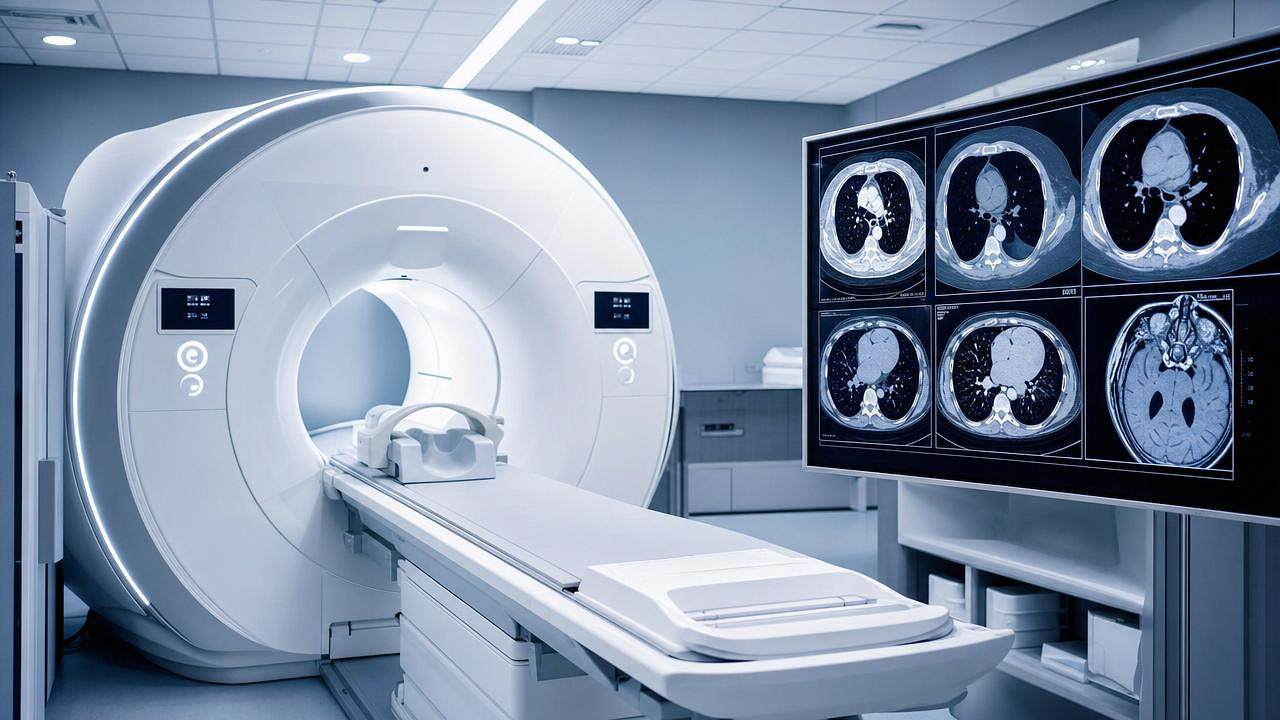




When clinical decisions depend on image clarity, medical imaging reconstruction technology becomes a decisive factor in safety, speed, and diagnostic confidence.
Its value is not limited to sharper pictures. It directly affects radiation dose, scan time, repeat exams, workflow stability, and clinical trust.
For AMDS, this topic sits at the center of modern MedTech intelligence. Reconstruction quality links physics, computing, compliance, and patient outcome in one chain.
This article answers practical questions about medical imaging reconstruction technology, focusing on definition, high-stakes use, evaluation criteria, common risks, and implementation priorities.
What is medical imaging reconstruction technology, and why does it matter so much?
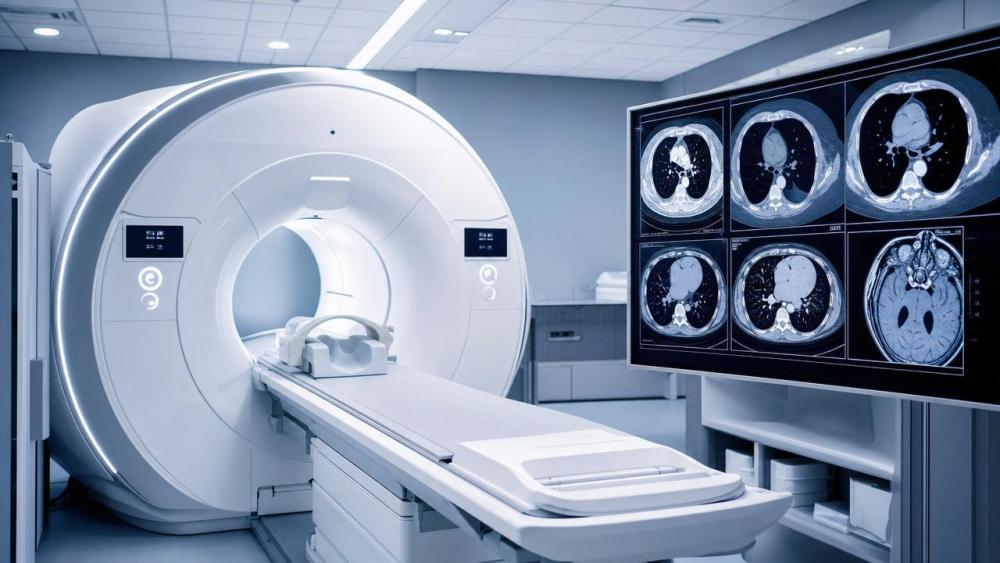
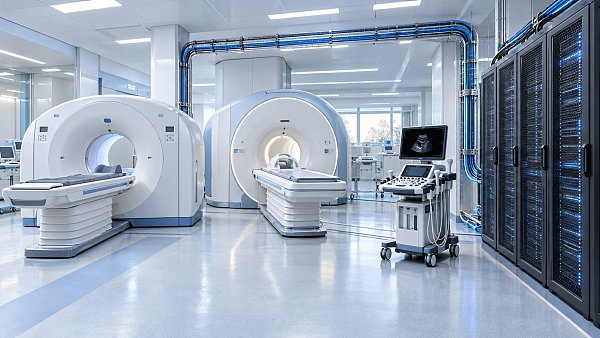
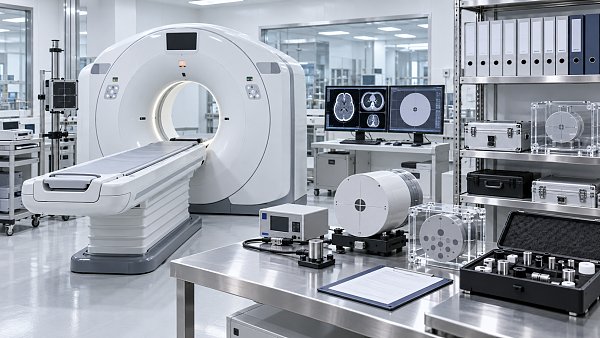
Medical imaging reconstruction technology converts raw acquisition data into clinically readable images. It is the computational bridge between signal capture and diagnostic interpretation.
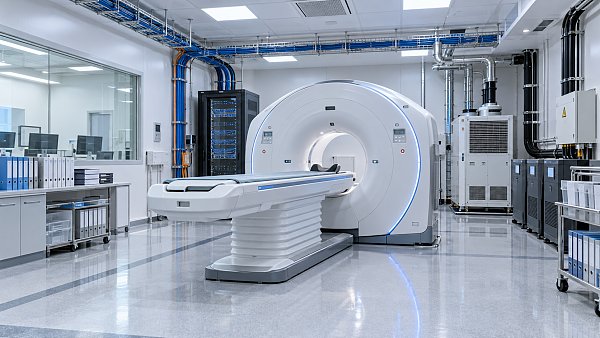
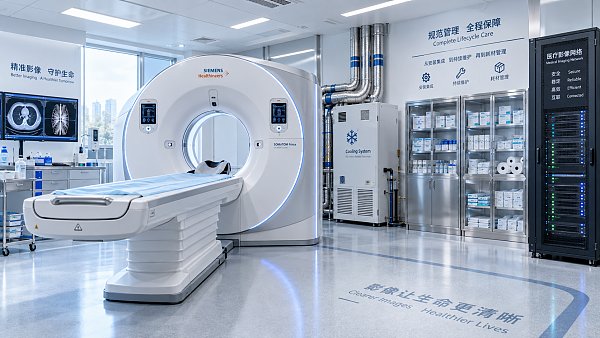
In CT, reconstruction transforms attenuation measurements into cross-sectional anatomy. In MRI, it converts frequency and phase information into structured tissue contrast.
The technology matters most because raw data alone cannot support diagnosis. Reconstruction determines whether subtle lesions appear clearly or stay hidden within noise.
Modern systems use filtered back projection, iterative reconstruction, model-based methods, and AI-assisted pipelines. Each approach balances speed, noise suppression, texture fidelity, and artifact control.
For integrated healthcare environments, image reconstruction also shapes interoperability. It affects post-processing, archiving behavior, structured reporting consistency, and downstream AI performance.
That is why AMDS treats medical imaging reconstruction technology as a strategic capability, not a background feature hidden inside scanner specifications.
In which medical scenarios does medical imaging reconstruction technology matter most?
The impact is strongest when image uncertainty can delay urgent treatment or create irreversible consequences. High-stakes scenarios reveal the true value of reconstruction performance.
1. Acute stroke and neurovascular emergencies
Brain imaging requires fast reconstruction with stable detail. Motion, low contrast, and tiny vascular structures demand excellent artifact handling and reliable edge preservation.
A small delay or blurred boundary may affect thrombectomy timing. In such cases, medical imaging reconstruction technology supports treatment speed and decision confidence.
2. Oncology screening and follow-up
Early tumor detection depends on seeing low-contrast lesions without creating false detail. Reconstruction must improve visibility while preserving realistic tissue texture.
Longitudinal follow-up also matters. If reconstruction changes image appearance too aggressively, comparison across time becomes less reliable.
3. Cardiac and thoracic imaging
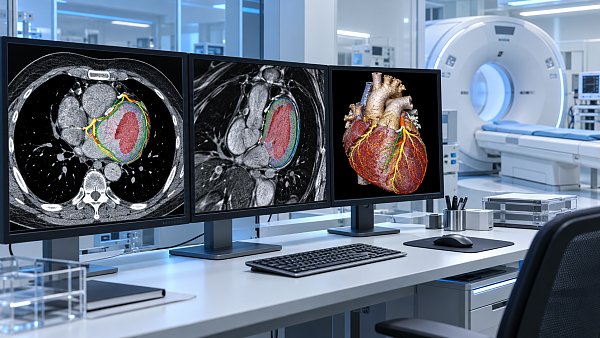
Cardiac imaging combines motion, small anatomy, and pressure for low dose. Reconstruction quality influences coronary visualization, calcium assessment, and temporal consistency.
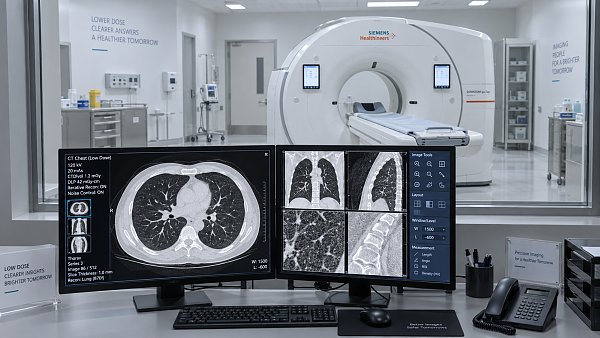
In chest imaging, dose efficiency becomes critical. Reconstruction must control noise without masking interstitial changes, nodules, or subtle inflammatory patterns.
4. Pediatric and critical care imaging
Children and unstable patients benefit from shorter scans and reduced radiation. Better reconstruction can preserve diagnostic quality under stricter exposure constraints.
This is where medical imaging reconstruction technology moves from technical preference to patient safety necessity.
How should reconstruction performance be evaluated beyond simple image sharpness?
A sharper image is not always a better image. Strong smoothing or AI hallucination risk can produce attractive visuals while weakening diagnostic reliability.
A practical evaluation framework should include the following dimensions:
- Spatial resolution for small structures and lesion boundaries
- Noise behavior under low-dose or fast-scan conditions
- Artifact suppression, especially for metal, motion, and beam hardening
- Texture fidelity for true clinical appearance
- Reconstruction speed and workflow consistency
- Validation evidence across patient types and use cases
It is also important to review dose-performance tradeoffs. If similar image quality can be maintained at lower exposure, reconstruction adds measurable clinical value.
For MRI, evaluators should examine acceleration compatibility, motion robustness, and consistency across coils and field strengths. For CT, protocol dependence deserves close attention.
AMDS recommends checking whether medical imaging reconstruction technology has independent clinical evidence, not only vendor demonstration images.
What are the most common misconceptions and risks?
One common misconception is that newer algorithms automatically deliver safer diagnosis. In reality, stronger processing can hide uncertainty behind visually pleasing outputs.
Another mistake is judging performance on one body region only. Reconstruction that excels in routine abdomen scans may behave differently in lung, cardiac, or neuro studies.
A third risk is ignoring workflow. Some advanced methods improve image quality but extend reconstruction time, slowing emergency throughput or multi-patient scheduling.
AI-assisted reconstruction introduces additional concerns. These include training bias, reduced explainability, and uncertainty about generalization to rare pathology or unusual anatomy.
Compliance risk must also be considered. Reconstruction outputs used for diagnosis require traceability, validation logic, and documented consistency under regulated quality systems.
In short, medical imaging reconstruction technology should be examined as a clinical system behavior, not a marketing claim about image beauty.
How do cost, implementation cycle, and compliance affect real adoption value?
The real value of reconstruction is revealed after installation. Performance gains must justify operational complexity, protocol updates, training time, and maintenance demands.
Implementation cost is not only software licensing. It may include hardware upgrades, GPU resources, storage expansion, and validation work for multiple clinical protocols.
Cycle time matters as well. A short deployment with stable protocols often delivers more value than a technically superior solution needing constant parameter adjustment.
From a regulatory perspective, documentation must show intended use, algorithm boundaries, update control, and image consistency. This is especially important for AI-driven reconstruction.
Health economics also matter. Better medical imaging reconstruction technology can reduce rescans, improve throughput, support lower-dose pathways, and strengthen utilization efficiency.
That broader return should be considered alongside purchase price. In advanced clinical environments, operational reliability often outweighs headline specification advantages.
How can a better comparison be made when reviewing systems or upgrades?
A useful review process compares reconstruction under matched protocols, similar patient conditions, and relevant clinical tasks. Side-by-side image galleries alone are not enough.
Use a structured checklist that combines image science, workflow, safety, and evidence. The table below offers a practical summary.
This approach makes medical imaging reconstruction technology easier to compare in a way aligned with both clinical and strategic priorities.
What should be the next step when reconstruction capability becomes a deciding factor?
Start with use-case prioritization. Identify where image uncertainty creates the highest downstream cost, delay, or diagnostic risk in actual clinical pathways.
Then request evidence under realistic protocols, not ideal demo settings. Focus on emergency imaging, low-dose scenarios, motion-prone cases, and longitudinal follow-up consistency.
It is equally important to review implementation readiness. Reconstruction performance should fit existing informatics, storage behavior, reporting flow, and compliance documentation practices.
For AMDS, the best medical imaging reconstruction technology is the one that unites algorithmic excellence with clinical realism, regulatory discipline, and measurable system value.
When image clarity determines action, reconstruction is no longer a hidden technical layer. It becomes a frontline determinant of safer diagnosis and stronger MedTech judgment.
Recommended News
 Oct 03, 2026How Detection Algorithms Improve Sensitivity and Workflow in Medical ImagingMedical imaging algorithms detection improves sensitivity, manages false positives, and streamlines clinical workflows. Explore validation, integration, and governance essentials.
 Oct 02, 2026High-Flow ICU Ventilators: Key Selection Criteria for Acute Respiratory CareICU ventilators high flow: discover key selection criteria for accurate gas delivery, NIV performance, humidification, alarms, reliability, and safer acute respiratory care.
 Oct 01, 2026How to Evaluate Medical Equipment Intelligence Suppliers for Hospital ProcurementMedical equipment intelligence suppliers: learn how hospitals can assess evidence quality, total cost, compliance, interoperability, and cybersecurity for smarter procurement decisions.
 Sep 30, 2026ISO 13485 Requirements for Blood Testing Instruments: A Buyer’s ChecklistBlood testing instruments ISO 13485 buyer’s checklist: verify certification scope, traceability, installation, consumables, and supplier support before you buy.
 Sep 29, 2026How to Evaluate Integrated Operating Room Systems for Workflow, Imaging, and IT IntegrationIntegrated operating room systems: evaluate workflow, imaging, IT integration, cybersecurity, and lifecycle value to select a scalable surgical solution.
 Sep 28, 2026How to Evaluate a Genetic Testing Equipment Supplier for PCR Lab ProcurementGenetic testing equipment supplier evaluation guide for PCR labs: compare performance, compliance, workflow, service, supply resilience, and total cost.
 Sep 27, 2026How to Specify Custom Benchtop Diagnostic Instruments for Your Assay WorkflowCustom diagnostic instruments benchtop guide: specify optics, fluidics, automation, software integration, and support to build a reliable assay workflow.
 Sep 26, 2026How Cardiac Imaging Analysis Tools Turn CT and MRI Data into Clinical MetricsMedical imaging analysis cardiology tools transform cardiac CT and MRI into reliable metrics. Explore segmentation, validation, workflow integration, and AI review.
 Sep 25, 2026How Iterative Image Reconstruction Algorithms Balance CT Dose, Noise, and DetailIterative image reconstruction algorithms help CT teams balance dose, noise, and diagnostic detail. Explore practical insights for confident imaging decisions.
 Sep 24, 2026What Drives the Total Cost of Medical Technology Solutions Over Their Lifecycle?Medical technology solutions cost goes far beyond purchase price—explore lifecycle drivers from installation and service to software, training, compliance, and downtime.
 Sep 24, 2026Diagnostic Imaging Technology: How Modalities Support Different Clinical DecisionsDiagnostic imaging technology supports smarter clinical decisions across CT, MRI, ultrasound, and nuclear imaging. Explore modality strengths, workflows, and selection factors.
 Sep 22, 2026How Life Science Labs Can Select Biomedical Research Equipment by Workflow and ThroughputBiomedical research equipment life science labs can select with confidence by aligning workflow, throughput, automation, data integrity, and scalable support.
 Sep 21, 2026How to Plan LIS Connectivity for Chemiluminescence Analyzers Without Data GapsChemiluminescence analyzers LIS connectivity: learn how to prevent data gaps with field mapping, exception workflows, end-to-end validation, and reliable go-live planning.
 Sep 20, 2026Selecting Fluorescence PCR Instruments: Detection Channels, Sensitivity, and Workflow FitPCR diagnostic instruments fluorescence detection guide: compare channels, sensitivity, multiplexing, and workflow fit to select a reliable platform.
 Sep 19, 2026Biomedical Signal Processing: From Sensor Data to Clinical Decision SupportBiomedical signal processing transforms sensor data into reliable clinical decision support. Explore AI, imaging, IVD, ICU monitoring, and compliance-ready MedTech insights.
 Sep 18, 2026How to Evaluate a Diagnostic Imaging Platform for Multi-Modality Workflow IntegrationDiagnostic imaging platform evaluation guide: assess multi-modality workflows, interoperability, AI integration, image integrity, security, and scalability for safer clinical decisions.
 Sep 17, 2026ISO 13485 for Medical Imaging Equipment: What Manufacturers Must DocumentMedical imaging equipment ISO 13485: discover essential documentation for design controls, risk management, traceability, software, and post-market quality.
 Sep 16, 2026Robotic MIS Equipment: What Hospitals Should Evaluate Before AdoptionMinimally invasive surgical equipment robotic adoption guide: evaluate workflow, safety, imaging, costs, cybersecurity, and service readiness.
 Sep 15, 2026How to Evaluate Biomedical Signal Processing Suppliers for Clinical Device ProjectsBiomedical signal processing supplier evaluation guide for clinical device teams—compare signal fidelity, regulatory evidence, cybersecurity, integration, and lifecycle support.
 Sep 14, 2026How Integrated Clinical Diagnostics Solutions Reduce Turnaround Time Across Lab WorkflowsIntegrated clinical diagnostics solutions reduce lab turnaround time by connecting workflows, automation, and data. Discover practical strategies for faster, traceable results.
 Sep 13, 2026ECMO System Market Outlook: Demand Drivers, Investment Risks, and Growth OpportunitiesECMO system market outlook explores demand drivers, investment risks, regulatory factors, and growth opportunities shaping critical-care innovation and adoption.
 Sep 12, 2026Where to Find Reliable Medical Device Information for Research and Due DiligenceMedical device information resource guide for due diligence: verify regulatory, clinical, safety, and technical evidence to make confident decisions.
 Sep 11, 2026Medical Equipment Intelligence: A Resource for Comparing Clinical TechnologiesMedical equipment intelligence resource for comparing clinical technologies by clinical fit, compliance, workflow, and total cost—make confident, evidence-led decisions.
 Sep 10, 2026How to Integrate Application-Specific Medical Solutions Into Existing Clinical WorkflowsApplication-specific medical solutions integration: learn how to align clinical workflows, interoperability, safety, and measurable outcomes for reliable deployment.









Related News
- 00
0000-00
Is Photon-Counting CT Clinically Better Than Conventional CT for Exporters? - 00
0000-00
How CT Reconstruction Technology Impacts Image Quality, Dose, and Workflow - 00
0000-00
EU Tightens MDR Transition for Photon-Counting CT - 00
0000-00
What Low-Dose Imaging Innovations Matter Most When Evaluating New CT Systems? - 00
0000-00
EFTA Requires NdFeB Carbon Disclosure for Photon-counting CT
Weekly Insights
Stay ahead with our curated technology reports delivered every Monday.