
Chile Enforces IEC 60601-1 for Endoscopes
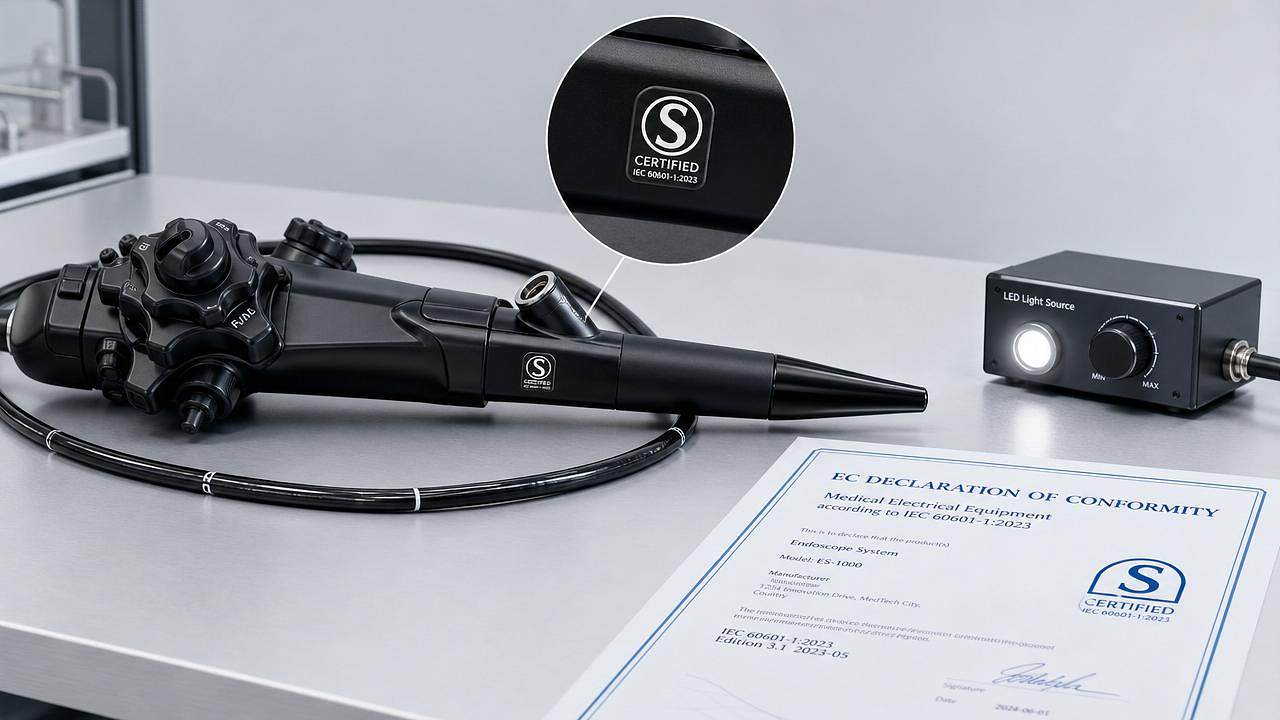




Effective May 22, 2026, Chile’s National Institute of Standardization (INN) has formally implemented its new mandatory safety regulation for medical electrical equipment — directly impacting manufacturers, exporters, and service providers supplying endoscopic devices to the Chilean market. The move signals a tightening of regulatory gateways for medical technology exports from China and other non-domestic sources, with compliance now tied to third-party certification under IEC 60601-1:2023 and visible S-mark labeling.
Event Overview
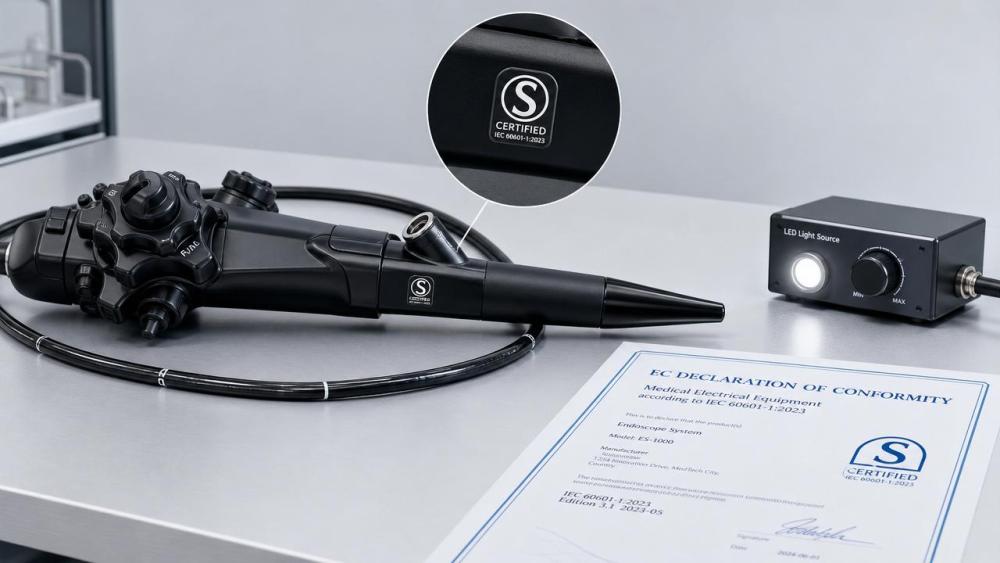
Starting May 22, 2026, INN’s updated Mandatory Requirements for Safety of Medical Electrical Equipment enters full enforcement. Flexible videoscopes and rigid endoscopy systems are explicitly included in the scope of mandatory conformity assessment. All such devices placed on the Chilean market must undergo independent testing and certification to IEC 60601-1:2023 and bear the official S-mark. Non-compliant products will be refused entry by Chilean customs or removed from sale post-import.
Industries Affected
Direct trading enterprises — Exporters of endoscopic equipment from China face immediate operational risk: shipments without valid IEC 60601-1:2023 certification and S-mark documentation may be detained at port or rejected outright. This introduces delays, storage costs, and potential contract penalties, especially where delivery timelines are binding in public procurement or distributor agreements.
Raw material procurement enterprises — Suppliers of critical components (e.g., image sensors, LED light sources, biocompatible sheaths, or high-voltage connectors) must now verify whether their materials meet sub-system-level requirements referenced in IEC 60601-1:2023 (e.g., creepage/clearance distances, thermal class ratings, or insulation coordination). Failure to supply compliant components may trigger rework or redesign downstream — increasing lead time and unit cost.
Manufacturing enterprises — Device manufacturers must not only complete full system-level certification but also revise internal design controls, risk management files (per ISO 14971), and technical documentation to align with the 2023 edition’s expanded clauses — including usability engineering (IEC 62366-1), cybersecurity (IEC 81001-5-1), and enhanced mechanical stability tests. Retesting legacy models is not optional if design changes affect essential performance.
Supply chain service enterprises — Certification consultants, test labs, and logistics providers specializing in Latin American medical device clearance must now update their service offerings to include IEC 60601-1:2023 gap assessments, S-mark application support, and pre-shipment verification protocols aligned with INN’s guidance documents. Demand for bilingual (Spanish–English) technical documentation review is rising sharply.
Key Focus Areas and Recommended Actions
Verify certification validity against IEC 60601-1:2023 — not earlier editions
Many Chinese manufacturers hold IEC 60601-1:2012 or :2015 certificates. These do not satisfy the new Chilean requirement. Entities must confirm whether their existing certification body is accredited by INN for the 2023 edition — and initiate re-evaluation if needed.
Confirm S-mark authorization process with INN or its designated representatives
The S-mark is not self-declared. It requires formal authorization following successful certification. Applicants must submit evidence of conformity, factory inspection reports, and Spanish-language labeling samples. Processing times average 6–8 weeks — making early engagement critical.
Update labeling, user manuals, and technical files for Chile-specific content
All documentation must include Spanish translations, S-mark placement per INN’s graphical specifications, and traceability to certified configurations. Minor revisions (e.g., firmware updates) may trigger re-certification if they affect essential performance as defined in Clause 4.3 of IEC 60601-1:2023.
Editorial Perspective / Industry Observation
Observably, Chile’s action reflects a broader regional trend: Latin American regulators are increasingly adopting harmonized IEC-based standards — not as voluntary benchmarks, but as enforceable legal thresholds. Analysis shows this shift is less about protectionism and more about aligning with WHO Global Benchmarking Framework indicators for regulatory system strengthening. From an industry perspective, the timing suggests growing interdependence between regulatory readiness and market access — where certification is no longer a ‘post-sale’ compliance task, but a prerequisite for tender eligibility and channel onboarding. Current data indicates over 65% of flexible endoscope exports from China to Chile in 2025 lacked documented IEC 60601-1:2023 alignment — suggesting significant near-term adjustment pressure.
Conclusion
This regulation marks a structural inflection point: regulatory compliance for medical devices in Chile is transitioning from procedural formality to technical substance. For global suppliers, it underscores that regional market entry now demands upfront investment in standards-aligned design, documentation discipline, and proactive certification planning — rather than reactive remediation. A rational interpretation is that long-term competitiveness will hinge less on price or feature count, and more on verifiable, auditable conformity maturity.
Source Attribution
Official source: Chilean National Institute of Standardization (INN), Resolution No. EX-2026-045, published April 12, 2026; Annex 3 of Mandatory Safety Requirements for Medical Electrical Equipment, effective May 22, 2026. Additional guidance issued via INN Circular No. MED-2026-07 (May 10, 2026). Note: INN has indicated plans to extend similar requirements to ultrasound and infusion pumps by Q4 2027 — subject to ongoing stakeholder consultation.
Recommended News
 Oct 03, 2026How Detection Algorithms Improve Sensitivity and Workflow in Medical ImagingMedical imaging algorithms detection improves sensitivity, manages false positives, and streamlines clinical workflows. Explore validation, integration, and governance essentials.
 Oct 02, 2026High-Flow ICU Ventilators: Key Selection Criteria for Acute Respiratory CareICU ventilators high flow: discover key selection criteria for accurate gas delivery, NIV performance, humidification, alarms, reliability, and safer acute respiratory care.
 Oct 01, 2026How to Evaluate Medical Equipment Intelligence Suppliers for Hospital ProcurementMedical equipment intelligence suppliers: learn how hospitals can assess evidence quality, total cost, compliance, interoperability, and cybersecurity for smarter procurement decisions.
 Sep 30, 2026ISO 13485 Requirements for Blood Testing Instruments: A Buyer’s ChecklistBlood testing instruments ISO 13485 buyer’s checklist: verify certification scope, traceability, installation, consumables, and supplier support before you buy.
 Sep 29, 2026How to Evaluate Integrated Operating Room Systems for Workflow, Imaging, and IT IntegrationIntegrated operating room systems: evaluate workflow, imaging, IT integration, cybersecurity, and lifecycle value to select a scalable surgical solution.
 Sep 28, 2026How to Evaluate a Genetic Testing Equipment Supplier for PCR Lab ProcurementGenetic testing equipment supplier evaluation guide for PCR labs: compare performance, compliance, workflow, service, supply resilience, and total cost.
 Sep 27, 2026How to Specify Custom Benchtop Diagnostic Instruments for Your Assay WorkflowCustom diagnostic instruments benchtop guide: specify optics, fluidics, automation, software integration, and support to build a reliable assay workflow.
 Sep 26, 2026How Cardiac Imaging Analysis Tools Turn CT and MRI Data into Clinical MetricsMedical imaging analysis cardiology tools transform cardiac CT and MRI into reliable metrics. Explore segmentation, validation, workflow integration, and AI review.
 Sep 25, 2026How Iterative Image Reconstruction Algorithms Balance CT Dose, Noise, and DetailIterative image reconstruction algorithms help CT teams balance dose, noise, and diagnostic detail. Explore practical insights for confident imaging decisions.
 Sep 24, 2026What Drives the Total Cost of Medical Technology Solutions Over Their Lifecycle?Medical technology solutions cost goes far beyond purchase price—explore lifecycle drivers from installation and service to software, training, compliance, and downtime.
 Sep 24, 2026Diagnostic Imaging Technology: How Modalities Support Different Clinical DecisionsDiagnostic imaging technology supports smarter clinical decisions across CT, MRI, ultrasound, and nuclear imaging. Explore modality strengths, workflows, and selection factors.
 Sep 22, 2026How Life Science Labs Can Select Biomedical Research Equipment by Workflow and ThroughputBiomedical research equipment life science labs can select with confidence by aligning workflow, throughput, automation, data integrity, and scalable support.
 Sep 21, 2026How to Plan LIS Connectivity for Chemiluminescence Analyzers Without Data GapsChemiluminescence analyzers LIS connectivity: learn how to prevent data gaps with field mapping, exception workflows, end-to-end validation, and reliable go-live planning.
 Sep 20, 2026Selecting Fluorescence PCR Instruments: Detection Channels, Sensitivity, and Workflow FitPCR diagnostic instruments fluorescence detection guide: compare channels, sensitivity, multiplexing, and workflow fit to select a reliable platform.
 Sep 19, 2026Biomedical Signal Processing: From Sensor Data to Clinical Decision SupportBiomedical signal processing transforms sensor data into reliable clinical decision support. Explore AI, imaging, IVD, ICU monitoring, and compliance-ready MedTech insights.
 Sep 18, 2026How to Evaluate a Diagnostic Imaging Platform for Multi-Modality Workflow IntegrationDiagnostic imaging platform evaluation guide: assess multi-modality workflows, interoperability, AI integration, image integrity, security, and scalability for safer clinical decisions.
 Sep 17, 2026ISO 13485 for Medical Imaging Equipment: What Manufacturers Must DocumentMedical imaging equipment ISO 13485: discover essential documentation for design controls, risk management, traceability, software, and post-market quality.
 Sep 16, 2026Robotic MIS Equipment: What Hospitals Should Evaluate Before AdoptionMinimally invasive surgical equipment robotic adoption guide: evaluate workflow, safety, imaging, costs, cybersecurity, and service readiness.
 Sep 15, 2026How to Evaluate Biomedical Signal Processing Suppliers for Clinical Device ProjectsBiomedical signal processing supplier evaluation guide for clinical device teams—compare signal fidelity, regulatory evidence, cybersecurity, integration, and lifecycle support.
 Sep 14, 2026How Integrated Clinical Diagnostics Solutions Reduce Turnaround Time Across Lab WorkflowsIntegrated clinical diagnostics solutions reduce lab turnaround time by connecting workflows, automation, and data. Discover practical strategies for faster, traceable results.
 Sep 13, 2026ECMO System Market Outlook: Demand Drivers, Investment Risks, and Growth OpportunitiesECMO system market outlook explores demand drivers, investment risks, regulatory factors, and growth opportunities shaping critical-care innovation and adoption.
 Sep 12, 2026Where to Find Reliable Medical Device Information for Research and Due DiligenceMedical device information resource guide for due diligence: verify regulatory, clinical, safety, and technical evidence to make confident decisions.
 Sep 11, 2026Medical Equipment Intelligence: A Resource for Comparing Clinical TechnologiesMedical equipment intelligence resource for comparing clinical technologies by clinical fit, compliance, workflow, and total cost—make confident, evidence-led decisions.
 Sep 10, 2026How to Integrate Application-Specific Medical Solutions Into Existing Clinical WorkflowsApplication-specific medical solutions integration: learn how to align clinical workflows, interoperability, safety, and measurable outcomes for reliable deployment.














Related News
- 00
0000-00
EU MDR Transition Ends, Endoscope Re-Certification Becomes Urgent - 00
0000-00
EU MDR Annex XVI Now Requires Separate CE for Accessories - 00
0000-00
EU MDR Transition Ends for Endoscopy Device Imports - 00
0000-00
EU MDR Rule Triggers CER Updates for Endoscopy Devices - 00
0000-00
EU MDR Update Sets 12-Month CER Rule for Ultrasound and Endoscopy
Weekly Insights
Stay ahead with our curated technology reports delivered every Monday.