
FDA Issues New Anti-Fog Requirements for Flexible Endoscopes
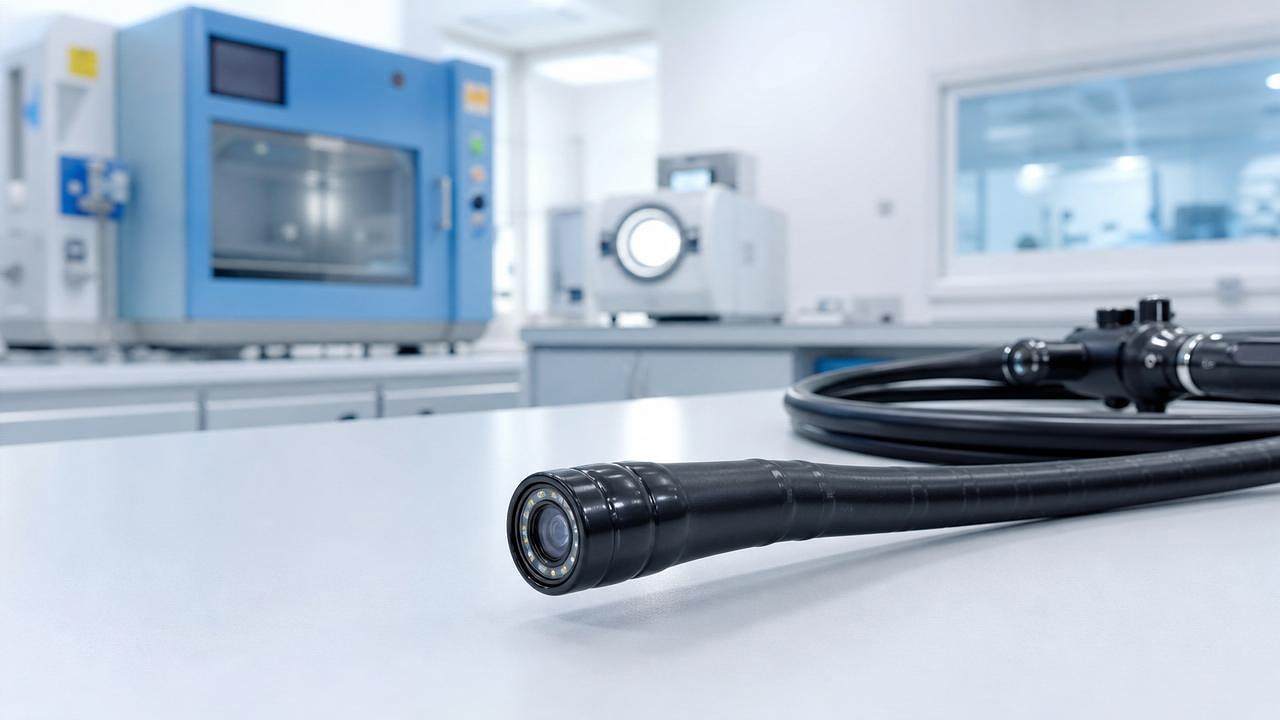




FDA updated its guidance on optical performance of flexible endoscopes on May 16, 2026, introducing mandatory anti-fog validation for all flexible videoscopes exported to the U.S. beginning June 1, 2026. This development directly affects manufacturers, exporters, and distributors involved in the global flexible endoscope supply chain — particularly those based in China, which accounts for 68% of global production capacity. The requirement signals a tightening of regulatory expectations for optical reliability under real-world clinical conditions, making it a high-priority item for medical device compliance and trade operations.
Event Overview
On May 16, 2026, the U.S. Food and Drug Administration (FDA) issued an update to its Flexible Endoscope Optical Performance Guidance. Effective June 1, 2026, all flexible videoscopes imported into the United States must be accompanied by a third-party ‘anti-fog persistence validation report’ conducted under dynamic temperature and humidity gradient conditions. The report must be issued by an ISO 13485-certified laboratory. Products failing to meet this requirement will be denied entry at U.S. ports or subjected to on-site inspection and port detention.
Industries Affected
Direct Exporters and Trade Enterprises
These entities face immediate operational impact: shipments scheduled for U.S. entry after June 1, 2026, require validated documentation prior to customs clearance. Without the report, goods risk rejection or extended holding time — affecting cash flow, delivery timelines, and contractual obligations with U.S. importers.
Manufacturers and Contract Manufacturers
As the source of device design and production, manufacturers bear primary responsibility for generating compliant validation data. The requirement applies specifically to optical surfaces and mandates testing under dynamic environmental stress — not static lab conditions — increasing test complexity and lead time compared to prior practices.
Distributors and Channel Operators
U.S.-based distributors must now verify documentation before accepting new inventory. Per the FDA’s notice, procurement planning must incorporate a minimum 45-day buffer to accommodate third-party lab scheduling, sample submission, testing, and report issuance — compressing traditional ordering cycles and requiring earlier engagement with upstream suppliers.
Regulatory and Compliance Service Providers
Consultancies and testing labs accredited to ISO 13485 are likely to see increased demand for anti-fog validation services. However, capacity constraints may emerge quickly, especially among labs with proven capability in dynamic thermal-humidity cycling protocols for optical components.
What Stakeholders Should Monitor and Do Now
Confirm lab accreditation and protocol alignment
Verify that intended testing laboratories hold current ISO 13485 certification and have documented experience performing anti-fog validation under dynamic temperature/humidity gradients — not just static fogging tests. Some labs may list ‘anti-fog testing’ but lack the required environmental cycling capability.
Map affected product lines and prioritize validation sequencing
Identify which flexible videoscope models are slated for U.S. shipment post-June 1, 2026, and rank them by volume, regulatory classification, and existing test history. Prioritize models without prior dynamic anti-fog data to avoid bottlenecks as lab capacity tightens.
Update internal quality agreements and supplier contracts
Review and revise quality agreements with contract manufacturers and component suppliers to explicitly assign responsibility for anti-fog validation — including sample provision, test coordination, and report ownership. Clarify whether validation applies per model, per optical assembly batch, or per production lot.
Adjust procurement and logistics timelines starting immediately
For any U.S.-bound flexible videoscope shipment scheduled after June 1, 2026, add a minimum 45-day validation window to the supply plan. Factor in potential retesting due to failed initial runs, especially if optical coatings or housing materials have not been previously evaluated under gradient conditions.
Editorial Perspective / Industry Observation
Observably, this requirement reflects a shift from outcome-based to process-embedded regulatory oversight — emphasizing how optical clarity is maintained *during use*, not only at time of manufacture. Analysis shows the FDA is treating anti-fog performance not as a cosmetic or usability feature, but as a functional safety attribute tied to procedural continuity and diagnostic accuracy. From an industry perspective, this is less a one-time compliance hurdle and more an early indicator of broader expectations for environmental resilience across other reusable endoscopic components. Current implementation remains limited to flexible videoscopes, but the underlying rationale — linking optical performance to real-world clinical environments — could inform future updates to guidance for rigid scopes or accessories. It is better understood as a signal of evolving regulatory emphasis than as an isolated technical amendment.
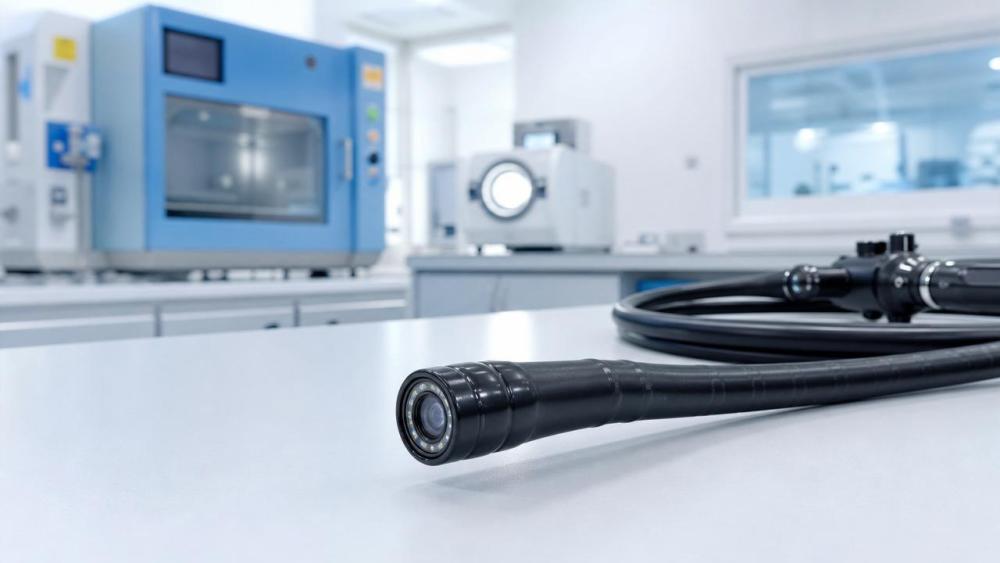
This update marks a concrete step toward harmonizing optical reliability standards with clinical workflow realities. While narrowly scoped to flexible videoscopes and effective June 2026, its implications extend across manufacturing, testing, distribution, and regulatory strategy. For stakeholders, the most pragmatic interpretation is not that the rule introduces unprecedented complexity, but that it formalizes a previously implicit expectation — and does so with clear, enforceable documentation requirements. Preparedness hinges less on technological adaptation and more on disciplined integration of validation into established product release workflows.
Source: U.S. FDA, Flexible Endoscope Optical Performance Guidance (updated May 16, 2026). Note: Further clarification on acceptable test parameters, report format, and enforcement discretion is pending and remains under observation.
Recommended News
 May 31, 2026Why medical device clinical trials face delaysMedical device clinical trials often face costly delays. Learn key regulatory, site, data, and reimbursement risks—and how AMDS helps improve market-entry decisions.
![]() May 31, 2026How surgical navigation intelligence improves accuracySurgical navigation intelligence improves surgical accuracy by linking imaging, tracking, and real-time guidance—helping teams reduce uncertainty and operate with confidence.
May 31, 2026How surgical navigation intelligence improves accuracySurgical navigation intelligence improves surgical accuracy by linking imaging, tracking, and real-time guidance—helping teams reduce uncertainty and operate with confidence. May 31, 2026Is endoscopic imaging technology worth upgrading?Endoscopic imaging technology upgrades can boost diagnostic confidence, workflow efficiency, compliance readiness, and ROI—use this checklist to decide with clarity.
 May 31, 2026Which healthcare technology trends matter in 2026?Healthcare technology trends in 2026 reveal where AI, IVD, imaging, critical care, and digital OR innovation deliver safer outcomes, compliance-ready growth, and measurable hospital ROI.
 May 31, 2026How clinical engineering solutions cut downtimeClinical engineering solutions help hospitals cut equipment downtime with predictive maintenance, faster response, asset visibility, and lifecycle planning that protects care and ROI.
 May 31, 2026ISMRM 2026 Cape Town Highlights MRI Innovation for Low-Resource SettingsMRI innovation for low-resource settings takes center stage at ISMRM 2026 Cape Town—discover how helium-free, AI-enhanced MRI systems are reshaping global procurement and market entry strategies.
 May 31, 2026US Senate Advances CHIP Theft Ban Bill, Tightening AI Chip Export Controls on Medical Imaging HardwareUS Senate advances CHIP Theft Ban Bill—tightening AI chip export controls on medical imaging hardware like AI-MRI and photon-counting CT systems. Act now.
 May 31, 2026EU Cuts Steel Import Quotas, Adds Tungsten, Rare Earths, Gallium to Strategic ListEU cuts steel import quotas by 47% and adds tungsten, rare earths, gallium to strategic list—key for MRI, ECMO & medical device supply chains. Act now.
 May 31, 2026NMPA’s 9th Intelligent Oversight ‘Dual Libraries’ Take Effect for 12 Remote Diagnostic DevicesNMPA’s 9th ‘Dual Libraries’ now regulate 12 remote diagnostic devices—key for exporters, QA teams & emerging market access. Act now.
 May 31, 2026FDA Unveils New AI Medical Device Lifecycle RegulationFDA's new AI medical device regulation mandates lifecycle oversight for Class III AI devices—key for exporters of digital radiography, photon-counting CT & MRI systems.
 May 30, 2026How will the medical equipment market shift in 2026?Medical equipment market trends for 2026 reveal how AI, regulation, IVD, imaging, and service reliability will shape smarter investment and procurement decisions.
 May 30, 2026Does medical imaging reconstruction technology cut dose?Medical imaging reconstruction technology can reduce dose while preserving diagnostic confidence—see how AI, iterative methods, and validation shape safer CT and MRI workflows.
 May 30, 2026When do digital healthcare solutions improve care?Digital healthcare solutions improve care when they deliver measurable clinical value, safer workflows, trusted data, and compliance-ready outcomes.
 May 30, 2026Can precision medicine diagnostics cut trial errors?Precision medicine diagnostics can cut trial errors when validated and integrated—learn how biomarkers, imaging consistency, and AI governance improve trial confidence.
 May 30, 2026Why do advanced clinical diagnostics miss early signals?Advanced clinical diagnostics can miss early signals when biology, imaging, workflows, and compliance don’t align. Learn how AMDS reveals blind spots and improves decisions.
 May 30, 2026China NMPA Allows Export Certificates for Unregistered Endoscopes, VentilatorsChina NMPA now allows Export Sales Certificates (II) for unregistered endoscopes & ventilators—boost your global market access with GMP-compliant export pathways.
 May 30, 2026UK MHRA Opens Consultation on UDI + Implant Card for High-Risk DevicesUK MHRA consultation on UDI + implant cards for high-risk devices like ECMO & anesthesia workstations—key compliance insights for global manufacturers.
 May 30, 2026Photon-Counting CT Detector Lead Times Extended to 26 Weeks Amid ITC Section 337 RulingPhoton-counting CT detector lead times extended to 26 weeks post-ITC Section 337 ruling—impacting OEMs, distributors & hospitals globally. Act now.
 May 30, 2026EU MDR Tightens Again: Dual EUDAMED Registration Mandatory for Endoscopes from 28 May 2026EU MDR mandates dual EUDAMED registration (SRN + UDI-DI) for endoscopes by 28 May 2026—avoid customs blocks, secure EU market access now.
 May 30, 2026FDA Tightens IVD Remote Review: Local Positive Controls Required for PCR TestsFDA now requires local positive controls for PCR-based IVDs—key for 510(k)/De Novo clearance. Learn how this impacts global manufacturers, validation strategy, and U.S. market access.
 May 29, 2026Why IVD molecular testing costs vary by workflowIVD molecular testing costs vary by workflow. Learn how automation, reagents, labor, controls, and TCO shape smarter platform decisions.
 May 29, 2026When medical endoscope systems need replacementMedical endoscope systems showing image decline, repeat repairs, safety failures, or compliance gaps? Learn when replacement protects patients and cuts downtime.
 May 29, 2026What healthcare technology assessment misses in budgetsHealthcare technology assessment often misses hidden budget risks. Learn how to uncover downtime, compliance, workflow, and ROI factors before approval.
 May 29, 2026Are surgical navigation systems worth the OR upgrade?Surgical navigation systems can turn OR upgrades into safer, more predictable surgery. Learn how ROI depends on case volume, workflow, integration, and compliance.











Related News
- 00
0000-00
Is endoscopic imaging technology worth upgrading? - 00
0000-00
When medical endoscope systems need replacement - 00
0000-00
What matters most when choosing endoscopic imaging technology? - 00
0000-00
EU REACH Adds 3 Phthalates Restrictions for Flexible Endoscope Handles & Packaging - 00
0000-00
Chile Mandates IEC 60601-1:2023 for Endoscopy Systems from Oct 2026
Weekly Insights
Stay ahead with our curated technology reports delivered every Monday.