
How surgical navigation intelligence improves accuracy





In modern operating rooms, precision depends on more than skilled hands—it requires real-time data, imaging, and intelligent guidance.
Surgical navigation intelligence helps surgeons and operating teams align anatomy, instruments, and procedural plans with greater confidence.
It is especially valuable in minimally invasive, image-guided, orthopedic, neurological, spinal, and high-risk soft-tissue interventions.
By transforming CT, MRI, endoscopic, and intraoperative data into actionable spatial insight, surgical navigation intelligence reduces uncertainty.
For clinical users and equipment operators, understanding this technology is essential for consistent accuracy in digitally assisted surgery.
Surgical navigation intelligence as a clinical accuracy layer
Surgical navigation intelligence refers to systems that connect imaging, instrument tracking, anatomical registration, and decision support.
The core purpose is simple: translate complex patient data into location-aware guidance during surgery.
Instead of relying only on visual inspection, teams can reference a digital map of the patient’s anatomy.
This map may be built from CT, MRI, cone-beam CT, ultrasound, fluoroscopy, endoscopic video, or fused datasets.
Surgical navigation intelligence does not replace professional judgment, but it strengthens judgment with structured spatial evidence.
It helps answer critical intraoperative questions: where is the target, where is the tool, and what lies nearby?
This accuracy layer is increasingly important as procedures move toward smaller incisions and tighter safety margins.
From static images to real-time guidance
Traditional imaging shows anatomy before surgery, while surgical navigation intelligence links imaging to the operating field.
The system registers patient anatomy, tracks instruments, and displays their position against the planned surgical route.
This creates a dynamic relationship between preoperative planning and intraoperative execution.
When anatomy shifts, imaging updates or algorithmic correction may help preserve navigational reliability.
Industry background and current attention points
Digital healthcare has made accuracy a measurable performance requirement, not only a surgical aspiration.
Hospitals now evaluate operating room technologies through outcomes, workflow efficiency, compliance, utilization, and total procedural value.
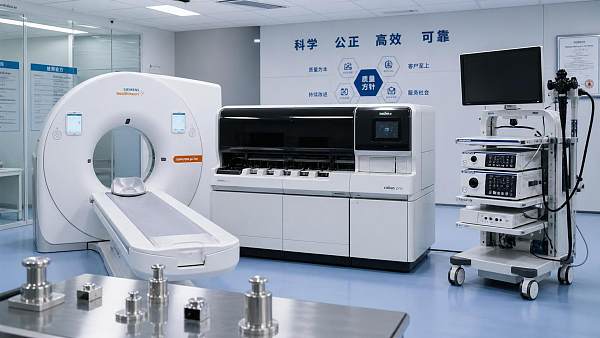
Surgical navigation intelligence sits between medical imaging, endoscopy, robotics, AI reconstruction, and operating room infrastructure.
Its relevance continues to grow because complex surgery increasingly depends on connected digital ecosystems.
The strongest systems integrate smoothly with existing imaging devices, endoscope platforms, and core operating room equipment.
Surgical navigation intelligence also aligns with precision medicine, where patient-specific anatomy guides procedural decisions.
As reimbursement models emphasize efficiency, navigation accuracy can influence complication reduction and resource control.
How surgical navigation intelligence improves accuracy
Accuracy improves when uncertainty is reduced across planning, access, targeting, verification, and documentation.
Surgical navigation intelligence contributes to each step through data alignment and real-time spatial awareness.
1. More precise anatomical localization
Many surgical errors begin with uncertainty about anatomical position, especially when the view is limited.
Surgical navigation intelligence provides a referenced coordinate system for organs, lesions, vessels, nerves, bones, and implants.
This localization supports better entry points, approach angles, resection boundaries, and implant trajectories.
2. Stronger alignment between plan and execution
A surgical plan is valuable only when it remains visible and usable during the procedure.
Navigation systems display planned paths and anatomical landmarks directly alongside tracked surgical instruments.
This improves consistency between preoperative decisions and intraoperative action.
3. Reduced dependence on repeated imaging
In some settings, navigation can reduce the need for repeated fluoroscopy or confirmatory image acquisition.
When used appropriately, surgical navigation intelligence may support radiation management and workflow predictability.
The benefit depends on registration quality, system calibration, procedure type, and operator proficiency.
4. Better identification of risk zones
Critical structures can be difficult to interpret during minimally invasive surgery or distorted anatomy.
Surgical navigation intelligence can highlight risk zones around vessels, ducts, nerves, tumors, or implant boundaries.
This supports safer dissection, puncture, drilling, ablation, and reconstruction decisions.
Clinical and operational value in digitally assisted surgery
The value of surgical navigation intelligence extends beyond technical precision.
It can support standardization, interdisciplinary communication, training continuity, and measurable quality control.
- Improved confidence when anatomical landmarks are hidden or altered.
- More consistent execution of complex procedural plans.
- Better visualization during minimally invasive and endoscopic procedures.
- Enhanced communication between imaging, surgery, anesthesia, and technical teams.
- Stronger traceability for training, review, and compliance audits.
In high-end medical technology ecosystems, accuracy depends on the entire chain of data reliability.
Imaging resolution, algorithmic reconstruction, registration quality, display ergonomics, and instrument calibration all matter.
Surgical navigation intelligence turns these separate capabilities into a coordinated guidance environment.
For outcome-focused institutions, this coordination can contribute to fewer deviations and better procedural repeatability.
Typical application areas and navigation objects
Different procedures require different navigation strategies, but the accuracy principle remains consistent.
The system must connect the visible field, hidden anatomy, and intended intervention target.
Surgical navigation intelligence is also expanding into hybrid operating rooms and robotic-assisted workflows.
In these environments, navigation data can inform robotic positioning, imaging confirmation, and procedural documentation.
Data quality factors that determine navigation accuracy
Accuracy is not guaranteed simply because a navigation system is present.
Surgical navigation intelligence depends on data quality, workflow discipline, and technical verification.
Imaging fidelity
Navigation begins with imaging that must represent patient anatomy with sufficient resolution and contrast.
Poor image quality can compromise segmentation, fusion, planning, and intraoperative interpretation.
Registration accuracy
Registration matches the virtual model to the patient’s physical position.
Errors here can shift the perceived location of instruments and critical structures.
Reliable surgical navigation intelligence requires verification before decisive steps.
Tracking stability
Optical, electromagnetic, or hybrid tracking must remain stable throughout the procedure.
Line-of-sight interruption, metal interference, instrument bending, or marker movement can degrade accuracy.
Human-system interaction
Even advanced guidance must be intuitive under operating room pressure.
Displays, alerts, user interfaces, and procedural checklists should support fast, safe interpretation.
Practical implementation considerations
Successful adoption requires more than purchasing technology.
Surgical navigation intelligence should be evaluated as a clinical workflow capability, not an isolated device.
- Define priority procedures where accuracy gaps are clinically meaningful.
- Assess compatibility with CT, MRI, endoscopy, robotics, and operating room systems.
- Standardize image acquisition and registration protocols.
- Train users on verification steps, failure modes, and backup workflows.
- Monitor procedural metrics, including deviation, time, radiation, revision, and complications.
Compliance is another critical dimension.
Systems should support traceable documentation, cybersecurity expectations, software validation, and applicable regulatory pathways.
This is especially relevant for markets governed by FDA requirements, CE MDR, and local medical device rules.
Surgical navigation intelligence also requires a maintenance plan covering calibration, software updates, service records, and accessory control.
Common limitations and safety precautions
Navigation should never be treated as infallible.
The displayed position may differ from true anatomy if conditions change or verification is incomplete.
- Confirm landmarks before relying on guidance for irreversible actions.
- Recheck registration after patient movement or table adjustment.
- Understand how soft-tissue deformation may affect model accuracy.
- Maintain visual, tactile, and anatomical judgment during navigation.
- Document deviations, alerts, and corrective actions during the case.
Surgical navigation intelligence works best when integrated with clinical discipline and transparent risk controls.
Its strength lies in augmenting awareness, not removing responsibility from the operating team.
Strategic outlook for advanced medical systems
The future of surgical navigation intelligence will be shaped by AI, multimodal imaging, robotics, and connected operating rooms.
AI-assisted segmentation may shorten planning time and improve consistency across complex anatomical datasets.
Intraoperative imaging may make guidance more responsive to anatomical changes during the procedure.
Endoscope systems may combine 4K, 3D, fluorescence, and navigation overlays for deeper spatial awareness.
Robotic platforms may use navigation data to enhance positioning, constraint control, and procedural repeatability.
For advanced medical technology ecosystems, the key challenge is trustworthy integration.
Every algorithm, sensor, display, and instrument must support clinical safety and verifiable performance.
This aligns with the broader mission of precision diagnostics and life-guarding medical intelligence.
Actionable next steps for accuracy-focused navigation
To improve accuracy, start with a structured review of procedures where navigation can reduce uncertainty.
Map each workflow from image acquisition to postoperative documentation, then identify avoidable accuracy risks.
Evaluate surgical navigation intelligence by clinical fit, data integrity, usability, compliance readiness, and measurable outcomes.
The most effective systems connect imaging excellence with practical operating room execution.
When implemented carefully, surgical navigation intelligence becomes a dependable bridge between diagnostic insight and surgical precision.
For organizations advancing digital surgery, the next step is clear: build navigation around evidence, verification, and clinical value.
Recommended News
 Aug 29, 2026How to Select a Hematology Analyzer With Reliable Reticulocyte CountingHematology analyzers retic selection guide: compare precision, flags, workflow, QC, and connectivity to achieve reliable reticulocyte counting.
 Aug 28, 2026Planning Operating Room Technology for a High-Throughput Surgery CenterOperating room technology for a surgery center: plan workflows, integration, uptime, and safety to boost throughput and create future-ready surgical rooms.
 Aug 27, 2026Building Medical Compliance Analytics for Middle East Market AccessMedical compliance analytics Middle East: build device-specific evidence maps, align local requirements, and accelerate market access with confidence.
 Aug 26, 2026How Surgical Equipment Digitalization Is Reshaping Hospital Investment in Latin AmericaSurgical equipment digitalization Latin America is reshaping hospital investment, from smart ORs to ROI-driven upgrades. Explore what buyers now value most.
 Aug 25, 2026How to Evaluate a Medical Compliance Intelligence Provider for Global Market AccessMedical compliance intelligence provider selection can make or break global market access. Learn how to assess technical depth, update quality, and commercial fit before choosing.
 Aug 24, 2026How Advanced Clinical Imaging Is Improving Cardiology Diagnosis and Treatment PlanningAdvanced clinical imaging cardiology is transforming diagnosis and treatment planning with clearer anatomy, tissue insight, and procedural guidance. Discover how it reduces uncertainty and supports smarter cardiac decisions.
 Aug 23, 2026How to Source Medical Devices in North America: Supplier Vetting and Market Access RisksMedical device sourcing North America made practical: learn how to vet suppliers, reduce compliance risks, and protect market access with smarter procurement decisions.
 Aug 22, 2026What Are Integrated Critical Care Systems and How Do Hospitals Evaluate Them?Critical care systems integrated: learn how hospitals assess ICU platforms for interoperability, alarm safety, workflow efficiency, and long-term value before buying.
 Aug 21, 2026How to Evaluate High-Resolution Diagnostic Imaging Systems for Detail-Critical ExamsDiagnostic imaging systems high resolution: learn how to compare detail-critical performance, workflow fit, dose efficiency, and ROI to choose the right system with confidence.
 Aug 20, 2026How to Evaluate Medical Equipment Performance Before Purchase?Medical equipment evaluation performance starts before purchase. Learn how to assess safety, workflow fit, compliance, uptime, and total cost to choose devices that truly perform.
 Aug 19, 2026How to Evaluate Small-Footprint Laboratory Diagnostic Equipment for Space-Limited LabsLaboratory diagnostic equipment small footprint choices require more than size checks. Learn how to assess workflow, throughput, compliance, and service access for smarter lab buying.
 Aug 18, 2026Biochemical Molecular Diagnostics Explained: Methods, Clinical Uses, and Lab Selection CriteriaBiochemical molecular diagnostics explained: compare key methods, clinical applications, and lab selection criteria to choose reliable, compliant testing with confidence.
 Aug 17, 2026How to Choose Diagnostic Equipment Solutions for a Clinic: Key Factors That Affect Workflow and CostDiagnostic equipment solutions clinic buyers can use to improve workflow, control total cost, and avoid hidden service risks. Learn the key factors before you invest.
 Aug 16, 2026How to Choose a Blood Cell Analyzer for a Small Lab: Throughput, CBC Menu, and CostBlood cell analyzers small lab buyers can compare throughput, CBC menu, and total operating cost with confidence. Learn how to avoid waste, reduce downtime, and choose the right fit.
 Aug 16, 2026FDA Approval of AMDS Hybrid Prosthesis Removes IRB Step for Faster U.S. AccessFDA approval of AMDS Hybrid Prosthesis removes the IRB step, speeding U.S. access for acute aortic dissection care and reshaping hospital procurement and supporting equipment demand.
 Aug 15, 2026What Hospital Technology Infrastructure Is Needed for Reliable Interoperability?Hospital technology infrastructure interoperability depends on secure networks, integration engines, identity services, and governance. Discover what hospitals need for reliable, scalable connectivity.
 Aug 14, 2026What to Look for in an Advanced Diagnostic Systems Distributor Before You BuyAdvanced diagnostic systems distributor: learn what to check before buying, from compliance and technical depth to delivery reliability and after-sales support. Make a smarter procurement decision today.
 Aug 14, 2026China Temporarily Bans Helium ExportsChina Temporarily Bans Helium Exports: learn how the July 10, 2026 rule may disrupt MRI, ECMO, and anesthesia device supply chains, compliance, and delivery planning for global buyers.
 Aug 13, 2026How CT Reconstruction Technology Impacts Image Quality, Dose, and WorkflowMedical imaging reconstruction technology CT shapes image quality, dose, and workflow. Learn how smarter CT reconstruction improves diagnostics and efficiency.
 Aug 13, 2026FDA clears AMDS PMA, easing U.S. hospital accessFDA clears AMDS PMA, easing U.S. hospital access for Artivion’s aortic arch device and speeding procurement, compliance, and deployment.
 Aug 12, 2026Hospital Diagnostic Equipment Comparison: What Buyers Should Evaluate Beyond PriceDiagnostic equipment comparison hospital buyers can trust: learn how to evaluate clinical performance, uptime, compliance, integration, and long-term ROI beyond price.
 Aug 12, 2026FDA Draft Guidance Reshapes AI Device ComplianceFDA Draft Guidance reshapes AI device compliance with new postmarket monitoring expectations for AI/ML-enabled SaMD. Learn what it means for U.S. market access, distributors, and exporters.
 Aug 11, 2026How to Evaluate a Diagnostic Medical Systems Manufacturer for Quality and Market AccessDiagnostic medical systems manufacturer selection starts with more than specs. Learn how to assess quality systems, regulatory readiness, service uptime, and market access before you buy.
 Aug 11, 2026EU MDR Deadline Extended for ECMO and ICU DevicesEU MDR deadline extended for ECMO and ICU devices to 2027. Learn what Regulation (EU) 2026/1347 means for compliance, exports, procurement, and roadmap filing.















Related News
- 00
0000-00
Planning Operating Room Technology for a High-Throughput Surgery Center - 00
0000-00
How Advanced Clinical Imaging Is Improving Cardiology Diagnosis and Treatment Planning - 00
0000-00
What Are Integrated Critical Care Systems and How Do Hospitals Evaluate Them? - 00
0000-00
How to Evaluate High-Resolution Diagnostic Imaging Systems for Detail-Critical Exams - 00
0000-00
How to Evaluate Medical Equipment Performance Before Purchase?
Weekly Insights
Stay ahead with our curated technology reports delivered every Monday.