
China NMPA Allows Export Certificates for Unregistered Endoscopes, Ventilators





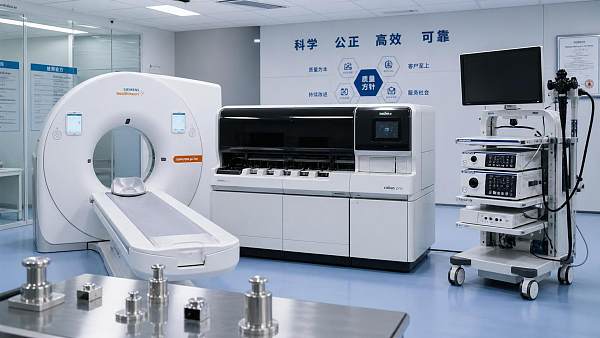
On May 1, 2026, China’s National Medical Products Administration (NMPA) implemented the Regulations on the Management of Medical Device Export Sales Certificates (NMPA Announcement No. 126 of 2025). This marks the first time that flexible videoscopes and ICU ventilators not registered in China may obtain an Export Sales Certificate (II) upon submission of a GMP compliance certificate. The change directly affects medical device exporters targeting overseas markets—particularly those developing innovative, export-only products—and signals a recalibration of regulatory pathways for international trade.
Event Overview
The NMPA’s Regulations on the Management of Medical Device Export Sales Certificates (Announcement No. 126 of 2025) took effect on May 1, 2026. Under this regulation, manufacturers may apply for an Export Sales Certificate (II) for certain unregistered devices—including flexible videoscopes and ICU ventilators—if they provide verifiable evidence of Good Manufacturing Practice (GMP) compliance. No domestic registration is required for these specific products to qualify for the certificate. The regulation is publicly confirmed and published by the NMPA.
Industries Affected
Direct Export Trading Companies
These companies often source or brand devices for non-Chinese markets without pursuing local NMPA registration. The new pathway reduces pre-export administrative friction: they can now support overseas regulatory submissions (e.g., FDA 510(k), CE technical documentation) with an official NMPA-issued certificate—even when the product lacks Chinese market authorization. Impact centers on faster documentation turnaround and strengthened credibility with foreign importers and regulators.
Contract Manufacturing Organizations (CMOs) & OEM/ODM Producers
Manufacturers producing flexible videoscopes or ICU ventilators exclusively for overseas clients—without intent to sell domestically—are now eligible to issue NMPA-backed export certificates. This lowers perceived risk for international buyers concerned about supply chain traceability and quality assurance. The main impact is enhanced commercial positioning, especially in competitive tenders where regulatory documentation is weighted heavily.
Supply Chain & Regulatory Support Service Providers
Firms offering GMP audit preparation, export documentation services, or regulatory strategy consulting will see increased demand for targeted support around Export Sales Certificate (II) applications. Unlike the standard Certificate (I), which requires full domestic registration, Certificate (II) hinges on GMP readiness—shifting service focus toward audit-readiness assessments and evidence packaging rather than registration dossier development.
What Relevant Enterprises or Practitioners Should Focus On
Monitor official NMPA guidance on scope and eligibility criteria
The regulation names flexible videoscopes and ICU ventilators as examples—but does not yet publish an exhaustive list of qualifying device categories or risk classifications. Enterprises should track subsequent NMPA notices or provincial bureau interpretations to confirm whether similar logic extends to other Class II/III devices intended solely for export.
Prioritize GMP compliance verification ahead of application
The regulation requires proof of GMP compliance, but does not specify whether third-party audits, provincial bureau inspections, or internal self-declarations suffice. Current practice suggests provincial-level NMPA offices conduct on-site verification; therefore, manufacturers should ensure facilities are audit-ready—including documentation control, process validation records, and personnel training logs—before initiating applications.
Distinguish between policy intent and operational rollout
While the regulation is effective as of May 1, 2026, provincial NMPA offices may vary in implementation speed, interpretation, and required supporting documents. Early applicants should treat initial submissions as pilot cases—documenting timelines, feedback, and procedural gaps—to inform internal SOP updates and cross-provincial strategy alignment.
Align export documentation workflows with certificate type
Export Sales Certificate (II) is not interchangeable with Certificate (I) in most overseas jurisdictions. Enterprises must verify whether importing countries accept it for customs clearance, reimbursement listing, or marketing authorization. Where acceptance is uncertain, concurrent pursuit of domestic registration—or dual-track documentation strategies—may remain prudent for high-priority markets.
Editorial Perspective / Industry Observation
Observably, this regulation reflects a pragmatic adjustment—not a broad deregulation—aimed at supporting China’s role as a global manufacturing base for innovative medical devices. Analysis shows the measure is best understood as a *procedural enabler*, not a de facto approval substitute. It lowers one barrier (domestic registration) while retaining another (GMP compliance), preserving regulatory oversight while improving export efficiency. From an industry perspective, the change signals growing recognition of divergent regulatory pathways across markets—and suggests future iterations may expand to additional device types or clarify equivalency with international GMP standards (e.g., ISO 13485 certification pathways). However, its immediate impact remains constrained to entities already operating under robust quality systems; it does not lower substantive safety or performance requirements.
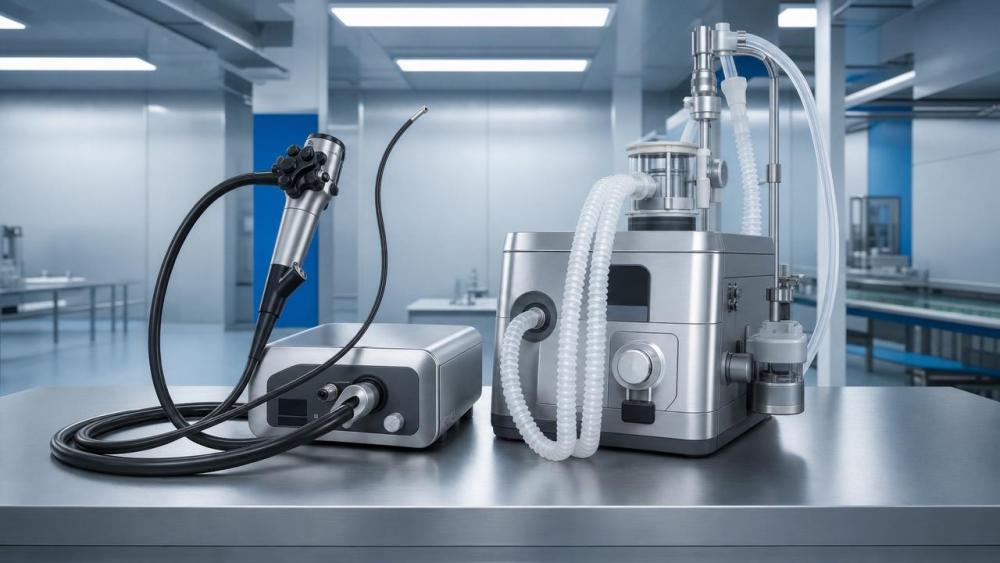
In summary, the NMPA’s updated export certificate framework introduces a targeted, compliance-based route for unregistered flexible videoscopes and ICU ventilators—strengthening export readiness for qualified manufacturers without altering core quality or safety expectations. It is neither a shortcut nor a relaxation of standards, but rather a formalized acknowledgment of parallel regulatory realities. Currently, it is more accurately interpreted as a procedural signal—indicating regulatory flexibility for export-focused innovation—rather than an immediate, scalable solution across all device categories or markets.
Source: National Medical Products Administration (NMPA) Announcement No. 126 of 2025. Note: Eligibility extension beyond flexible videoscopes and ICU ventilators, as well as provincial implementation details, remain subject to ongoing observation.
Recommended News
 Aug 28, 2026Planning Operating Room Technology for a High-Throughput Surgery CenterOperating room technology for a surgery center: plan workflows, integration, uptime, and safety to boost throughput and create future-ready surgical rooms.
 Aug 27, 2026Building Medical Compliance Analytics for Middle East Market AccessMedical compliance analytics Middle East: build device-specific evidence maps, align local requirements, and accelerate market access with confidence.
 Aug 26, 2026How Surgical Equipment Digitalization Is Reshaping Hospital Investment in Latin AmericaSurgical equipment digitalization Latin America is reshaping hospital investment, from smart ORs to ROI-driven upgrades. Explore what buyers now value most.
 Aug 25, 2026How to Evaluate a Medical Compliance Intelligence Provider for Global Market AccessMedical compliance intelligence provider selection can make or break global market access. Learn how to assess technical depth, update quality, and commercial fit before choosing.
 Aug 24, 2026How Advanced Clinical Imaging Is Improving Cardiology Diagnosis and Treatment PlanningAdvanced clinical imaging cardiology is transforming diagnosis and treatment planning with clearer anatomy, tissue insight, and procedural guidance. Discover how it reduces uncertainty and supports smarter cardiac decisions.
 Aug 23, 2026How to Source Medical Devices in North America: Supplier Vetting and Market Access RisksMedical device sourcing North America made practical: learn how to vet suppliers, reduce compliance risks, and protect market access with smarter procurement decisions.
 Aug 22, 2026What Are Integrated Critical Care Systems and How Do Hospitals Evaluate Them?Critical care systems integrated: learn how hospitals assess ICU platforms for interoperability, alarm safety, workflow efficiency, and long-term value before buying.
 Aug 21, 2026How to Evaluate High-Resolution Diagnostic Imaging Systems for Detail-Critical ExamsDiagnostic imaging systems high resolution: learn how to compare detail-critical performance, workflow fit, dose efficiency, and ROI to choose the right system with confidence.
 Aug 20, 2026How to Evaluate Medical Equipment Performance Before Purchase?Medical equipment evaluation performance starts before purchase. Learn how to assess safety, workflow fit, compliance, uptime, and total cost to choose devices that truly perform.
 Aug 19, 2026How to Evaluate Small-Footprint Laboratory Diagnostic Equipment for Space-Limited LabsLaboratory diagnostic equipment small footprint choices require more than size checks. Learn how to assess workflow, throughput, compliance, and service access for smarter lab buying.
 Aug 18, 2026Biochemical Molecular Diagnostics Explained: Methods, Clinical Uses, and Lab Selection CriteriaBiochemical molecular diagnostics explained: compare key methods, clinical applications, and lab selection criteria to choose reliable, compliant testing with confidence.
 Aug 17, 2026How to Choose Diagnostic Equipment Solutions for a Clinic: Key Factors That Affect Workflow and CostDiagnostic equipment solutions clinic buyers can use to improve workflow, control total cost, and avoid hidden service risks. Learn the key factors before you invest.
 Aug 16, 2026How to Choose a Blood Cell Analyzer for a Small Lab: Throughput, CBC Menu, and CostBlood cell analyzers small lab buyers can compare throughput, CBC menu, and total operating cost with confidence. Learn how to avoid waste, reduce downtime, and choose the right fit.
 Aug 16, 2026FDA Approval of AMDS Hybrid Prosthesis Removes IRB Step for Faster U.S. AccessFDA approval of AMDS Hybrid Prosthesis removes the IRB step, speeding U.S. access for acute aortic dissection care and reshaping hospital procurement and supporting equipment demand.
 Aug 15, 2026What Hospital Technology Infrastructure Is Needed for Reliable Interoperability?Hospital technology infrastructure interoperability depends on secure networks, integration engines, identity services, and governance. Discover what hospitals need for reliable, scalable connectivity.
 Aug 14, 2026What to Look for in an Advanced Diagnostic Systems Distributor Before You BuyAdvanced diagnostic systems distributor: learn what to check before buying, from compliance and technical depth to delivery reliability and after-sales support. Make a smarter procurement decision today.
 Aug 14, 2026China Temporarily Bans Helium ExportsChina Temporarily Bans Helium Exports: learn how the July 10, 2026 rule may disrupt MRI, ECMO, and anesthesia device supply chains, compliance, and delivery planning for global buyers.
 Aug 13, 2026How CT Reconstruction Technology Impacts Image Quality, Dose, and WorkflowMedical imaging reconstruction technology CT shapes image quality, dose, and workflow. Learn how smarter CT reconstruction improves diagnostics and efficiency.
 Aug 13, 2026FDA clears AMDS PMA, easing U.S. hospital accessFDA clears AMDS PMA, easing U.S. hospital access for Artivion’s aortic arch device and speeding procurement, compliance, and deployment.
 Aug 12, 2026Hospital Diagnostic Equipment Comparison: What Buyers Should Evaluate Beyond PriceDiagnostic equipment comparison hospital buyers can trust: learn how to evaluate clinical performance, uptime, compliance, integration, and long-term ROI beyond price.
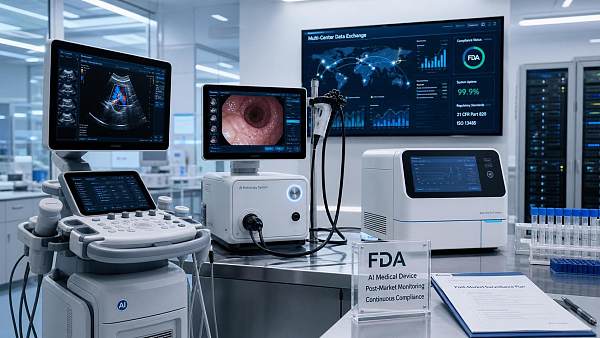
 Aug 12, 2026FDA Draft Guidance Reshapes AI Device ComplianceFDA Draft Guidance reshapes AI device compliance with new postmarket monitoring expectations for AI/ML-enabled SaMD. Learn what it means for U.S. market access, distributors, and exporters.
 Aug 11, 2026How to Evaluate a Diagnostic Medical Systems Manufacturer for Quality and Market AccessDiagnostic medical systems manufacturer selection starts with more than specs. Learn how to assess quality systems, regulatory readiness, service uptime, and market access before you buy.
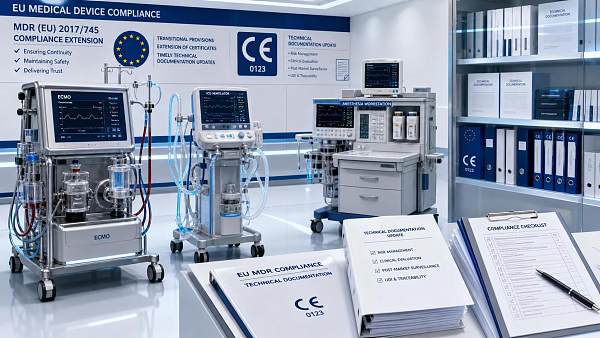
 Aug 11, 2026EU MDR Deadline Extended for ECMO and ICU DevicesEU MDR deadline extended for ECMO and ICU devices to 2027. Learn what Regulation (EU) 2026/1347 means for compliance, exports, procurement, and roadmap filing.
 Aug 10, 2026How to Evaluate Laboratory Automation Systems in Europe for Multi-Site Lab OperationsLaboratory automation systems Europe buyers can use this guide to compare interoperability, compliance, service coverage, and ROI for multi-site lab operations with confidence.










Related News
- 00
0000-00
Planning Operating Room Technology for a High-Throughput Surgery Center - 00
0000-00
Building Medical Compliance Analytics for Middle East Market Access - 00
0000-00
How Surgical Equipment Digitalization Is Reshaping Hospital Investment in Latin America - 00
0000-00
How to Evaluate a Medical Compliance Intelligence Provider for Global Market Access - 00
0000-00
How Advanced Clinical Imaging Is Improving Cardiology Diagnosis and Treatment Planning
Weekly Insights
Stay ahead with our curated technology reports delivered every Monday.