
UK MHRA Opens Consultation on UDI + Implant Card for High-Risk Devices
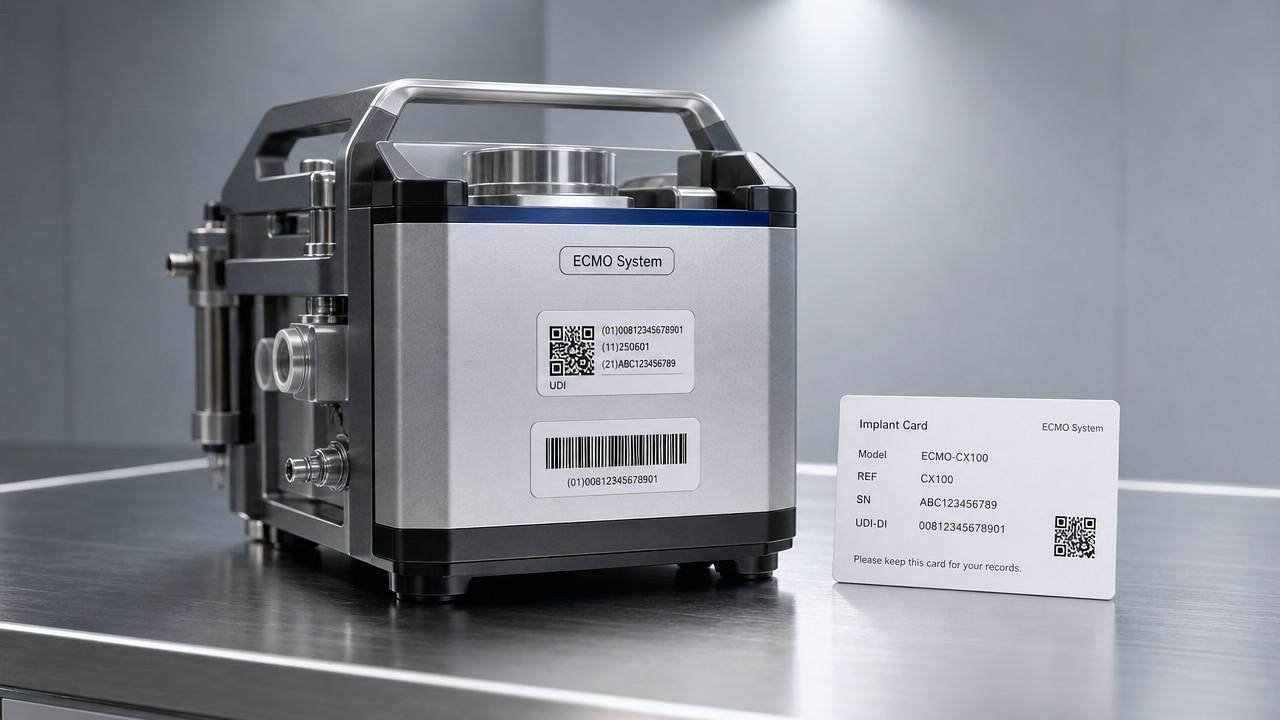




On 28 May 2026, the UK Medicines and Healthcare products Regulatory Agency (MHRA) launched a 21-day public consultation on the Medical Devices (Amendment) Regulations 2026, proposing mandatory Unique Device Identification (UDI) carriers combined with physical implant cards for high-risk implanted or long-term use devices—including ECMO systems and anesthesia workstations. This development is particularly relevant for manufacturers and exporters of advanced life-support equipment from China and other third countries supplying the UK market, as it introduces new documentation and labelling compliance requirements.
Event Overview
The MHRA initiated a formal public consultation on 28 May 2026 regarding the Medical Devices (Amendment) Regulations 2026. The proposed amendment would require UDI carriers (e.g., barcodes or RFID tags compliant with ISO/IEC 15459 and GS1 standards) and a physical implant card to be provided for certain high-risk implanted or long-term use medical devices—specifically naming ECMO systems and anesthesia workstations. The consultation period lasts 21 days from the launch date and is publicly accessible via the MHRA’s official website.
Industries Affected
Direct Exporters & OEM Manufacturers
Companies exporting life-support devices such as ECMO systems or anesthesia workstations into the UK will face revised labelling, packaging, and technical documentation obligations. The dual requirement—UDI carrier plus physical implant card—adds layers to device traceability infrastructure, requiring updates to production line marking systems, packaging workflows, and post-market documentation templates.
Contract Manufacturers & Assemblers
Firms engaged in final assembly or labelling for UK-bound devices must verify whether their current UDI implementation meets MHRA’s forthcoming specifications—including data content, placement, durability, and human- and machine-readable format. Any deviation may necessitate revalidation of labelling processes and quality system documentation.
Regulatory Affairs & Technical Documentation Teams
Regulatory professionals will need to align UK-specific UDI and implant card requirements with existing EU MDR, US FDA, and other jurisdictional frameworks. The absence of harmonisation across these regimes increases the risk of conflicting labelling versions and duplicated compliance efforts.
Distribution & Importer Entities
UK-based importers and authorised representatives will bear increased responsibility for verifying UDI assignment, implant card inclusion, and traceability data submission readiness—potentially triggering additional contractual obligations and audit readiness checks from MHRA.
What Relevant Companies or Practitioners Should Focus On
Monitor Official Updates Beyond the Consultation Period
The current proposal remains subject to revision before final adoption. Stakeholders should track MHRA’s post-consultation statement—expected by mid-June 2026—and any subsequent guidance documents outlining implementation timelines, exemptions, and transitional arrangements.
Map Current Product Portfolios Against Named Device Categories
ECMO systems and anesthesia workstations are explicitly cited, but the regulation may apply more broadly to ‘implanted or long-term use’ devices under Class III or Class IIb definitions. Companies should conduct an internal review to identify all affected SKUs—not just those bearing explicit ‘implantable’ labels—based on intended use and duration of patient contact.
Distinguish Between Policy Signal and Enforceable Requirement
This consultation reflects regulatory intent—not yet law. Enforcement, penalties, and phased rollout (e.g., grandfathering of existing stock) remain unconfirmed. Businesses should avoid premature capital expenditure on UDI hardware or implant card design until the final regulation text and MHRA guidance are published.
Initiate Cross-Functional Alignment Now
Manufacturers should convene teams from regulatory affairs, quality assurance, labelling operations, and supply chain to assess current UDI readiness—including data pool registration (e.g., with GS1 UK), label print capability, and implant card material specifications (e.g., biocompatibility, legibility, sterilisation stability). Early alignment helps prioritise remediation efforts ahead of potential deadlines.
Editorial Perspective / Industry Observation
Observably, this consultation signals MHRA’s intent to strengthen post-market traceability for critical care devices—especially those where failure carries high clinical consequence. Analysis shows the dual UDI + implant card approach mirrors aspects of EU MDR’s implant card requirement but introduces UK-specific operational expectations. From an industry perspective, this is currently best understood as a policy signal rather than an immediate compliance trigger; however, its alignment with broader global trends in device identification suggests sustained regulatory attention on traceability infrastructure. Continued monitoring is warranted—not only for UK implementation but also as a potential bellwether for similar proposals in other non-EU markets seeking regulatory autonomy post-Brexit.
Conclusion
This consultation marks a targeted step toward enhanced accountability for high-risk medical devices in the UK. Its significance lies not in immediate enforceability, but in the clarity it provides about MHRA’s evolving expectations for traceability, documentation integrity, and manufacturer responsibility. For now, it is more appropriately interpreted as a preparatory milestone—indicating where compliance systems may need reinforcement—rather than a deadline-driven mandate.
Source Information:
– UK Medicines and Healthcare products Regulatory Agency (MHRA), Public Consultation Notice: Medical Devices (Amendment) Regulations 2026, launched 28 May 2026.
– Note: Final regulatory text, effective dates, and transitional provisions remain pending MHRA’s post-consultation decision and statutory instrument publication. These elements require ongoing observation.
Recommended News
 Aug 28, 2026Planning Operating Room Technology for a High-Throughput Surgery CenterOperating room technology for a surgery center: plan workflows, integration, uptime, and safety to boost throughput and create future-ready surgical rooms.
 Aug 27, 2026Building Medical Compliance Analytics for Middle East Market AccessMedical compliance analytics Middle East: build device-specific evidence maps, align local requirements, and accelerate market access with confidence.
 Aug 26, 2026How Surgical Equipment Digitalization Is Reshaping Hospital Investment in Latin AmericaSurgical equipment digitalization Latin America is reshaping hospital investment, from smart ORs to ROI-driven upgrades. Explore what buyers now value most.
 Aug 25, 2026How to Evaluate a Medical Compliance Intelligence Provider for Global Market AccessMedical compliance intelligence provider selection can make or break global market access. Learn how to assess technical depth, update quality, and commercial fit before choosing.
 Aug 24, 2026How Advanced Clinical Imaging Is Improving Cardiology Diagnosis and Treatment PlanningAdvanced clinical imaging cardiology is transforming diagnosis and treatment planning with clearer anatomy, tissue insight, and procedural guidance. Discover how it reduces uncertainty and supports smarter cardiac decisions.
 Aug 23, 2026How to Source Medical Devices in North America: Supplier Vetting and Market Access RisksMedical device sourcing North America made practical: learn how to vet suppliers, reduce compliance risks, and protect market access with smarter procurement decisions.
 Aug 22, 2026What Are Integrated Critical Care Systems and How Do Hospitals Evaluate Them?Critical care systems integrated: learn how hospitals assess ICU platforms for interoperability, alarm safety, workflow efficiency, and long-term value before buying.
 Aug 21, 2026How to Evaluate High-Resolution Diagnostic Imaging Systems for Detail-Critical ExamsDiagnostic imaging systems high resolution: learn how to compare detail-critical performance, workflow fit, dose efficiency, and ROI to choose the right system with confidence.
 Aug 20, 2026How to Evaluate Medical Equipment Performance Before Purchase?Medical equipment evaluation performance starts before purchase. Learn how to assess safety, workflow fit, compliance, uptime, and total cost to choose devices that truly perform.
 Aug 19, 2026How to Evaluate Small-Footprint Laboratory Diagnostic Equipment for Space-Limited LabsLaboratory diagnostic equipment small footprint choices require more than size checks. Learn how to assess workflow, throughput, compliance, and service access for smarter lab buying.
 Aug 18, 2026Biochemical Molecular Diagnostics Explained: Methods, Clinical Uses, and Lab Selection CriteriaBiochemical molecular diagnostics explained: compare key methods, clinical applications, and lab selection criteria to choose reliable, compliant testing with confidence.
 Aug 17, 2026How to Choose Diagnostic Equipment Solutions for a Clinic: Key Factors That Affect Workflow and CostDiagnostic equipment solutions clinic buyers can use to improve workflow, control total cost, and avoid hidden service risks. Learn the key factors before you invest.
 Aug 16, 2026How to Choose a Blood Cell Analyzer for a Small Lab: Throughput, CBC Menu, and CostBlood cell analyzers small lab buyers can compare throughput, CBC menu, and total operating cost with confidence. Learn how to avoid waste, reduce downtime, and choose the right fit.
 Aug 16, 2026FDA Approval of AMDS Hybrid Prosthesis Removes IRB Step for Faster U.S. AccessFDA approval of AMDS Hybrid Prosthesis removes the IRB step, speeding U.S. access for acute aortic dissection care and reshaping hospital procurement and supporting equipment demand.
 Aug 15, 2026What Hospital Technology Infrastructure Is Needed for Reliable Interoperability?Hospital technology infrastructure interoperability depends on secure networks, integration engines, identity services, and governance. Discover what hospitals need for reliable, scalable connectivity.
 Aug 14, 2026What to Look for in an Advanced Diagnostic Systems Distributor Before You BuyAdvanced diagnostic systems distributor: learn what to check before buying, from compliance and technical depth to delivery reliability and after-sales support. Make a smarter procurement decision today.
 Aug 14, 2026China Temporarily Bans Helium ExportsChina Temporarily Bans Helium Exports: learn how the July 10, 2026 rule may disrupt MRI, ECMO, and anesthesia device supply chains, compliance, and delivery planning for global buyers.
 Aug 13, 2026How CT Reconstruction Technology Impacts Image Quality, Dose, and WorkflowMedical imaging reconstruction technology CT shapes image quality, dose, and workflow. Learn how smarter CT reconstruction improves diagnostics and efficiency.
 Aug 13, 2026FDA clears AMDS PMA, easing U.S. hospital accessFDA clears AMDS PMA, easing U.S. hospital access for Artivion’s aortic arch device and speeding procurement, compliance, and deployment.
 Aug 12, 2026Hospital Diagnostic Equipment Comparison: What Buyers Should Evaluate Beyond PriceDiagnostic equipment comparison hospital buyers can trust: learn how to evaluate clinical performance, uptime, compliance, integration, and long-term ROI beyond price.
 Aug 12, 2026FDA Draft Guidance Reshapes AI Device ComplianceFDA Draft Guidance reshapes AI device compliance with new postmarket monitoring expectations for AI/ML-enabled SaMD. Learn what it means for U.S. market access, distributors, and exporters.
 Aug 11, 2026How to Evaluate a Diagnostic Medical Systems Manufacturer for Quality and Market AccessDiagnostic medical systems manufacturer selection starts with more than specs. Learn how to assess quality systems, regulatory readiness, service uptime, and market access before you buy.
 Aug 11, 2026EU MDR Deadline Extended for ECMO and ICU DevicesEU MDR deadline extended for ECMO and ICU devices to 2027. Learn what Regulation (EU) 2026/1347 means for compliance, exports, procurement, and roadmap filing.
 Aug 10, 2026How to Evaluate Laboratory Automation Systems in Europe for Multi-Site Lab OperationsLaboratory automation systems Europe buyers can use this guide to compare interoperability, compliance, service coverage, and ROI for multi-site lab operations with confidence.
















Related News
- 00
0000-00
Planning Operating Room Technology for a High-Throughput Surgery Center - 00
0000-00
Building Medical Compliance Analytics for Middle East Market Access - 00
0000-00
How Surgical Equipment Digitalization Is Reshaping Hospital Investment in Latin America - 00
0000-00
How to Evaluate a Medical Compliance Intelligence Provider for Global Market Access - 00
0000-00
How Advanced Clinical Imaging Is Improving Cardiology Diagnosis and Treatment Planning
Weekly Insights
Stay ahead with our curated technology reports delivered every Monday.