
FDA Tightens IVD Remote Review: Local Positive Controls Required for PCR Tests
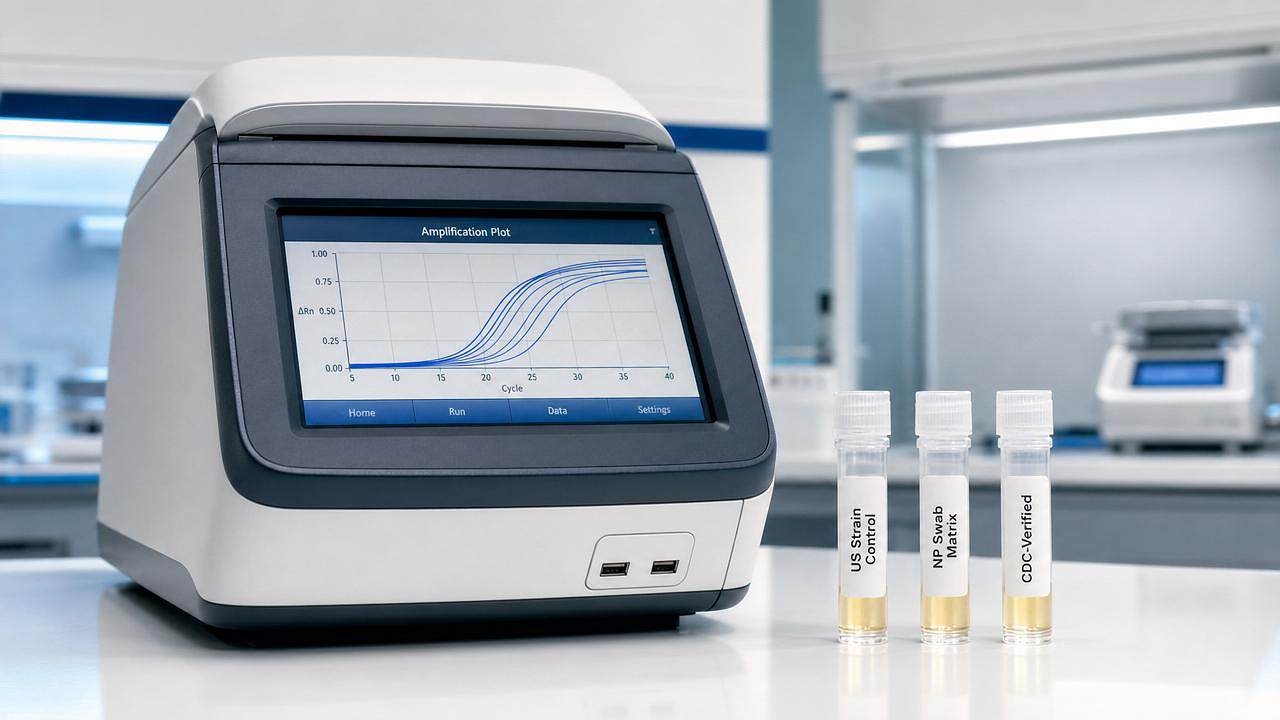




On May 29, 2026, the U.S. Food and Drug Administration (FDA) issued the Supplemental Guidance for Remote Review of IVDs (v3.1), introducing new validation requirements for molecular diagnostic PCR reagents seeking 510(k) or De Novo clearance. The update directly affects in vitro diagnostic manufacturers—particularly those based in China—exporting to the U.S. market, raising clinical verification complexity and regulatory pathway considerations.
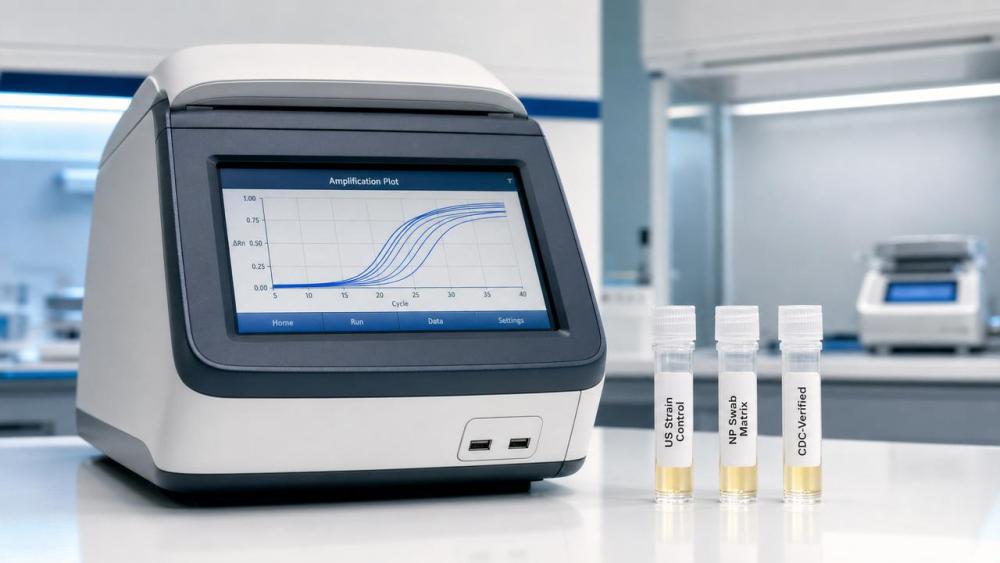
New FDA Requirements for PCR-Based IVD Submissions
The FDA’s updated guidance mandates that all applicants submitting 510(k) or De Novo requests for PCR-based molecular diagnostics must include a validation report using locally sourced positive control samples from the target market (i.e., the United States). This validation must cover three key elements: (1) representation of circulating viral strains relevant to the U.S. population; (2) concentration gradient testing across clinically meaningful ranges; and (3) matrix interference assessment using U.S.-typical specimen types (e.g., nasopharyngeal swabs, whole blood, plasma).
Impact Across the IVD Supply Chain
Export-Oriented Diagnostic Manufacturers
These companies face revised premarket submission timelines and increased resource allocation for U.S.-specific analytical validation. The requirement shifts clinical evidence generation from generic or regional reference materials to geographically anchored controls—effectively adding a localization step prior to FDA review.
Raw Material and Reagent Suppliers
Suppliers of synthetic oligonucleotides, reference standards, and lyophilized controls must now support traceable, U.S.-qualified strain lineages and certified concentration ranges. Demand is rising for reference materials aligned with CDC- or ATCC-sourced isolates and validated in U.S. clinical matrices.
Contract Development and Manufacturing Organizations (CDMOs)
CDMOs engaged in assay development or verification for U.S.-bound PCR kits must integrate local control sourcing and matrix-matched testing into their service scope. Their protocols and quality documentation must explicitly address U.S. strain relevance and interference profiles—not just analytical sensitivity or specificity.
Regulatory and Compliance Service Providers
Consultancies and regulatory affairs firms are updating submission templates, gap assessments, and audit checklists to embed local positive control validation as a non-negotiable prerequisite—not an optional add-on—for FDA remote review readiness.
Key Actions for IVD Exporters
Reassess Preclinical Validation Strategy
Verify whether existing clinical or analytical validation data meets the v3.1 criteria for local strain coverage, concentration linearity, and matrix interference. Retrospective alignment may not be accepted; prospective U.S.-based validation may be required.
Secure U.S.-Qualified Reference Materials Early
Procure or co-develop positive controls derived from current U.S.-circulating strains (e.g., SARS-CoV-2 XBB sublineages, influenza A/H3N2 clades, or common hematologic malignancy fusion transcripts prevalent in U.S. patient cohorts), with full traceability and certificate of analysis.
Update Technical Documentation for FDA Submission
Revise labeling, instructions for use, and technical files to reflect the origin, characterization, and performance specifications of locally validated controls—including stability data under U.S. storage and handling conditions.
Evaluate Impact on Respiratory, Hematologic Oncology, and Antimicrobial Resistance Assays
Given the guidance’s emphasis on pathogen strain relevance and clinical matrix fidelity, assays targeting respiratory viruses, blood-based tumor markers (e.g., BCR-ABL1, JAK2 V617F), and resistance genes (e.g., KRAS G12C, EGFR T790M) require priority reassessment due to high geographic variability in target prevalence and specimen composition.
Industry Observation: Localization Is Becoming a Regulatory Threshold
Analysis shows that the FDA’s move reflects a broader trend toward contextualizing analytical performance within real-world U.S. clinical practice—not just controlled lab environments. It is more appropriate to understand this as a de facto harmonization of verification rigor with epidemiological and diagnostic workflow realities. Observably, this raises the entry requirements for global IVD firms without established U.S. validation infrastructure, potentially extending time-to-market by 4–6 months and increasing pre-submission costs by 20–35% for affected assay categories. What deserves closer attention is how FDA reviewers will interpret “local” — whether it implies domestic U.S. collection, U.S.-licensed biobank sources, or equivalence via sequence homology and functional mimicry.
Strategic Implication for Global IVD Firms
This update signals a maturation of FDA’s remote review framework: regulatory acceptance now hinges not only on assay design and reproducibility but also on demonstrable relevance to the U.S. diagnostic ecosystem. For exporters, it underscores that compliance is no longer solely about meeting technical thresholds—it is about embedding geographic and clinical context into the core of product validation. Proactive alignment with U.S. reference standards and early engagement with U.S.-based clinical labs or biorepositories will increasingly define competitive advantage in the IVD export landscape.
Source Information and Verification Notes
This article is generated exclusively from the provided input: title, event date (May 29, 2026), and summary description. Specific official source links were not provided in the input and should be verified continuously. Stakeholders are advised to monitor FDA’s official guidance portal, updates to the IVDR Guidance Series, public docket comments on Docket No. FDA-2026-N-1287 (if assigned), and emerging interpretations from accredited third-party reviewers and U.S. regulatory consultants. Continued observation is warranted for implementation clarifications, enforcement discretion policies, and potential extensions to other molecular modalities (e.g., digital PCR, NGS-based assays).
Recommended News
 Aug 28, 2026Planning Operating Room Technology for a High-Throughput Surgery CenterOperating room technology for a surgery center: plan workflows, integration, uptime, and safety to boost throughput and create future-ready surgical rooms.
 Aug 27, 2026Building Medical Compliance Analytics for Middle East Market AccessMedical compliance analytics Middle East: build device-specific evidence maps, align local requirements, and accelerate market access with confidence.
 Aug 26, 2026How Surgical Equipment Digitalization Is Reshaping Hospital Investment in Latin AmericaSurgical equipment digitalization Latin America is reshaping hospital investment, from smart ORs to ROI-driven upgrades. Explore what buyers now value most.
 Aug 25, 2026How to Evaluate a Medical Compliance Intelligence Provider for Global Market AccessMedical compliance intelligence provider selection can make or break global market access. Learn how to assess technical depth, update quality, and commercial fit before choosing.
 Aug 24, 2026How Advanced Clinical Imaging Is Improving Cardiology Diagnosis and Treatment PlanningAdvanced clinical imaging cardiology is transforming diagnosis and treatment planning with clearer anatomy, tissue insight, and procedural guidance. Discover how it reduces uncertainty and supports smarter cardiac decisions.
 Aug 23, 2026How to Source Medical Devices in North America: Supplier Vetting and Market Access RisksMedical device sourcing North America made practical: learn how to vet suppliers, reduce compliance risks, and protect market access with smarter procurement decisions.
 Aug 22, 2026What Are Integrated Critical Care Systems and How Do Hospitals Evaluate Them?Critical care systems integrated: learn how hospitals assess ICU platforms for interoperability, alarm safety, workflow efficiency, and long-term value before buying.
 Aug 21, 2026How to Evaluate High-Resolution Diagnostic Imaging Systems for Detail-Critical ExamsDiagnostic imaging systems high resolution: learn how to compare detail-critical performance, workflow fit, dose efficiency, and ROI to choose the right system with confidence.
 Aug 20, 2026How to Evaluate Medical Equipment Performance Before Purchase?Medical equipment evaluation performance starts before purchase. Learn how to assess safety, workflow fit, compliance, uptime, and total cost to choose devices that truly perform.
 Aug 19, 2026How to Evaluate Small-Footprint Laboratory Diagnostic Equipment for Space-Limited LabsLaboratory diagnostic equipment small footprint choices require more than size checks. Learn how to assess workflow, throughput, compliance, and service access for smarter lab buying.
 Aug 18, 2026Biochemical Molecular Diagnostics Explained: Methods, Clinical Uses, and Lab Selection CriteriaBiochemical molecular diagnostics explained: compare key methods, clinical applications, and lab selection criteria to choose reliable, compliant testing with confidence.
 Aug 17, 2026How to Choose Diagnostic Equipment Solutions for a Clinic: Key Factors That Affect Workflow and CostDiagnostic equipment solutions clinic buyers can use to improve workflow, control total cost, and avoid hidden service risks. Learn the key factors before you invest.
 Aug 16, 2026How to Choose a Blood Cell Analyzer for a Small Lab: Throughput, CBC Menu, and CostBlood cell analyzers small lab buyers can compare throughput, CBC menu, and total operating cost with confidence. Learn how to avoid waste, reduce downtime, and choose the right fit.
 Aug 16, 2026FDA Approval of AMDS Hybrid Prosthesis Removes IRB Step for Faster U.S. AccessFDA approval of AMDS Hybrid Prosthesis removes the IRB step, speeding U.S. access for acute aortic dissection care and reshaping hospital procurement and supporting equipment demand.
 Aug 15, 2026What Hospital Technology Infrastructure Is Needed for Reliable Interoperability?Hospital technology infrastructure interoperability depends on secure networks, integration engines, identity services, and governance. Discover what hospitals need for reliable, scalable connectivity.
 Aug 14, 2026What to Look for in an Advanced Diagnostic Systems Distributor Before You BuyAdvanced diagnostic systems distributor: learn what to check before buying, from compliance and technical depth to delivery reliability and after-sales support. Make a smarter procurement decision today.
 Aug 14, 2026China Temporarily Bans Helium ExportsChina Temporarily Bans Helium Exports: learn how the July 10, 2026 rule may disrupt MRI, ECMO, and anesthesia device supply chains, compliance, and delivery planning for global buyers.
 Aug 13, 2026How CT Reconstruction Technology Impacts Image Quality, Dose, and WorkflowMedical imaging reconstruction technology CT shapes image quality, dose, and workflow. Learn how smarter CT reconstruction improves diagnostics and efficiency.
 Aug 13, 2026FDA clears AMDS PMA, easing U.S. hospital accessFDA clears AMDS PMA, easing U.S. hospital access for Artivion’s aortic arch device and speeding procurement, compliance, and deployment.
 Aug 12, 2026Hospital Diagnostic Equipment Comparison: What Buyers Should Evaluate Beyond PriceDiagnostic equipment comparison hospital buyers can trust: learn how to evaluate clinical performance, uptime, compliance, integration, and long-term ROI beyond price.
 Aug 12, 2026FDA Draft Guidance Reshapes AI Device ComplianceFDA Draft Guidance reshapes AI device compliance with new postmarket monitoring expectations for AI/ML-enabled SaMD. Learn what it means for U.S. market access, distributors, and exporters.
 Aug 11, 2026How to Evaluate a Diagnostic Medical Systems Manufacturer for Quality and Market AccessDiagnostic medical systems manufacturer selection starts with more than specs. Learn how to assess quality systems, regulatory readiness, service uptime, and market access before you buy.
 Aug 11, 2026EU MDR Deadline Extended for ECMO and ICU DevicesEU MDR deadline extended for ECMO and ICU devices to 2027. Learn what Regulation (EU) 2026/1347 means for compliance, exports, procurement, and roadmap filing.
 Aug 10, 2026How to Evaluate Laboratory Automation Systems in Europe for Multi-Site Lab OperationsLaboratory automation systems Europe buyers can use this guide to compare interoperability, compliance, service coverage, and ROI for multi-site lab operations with confidence.














Related News
- 00
0000-00
Planning Operating Room Technology for a High-Throughput Surgery Center - 00
0000-00
Building Medical Compliance Analytics for Middle East Market Access - 00
0000-00
How Surgical Equipment Digitalization Is Reshaping Hospital Investment in Latin America - 00
0000-00
How to Evaluate a Medical Compliance Intelligence Provider for Global Market Access - 00
0000-00
How Advanced Clinical Imaging Is Improving Cardiology Diagnosis and Treatment Planning
Weekly Insights
Stay ahead with our curated technology reports delivered every Monday.