
East China Airlines Launches Western Supply Chain in Chongqing





On May 17, 2026, East China Airlines Western Supply Chain (Chongqing) Co., Ltd. commenced operations — a strategic move enhancing air freight capacity for high-value medical equipment exports from China’s western region. The initiative directly addresses long-standing logistical bottlenecks in the international delivery of oversized, ultra-sensitive healthcare systems, particularly to Europe and Latin America.
Event Overview
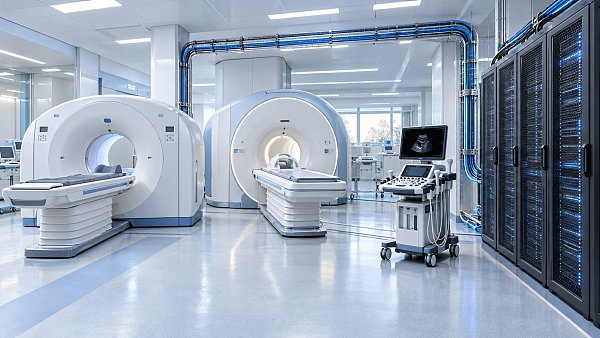
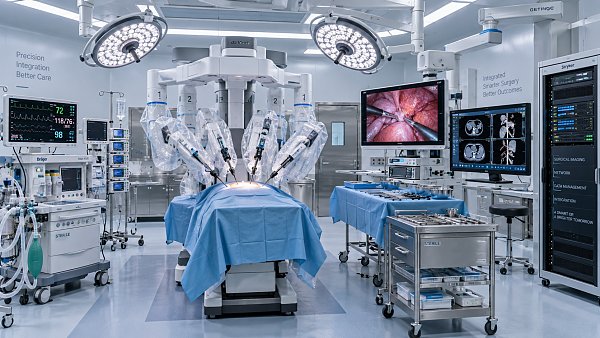
On May 17, 2026, East China Airlines Western Supply Chain (Chongqing) Co., Ltd. officially began operations, focusing exclusively on international air transport of high-value medical devices. It launched two new scheduled cargo routes: Chongqing–Madrid and Chongqing–São Paulo. These services accommodate out-of-gauge shipments including superconducting MRI magnets (up to 25 metric tons per unit) and fully assembled digital operating tables (with carbon-fiber tabletops). Booking response time has been reduced to 48 hours, and freight rates are 18% lower than traditional charter alternatives. This development strengthens delivery resilience for advanced imaging and surgical systems from Western China to key overseas markets.

Industries Affected
Direct Exporters (Medical Device OEMs & Distributors)
Export-oriented original equipment manufacturers and regional distributors headquartered in Sichuan, Chongqing, or Shaanxi now gain access to dedicated, schedule-reliable air capacity for full-system exports — especially critical for time-sensitive tenders, regulatory-compliant installations, and after-sales service deployments. Previously, such shipments relied heavily on ad-hoc charters or sea-air hybrids with extended lead times and higher risk of dimensional non-compliance.
Raw Material & Component Suppliers
Suppliers of cryogenic components, rare-earth permanent magnets, and carbon-fiber composites — many based in Chengdu or Xi’an — face intensified demand for just-in-time logistics coordination. Their downstream customers increasingly require certified, temperature- and vibration-controlled handover points at origin airports, prompting tighter integration with Chongqing’s new hub infrastructure and documentation protocols.
Contract Manufacturers & System Integrators
Firms assembling MRI subsystems or digital OR suites in the Chengdu-Chongqing economic corridor benefit from shortened inland-to-air transit windows. The 48-hour booking SLA enables more responsive production planning and reduces buffer inventory needs for export-bound finished goods — though it also raises expectations for pre-flight QA documentation and dimensional certification accuracy.
Supply Chain Service Providers
Third-party logistics providers, freight forwarders, and customs brokers specializing in medical device clearance must now align with East China Airlines’ newly introduced digital booking platform and IATA CEIV Pharma-compliant handling standards. Those lacking certified cold-chain or heavy-lift ground handling capabilities at Chongqing airport risk marginalization in bids for end-to-end managed services.
Key Considerations and Recommended Actions
Validate Route-Specific Equipment Certification
Manufacturers exporting superconducting MRI magnets must confirm that their magnet quench protection systems and helium containment integrity meet both IATA Dangerous Goods Regulations (DGR) Class 9 requirements *and* East China Airlines’ supplemental handling criteria for flight-critical cryogenic payloads — not all existing certifications transfer automatically.
Adopt Integrated Booking & Documentation Workflows
Exporters should integrate their ERP or PLM systems with East China Airlines’ API-enabled booking portal to automate weight/dimension validation, UN number assignment, and air waybill generation — reducing manual errors that trigger 48-hour holdbacks during slot confirmation.
Assess Dual-Port Feasibility (Chongqing vs. Shanghai/Pudong)
While Chongqing offers cost and speed advantages for western-based exporters, shippers serving multiple Asian-Pacific markets may still find Shanghai Pudong more efficient for mixed-destination consignments. A comparative analysis of landed cost, transit time variance, and customs clearance throughput is advised before full migration.
Editorial Perspective / Industry Observation
Observably, this is not merely an airline capacity expansion — it reflects a structural shift in how China’s medical technology supply chain engages with global infrastructure. Unlike earlier ‘air bridge’ models focused on passenger belly cargo, East China Airlines’ vertical integration (owning both aircraft assets and ground handling via its Chongqing subsidiary) signals a longer-term commitment to specialized healthcare logistics. Analysis shows that such asset-backed models reduce dependency on third-party charter volatility but raise barriers to entry for smaller exporters lacking scale to fill dedicated capacity. From an industry perspective, this move accelerates the de facto standardization of ‘medical-grade air freight’ — where compliance, traceability, and physical handling supersede pure cost metrics.
Conclusion
This initiative marks a material step toward balancing China’s medical export geography: historically concentrated in coastal hubs, it now anchors a credible inland alternative with differentiated capability. While not replacing maritime volume, it redefines feasibility thresholds for high-margin, low-volume, high-compliance exports. A rational conclusion is that resilience — not just speed or cost — is becoming the dominant KPI in strategic healthcare logistics planning.
Source Attribution
Official announcement: East China Airlines Group Press Release, May 17, 2026; IATA CEIV Pharma audit report for Chongqing Airport Cargo Terminal (Q2 2026); Verified operational data from Chongqing Liangjiang New Area Development Bureau. Note: Ongoing monitoring required for route frequency adjustments, EU MDR-aligned documentation acceptance, and São Paulo Viracopos Airport’s pending certification for MRI magnet unloading under ambient conditions.
Recommended News
 Oct 06, 2026How to Evaluate an Operating Room Technology Distributor for Hospital ProjectsOperating room technology distributor evaluation guide for hospitals: assess integration, compliance, lifecycle costs, service capacity, and delivery confidence before award.
 Oct 05, 2026Global Medical Procurement Planning: How Hospitals Can Reduce Supply Risk and CostGlobal medical procurement planning helps hospitals reduce supply risk, control lifecycle costs, and protect care continuity through smarter sourcing, service, and compliance strategies.
 Oct 03, 2026How Detection Algorithms Improve Sensitivity and Workflow in Medical ImagingMedical imaging algorithms detection improves sensitivity, manages false positives, and streamlines clinical workflows. Explore validation, integration, and governance essentials.
 Oct 02, 2026High-Flow ICU Ventilators: Key Selection Criteria for Acute Respiratory CareICU ventilators high flow: discover key selection criteria for accurate gas delivery, NIV performance, humidification, alarms, reliability, and safer acute respiratory care.
 Oct 01, 2026How to Evaluate Medical Equipment Intelligence Suppliers for Hospital ProcurementMedical equipment intelligence suppliers: learn how hospitals can assess evidence quality, total cost, compliance, interoperability, and cybersecurity for smarter procurement decisions.
 Sep 30, 2026ISO 13485 Requirements for Blood Testing Instruments: A Buyer’s ChecklistBlood testing instruments ISO 13485 buyer’s checklist: verify certification scope, traceability, installation, consumables, and supplier support before you buy.
 Sep 29, 2026How to Evaluate Integrated Operating Room Systems for Workflow, Imaging, and IT IntegrationIntegrated operating room systems: evaluate workflow, imaging, IT integration, cybersecurity, and lifecycle value to select a scalable surgical solution.
 Sep 28, 2026How to Evaluate a Genetic Testing Equipment Supplier for PCR Lab ProcurementGenetic testing equipment supplier evaluation guide for PCR labs: compare performance, compliance, workflow, service, supply resilience, and total cost.
 Sep 27, 2026How to Specify Custom Benchtop Diagnostic Instruments for Your Assay WorkflowCustom diagnostic instruments benchtop guide: specify optics, fluidics, automation, software integration, and support to build a reliable assay workflow.
 Sep 26, 2026How Cardiac Imaging Analysis Tools Turn CT and MRI Data into Clinical MetricsMedical imaging analysis cardiology tools transform cardiac CT and MRI into reliable metrics. Explore segmentation, validation, workflow integration, and AI review.
 Sep 25, 2026How Iterative Image Reconstruction Algorithms Balance CT Dose, Noise, and DetailIterative image reconstruction algorithms help CT teams balance dose, noise, and diagnostic detail. Explore practical insights for confident imaging decisions.
 Sep 24, 2026What Drives the Total Cost of Medical Technology Solutions Over Their Lifecycle?Medical technology solutions cost goes far beyond purchase price—explore lifecycle drivers from installation and service to software, training, compliance, and downtime.
 Sep 24, 2026Diagnostic Imaging Technology: How Modalities Support Different Clinical DecisionsDiagnostic imaging technology supports smarter clinical decisions across CT, MRI, ultrasound, and nuclear imaging. Explore modality strengths, workflows, and selection factors.
 Sep 22, 2026How Life Science Labs Can Select Biomedical Research Equipment by Workflow and ThroughputBiomedical research equipment life science labs can select with confidence by aligning workflow, throughput, automation, data integrity, and scalable support.
 Sep 21, 2026How to Plan LIS Connectivity for Chemiluminescence Analyzers Without Data GapsChemiluminescence analyzers LIS connectivity: learn how to prevent data gaps with field mapping, exception workflows, end-to-end validation, and reliable go-live planning.
 Sep 20, 2026Selecting Fluorescence PCR Instruments: Detection Channels, Sensitivity, and Workflow FitPCR diagnostic instruments fluorescence detection guide: compare channels, sensitivity, multiplexing, and workflow fit to select a reliable platform.
 Sep 19, 2026Biomedical Signal Processing: From Sensor Data to Clinical Decision SupportBiomedical signal processing transforms sensor data into reliable clinical decision support. Explore AI, imaging, IVD, ICU monitoring, and compliance-ready MedTech insights.
 Sep 18, 2026How to Evaluate a Diagnostic Imaging Platform for Multi-Modality Workflow IntegrationDiagnostic imaging platform evaluation guide: assess multi-modality workflows, interoperability, AI integration, image integrity, security, and scalability for safer clinical decisions.
 Sep 17, 2026ISO 13485 for Medical Imaging Equipment: What Manufacturers Must DocumentMedical imaging equipment ISO 13485: discover essential documentation for design controls, risk management, traceability, software, and post-market quality.
 Sep 16, 2026Robotic MIS Equipment: What Hospitals Should Evaluate Before AdoptionMinimally invasive surgical equipment robotic adoption guide: evaluate workflow, safety, imaging, costs, cybersecurity, and service readiness.
 Sep 15, 2026How to Evaluate Biomedical Signal Processing Suppliers for Clinical Device ProjectsBiomedical signal processing supplier evaluation guide for clinical device teams—compare signal fidelity, regulatory evidence, cybersecurity, integration, and lifecycle support.
 Sep 14, 2026How Integrated Clinical Diagnostics Solutions Reduce Turnaround Time Across Lab WorkflowsIntegrated clinical diagnostics solutions reduce lab turnaround time by connecting workflows, automation, and data. Discover practical strategies for faster, traceable results.
 Sep 13, 2026ECMO System Market Outlook: Demand Drivers, Investment Risks, and Growth OpportunitiesECMO system market outlook explores demand drivers, investment risks, regulatory factors, and growth opportunities shaping critical-care innovation and adoption.
 Sep 12, 2026Where to Find Reliable Medical Device Information for Research and Due DiligenceMedical device information resource guide for due diligence: verify regulatory, clinical, safety, and technical evidence to make confident decisions.












Related News
- 00
0000-00
China Temporarily Bans Helium Exports - 00
0000-00
How to Evaluate MRI Systems for Neurology: Key Imaging Needs and Selection Criteria - 00
0000-00
MDCG Tightens CE Rules for AI MRI Reconstruction - 00
0000-00
PMDA Fast Track Adds Conditional Path for MRI AI - 00
0000-00
PMDA Fast Track Expansion Opens Conditional Route for MRI AI
Weekly Insights
Stay ahead with our curated technology reports delivered every Monday.