
Philippines FDA Launches Capsule Endoscopy Fast Track
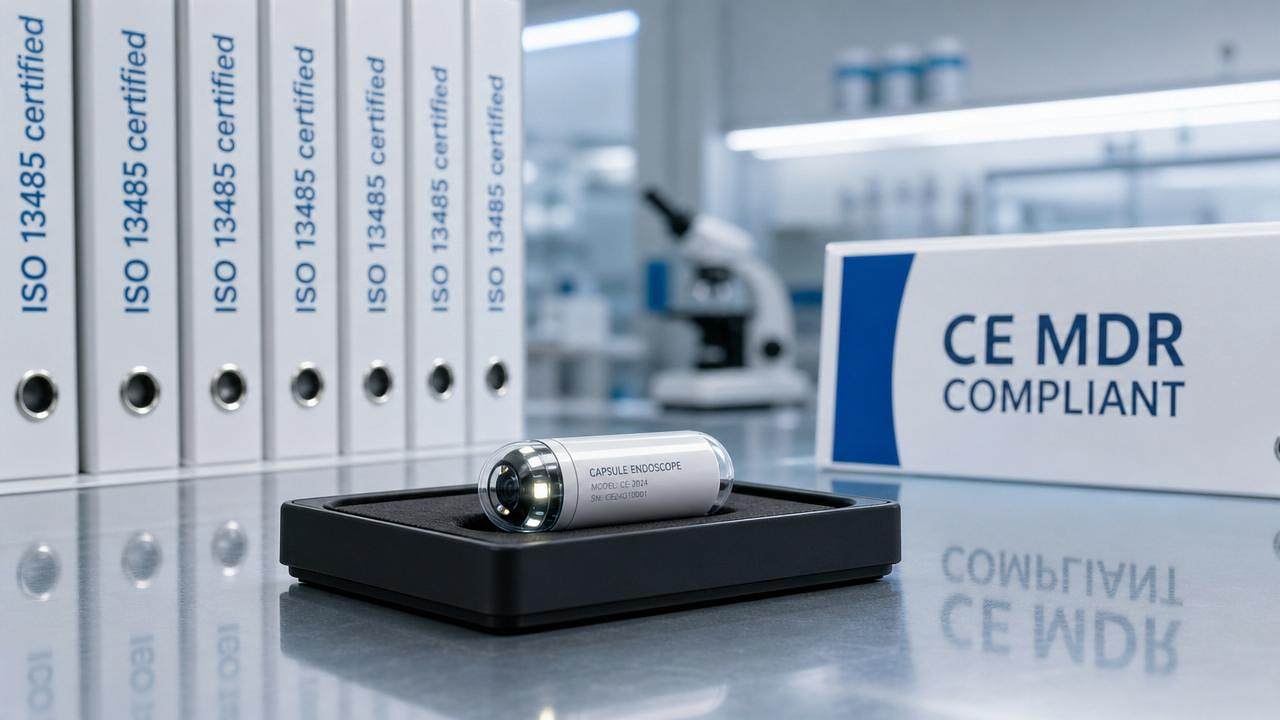




On May 21, 2026, the Philippines Food and Drug Administration (FDA) launched a dedicated fast-track pathway for capsule endoscopes — cutting registration review to five working days and customs clearance to under 72 hours. The move directly impacts medical device exporters, particularly those in China supplying the Philippine market, and signals a strategic tightening of regulatory gatekeeping: speed is now conditional on verified quality infrastructure.
Event Overview
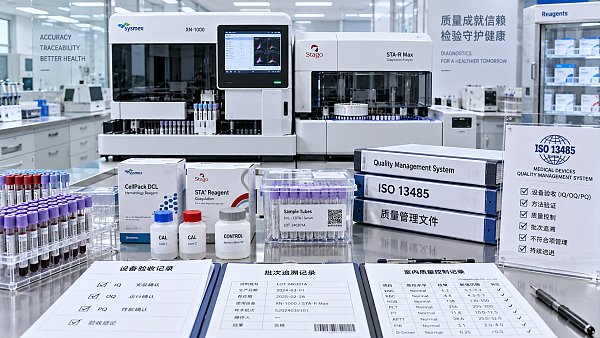
The Philippines FDA announced on May 21, 2026, the implementation of a Capsule Endoscopes Specialized Fast Review Channel. Under this channel, regulatory registration approval is reduced to five working days, and customs release is accelerated to within 72 hours. Applicants must simultaneously submit a valid ISO 13485 quality management system certificate and a CE MDR conformity declaration, including the Notified Body identification number. No exceptions or transitional allowances are specified in the official announcement.

Industries Affected
Direct Exporters (Trade Enterprises): These firms face immediate operational bifurcation — those holding both ISO 13485 and CE MDR documentation gain significant time-to-market advantage (up to 8–12 weeks faster than standard route), while non-compliant exporters are effectively locked out of the fast track and may experience de facto market exclusion if competitors dominate shelf space and hospital tenders via expedited entry.
Raw Material & Component Suppliers: Though not directly regulated under this policy, suppliers serving Chinese capsule endoscope manufacturers now face upstream pressure to align with ISO 13485-aligned traceability, documentation, and change-control practices — especially for critical components (e.g., CMOS image sensors, biocompatible capsules, RF transmitters). Absent such alignment, their customers risk audit findings during ISO 13485 surveillance or CE technical file verification.
Contract Manufacturers & OEM/ODM Producers: Entities producing devices for branded exporters must ensure their own ISO 13485 certification explicitly covers capsule endoscope design, assembly, and sterilization (if applicable). The CE MDR declaration requirement further implies that their production processes must support full technical documentation — including clinical evaluation reports, UDI assignment, and post-market surveillance plans — even when acting solely as contract assemblers.
Regulatory & Logistics Service Providers: Third-party regulatory consultants and freight forwarders specializing in ASEAN medical device clearance must now integrate dual-certificate validation into pre-submission checks. Customs brokers will increasingly be asked to verify CE MDR Notified Body numbers against EU NANDO database prior to filing — adding a new layer of due diligence before cargo arrival.
Key Focus Areas and Recommended Actions
Verify Certificate Validity and Scope Alignment
ISO 13485 certificates must be issued by an accreditation body recognized by the Philippines FDA (e.g., ANAB, UKAS, DAkkS); scope must explicitly include ‘capsule endoscopes’ or ‘ingestible diagnostic devices’. CE MDR declarations must cite a Notified Body listed under Regulation (EU) 2017/745 and include a valid certificate number — self-declarations or legacy MDD certificates are insufficient.
Update Technical Documentation for Philippine Submission
While CE MDR compliance satisfies one pillar, Philippine FDA still requires local-language labeling, product specifications, and risk analysis tailored to local clinical use conditions (e.g., tropical storage, power stability). Firms should treat the fast-track application not as a formality, but as a trigger for full dossier localization — including translation of IFUs and validation of humidity-resistant packaging claims.
Assess Supply Chain Certification Gaps
Manufacturers should map ISO 13485 coverage across Tier-1 and Tier-2 suppliers — especially for printed circuit boards, wireless modules, and encapsulation resins. Gaps here may invalidate the manufacturer’s own ISO 13485 scope during FDA inquiry or post-clearance inspection.
Editorial Perspective / Industry Observation
Observably, the Philippines FDA is modeling its approach after Singapore’s HSA and Thailand’s TFDA — using procedural acceleration not to lower standards, but to concentrate oversight on verifiable compliance. Analysis shows this reflects a broader ASEAN trend: regulators are shifting from ‘paper-based equivalence’ to ‘evidence-based readiness’. The 72-hour clearance window isn’t just about logistics; it presumes real-time access to certified data — making digital regulatory intelligence (e.g., e-dossiers, blockchain-tracked audits) increasingly strategic, not optional.
Conclusion
This fast-track initiative does not simplify market access — it redefines competitiveness. Speed is now inseparable from systemic compliance. For Chinese exporters, success hinges less on cost or feature differentiation, and more on demonstrable, auditable integration of quality systems across the entire value chain. The policy is better understood not as a concession, but as a calibration: rewarding maturity, exposing fragmentation.
Source Attribution
Official notice published on the Philippines FDA website (www.fda.gov.ph) under Advisory No. 2026-017, dated May 21, 2026. CE MDR requirements cross-referenced with European Commission NANDO database (ec.europa.eu/nando) and MDCG 2022-18 guidance. Note: Implementation details for third-country manufacturer representation (e.g., Philippine Authorized Representative obligations) remain pending clarification — ongoing monitoring advised.
Recommended News
 Oct 06, 2026How to Evaluate an Operating Room Technology Distributor for Hospital ProjectsOperating room technology distributor evaluation guide for hospitals: assess integration, compliance, lifecycle costs, service capacity, and delivery confidence before award.
 Oct 05, 2026Global Medical Procurement Planning: How Hospitals Can Reduce Supply Risk and CostGlobal medical procurement planning helps hospitals reduce supply risk, control lifecycle costs, and protect care continuity through smarter sourcing, service, and compliance strategies.
 Oct 03, 2026How Detection Algorithms Improve Sensitivity and Workflow in Medical ImagingMedical imaging algorithms detection improves sensitivity, manages false positives, and streamlines clinical workflows. Explore validation, integration, and governance essentials.
 Oct 02, 2026High-Flow ICU Ventilators: Key Selection Criteria for Acute Respiratory CareICU ventilators high flow: discover key selection criteria for accurate gas delivery, NIV performance, humidification, alarms, reliability, and safer acute respiratory care.
 Oct 01, 2026How to Evaluate Medical Equipment Intelligence Suppliers for Hospital ProcurementMedical equipment intelligence suppliers: learn how hospitals can assess evidence quality, total cost, compliance, interoperability, and cybersecurity for smarter procurement decisions.
 Sep 30, 2026ISO 13485 Requirements for Blood Testing Instruments: A Buyer’s ChecklistBlood testing instruments ISO 13485 buyer’s checklist: verify certification scope, traceability, installation, consumables, and supplier support before you buy.
 Sep 29, 2026How to Evaluate Integrated Operating Room Systems for Workflow, Imaging, and IT IntegrationIntegrated operating room systems: evaluate workflow, imaging, IT integration, cybersecurity, and lifecycle value to select a scalable surgical solution.
 Sep 28, 2026How to Evaluate a Genetic Testing Equipment Supplier for PCR Lab ProcurementGenetic testing equipment supplier evaluation guide for PCR labs: compare performance, compliance, workflow, service, supply resilience, and total cost.
 Sep 27, 2026How to Specify Custom Benchtop Diagnostic Instruments for Your Assay WorkflowCustom diagnostic instruments benchtop guide: specify optics, fluidics, automation, software integration, and support to build a reliable assay workflow.
 Sep 26, 2026How Cardiac Imaging Analysis Tools Turn CT and MRI Data into Clinical MetricsMedical imaging analysis cardiology tools transform cardiac CT and MRI into reliable metrics. Explore segmentation, validation, workflow integration, and AI review.
 Sep 25, 2026How Iterative Image Reconstruction Algorithms Balance CT Dose, Noise, and DetailIterative image reconstruction algorithms help CT teams balance dose, noise, and diagnostic detail. Explore practical insights for confident imaging decisions.
 Sep 24, 2026What Drives the Total Cost of Medical Technology Solutions Over Their Lifecycle?Medical technology solutions cost goes far beyond purchase price—explore lifecycle drivers from installation and service to software, training, compliance, and downtime.
 Sep 24, 2026Diagnostic Imaging Technology: How Modalities Support Different Clinical DecisionsDiagnostic imaging technology supports smarter clinical decisions across CT, MRI, ultrasound, and nuclear imaging. Explore modality strengths, workflows, and selection factors.
 Sep 22, 2026How Life Science Labs Can Select Biomedical Research Equipment by Workflow and ThroughputBiomedical research equipment life science labs can select with confidence by aligning workflow, throughput, automation, data integrity, and scalable support.
 Sep 21, 2026How to Plan LIS Connectivity for Chemiluminescence Analyzers Without Data GapsChemiluminescence analyzers LIS connectivity: learn how to prevent data gaps with field mapping, exception workflows, end-to-end validation, and reliable go-live planning.
 Sep 20, 2026Selecting Fluorescence PCR Instruments: Detection Channels, Sensitivity, and Workflow FitPCR diagnostic instruments fluorescence detection guide: compare channels, sensitivity, multiplexing, and workflow fit to select a reliable platform.
 Sep 19, 2026Biomedical Signal Processing: From Sensor Data to Clinical Decision SupportBiomedical signal processing transforms sensor data into reliable clinical decision support. Explore AI, imaging, IVD, ICU monitoring, and compliance-ready MedTech insights.
 Sep 18, 2026How to Evaluate a Diagnostic Imaging Platform for Multi-Modality Workflow IntegrationDiagnostic imaging platform evaluation guide: assess multi-modality workflows, interoperability, AI integration, image integrity, security, and scalability for safer clinical decisions.
 Sep 17, 2026ISO 13485 for Medical Imaging Equipment: What Manufacturers Must DocumentMedical imaging equipment ISO 13485: discover essential documentation for design controls, risk management, traceability, software, and post-market quality.
 Sep 16, 2026Robotic MIS Equipment: What Hospitals Should Evaluate Before AdoptionMinimally invasive surgical equipment robotic adoption guide: evaluate workflow, safety, imaging, costs, cybersecurity, and service readiness.
 Sep 15, 2026How to Evaluate Biomedical Signal Processing Suppliers for Clinical Device ProjectsBiomedical signal processing supplier evaluation guide for clinical device teams—compare signal fidelity, regulatory evidence, cybersecurity, integration, and lifecycle support.
 Sep 14, 2026How Integrated Clinical Diagnostics Solutions Reduce Turnaround Time Across Lab WorkflowsIntegrated clinical diagnostics solutions reduce lab turnaround time by connecting workflows, automation, and data. Discover practical strategies for faster, traceable results.
 Sep 13, 2026ECMO System Market Outlook: Demand Drivers, Investment Risks, and Growth OpportunitiesECMO system market outlook explores demand drivers, investment risks, regulatory factors, and growth opportunities shaping critical-care innovation and adoption.
 Sep 12, 2026Where to Find Reliable Medical Device Information for Research and Due DiligenceMedical device information resource guide for due diligence: verify regulatory, clinical, safety, and technical evidence to make confident decisions.







Related News
- 00
0000-00
Endoscopic Imaging Technology in GI Diagnosis: Key Features and Common Image Quality Issues - 00
0000-00
ITC Opens 337 Probe Into Smart Medical Device Patents - 00
0000-00
FDA AI Capsule Rule Requires Clinical Evidence - 00
0000-00
Philippines FDA Launches Capsule Endoscopy Fast Track - 00
0000-00
Philippines FDA Launches Priority Review for Capsule Endoscopes
Weekly Insights
Stay ahead with our curated technology reports delivered every Monday.