
What healthcare intelligence reveals before buying equipment
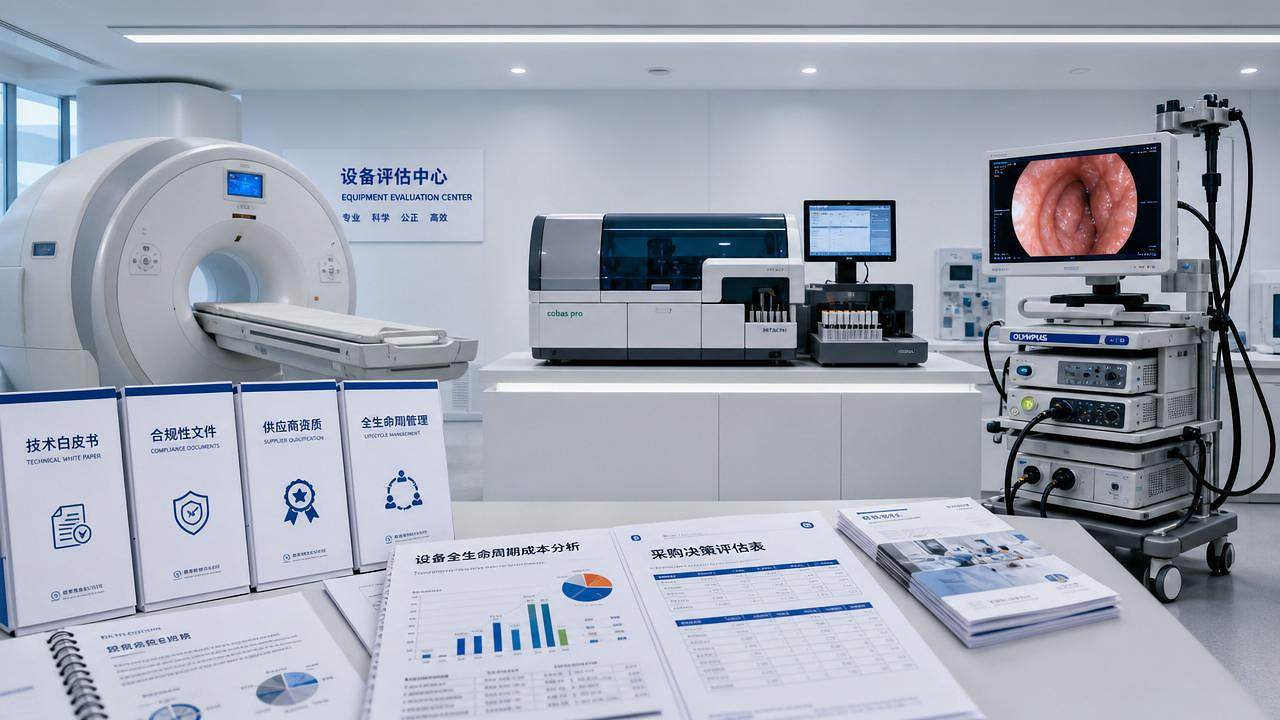




Before capital equipment decisions are signed, healthcare intelligence exposes facts that product brochures rarely show.
It clarifies clinical fit, regulatory exposure, service continuity, ownership cost, and expected financial return across imaging, IVD, life support, operating room, and endoscopy systems.
In modern healthcare, procurement success depends on evidence, not marketing language.
That is why healthcare intelligence has become essential for comparing complex technologies under strict safety, compliance, and reimbursement pressures.
What does healthcare intelligence really mean before buying equipment?
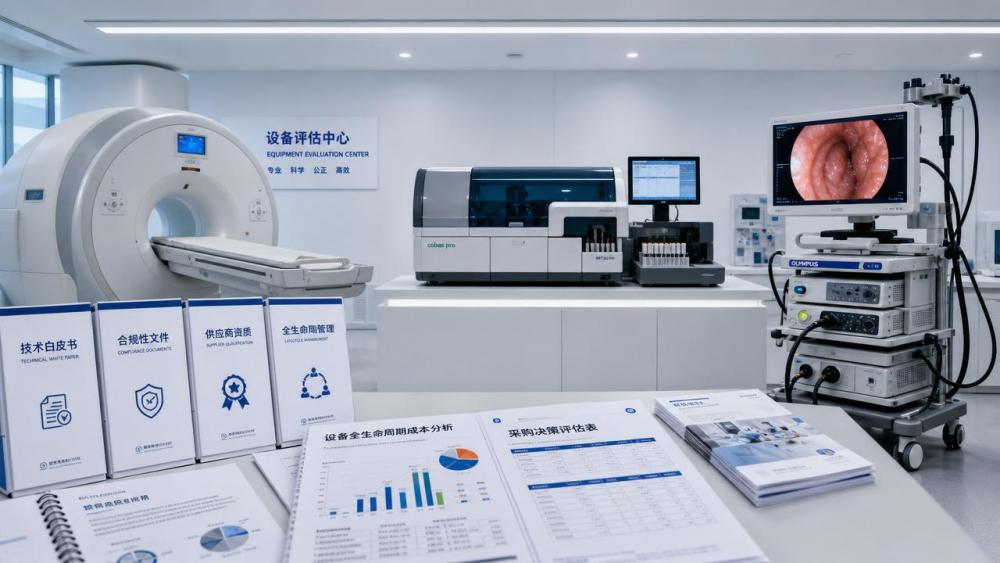
Healthcare intelligence is structured decision evidence collected before procurement.
It combines technical validation, clinical workflow analysis, market access review, service capability, utilization forecasting, and financial modeling.
For large medical systems, this intelligence reduces uncertainty hidden behind specifications and sales promises.
A scanner may advertise resolution, yet healthcare intelligence asks whether image quality remains consistent across real patient volumes and mixed case complexity.
An IVD platform may claim fast throughput, yet healthcare intelligence checks assay menu relevance, reagent stability, calibration burden, and downtime history.
For ventilators or ECMO, intelligence goes further into alarm logic, backup availability, spare parts, and training adequacy.
In practice, healthcare intelligence answers five hidden questions:
- Does the equipment fit actual clinical demand?
- Can it pass market and hospital compliance reviews?
- What will it truly cost over its lifecycle?
- Will service support remain dependable after installation?
- Can the investment create measurable operational value?
Without these answers, buying decisions often rely on list prices and feature sheets alone.
How does healthcare intelligence reveal clinical fit beyond specifications?
Clinical fit is the first test of value.
Healthcare intelligence studies whether a device supports real diagnostic or treatment pathways, not ideal showroom conditions.
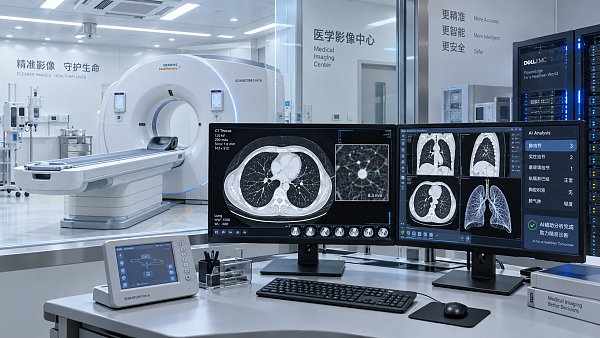
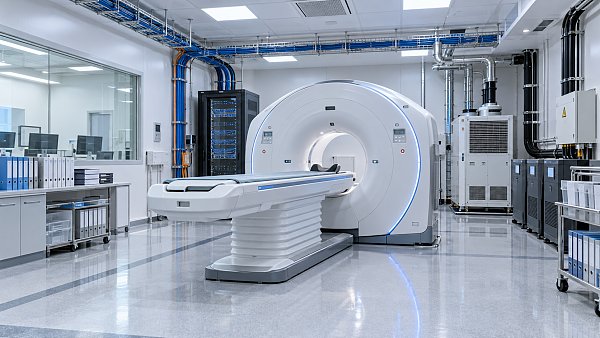
In medical imaging, that means checking patient mix, scan duration, workflow bottlenecks, and reconstruction performance during peak demand.
A high-end MRI may be impressive, but poor scheduling alignment can leave capacity underused.
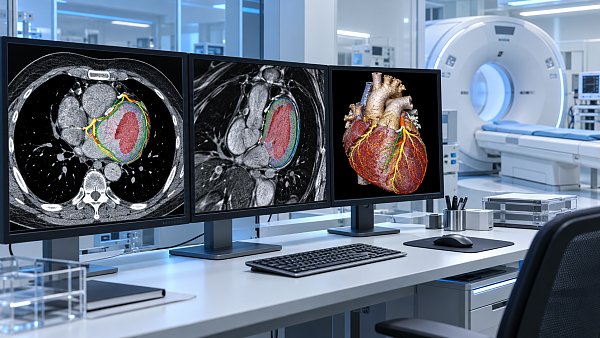
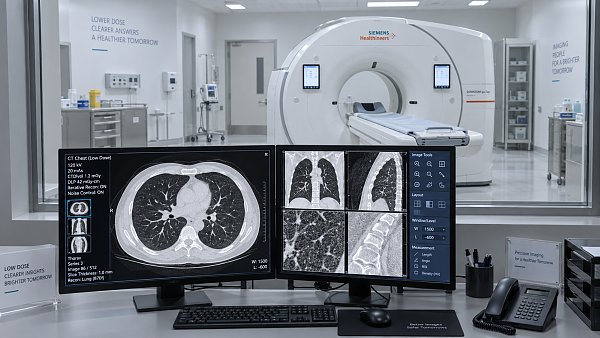
For CT, intelligence should review emergency throughput, cardiac capability, dose management, and post-processing requirements.
In IVD, healthcare intelligence compares test menu breadth, random access speed, contamination controls, and compatibility with expected sample volumes.
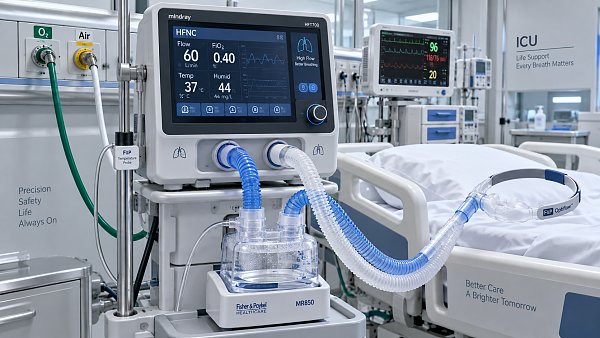
For life support systems, clinical fit includes response time, reliability under long use cycles, and compatibility with ICU protocols.
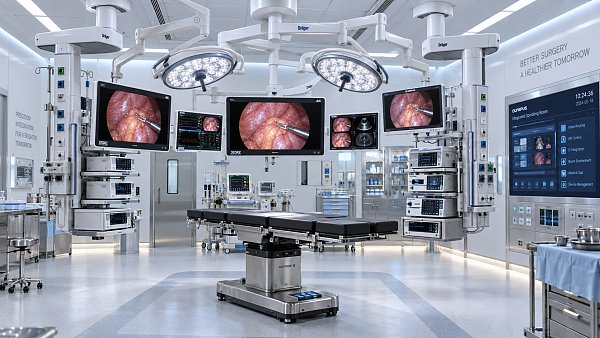
Operating room equipment must support positioning accuracy, cleaning standards, and procedural continuity between different specialties.
Endoscopy systems require image clarity, ergonomic control, reprocessing practicality, and integration with minimally invasive workflows.
Useful healthcare intelligence therefore looks at scenarios such as:
- High outpatient imaging volumes
- Emergency diagnosis windows
- Complex ICU rescue cases
- Back-to-back surgeries
- Minimally invasive procedural expansion
If the equipment does not match these scenarios, even premium technology may perform below expectations.
Why is compliance risk one of the most important signals in healthcare intelligence?
Compliance failures can destroy value faster than technical shortcomings.
Healthcare intelligence reviews approval pathways, labeling accuracy, clinical evidence strength, cybersecurity obligations, and post-market surveillance responsibilities.
A device with uncertain CE MDR or FDA positioning may create delays, audit pressure, or restricted deployment.
This is especially relevant for AI-assisted imaging, molecular diagnostics, connected ICU devices, and software-driven endoscopy platforms.
Healthcare intelligence should verify whether software updates trigger additional validation needs.
It should also assess whether data handling practices align with local privacy and hospital security frameworks.
Important warning signs include incomplete documentation, inconsistent claims across markets, and unclear adverse event reporting structures.
For imported systems, intelligence should confirm spare parts traceability, field corrective action readiness, and distributor service authorization.
Strong healthcare intelligence turns compliance from a late-stage obstacle into an early decision filter.
How can healthcare intelligence uncover the true lifecycle cost?
Purchase price is only the opening number.
Healthcare intelligence calculates total cost across installation, training, maintenance, consumables, upgrades, downtime, and decommissioning.
For imaging equipment, hidden costs may include shielding, cooling, power upgrades, software licenses, and service contracts.
For IVD platforms, reagent dependency, calibrators, controls, and inventory expiry can heavily affect budget performance.
In life support, consumables, emergency replacement logistics, and intensive staff training are major cost drivers.
For operating room systems, accessories, integration modules, and preventive maintenance can exceed initial assumptions.
For endoscopy, repair frequency, reprocessing tools, and scope handling losses must be modeled carefully.
Healthcare intelligence becomes most useful when these costs are linked to expected utilization.
A lower-priced device with frequent downtime may become more expensive than a premium system with stable service uptime.
Quick comparison table for pre-purchase healthcare intelligence
What separates strong service resilience from weak after-sales promises?
Service resilience is where healthcare intelligence often changes the shortlist.
Many systems appear equal until one faces downtime.
Healthcare intelligence evaluates engineer availability, remote diagnostics, spare parts stocking, training quality, and escalation speed.
In imaging, long downtime means canceled scans and delayed diagnoses.
In IVD, service weakness can interrupt routine testing and urgent molecular workflows.
In ICU environments, support delays can become unacceptable operational risk.
For endoscopy and operating room equipment, poor service may disrupt procedure schedules and sterilization planning.
Healthcare intelligence should ask for actual uptime records, average repair time, and regional service coverage evidence.
It should also review software patch discipline and user retraining after updates.
Reliable support is not a brochure claim.
It is a measurable operational capability.
How does healthcare intelligence help estimate real ROI and avoid buying mistakes?
Real ROI depends on utilization, reimbursement logic, patient pathway value, and avoided operational loss.
Healthcare intelligence links technical capacity to financial outcomes instead of treating them separately.
For CT or MRI, ROI may come from higher throughput, fewer referrals out, better diagnostic confidence, and stronger specialty attraction.
For IVD, returns may come from shorter turnaround, broader in-house testing, and reduced send-out expenses.
For life support equipment, ROI can include survival support readiness, complication reduction, and lower crisis transfer costs.
For operating room and endoscopy systems, value may appear through faster turnover, expanded procedures, and shorter recovery pathways.
Healthcare intelligence also reveals common mistakes:
- Choosing maximum features without demand evidence
- Ignoring compliance-related deployment delays
- Underestimating consumables and maintenance burden
- Trusting service promises without data
- Calculating ROI without workflow constraints
When healthcare intelligence is applied early, these mistakes become visible before contracts are finalized.
Practical next-step checklist
- Map the exact clinical use cases and expected volume.
- Verify regulatory status and documentation consistency.
- Model five-year ownership cost, not list price alone.
- Review service data, uptime history, and parts access.
- Test ROI against reimbursement and workflow reality.
In the end, healthcare intelligence is not an optional research layer.
It is the discipline that connects clinical safety, compliance certainty, operational continuity, and financial logic before expensive equipment enters the care pathway.
For any organization comparing advanced medical systems, the smartest next move is simple: build decisions on verified healthcare intelligence, then purchase with confidence.
Recommended News
 Oct 06, 2026How to Evaluate an Operating Room Technology Distributor for Hospital ProjectsOperating room technology distributor evaluation guide for hospitals: assess integration, compliance, lifecycle costs, service capacity, and delivery confidence before award.
 Oct 05, 2026Global Medical Procurement Planning: How Hospitals Can Reduce Supply Risk and CostGlobal medical procurement planning helps hospitals reduce supply risk, control lifecycle costs, and protect care continuity through smarter sourcing, service, and compliance strategies.
 Oct 03, 2026How Detection Algorithms Improve Sensitivity and Workflow in Medical ImagingMedical imaging algorithms detection improves sensitivity, manages false positives, and streamlines clinical workflows. Explore validation, integration, and governance essentials.
 Oct 02, 2026High-Flow ICU Ventilators: Key Selection Criteria for Acute Respiratory CareICU ventilators high flow: discover key selection criteria for accurate gas delivery, NIV performance, humidification, alarms, reliability, and safer acute respiratory care.
 Oct 01, 2026How to Evaluate Medical Equipment Intelligence Suppliers for Hospital ProcurementMedical equipment intelligence suppliers: learn how hospitals can assess evidence quality, total cost, compliance, interoperability, and cybersecurity for smarter procurement decisions.
 Sep 30, 2026ISO 13485 Requirements for Blood Testing Instruments: A Buyer’s ChecklistBlood testing instruments ISO 13485 buyer’s checklist: verify certification scope, traceability, installation, consumables, and supplier support before you buy.
 Sep 29, 2026How to Evaluate Integrated Operating Room Systems for Workflow, Imaging, and IT IntegrationIntegrated operating room systems: evaluate workflow, imaging, IT integration, cybersecurity, and lifecycle value to select a scalable surgical solution.
 Sep 28, 2026How to Evaluate a Genetic Testing Equipment Supplier for PCR Lab ProcurementGenetic testing equipment supplier evaluation guide for PCR labs: compare performance, compliance, workflow, service, supply resilience, and total cost.
 Sep 27, 2026How to Specify Custom Benchtop Diagnostic Instruments for Your Assay WorkflowCustom diagnostic instruments benchtop guide: specify optics, fluidics, automation, software integration, and support to build a reliable assay workflow.
 Sep 26, 2026How Cardiac Imaging Analysis Tools Turn CT and MRI Data into Clinical MetricsMedical imaging analysis cardiology tools transform cardiac CT and MRI into reliable metrics. Explore segmentation, validation, workflow integration, and AI review.
 Sep 25, 2026How Iterative Image Reconstruction Algorithms Balance CT Dose, Noise, and DetailIterative image reconstruction algorithms help CT teams balance dose, noise, and diagnostic detail. Explore practical insights for confident imaging decisions.
 Sep 24, 2026What Drives the Total Cost of Medical Technology Solutions Over Their Lifecycle?Medical technology solutions cost goes far beyond purchase price—explore lifecycle drivers from installation and service to software, training, compliance, and downtime.
 Sep 24, 2026Diagnostic Imaging Technology: How Modalities Support Different Clinical DecisionsDiagnostic imaging technology supports smarter clinical decisions across CT, MRI, ultrasound, and nuclear imaging. Explore modality strengths, workflows, and selection factors.
 Sep 22, 2026How Life Science Labs Can Select Biomedical Research Equipment by Workflow and ThroughputBiomedical research equipment life science labs can select with confidence by aligning workflow, throughput, automation, data integrity, and scalable support.
 Sep 21, 2026How to Plan LIS Connectivity for Chemiluminescence Analyzers Without Data GapsChemiluminescence analyzers LIS connectivity: learn how to prevent data gaps with field mapping, exception workflows, end-to-end validation, and reliable go-live planning.
 Sep 20, 2026Selecting Fluorescence PCR Instruments: Detection Channels, Sensitivity, and Workflow FitPCR diagnostic instruments fluorescence detection guide: compare channels, sensitivity, multiplexing, and workflow fit to select a reliable platform.
 Sep 19, 2026Biomedical Signal Processing: From Sensor Data to Clinical Decision SupportBiomedical signal processing transforms sensor data into reliable clinical decision support. Explore AI, imaging, IVD, ICU monitoring, and compliance-ready MedTech insights.
 Sep 18, 2026How to Evaluate a Diagnostic Imaging Platform for Multi-Modality Workflow IntegrationDiagnostic imaging platform evaluation guide: assess multi-modality workflows, interoperability, AI integration, image integrity, security, and scalability for safer clinical decisions.
 Sep 17, 2026ISO 13485 for Medical Imaging Equipment: What Manufacturers Must DocumentMedical imaging equipment ISO 13485: discover essential documentation for design controls, risk management, traceability, software, and post-market quality.
 Sep 16, 2026Robotic MIS Equipment: What Hospitals Should Evaluate Before AdoptionMinimally invasive surgical equipment robotic adoption guide: evaluate workflow, safety, imaging, costs, cybersecurity, and service readiness.
 Sep 15, 2026How to Evaluate Biomedical Signal Processing Suppliers for Clinical Device ProjectsBiomedical signal processing supplier evaluation guide for clinical device teams—compare signal fidelity, regulatory evidence, cybersecurity, integration, and lifecycle support.
 Sep 14, 2026How Integrated Clinical Diagnostics Solutions Reduce Turnaround Time Across Lab WorkflowsIntegrated clinical diagnostics solutions reduce lab turnaround time by connecting workflows, automation, and data. Discover practical strategies for faster, traceable results.
 Sep 13, 2026ECMO System Market Outlook: Demand Drivers, Investment Risks, and Growth OpportunitiesECMO system market outlook explores demand drivers, investment risks, regulatory factors, and growth opportunities shaping critical-care innovation and adoption.
 Sep 12, 2026Where to Find Reliable Medical Device Information for Research and Due DiligenceMedical device information resource guide for due diligence: verify regulatory, clinical, safety, and technical evidence to make confident decisions.











Related News
- 00
0000-00
Global Medical Procurement Planning: How Hospitals Can Reduce Supply Risk and Cost - 00
0000-00
How to Evaluate Medical Equipment Intelligence Suppliers for Hospital Procurement - 00
0000-00
What Drives the Total Cost of Medical Technology Solutions Over Their Lifecycle? - 00
0000-00
How to Calculate the Total Cost of Ownership for Medical Devices - 00
0000-00
How Surgical Equipment Digitalization Is Reshaping Hospital Investment in Latin America
Weekly Insights
Stay ahead with our curated technology reports delivered every Monday.