
EU MDR Annex XVI Update: Flexible Video Endoscopes Must Upgrade Clinical Evidence by Q3 2026
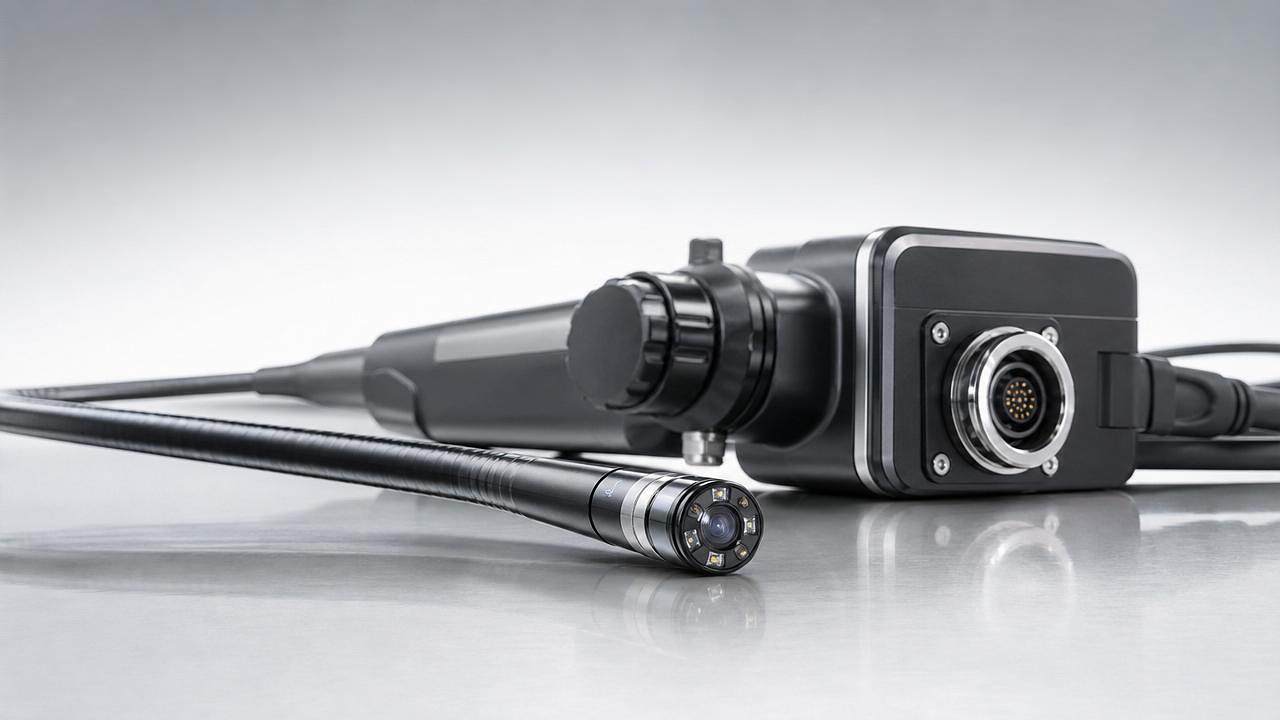




On 30 May 2026, the European Commission published Implementing Act EU/2026/987, mandating that all flexible video endoscopes comply with the revised clinical evaluation requirements under Annex XVI of the EU Medical Device Regulation (MDR) effective 1 September 2026. This development directly impacts manufacturers, exporters, and regulatory service providers active in gastrointestinal, urological, and bronchoscopic device markets — particularly those supplying to the EU 27 and EFTA countries.
Event Overview
The European Commission formally issued Implementing Act EU/2026/987 on 30 May 2026. It stipulates that, as of 1 September 2026, all flexible video endoscopes must be supported by a Clinical Evaluation Report (CER) aligned with the updated Annex XVI. The revised CER must include new clinical evidence addressing three specific performance domains: AI-assisted lesion recognition capability, anti-fog optical system longevity, and resistance to repeated high-level disinfection cycles. Products lacking compliant CERs will be prohibited from placement on the EU and EFTA markets.
Industries Affected
Direct Exporters and CE Mark Holders
Manufacturers holding or pursuing CE marking for flexible video endoscopes are directly affected because compliance is a prerequisite for maintaining or obtaining valid CE certification. Non-compliance results in immediate market access suspension across all 27 EU Member States and the four EFTA countries (Iceland, Liechtenstein, Norway, Switzerland).
OEM/ODM Manufacturing Partners
Contract manufacturers producing flexible video endoscopes for EU-distributed brands must adapt production documentation and testing protocols to generate the required clinical evidence. Their role shifts from hardware assembly to supporting clinical validation — especially for AI software integration and durability testing under real-world reprocessing conditions.
Regulatory Affairs and Notified Body Service Providers
Consultancies and Notified Bodies involved in MDR conformity assessment must update their review checklists, audit criteria, and technical documentation templates to explicitly cover the three new evidence categories. Delays in internal process alignment may extend time-to-certification for clients.
Supply Chain & Component Suppliers
Vendors of optical modules, AI inference engines, and disinfection-resistant coatings face increased demand for traceable, test-backed specifications. Buyers are likely to require ISO 13485-aligned validation data — not just material certifications — to support the new CER requirements.
What Stakeholders Should Monitor and Do Now
Track official guidance from EU Commission and Notified Bodies
While EU/2026/987 establishes the legal obligation, detailed interpretation — including acceptable study designs, equivalence thresholds for AI performance, and accepted disinfection cycle counts — remains pending. Stakeholders should monitor updates from the MDCG (Medical Device Coordination Group) and individual Notified Bodies over Q3–Q4 2026.
Prioritise devices with AI functionality, multi-cycle reprocessing claims, or fog-prone optics
These three features map directly to the new evidence pillars. Companies should triage existing product portfolios to identify which models require urgent clinical re-evaluation versus those potentially eligible for legacy data bridging — assuming such pathways are confirmed in future MDCG guidance.
Distinguish between regulatory signal and operational readiness
The 1 September 2026 deadline is legally binding, but practical implementation depends on Notified Body capacity, test lab availability (especially for accelerated disinfection endurance studies), and AI algorithm version control. Firms should treat the deadline as a hard cutoff for submission, not for final approval — allowing at least 6–9 months for assessment turnaround.
Initiate cross-functional alignment now — especially between R&D, QA, and regulatory teams
Clinical evidence generation requires coordinated input: R&D to define AI use cases and optical specs; QA to design and execute repeat-disinfection protocols; regulatory to structure the CER narrative. Delaying internal alignment risks last-minute documentation gaps or misaligned test reports.
Editorial Perspective / Industry Observation
Observably, this update represents a targeted tightening of clinical expectations — not a broad regulatory overhaul. It reflects growing EU emphasis on real-world usability, software-driven performance, and long-term reliability in reusable devices. Analysis shows the requirement is less about introducing entirely new safety concerns and more about formalising evidence standards that many leading manufacturers have already begun developing. From an industry perspective, it functions primarily as a compliance checkpoint: the legal basis is now in force, but its operational impact will unfold gradually as Notified Bodies issue first assessments and clarifications emerge. Continued monitoring is essential — not because the rule is ambiguous, but because its application hinges on evolving technical interpretations.
Conclusion
This Annex XVI update marks a defined, enforceable milestone in EU clinical evidence expectations for flexible video endoscopes. It does not introduce new device classifications or fundamental safety requirements, but rather elevates evidentiary rigor in three specified technical areas. Current understanding best fits the interpretation that this is a binding regulatory threshold — one requiring proactive, evidence-led preparation — rather than a provisional policy signal open to reversal or deferral.
Source Attribution
Main source: European Commission Implementing Act EU/2026/987, published 30 May 2026.
Areas requiring ongoing observation: MDCG guidance documents, Notified Body interpretation notes, and any future amendments to the MDR Annex XVI application rules.
Recommended News
 Jun 03, 2026IVD Molecular Testing Selection Guide: PCR Platforms, Workflow, and QC NeedsIVD molecular testing guide to choosing PCR platforms, optimizing workflow, controlling contamination, and building QC systems for reliable, audit-ready diagnostics.
 Jun 03, 2026Biomedical Compliance Standards: How to Prepare Device Files for Market AccessBiomedical compliance standards shape device files for CE MDR, FDA, and global access. Learn how to reduce audit friction, prove safety, and enter markets faster.
 Jun 03, 2026Precision Medicine Technology Explained: Data, Testing, and Clinical Use CasesPrecision medicine technology turns data, testing, and imaging into targeted clinical decisions. Explore key use cases, benefits, and adoption tips for safer care.
 Jun 03, 2026Clinical Validation Standards for MedTech: Evidence, Endpoints, and Audit ReadinessClinical validation standards guide MedTech evidence, endpoints, and audit readiness—helping teams prove safety, support claims, and accelerate trusted market access.
 Jun 03, 2026Hospital Technology Infrastructure Planning: Systems, Integration, and Risk ChecksHospital technology infrastructure planning guide for safer uptime, system integration, cybersecurity, compliance, and risk checks across modern clinical environments.
 Jun 03, 2026Saudi SASO Fast Track Opens for ICU VentilatorsSaudi SASO Fast Track for ICU Ventilators: learn how SFDA’s parallel testing pathway can cut local validation to 14 working days and speed compliant market entry.
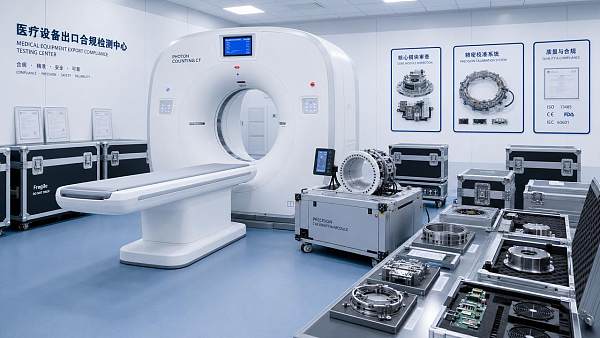
 Jun 03, 2026ITC Bars Certain Photon-Counting CT ModulesITC bars some Photon-counting CT modules in a Section 337 ruling, raising patent, import, and supply chain compliance risks for medical imaging OEMs.
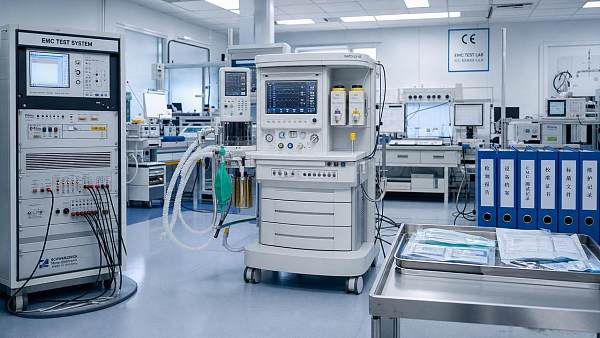
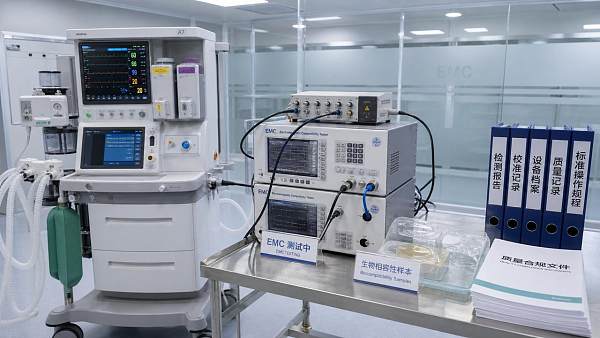
 Jun 03, 2026Malaysia SIRIM Mandates New Anesthesia Tests in JulyMalaysia SIRIM updates anesthesia workstation import rules with EMC and biocompatibility tests. Learn key compliance steps, timelines, and shipment planning tips.
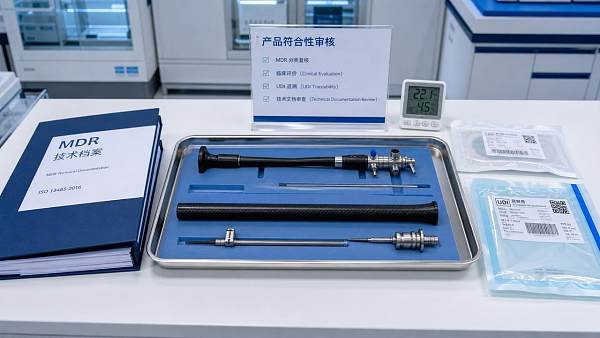
 Jun 03, 2026EU MDR Annex XVI Expands Rigid Endoscope RulesEU MDR Annex XVI now expands for rigid endoscopes, raising clinical evaluation and UDI traceability demands. See what exporters must review to stay compliant.
 Jun 03, 2026FDA AI Capsule Rule Requires Clinical EvidenceFDA AI capsule endoscopy rule is now in effect, raising clinical validation requirements for U.S. market access, reimbursement readiness, and AI diagnostic compliance.
 Jun 02, 2026Critical Care Diagnostics: Which Tests Matter Most in the ICU?Critical care diagnostics guide urgent ICU decisions. Discover the key tests that improve speed, reliability, and life-saving action at the bedside.
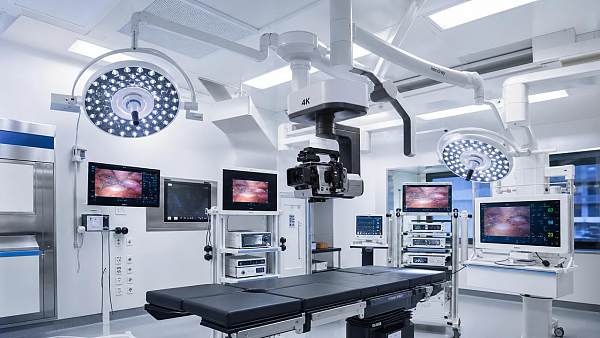
 Jun 02, 2026Surgical Imaging Technology for ORs: Camera, Lighting, and Display ChoicesSurgical imaging technology guide for OR upgrades: compare cameras, LED lighting, and medical-grade displays to improve precision, workflow, compliance, and ROI.
 Jun 02, 2026Critical Life Support Technology: ECMO vs ICU Ventilator Use CasesCritical life support technology decisions shape ICU outcomes. Compare ECMO vs ventilator use cases, costs, staffing needs, and deployment strategy for resilient care.
 Jun 02, 2026Medical Imaging Reconstruction: How Algorithms Affect CT and MRI QualityMedical imaging reconstruction drives CT and MRI quality. Learn how AI, iterative methods, and compliance-focused evaluation improve clarity, dose efficiency, and confidence.
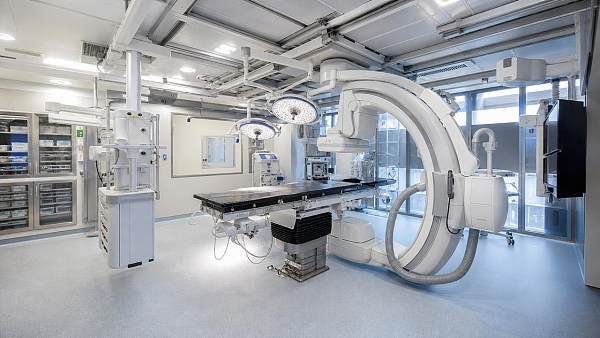
 Jun 02, 2026Interventional Radiology Equipment: Key Specs for Hybrid OR PlanningInterventional radiology equipment planning guide for hybrid ORs—compare key specs, imaging needs, safety, integration, and lifecycle value before you invest.
 Jun 02, 2026Malaysia SIRIM Adds EMC, Bio Tests for Anesthesia UnitsMalaysia SIRIM adds EMC and biocompatibility tests for imported anesthesia workstations from July 2026. Learn how the new rule impacts compliance, trade, and supply planning.
 Jun 02, 2026ITC Excludes CT Imaging Module in 337 RulingITC 337 ruling excludes a CT imaging calibration module from U.S. entry, raising key patent, import compliance, and supply chain risks for medical imaging firms.
 Jun 02, 2026Saudi SASO Sets Local ICU Ventilator Test RuleSaudi SASO’s new ICU ventilator test rule requires local clinical reports for MDR applications from July 2026. See who is affected and how to prepare.
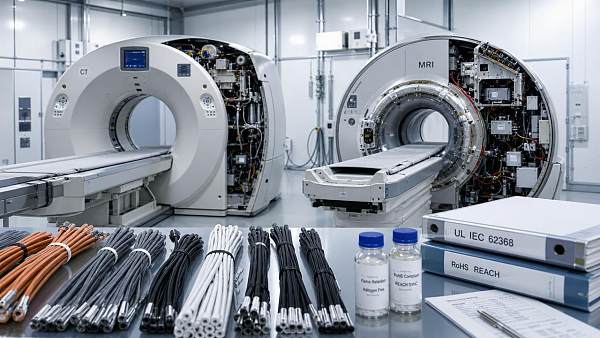
 Jun 02, 2026ECHA Lists DBDPE as SVHC, Raising MRI and CT Cable Compliance PressureECHA lists DBDPE as an SVHC, creating new SCIP, CE marking, and safe-use obligations for MRI and CT cable suppliers, equipment makers, and EU compliance teams.
 Jun 02, 2026FDA Tightens AI Endoscopy Filing RulesFDA tightens AI endoscopy filing rules, requiring clinical validation for 510(k) and De Novo submissions—learn how exporters and device makers should prepare.
 Jun 01, 2026Does medical equipment innovation lower lifetime cost?Medical equipment innovation can cut lifetime costs when it improves uptime, throughput, compliance, and ROI. Learn how procurement teams can evaluate true TCO.
 Jun 01, 2026Precision diagnostics technology can cut false resultsPrecision diagnostics technology reduces false positives and negatives with AI, advanced imaging, IVD accuracy, and quality controls—helping teams deliver faster, safer decisions.
 Jun 01, 2026Can medical device precision engineering reduce recalls?Medical device precision engineering can cut recall risk by linking tolerances, validation, suppliers, and post-market data to safer, compliant device decisions.
 Jun 01, 2026Advanced diagnostic systems are changing lab accuracyAdvanced diagnostic systems are redefining lab accuracy with AI, automation, compliance, and workflow control—helping labs deliver more trusted clinical results.















Related News
- 00
0000-00
IVD Molecular Testing Selection Guide: PCR Platforms, Workflow, and QC Needs - 00
0000-00
Biomedical Compliance Standards: How to Prepare Device Files for Market Access - 00
0000-00
Precision Medicine Technology Explained: Data, Testing, and Clinical Use Cases - 00
0000-00
Clinical Validation Standards for MedTech: Evidence, Endpoints, and Audit Readiness - 00
0000-00
Hospital Technology Infrastructure Planning: Systems, Integration, and Risk Checks
Weekly Insights
Stay ahead with our curated technology reports delivered every Monday.