
IVD Molecular Testing Selection Guide: PCR Platforms, Workflow, and QC Needs
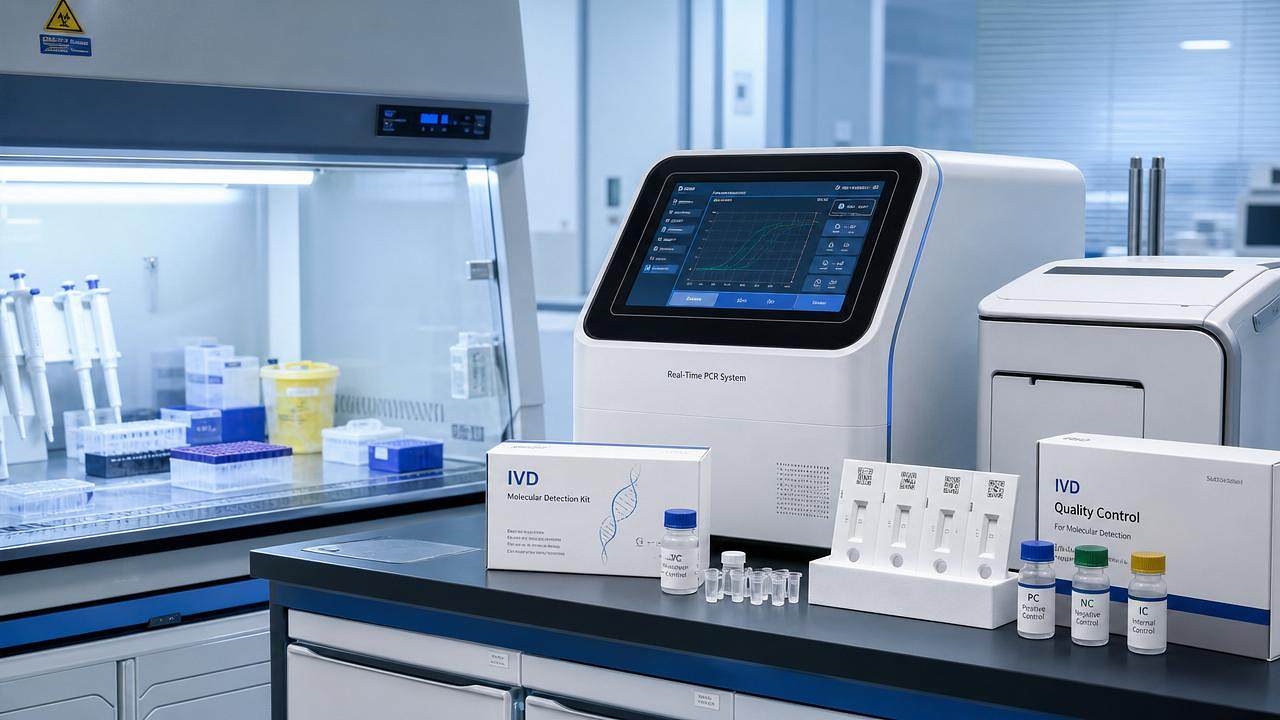




Why PCR Platform Selection Has Become a Strategic IVD Decision
Selecting an IVD molecular testing platform now requires more than comparing throughput, assay menus, or instrument footprint.
The real decision sits at the intersection of PCR chemistry, workflow design, contamination control, data traceability, and regulatory readiness.
In clinical diagnostics, IVD molecular testing often provides decisive evidence when symptoms, imaging, or routine biomarkers remain incomplete.
It can detect viral nucleic acids, bacterial targets, genetic variants, resistance markers, and oncology-related mutations from small sample volumes.
That makes platform reliability central to precision medicine, infection control, therapeutic selection, and public health response.
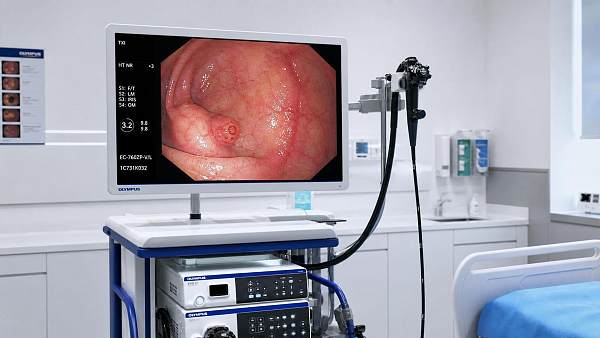
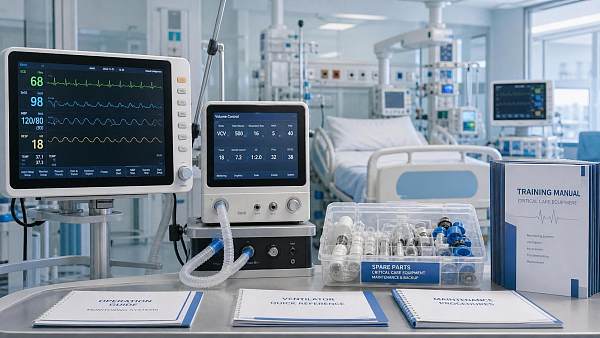
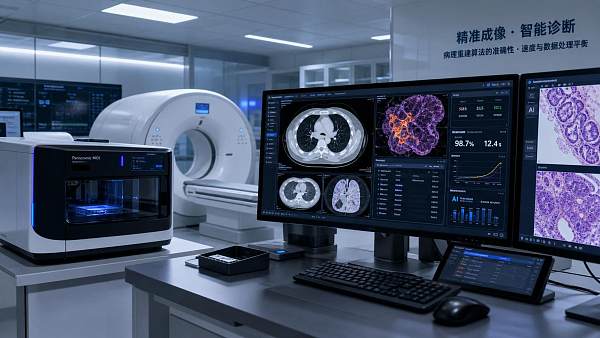
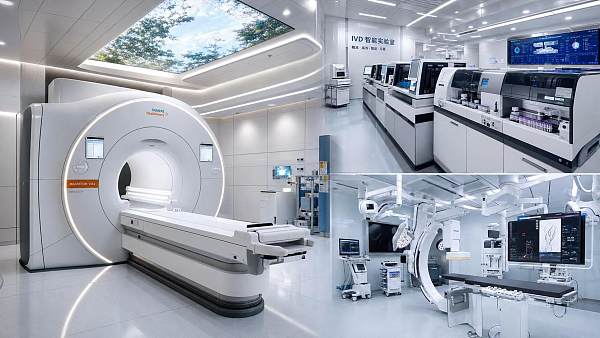
For intelligence-driven medical technology evaluation, IVD molecular testing belongs beside imaging, life support, endoscopy, and operating room systems.
Each discipline depends on accuracy under pressure, but molecular diagnostics adds microscopic biochemical complexity to every result.
A well-chosen PCR system should therefore support both analytical performance and daily operational stability.
Understanding the Core of IVD Molecular Testing
IVD molecular testing uses molecular methods to identify nucleic acid sequences associated with pathogens, inherited conditions, or disease processes.
PCR remains the most widely deployed technology because it can amplify trace genetic material into measurable signals.
Real-time PCR measures amplification during the reaction, allowing quantitative or semi-quantitative interpretation.
Digital PCR partitions reactions into thousands of micro-reactions, improving precision for low-abundance targets.
Isothermal amplification, syndromic panels, and cartridge-based systems also support molecular diagnostics, though with different trade-offs.
The platform choice shapes what happens before amplification, during detection, and after result release.
Extraction quality, inhibitor removal, thermal uniformity, fluorescence detection, software interpretation, and QC flags all affect confidence.
This is why IVD molecular testing evaluation must treat the instrument as part of a complete diagnostic ecosystem.
PCR Platform Types and Their Practical Fit
PCR platforms differ in how they balance flexibility, automation, sample capacity, turnaround time, and contamination protection.
A high-throughput central laboratory may prioritize batch efficiency, LIS connectivity, and validated multi-assay operation.
An urgent care or emergency setting may value sealed cartridges, minimal handling, and rapid sample-to-result reporting.
For IVD molecular testing, no single PCR format is universally superior.
The better question is whether the platform fits expected testing volume, assay complexity, staffing model, and clinical urgency.
The most reliable evaluations compare system behavior under realistic workload conditions, not only under ideal demonstration settings.
That includes peak demand, repeat testing, invalid rates, reagent lot changes, and operator variation.
Workflow Is Often the Hidden Performance Driver
In IVD molecular testing, workflow design can determine whether a strong assay performs consistently in routine use.
A typical molecular workflow includes specimen receipt, accessioning, preparation, extraction, amplification, interpretation, reporting, and archiving.
Each step introduces possible variation, especially when manual pipetting or open-tube handling is involved.
Automation reduces repetitive handling, but it does not remove the need for process design.
Dead time, consumable loading, maintenance cycles, and instrument scheduling can still slow daily output.
Sample-to-result clarity
A useful platform map should show every point where a sample is opened, transferred, stored, or electronically reconciled.
This helps identify contamination exposure, traceability gaps, and workload bottlenecks before routine implementation.
For respiratory testing, urgency often favors short turnaround and closed consumables.
For oncology monitoring, analytical sensitivity, quantification, and longitudinal comparability may become more important.
Data flow and digital integration
Modern IVD molecular testing depends heavily on software, not only thermal cycling hardware.
Result interpretation, user permissions, audit trails, barcode tracking, and LIS connectivity should be checked early.
When molecular results guide isolation, treatment, or surgical decisions, reporting delays become clinical risks.
A platform with clean digital handoffs can reduce transcription errors and support compliance reviews.
Contamination Control Cannot Be Treated as an Accessory
PCR is powerful because it amplifies tiny amounts of nucleic acid.
The same sensitivity makes IVD molecular testing vulnerable to carryover, aerosolized amplicons, and cross-sample contamination.
Physical separation remains a foundation for many laboratories, especially with open workflows.
Pre-amplification and post-amplification areas should not share uncontrolled materials, air movement, or equipment.
Closed cartridges reduce exposure, but they still require disciplined specimen handling and waste management.
Good contamination control combines facility design, consumable design, reagent chemistry, and behavioral control.
- Use unidirectional workflow wherever open handling remains necessary.
- Assess whether the system supports sealed amplification and safe waste removal.
- Review decontamination procedures against realistic daily staffing patterns.
- Track false-positive signals, unexpected clusters, and environmental monitoring trends.
- Confirm that software flags repeat runs, invalids, and control failures clearly.
Contamination control should be evaluated before procurement, not after unexplained positives appear.
This is especially important for high-volume IVD molecular testing during seasonal respiratory surges.
QC Architecture Defines Result Confidence
Quality control in molecular diagnostics is more than running a positive and negative control.
A robust QC architecture checks extraction, amplification, inhibition, reagent integrity, instrument performance, and interpretive logic.
Internal controls help identify failed extraction or amplification inhibition within individual samples.
External controls support batch-level confidence and can reveal broader reagent or process problems.
For IVD molecular testing, QC expectations also extend into calibration, maintenance records, lot verification, and operator competency.
Regulatory frameworks such as FDA requirements, CE IVDR expectations, and ISO 15189 principles reinforce traceable evidence.
A technically attractive platform becomes weaker if QC data cannot be easily reviewed during audits.
What good QC should make visible
A dependable platform should show why a result is valid, not simply display positive or negative output.
Cycle threshold behavior, amplification curve quality, control status, run conditions, and user actions all matter.
When QC exceptions occur, the system should guide investigation rather than hide complexity behind simplified alerts.
That visibility supports root-cause analysis and protects clinical confidence in IVD molecular testing services.
Matching Platform Capability to Clinical Use Cases
Different clinical applications create different pressure points for PCR platform selection.
In infectious disease diagnostics, turnaround time, multiplexing, and outbreak scalability often dominate the evaluation.
In transplant and immunocompromised care, low-level detection and reliable quantification can be more important.
In oncology, IVD molecular testing may need to support mutation profiling, measurable residual disease, or therapy monitoring.
In reproductive or inherited disease testing, validation depth and result interpretation governance become central.
The same instrument may perform well in one scenario and create friction in another.
Selection should therefore begin with a defined test menu, expected volume, clinical urgency, and reporting requirements.
A practical evaluation should also consider reimbursement models, staffing availability, service contracts, and reagent supply resilience.
Under cost-controlled care models, high-end capability must be connected to measurable clinical and operational value.
Regulatory and Compliance Signals to Review Early
Compliance is not only a final documentation exercise for IVD molecular testing systems.
It influences platform configuration, cybersecurity controls, software updates, validation strategy, and post-market monitoring.
Markets operating under FDA, CE IVDR, or other national frameworks often require strong evidence linkage.
That includes intended use, performance claims, risk management, usability, labeling, and change control.
For exported medical devices, the gap between technical capability and market access can be significant.
A platform with transparent documentation and audit-ready data architecture will usually face fewer implementation obstacles.
In this respect, molecular diagnostics mirrors other advanced medical systems.
A CT scanner, ventilator, endoscope, or PCR platform must prove safety, performance, and traceability under clinical reality.
Practical Evaluation Criteria Before Final Selection
A strong selection process moves from brochure claims to evidence under expected operating conditions.
For IVD molecular testing, this means building a structured view of performance, workflow, compliance, and lifecycle cost.
- Define the expected assay menu and likely future expansion.
- Compare extraction methods, sample types, and inhibitor tolerance.
- Review hands-on time, total turnaround time, and batching flexibility.
- Check control design, invalid result handling, and audit trail depth.
- Test software integration with existing LIS or middleware systems.
- Evaluate reagent storage, consumable supply, maintenance, and service response.
- Confirm regulatory status against the intended clinical and geographic use.
The best choice is rarely the instrument with the longest specification sheet.
It is the system that produces reliable results within the laboratory’s real constraints.
It should also leave room for clinical growth, updated assays, and changing compliance expectations.
Building a Clear Next Step for Molecular Platform Decisions
IVD molecular testing will continue to expand as precision diagnostics becomes more integrated with clinical decision-making.
PCR platforms remain central because they combine sensitivity, speed, scalability, and broad clinical familiarity.
Still, platform selection should never stop at amplification performance alone.
Workflow integrity, contamination control, QC architecture, software traceability, and regulatory readiness all shape diagnostic confidence.
A useful next step is to translate clinical demand into a short evaluation matrix.
That matrix should compare use cases, sample volumes, turnaround needs, QC requirements, integration gaps, and lifecycle costs.
From there, platform demonstrations and validation planning can focus on evidence that matters in daily operation.
This approach makes IVD molecular testing selection more defensible, more practical, and better aligned with clinical responsibility.
Recommended News
 Jun 23, 2026Diagnostic Algorithm Development: Validation Steps, Performance Metrics, and Compliance BasicsDiagnostic algorithm development explained: learn validation steps, key performance metrics, and compliance basics to build safer, audit-ready medical AI with confidence.
 Jun 23, 2026Endoscopic Imaging Technology in Practice: How to Compare Resolution, Lighting, and Scope TypeEndoscopic imaging technology explained in practical terms—compare resolution, lighting, and scope type to improve clinical clarity, workflow efficiency, and smarter system selection.
 Jun 23, 2026ICU Ventilator Selection for Critical Care Ventilation: Which Parameters Matter Most?Critical care ventilation buyers: learn which ICU ventilator parameters matter most, from monitoring accuracy and lung protection to alarms, weaning tools, and long-term value.
 Jun 23, 2026Medical Device Precision Engineering Explained: Key Tolerances, Materials, and Risk PointsMedical device precision engineering explained: explore critical tolerances, material choices, contamination risks, and compliance factors that shape safer, more reliable MedTech performance.
 Jun 23, 2026How to Evaluate Surgical Navigation Systems: Accuracy, Workflow, and OR IntegrationSurgical navigation systems: learn how to evaluate accuracy, workflow, and OR integration to reduce risk, improve efficiency, and choose a platform that fits real clinical needs.
 Jun 23, 2026MHRA Opens 30-Day Fast Track for Chemiluminescence SystemsMHRA opens a 30-day fast track for chemiluminescence systems, reshaping UKCA market access. See what IVD manufacturers, distributors, and regulatory teams must do next.
 Jun 23, 2026SFDA Fast Track Cuts Photon-counting CT Review to 45 DaysSFDA Fast Track cuts Photon-counting CT review to 45 working days, reshaping Saudi market entry, compliance planning, and procurement timing. See what manufacturers and distributors should do next.
 Jun 23, 2026EU MDR Deadline Nears for Class IIa Rigid EndoscopyEU MDR deadline for Class IIa rigid endoscopy is approaching fast. Learn what the September 21, 2026 CE certification cutoff means for manufacturers, exporters, and EU distributors.
 Jun 23, 2026FDA Requires PCCP for AI Flexible VideoscopesFDA Requires PCCP for AI Flexible Videoscopes: learn what the October 1, 2026 rule means for 510(k) products, new submissions, compliance planning, and uninterrupted U.S. market access.
 Jun 22, 2026Endoscopic Imaging Technology in GI Diagnosis: Key Features and Common Image Quality IssuesEndoscopic imaging technology in GI diagnosis: explore key features, common image quality issues, and practical tips to improve clarity, accuracy, and workflow efficiency.
 Jun 22, 2026Clinical Life Support Systems: How to Compare Cost, Uptime, and Training RequirementsClinical life support buying guide: compare total cost, uptime, training, and compliance to choose safer, higher-value systems and avoid hidden long-term risks.
 Jun 22, 2026Pathological Reconstruction Algorithms Explained: Accuracy, Speed, and Data NeedsPathological reconstruction algorithms explained with a practical focus on accuracy, speed, and data needs. Learn how to compare vendors, validate claims, and choose systems ready for real clinical deployment.
 Jun 22, 2026Healthcare Technology Trends in 2025: Which Investments Matter Most for Providers?Healthcare technology trends in 2025 are reshaping provider investment priorities. Discover which innovations deliver clinical proof, ROI, compliance strength, and operational resilience.
 Jun 22, 2026What Is a Medical Intelligence Platform and How Hospitals Use It for Clinical DecisionsMedical intelligence platform explained: learn how hospitals connect imaging, lab, ICU, and OR data to make faster clinical decisions, improve compliance, and support safer, smarter care.
 Jun 22, 2026Hong Kong Opens Dual-Use MRI Trial PathHong Kong Opens Dual-Use MRI Trial Path: learn how the new Hong Kong route helps superconducting MRI makers cut timelines, support FDA/EMA filings, and speed entry into Southeast Asia and the Middle East.
 Jun 22, 2026SCFI Falls Below 1,200, Cutting ICU Ventilator Export CostsSCFI falls below 1,200, cutting ICU ventilator export costs to Germany, the Netherlands, and Poland. See how this freight window may lower Q3 logistics costs and improve shipment planning.
 Jun 22, 2026EU MDR Annex XVI Expansion Brings ECMO Into Class CEU MDR Annex XVI expansion brings ECMO into Class C from June 2026. Learn key deadlines, cybersecurity, clinical evidence, and EUDAMED duties affecting EU market access.
 Jun 22, 2026Malaysia Opens 30-Day Fast Track for CLIA AnalyzersMalaysia opens a 30-day fast track for CLIA analyzers, linking NMPA, ISO 13485, and IEC 62304 compliance to faster entry and an $85M hospital procurement opportunity.
 Jun 22, 2026Saudi SFDA Fast-Tracks Photon-counting CT to 45 DaysSaudi SFDA fast-tracks photon-counting CT to 45 working days, reshaping Saudi market entry, tender timing, and compliance planning. See what exporters and manufacturers must prepare now.
 Jun 21, 2026How Clinical Engineering Intelligence Helps Reduce Downtime and Improve Preventive MaintenanceClinical engineering intelligence helps reduce medical device downtime, strengthen preventive maintenance, and improve reliability with data-driven insights for smarter healthcare operations.
 Jun 21, 2026Critical Care Ventilation Settings Explained: How to Balance Oxygenation and Lung ProtectionCritical care ventilation explained: learn how FiO2, PEEP, tidal volume, and pressure limits work together to improve oxygenation, protect lungs, and support safer ICU decisions.
 Jun 21, 2026Medical Equipment Economics: How to Calculate Total Cost of Ownership for Capital PurchasesMedical equipment economics made practical: learn how to calculate total cost of ownership for capital purchases, reduce hidden costs, compare vendors smarter, and make more confident buying decisions.
 Jun 21, 2026Medical Intelligence Platform Evaluation: 7 Capabilities Hospitals Should Compare Before AdoptionMedical intelligence platform evaluation starts with 7 must-compare capabilities. Learn how hospitals can assess interoperability, compliance, analytics, and scalability before adoption.
 Jun 21, 2026What Is Critical Life Support Technology and Which Hospital Systems Does It Include?Critical life support technology explained: discover which hospital systems it includes, from ventilators and ECMO to monitoring, transport, and infrastructure.







Related News
- 00
0000-00
Pathological Reconstruction Algorithms Explained: Accuracy, Speed, and Data Needs - 00
0000-00
Biochemical Detection Technology Explained: Methods, Limits, and Validation Factors - 00
0000-00
GCC to Enforce ISO 20914:2025 for Imported PCR Reagents - 00
0000-00
EU Extends IVDR Transition to End-2028, Reopens PCR Fast Track - 00
0000-00
IVD Molecular Testing Explained: Key Methods, Clinical Uses, and Limits
Weekly Insights
Stay ahead with our curated technology reports delivered every Monday.