
FDA Tightens AI Endoscopy Filing Rules
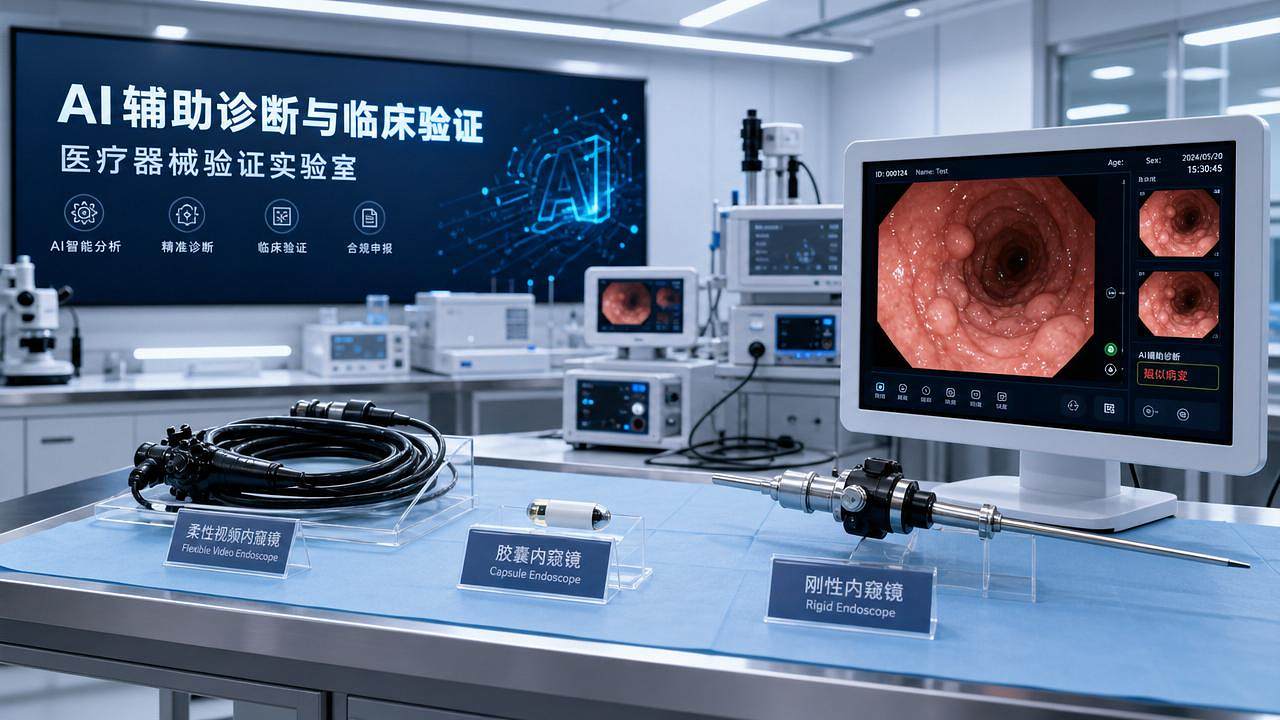




Lead: On June 1, 2026, the U.S. Food and Drug Administration updated its guidance on AI/ML-based software as a medical device for endoscopy guidance. The update requires AI-assisted diagnostic functions integrated into flexible video endoscopes, capsule endoscopes, and rigid endoscopy systems exported to the United States to submit clinical validation data in 510(k) or De Novo applications. The change deserves attention from AI endoscopy developers, endoscope manufacturers, export-oriented medical device companies, and regulatory affairs teams because it may affect U.S. market access timelines and registration costs.
Event Overview
On June 1, 2026, the FDA updated the guidance titled AI/ML-Based Software as a Medical Device for Endoscopy Guidance. According to the disclosed information, all AI-assisted diagnostic features integrated into flexible video endoscopes, capsule endoscopes, and rigid endoscopy systems exported to the U.S. must submit clinical validation data in 510(k) or De Novo filings from the effective date.
The covered functions include, but are not limited to, real-time polyp detection, bleeding localization, and tissue classification. The required validation data must be based on real-world colonoscopy or gastroscopy procedures. The disclosed information indicates that the rule directly affects the export access pace and registration costs of Chinese AI endoscopy manufacturers.
Which Segments Are Affected
AI Endoscopy Exporters Targeting the U.S. Market
Companies exporting AI-enabled endoscopy systems to the United States are directly affected because the updated FDA guidance changes the filing requirements for AI-assisted diagnostic functions. The main impact is likely to appear in registration preparation, submission timelines, and the need to organize clinical validation materials based on real-world endoscopic procedures.
From an industry perspective, exporters that previously focused mainly on technical performance documentation may need to pay closer attention to whether their evidence package can support 510(k) or De Novo review under the updated expectations.
Endoscope System Manufacturers and Product Integrators
Manufacturers of flexible video endoscopes, capsule endoscopes, and rigid endoscopy systems may be affected when AI-assisted diagnostic functions are integrated into their products. The impact does not only concern the algorithm supplier; it also concerns the overall system submitted for regulatory review.
Analysis shows that product integrators may need to clarify which functions are considered AI-assisted diagnosis, how these functions are linked to clinical use scenarios, and whether the complete device-software combination has sufficient clinical validation data for the U.S. filing process.
AI Algorithm Developers for Endoscopy Applications
Algorithm developers providing real-time polyp recognition, bleeding localization, tissue classification, or similar functions may face higher documentation and validation requirements when their software is intended for U.S.-bound endoscopy products.
Observably, the core issue for this segment is no longer limited to algorithm design or laboratory performance. What deserves closer attention now is whether the algorithm has been validated in real-world colonoscopy or gastroscopy operations in a way that can be used in regulatory submissions.
Regulatory Affairs and Clinical Validation Service Providers
Regulatory teams and clinical validation service providers may see changes in workload and project planning because submissions involving AI-assisted endoscopy diagnosis now need to include the required clinical validation data. The impact is mainly reflected in dossier preparation, evidence mapping, validation protocol alignment, and communication with device manufacturers.
It is more appropriate to understand this as a compliance workload change linked to specific product categories and AI functions, rather than a general requirement for all medical device exports.
What Companies and Practitioners Should Watch and How to Respond
Track Further FDA Statements and Filing Practice
Companies preparing 510(k) or De Novo submissions should closely follow any further FDA explanations related to the updated guidance. The currently disclosed information confirms the requirement for clinical validation data, but practical details may become clearer through subsequent official communication or actual submission review practice.
For ongoing projects, regulatory teams should compare current filing materials against the updated requirement and identify whether real-world colonoscopy or gastroscopy validation evidence is already available.
Review Covered Products and AI Functions
Enterprises should first determine whether their products fall within the stated scope: flexible video endoscopes, capsule endoscopes, or rigid endoscopy systems with AI-assisted diagnostic functions. They should also distinguish covered functions such as real-time polyp detection, bleeding localization, and tissue classification from non-covered or non-diagnostic software features.
From an industry perspective, this product-by-product review is important because the impact depends on both the device type and the function integrated into the system.
Assess Clinical Validation Readiness
Companies planning U.S. filings should evaluate whether they have clinical validation data based on real-world colonoscopy or gastroscopy procedures. If such data are not yet organized for regulatory use, project teams may need to reassess submission schedules and evidence preparation plans.
Analysis shows that the key practical issue is not only whether validation has been conducted, but whether the data are relevant to the intended AI-assisted diagnostic function and usable in the 510(k) or De Novo application context.
Separate Policy Signal from Business Execution
The FDA update should not be interpreted as a ban on AI endoscopy products. It is more appropriate to understand this as a clearer evidence requirement for U.S. regulatory access. Companies should avoid overreacting, but they should also avoid treating the update as a routine administrative change.
What deserves closer attention now is how the requirement affects product launch timing, cost planning, partner communication, and registration strategy for U.S.-oriented endoscopy systems.
Editor’s View / Industry Observation
Observably, the June 1 update indicates that AI-assisted diagnostic functions in endoscopy are entering a more evidence-focused stage in the U.S. regulatory process. The requirement for real-world colonoscopy or gastroscopy clinical validation data may raise the threshold for companies seeking U.S. access, especially those whose export plans depend on 510(k) or De Novo pathways.
From an industry perspective, the update is both a concrete regulatory requirement and a signal that AI medical device submissions will be assessed more closely around clinical performance in actual use scenarios. For Chinese AI endoscopy manufacturers, the immediate concern is the potential adjustment of export access rhythm and registration cost. The longer-term concern is how to build validation systems that can support overseas filings.
It is more appropriate to understand this development as a compliance and evidence-quality issue rather than simply a market barrier. Companies that can align product development, clinical validation, and regulatory documentation earlier may be better positioned to manage uncertainty.
Conclusion
The FDA’s updated guidance on AI/ML-based software for endoscopy guidance gives the AI endoscopy sector a clear signal: U.S. filings for AI-assisted diagnostic functions will require stronger clinical validation support based on real-world endoscopic procedures. The change is especially relevant to exporters, system manufacturers, algorithm developers, and regulatory service teams involved in flexible video endoscopes, capsule endoscopes, and rigid endoscopy systems.
At this stage, the update should be viewed rationally as a regulatory evidence requirement that may affect timelines and costs, rather than as a final market outcome. Companies should focus on scope identification, validation readiness, and continued tracking of official FDA communication.
Information Source Statement
Main source: U.S. Food and Drug Administration, updated guidance titled AI/ML-Based Software as a Medical Device for Endoscopy Guidance, released on June 1, 2026, as described in the provided event information.
Items for continued observation: Further FDA explanations, practical review requirements in 510(k) or De Novo submissions, and how companies adjust clinical validation preparation for AI-assisted endoscopy functions.
Recommended News
 Aug 31, 2026Clinical Imaging Innovation: Which Technologies Deliver Measurable Diagnostic Gains?Clinical imaging innovation delivers measurable diagnostic gains through photon-counting CT, AI reconstruction, and quantitative MRI—explore evidence-based selection insights.
 Aug 30, 2026How Surgical Navigation Technology Improves Accuracy in Complex Spine SurgerySurgical navigation technology spine surgery: discover how imaging, tracking, and workflow controls improve precision for complex procedures.
 Aug 29, 2026How to Select a Hematology Analyzer With Reliable Reticulocyte CountingHematology analyzers retic selection guide: compare precision, flags, workflow, QC, and connectivity to achieve reliable reticulocyte counting.
 Aug 28, 2026Planning Operating Room Technology for a High-Throughput Surgery CenterOperating room technology for a surgery center: plan workflows, integration, uptime, and safety to boost throughput and create future-ready surgical rooms.
 Aug 27, 2026Building Medical Compliance Analytics for Middle East Market AccessMedical compliance analytics Middle East: build device-specific evidence maps, align local requirements, and accelerate market access with confidence.
 Aug 26, 2026How Surgical Equipment Digitalization Is Reshaping Hospital Investment in Latin AmericaSurgical equipment digitalization Latin America is reshaping hospital investment, from smart ORs to ROI-driven upgrades. Explore what buyers now value most.
 Aug 25, 2026How to Evaluate a Medical Compliance Intelligence Provider for Global Market AccessMedical compliance intelligence provider selection can make or break global market access. Learn how to assess technical depth, update quality, and commercial fit before choosing.
 Aug 24, 2026How Advanced Clinical Imaging Is Improving Cardiology Diagnosis and Treatment PlanningAdvanced clinical imaging cardiology is transforming diagnosis and treatment planning with clearer anatomy, tissue insight, and procedural guidance. Discover how it reduces uncertainty and supports smarter cardiac decisions.
 Aug 23, 2026How to Source Medical Devices in North America: Supplier Vetting and Market Access RisksMedical device sourcing North America made practical: learn how to vet suppliers, reduce compliance risks, and protect market access with smarter procurement decisions.
 Aug 22, 2026What Are Integrated Critical Care Systems and How Do Hospitals Evaluate Them?Critical care systems integrated: learn how hospitals assess ICU platforms for interoperability, alarm safety, workflow efficiency, and long-term value before buying.
 Aug 21, 2026How to Evaluate High-Resolution Diagnostic Imaging Systems for Detail-Critical ExamsDiagnostic imaging systems high resolution: learn how to compare detail-critical performance, workflow fit, dose efficiency, and ROI to choose the right system with confidence.
 Aug 20, 2026How to Evaluate Medical Equipment Performance Before Purchase?Medical equipment evaluation performance starts before purchase. Learn how to assess safety, workflow fit, compliance, uptime, and total cost to choose devices that truly perform.
 Aug 19, 2026How to Evaluate Small-Footprint Laboratory Diagnostic Equipment for Space-Limited LabsLaboratory diagnostic equipment small footprint choices require more than size checks. Learn how to assess workflow, throughput, compliance, and service access for smarter lab buying.
 Aug 18, 2026Biochemical Molecular Diagnostics Explained: Methods, Clinical Uses, and Lab Selection CriteriaBiochemical molecular diagnostics explained: compare key methods, clinical applications, and lab selection criteria to choose reliable, compliant testing with confidence.
 Aug 17, 2026How to Choose Diagnostic Equipment Solutions for a Clinic: Key Factors That Affect Workflow and CostDiagnostic equipment solutions clinic buyers can use to improve workflow, control total cost, and avoid hidden service risks. Learn the key factors before you invest.
 Aug 16, 2026How to Choose a Blood Cell Analyzer for a Small Lab: Throughput, CBC Menu, and CostBlood cell analyzers small lab buyers can compare throughput, CBC menu, and total operating cost with confidence. Learn how to avoid waste, reduce downtime, and choose the right fit.
 Aug 16, 2026FDA Approval of AMDS Hybrid Prosthesis Removes IRB Step for Faster U.S. AccessFDA approval of AMDS Hybrid Prosthesis removes the IRB step, speeding U.S. access for acute aortic dissection care and reshaping hospital procurement and supporting equipment demand.
 Aug 15, 2026What Hospital Technology Infrastructure Is Needed for Reliable Interoperability?Hospital technology infrastructure interoperability depends on secure networks, integration engines, identity services, and governance. Discover what hospitals need for reliable, scalable connectivity.
 Aug 14, 2026What to Look for in an Advanced Diagnostic Systems Distributor Before You BuyAdvanced diagnostic systems distributor: learn what to check before buying, from compliance and technical depth to delivery reliability and after-sales support. Make a smarter procurement decision today.
 Aug 14, 2026China Temporarily Bans Helium ExportsChina Temporarily Bans Helium Exports: learn how the July 10, 2026 rule may disrupt MRI, ECMO, and anesthesia device supply chains, compliance, and delivery planning for global buyers.
 Aug 13, 2026How CT Reconstruction Technology Impacts Image Quality, Dose, and WorkflowMedical imaging reconstruction technology CT shapes image quality, dose, and workflow. Learn how smarter CT reconstruction improves diagnostics and efficiency.
 Aug 13, 2026FDA clears AMDS PMA, easing U.S. hospital accessFDA clears AMDS PMA, easing U.S. hospital access for Artivion’s aortic arch device and speeding procurement, compliance, and deployment.
 Aug 12, 2026Hospital Diagnostic Equipment Comparison: What Buyers Should Evaluate Beyond PriceDiagnostic equipment comparison hospital buyers can trust: learn how to evaluate clinical performance, uptime, compliance, integration, and long-term ROI beyond price.
 Aug 12, 2026FDA Draft Guidance Reshapes AI Device ComplianceFDA Draft Guidance reshapes AI device compliance with new postmarket monitoring expectations for AI/ML-enabled SaMD. Learn what it means for U.S. market access, distributors, and exporters.



Related News
- 00
0000-00
EU MDR Transition Ends, Endoscope Re-Certification Becomes Urgent - 00
0000-00
EU MDR Annex XVI Now Requires Separate CE for Accessories - 00
0000-00
EU MDR Transition Ends for Endoscopy Device Imports - 00
0000-00
EU MDR Rule Triggers CER Updates for Endoscopy Devices - 00
0000-00
EU MDR Update Sets 12-Month CER Rule for Ultrasound and Endoscopy
Weekly Insights
Stay ahead with our curated technology reports delivered every Monday.