
Medical Imaging Reconstruction: How Algorithms Affect CT and MRI Quality
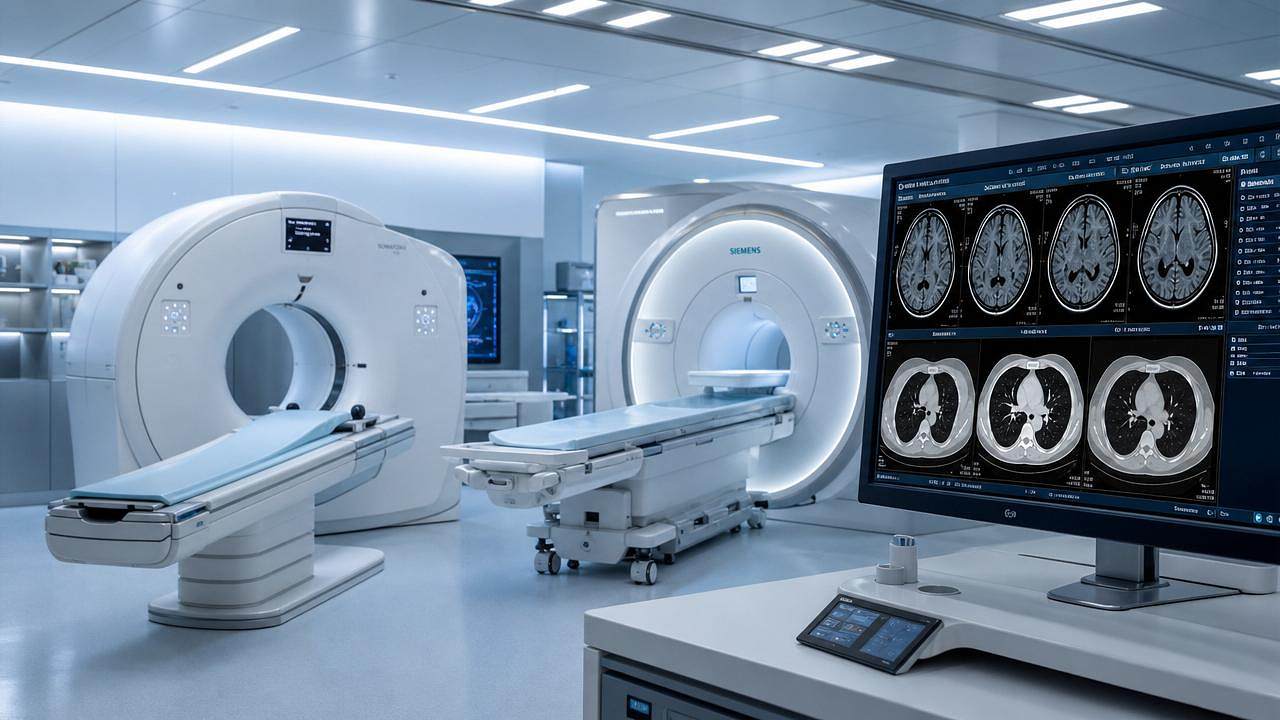




Medical imaging reconstruction sits at the center of CT and MRI performance, shaping raw scanner signals into clinically actionable images.
For system evaluation, medical imaging reconstruction affects spatial resolution, noise texture, artifact control, dose efficiency, scan speed, and diagnostic confidence.
As AI, iterative reconstruction, compressed sensing, and photon-counting CT mature, algorithm choices now influence clinical value, compliance strategy, and economic justification.
Medical Imaging Reconstruction in CT and MRI Fundamentals
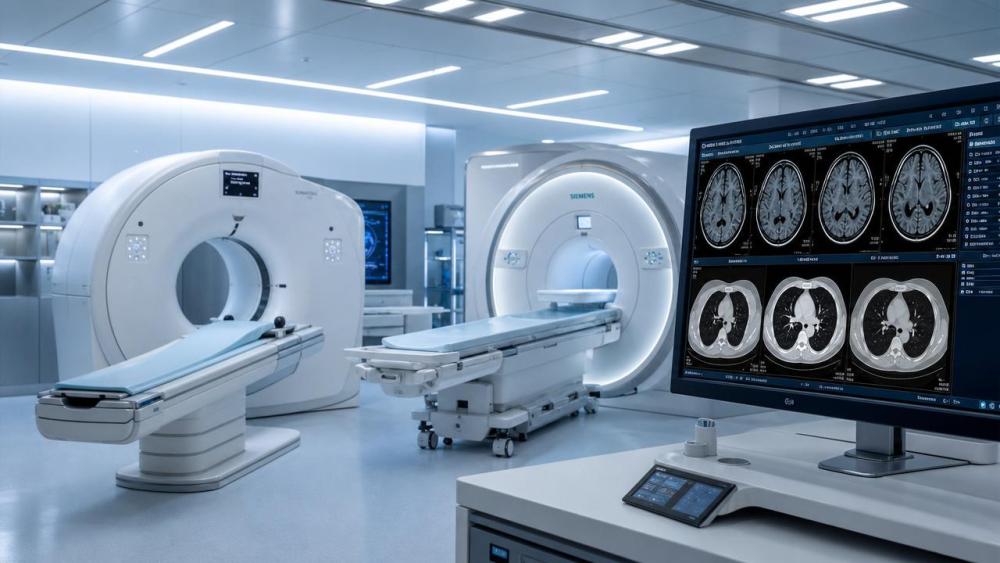
Medical imaging reconstruction is the computational bridge between physical acquisition and visual diagnosis.
In CT, detectors capture X-ray attenuation from many angles. Algorithms convert projections into cross-sectional anatomy.
In MRI, coils receive radiofrequency signals in k-space. Reconstruction translates frequency data into contrast-rich tissue images.
The same scanner hardware can produce different image quality when medical imaging reconstruction parameters change.
This is why reconstruction is not a background process. It is a clinical performance layer.
Core Image Quality Dimensions
- Spatial resolution defines how clearly small structures appear.
- Contrast resolution separates tissues with subtle density or signal differences.
- Noise texture affects confidence, especially in low-dose CT.
- Artifact suppression reduces motion, metal, beam hardening, and aliasing effects.
- Temporal performance supports faster exams and less motion-related degradation.
Good medical imaging reconstruction balances these dimensions without hiding relevant pathology or creating misleading structures.
Algorithm Families Shaping Clinical Image Quality
Different reconstruction families reflect different assumptions about physics, anatomy, noise, and clinical tolerance.
Filtered back projection remains fast and transparent, but it struggles when dose is reduced aggressively.
Iterative reconstruction models scanner physics and noise more carefully. It can improve low-dose CT usability.
Compressed sensing accelerates MRI by recovering images from undersampled data, reducing scan time for selected sequences.
Deep learning reconstruction uses trained neural networks to reduce noise, enhance detail, or accelerate acquisition.
The best medical imaging reconstruction choice depends on anatomy, protocol, patient condition, and diagnostic task.
A lung nodule workflow values edge fidelity. A liver lesion protocol may prioritize contrast stability.
Cardiac imaging needs temporal reliability. Neuroimaging often requires delicate contrast preservation and artifact discipline.
Current Industry Signals and Technical Priorities
Medical imaging reconstruction is receiving renewed attention because clinical, regulatory, and economic pressures are converging.
Hospitals seek lower radiation dose, faster MRI access, consistent images, and fewer repeat scans.
Equipment platforms are also shifting toward photon-counting CT, AI-enabled MRI, and quantitative imaging biomarkers.
For AMDS, these signals are not isolated technical trends.
They connect scanner physics, clinical safety, CE MDR evidence, FDA expectations, and DRG-based investment logic.
Medical imaging reconstruction therefore belongs in both engineering evaluation and strategic market access analysis.
Business and Clinical Value of Better Reconstruction
High-quality medical imaging reconstruction improves more than image appearance.
It can reduce non-diagnostic scans, support earlier detection, and increase confidence in complex disease assessment.
In CT, stronger reconstruction can help maintain diagnostic quality while reducing radiation exposure.
In MRI, faster reconstruction and undersampling strategies can improve throughput without automatically sacrificing lesion visibility.
Operationally, shorter scans can ease scheduling pressure and reduce motion from patient fatigue.
Economically, fewer repeats and better equipment utilization strengthen the case for advanced imaging systems.
Value Pathways
- Dose efficiency supports safer CT screening and follow-up programs.
- Artifact reduction improves imaging near implants, motion, or dense anatomy.
- Scan acceleration improves MRI availability for urgent or high-volume pathways.
- Stable image texture supports radiomics, AI reading, and longitudinal comparison.
- Protocol consistency supports multi-site clinical governance and audit readiness.
The value of medical imaging reconstruction must be measured against real diagnostic tasks.
A beautiful image is insufficient if subtle fractures, plaques, hemorrhage, or tumors become harder to evaluate.
Typical CT and MRI Application Scenarios
Medical imaging reconstruction should be assessed by scenario rather than as a generic software feature.
Different clinical domains expose different algorithm limitations and strengths.
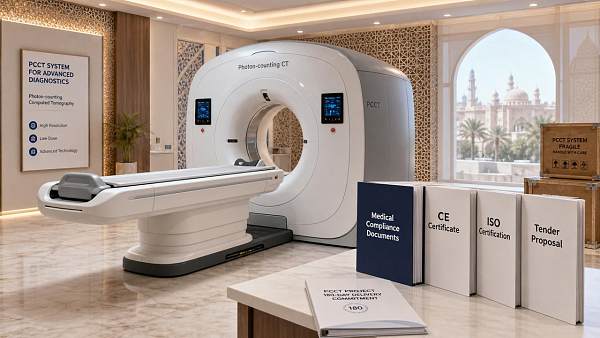
Photon-counting CT adds another dimension to medical imaging reconstruction.
Energy-resolved data can improve material separation, iodine mapping, and high-resolution imaging.
However, the reconstruction chain must preserve spectral information without amplifying noise or calibration errors.
In MRI, deep learning reconstruction must respect sequence contrast and avoid hallucinated anatomy.
This is critical when images guide neurology, oncology, vascular care, or surgical planning.
Regulatory, Compliance, and Evidence Considerations
Advanced medical imaging reconstruction increasingly resembles medical software with direct clinical influence.
Regulatory review therefore expects evidence for intended use, risk controls, performance claims, and change management.
For AI reconstruction, training data diversity and clinical validation are central concerns.
Performance should be tested across body sizes, scanner settings, pathologies, artifacts, and acquisition protocols.
Evidence must show that reconstruction improves or preserves diagnostic performance, not merely visual smoothness.
Key Evidence Questions
- Does medical imaging reconstruction maintain lesion detectability at proposed dose or speed settings?
- Are artifacts reduced without removing diagnostically relevant features?
- Is image quality consistent across patient size and anatomy?
- Can software updates be controlled, documented, and verified?
- Do quantitative biomarkers remain stable after reconstruction changes?
CE MDR and FDA-aligned pathways require disciplined documentation.
Technical files should connect algorithm design, hazard analysis, verification, clinical evaluation, and post-market monitoring.
For AMDS, this is where engineering intelligence and compliance intelligence must be stitched together.
Practical Evaluation Framework for Reconstruction Decisions
A structured evaluation reduces the risk of overvaluing attractive images while missing clinical weaknesses.
Medical imaging reconstruction should be tested with phantom studies, reader studies, workflow metrics, and lifecycle controls.
Recommended Assessment Steps
- Define the intended clinical task before comparing algorithms.
- Benchmark against current standard protocols, not ideal laboratory settings.
- Measure resolution, contrast, noise power spectrum, and artifact behavior.
- Include difficult cases such as obesity, motion, implants, and pediatric protocols.
- Review radiologist confidence, reading time, and repeat-scan frequency.
- Check cybersecurity, update policy, audit trails, and service documentation.
Health-economic review should be linked to measurable outcomes.
Useful indicators include dose reduction, MRI slot savings, reduced repeats, improved throughput, and avoided downstream uncertainty.
Under DRG pressure, medical imaging reconstruction can support value when it improves reliability and utilization.
It should not be treated as a premium feature without operational evidence.
Implementation Risks and Control Points
Every reconstruction upgrade changes the visual language of imaging.
If introduced without governance, medical imaging reconstruction may disrupt longitudinal comparison or reporting habits.
Protocol teams should document parameter changes, reader training, and comparison rules.
Legacy images and new images may have different noise texture, sharpness, or apparent lesion margins.
Common Pitfalls
- Excessive denoising that creates plastic-looking images.
- Edge enhancement that mimics calcification or small structures.
- Acceleration that weakens subtle MRI contrast differences.
- AI models trained on narrow populations or limited scanner types.
- Software updates that lack local verification before clinical release.
Risk control should combine physics testing, clinical review, vendor documentation, and post-deployment monitoring.
This approach keeps medical imaging reconstruction aligned with safety, efficacy, and daily workflow realities.
Actionable Next Steps for Imaging Strategy
A mature imaging strategy treats reconstruction as a core decision variable, not a hidden scanner setting.
Start by mapping priority clinical pathways, including oncology, cardiovascular imaging, emergency care, and neurological diagnosis.
Then align each pathway with required image quality, acceptable dose, examination time, and compliance evidence.
Medical imaging reconstruction should be compared through controlled trials, representative cases, and documented acceptance criteria.
AMDS frames this process through clinical safety, frontier efficacy, regulatory access, and health-economic proof.
The objective is simple but demanding: every scan must provide trustworthy information when decisions matter most.
By evaluating medical imaging reconstruction rigorously, CT and MRI systems can deliver clearer images, safer protocols, and stronger clinical confidence.
Recommended News
 Jun 16, 2026Medical Compliance Analytics: Key Standards, Audit Metrics, and Data Review PointsMedical compliance analytics explained: explore key standards, audit metrics, and critical data review points to strengthen MedTech risk control, audit readiness, and market access.
 Jun 16, 2026IVD Molecular Testing vs Traditional Lab Methods: What Buyers Should Compare FirstIVD molecular testing vs traditional lab methods: compare accuracy, workflow, cost, compliance, and scalability first to choose the right diagnostic platform with confidence.
 Jun 16, 2026How Clinical Decision Support Helps Reduce Diagnostic Delays and Reporting ErrorsClinical decision support helps reduce diagnostic delays and reporting errors across imaging, IVD, and ICU workflows. See how smarter alerts and structured logic improve care.
 Jun 16, 2026Advanced Diagnostic Systems Selection Guide: Key Specs, Integration, and Workflow FitAdvanced diagnostic systems selection guide covering key specs, integration, workflow fit, compliance, and lifecycle cost—learn how to choose the right platform with confidence.
 Jun 16, 2026What Is Biochemical Molecular Diagnostics and When Is It Used in Clinical Testing?Biochemical molecular diagnostics explains how genes, proteins, and biomarkers guide earlier detection, precision treatment, and smarter clinical testing across infection, cancer, and monitoring.
 Jun 16, 2026FDA Tightens Evidence Rules for AI EndoscopyFDA Tightens Evidence Rules for AI Endoscopy: learn how the new FDA guidance raises clinical validation standards, reshapes U.S. approval strategy, and impacts timelines, trials, and market entry.
 Jun 16, 2026ECMO Exports Surge as Bearing Dependence PersistsECMO exports surge to a record high as bearing dependence persists, raising delivery and compliance risks. Explore what import reliance means for supply chains, buyer scrutiny, and export strategy.
 Jun 16, 2026IVDR Deadline Extended as PCR Fast Track ReturnsIVDR deadline extended to 2028 as the PCR fast track returns for dual-certified CE MDR and UKCA kits. Learn what it means for IVD exporters, compliance teams, and EU-UK market access.
 Jun 16, 2026GCC Six-Nation Tender Sets Dual Certification Bar for Photon-Counting CTGCC Six-Nation Tender for Photon-Counting CT sets a dual CE MDR and ISO 13485:2016 bar. Learn how the USD 920M bid and 180-day delivery rule reshape access, compliance, and service strategy.
 Jun 15, 2026Precision Diagnostics Technology in Molecular Testing: Accuracy Drivers and Common PitfallsPrecision diagnostics technology in molecular testing: learn the key accuracy drivers, common pitfalls, and practical controls that improve compliance, reduce risk, and strengthen reliable results.
 Jun 15, 2026Advanced Clinical Imaging vs Standard Imaging: When Higher Resolution Changes DecisionsAdvanced clinical imaging vs standard imaging: discover when higher resolution improves diagnosis, speeds decisions, and delivers stronger ROI for modern healthcare providers.
 Jun 15, 2026Operating Room Technology Checklist for New OR Projects: Lighting, Imaging, Tables, and AVOperating room technology checklist for new OR projects: compare lighting, imaging, tables, and AV with a practical, workflow-led guide to avoid costly design mistakes.
 Jun 15, 2026Medical Equipment AI Integration: How to Evaluate Workflow Fit, Data Quality, and ROIMedical equipment AI integration explained: learn how to assess workflow fit, data quality, compliance, and ROI to choose solutions that deliver measurable clinical and operational value.
 Jun 15, 2026Medical Imaging Diagnostics Explained: Modalities, Use Cases, and Key Selection FactorsMedical imaging diagnostics explained clearly: compare major modalities, clinical use cases, and key selection factors to choose smarter, safer, and more cost-effective imaging solutions.
 Jun 15, 2026IVDR Transition Extended, PCR Fast Track ReturnsIVDR transition extended to 2028 and PCR fast track resumes for CE+UKCA products. Learn what this regulatory update means for exports, compliance, and faster delivery planning.
 Jun 15, 2026China ECMO Exports Surge as Bearing Dependence PersistsChina ECMO exports surge 368% as bearing dependence persists. Explore how imported components, rising freight costs, and longer delivery cycles are reshaping supply chain risk.
 Jun 15, 2026EU EUDAMED UDI Module Becomes Mandatory on June 28EU EUDAMED UDI Module becomes mandatory on June 28, 2026. Learn how UDI-DI and CE certificate linkage impact EU market access, customs clearance, and hospital procurement.
 Jun 15, 2026GCC Tender Raises PCCT Compliance BarGCC Tender Raises PCCT Compliance Bar: learn how new CE, MDR Annex II, and ISO 13485:2016 requirements plus a 180-day delivery window reshape PCCT bidding, compliance, and export planning.
 Jun 15, 2026ITC Opens 337 Probe Into Smart Medical Device PatentsITC opens a Section 337 probe into smart medical device patents, spotlighting AI imaging and capsule endoscopy exports. See what it means for U.S. market access, compliance, and channel risk.
 Jun 14, 2026AI in Medical Imaging: What to Check Before Procurement, Validation, and DeploymentAI in medical imaging procurement starts with the right checklist. Learn how to assess validation, integration, compliance, cybersecurity, ROI, and safe deployment before you buy.
 Jun 14, 2026Medical Imaging Diagnostics vs Lab Testing: When Each Delivers Better Clinical ValueMedical imaging diagnostics vs lab testing: learn when imaging delivers greater clinical value, where labs lead, and how smarter diagnostic strategy improves care, speed, and ROI.
 Jun 14, 2026Top Healthcare Technology Trends Shaping Capital Planning and Equipment StrategyHealthcare technology trends are reshaping capital planning, imaging, IVD, and critical care strategy. Discover how smarter equipment investments improve ROI, resilience, and clinical performance.
 Jun 14, 2026Life Support Systems Explained: Key Types, Functions, and Clinical Use CasesLife support systems explained: explore key types, core functions, and clinical use cases across ICU, ECMO, monitoring, and perioperative care to improve decisions and outcomes.
 Jun 14, 2026How to Evaluate Patient Monitoring Technology for ICU and Step-Down UnitsPatient monitoring technology evaluation for ICU and step-down units: learn how to compare alarm performance, integration, usability, security, and long-term value for smarter purchasing decisions.








Related News
- 00
0000-00
How Clinical Decision Support Helps Reduce Diagnostic Delays and Reporting Errors - 00
0000-00
Advanced Diagnostic Systems Selection Guide: Key Specs, Integration, and Workflow Fit - 00
0000-00
Medical Equipment AI Integration: How to Evaluate Workflow Fit, Data Quality, and ROI - 00
0000-00
Medical Imaging Diagnostics Explained: Modalities, Use Cases, and Key Selection Factors - 00
0000-00
How to Evaluate Patient Monitoring Technology for ICU and Step-Down Units
Weekly Insights
Stay ahead with our curated technology reports delivered every Monday.