
Singapore HSA Expands Chemiluminescence Reagent Regulation





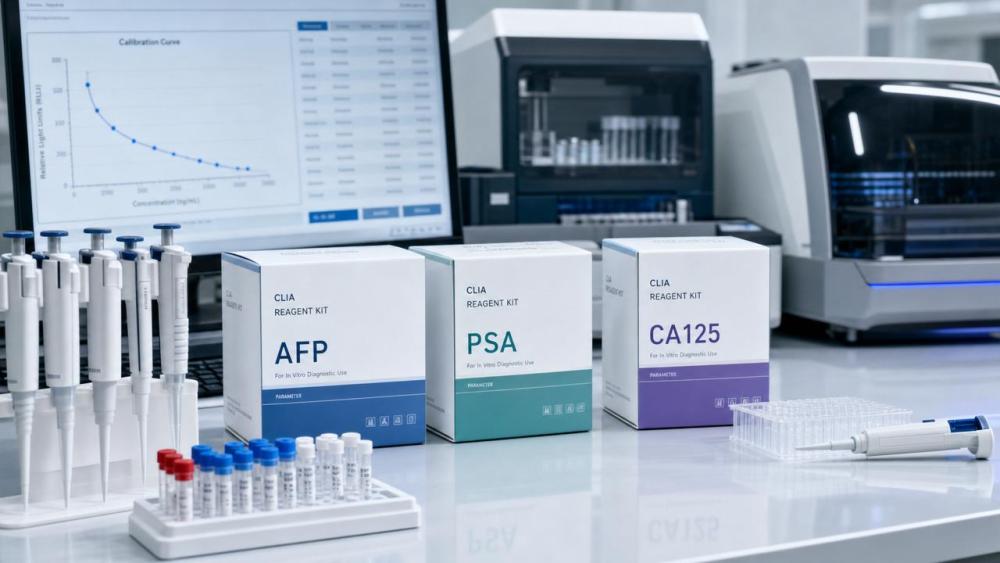
Singapore’s Health Sciences Authority (HSA) announced a significant regulatory update on 15 May 2026, expanding oversight of chemiluminescence-based immunoassay (CLIA) reagents—particularly those used for tumor marker detection. The change directly affects exporters, distributors, and service providers in the in vitro diagnostics (IVD) sector, especially those engaged in cross-border trade between China and Singapore. Its impact stems not from stricter registration requirements, but from newly mandated local clinical validation steps tied to Singaporean population baselines.
Event Overview
On 15 May 2026, the Singapore Health Sciences Authority (HSA) issued a notice extending its Chemical Luminescence-based Immunoassay Products (CEP) regulatory list to include 12 high-frequency tumor marker assays: AFP, CEA, CA125, PSA, CA19-9, CA15-3, NSE, SCC, CYFRA 21-1, β-hCG, Ferritin, and LDH. Effective 1 August 2026, all imported batches of these reagents must be accompanied by a ‘Local Population Baseline Comparison Report’—generated exclusively by HSA-designated laboratories in Singapore.
Industries Affected
Direct trading enterprises: Exporters and importers handling CLIA reagents for the listed tumor markers will face extended lead times (typically +4–6 weeks per batch) and added costs (~USD 1,800–2,500 per report). Since the report is batch-specific—not product-specific—repeat imports require repeat testing, undermining just-in-time supply models.
Raw material procurement enterprises: Firms sourcing critical components (e.g., monoclonal antibodies, magnetic beads, or chemiluminescent substrates) for tumor marker assays may experience upstream delays. Suppliers now need to align with downstream clients’ new documentation timelines; some are beginning to request pre-submission of lot-level stability and interference data to expedite local comparison workflows.
Manufacturing enterprises: Chinese IVD manufacturers producing CE-marked CLIA kits must now treat Singapore as a de facto clinical validation market—not merely a regulatory filing destination. While no new performance claims are required, the baseline report introduces an implicit requirement for analytical sensitivity/specificity alignment with local reference populations, prompting some firms to revisit assay calibration protocols ahead of shipment.
Supply chain service enterprises: Logistics and regulatory support providers offering ‘regulatory bridge’ services—including local representative appointments, customs clearance, and document verification—are seeing increased demand for end-to-end reporting coordination. Notably, only three Singapore-based labs are currently designated by HSA to issue the required reports, creating a capacity bottleneck and premium pricing for expedited slots.
Key Considerations and Recommended Actions
Verify designation status of intended testing labs
Confirm whether your chosen Singapore lab remains on HSA’s active list of designated facilities (updated quarterly); unlisted labs—even if ISO 15189-accredited—cannot issue valid reports.
Implement batch-level traceability and documentation planning
Integrate local comparison reporting into production scheduling: allocate ≥8 weeks between manufacturing completion and target Singapore arrival date, and retain full lot-level QC records (including calibrator/controls traceability) for potential audit review.
Evaluate feasibility of local sample pooling or collaborative studies
For firms exporting multiple related assays (e.g., full oncology panels), explore joint baseline studies across analytes—subject to HSA approval—to reduce per-assay reporting burden and cost.
Assess strategic value of establishing local technical representation
Companies without a Singapore entity may benefit from appointing a qualified local regulatory agent capable of liaising directly with HSA labs and managing report submission timelines—especially given limited lab capacity and strict report validity windows (6 months from issuance).
Editorial Perspective / Industry Observation
Observably, this policy shift reflects HSA’s broader pivot toward real-world clinical relevance over procedural compliance alone. Unlike EU IVDR’s focus on technical documentation depth, Singapore’s approach embeds local epidemiological context directly into market access—making it less about ‘what the test measures’ and more about ‘how it performs in our population’. Analysis shows this does not signal a move toward full local clinical trials, but rather a calibrated step toward evidence-based adoption thresholds. From an industry perspective, it is better understood not as a barrier, but as an early indicator of how ASEAN regulators may increasingly prioritize population-specific performance benchmarks—especially for high-impact diagnostic categories like oncology.
Conclusion
This regulatory expansion underscores a maturing regional approach to IVD oversight—one that balances global standards with localized clinical utility. For exporters, the immediate challenge lies in operational adaptation; for the broader IVD ecosystem, it signals a longer-term recalibration of what constitutes ‘market-ready’ in Southeast Asia. A rational interpretation is that such measures reward proactive engagement—not just regulatory literacy, but also clinical and logistical preparedness.
Source Attribution
Official notice: Singapore Health Sciences Authority (HSA), ‘Notice on Expansion of CEP Regulatory Scope’, Ref. No. HSA/IVD/NOTICE/2026/007, published 15 May 2026. Available at: https://www.hsa.gov.sg/ivd-notices.
Note: HSA has indicated that the list of designated laboratories and acceptable report templates will be updated on a rolling basis; stakeholders are advised to monitor HSA’s IVD portal for revisions through Q2 2026.
Recommended News
 May 17, 2026Brazil ANVISA Mandates Local Leakage Testing for Imported Anesthesia WorkstationsBrazil ANVISA mandates local leakage testing for imported anesthesia workstations—learn how to comply, avoid delays, and ensure market access.
 May 17, 2026China Introduces HS Code 8471.91.12 for AI Ventilator ModulesChina's new HS Code 8471.91.12 for AI ventilator modules boosts export refunds & regulatory clarity—unlock competitive edge in global medtech trade now.
 May 17, 2026GCC States Adopt New Interoperability Rules for 4K Rigid EndoscopesGCC States adopt new interoperability rules for 4K rigid endoscopes—mandating DICOM SR, HL7-FHIR, and IEC 62304 Class C. Act now to secure market access before Oct 1, 2026.
 May 17, 2026Singapore HSA Expands Chemiluminescence Reagent RegulationSingapore HSA expands chemiluminescence reagent regulation—12 tumor marker assays now require local population baseline reports. Act now to avoid delays & costs.
 May 17, 2026WHO Adds 3 Chinese PCR Platforms to Essential Medicines ListWHO adds 3 Chinese PCR platforms to Essential Diagnostics List—boosting LMIC market access, tender eligibility & global IVD supply chain opportunities.
 May 17, 2026EU Launches Photon-Counting CT Traceability PilotEU's Photon-Counting CT Traceability Pilot launches—key for manufacturers, AI developers & regulators. Discover compliance insights, 17-node requirements & early adoption advantages.
 May 17, 2026Philippines FDA Approves China-Made Capsule Endoscopes via Fast TrackPhilippines FDA approves China-made capsule endoscopes via Fast Track—boosting GI diagnostics trade. Key for exporters, OEMs & supply chain partners.
 May 17, 2026India NPPA Waives Local Service Hub Requirement for 12 Chinese ECMO MakersIndia NPPA waives local service hub requirement for 12 Chinese ECMO makers — key update for exporters, regulators & service providers targeting India’s emergency medical equipment market.
 May 17, 2026Saudi SFDA Introduces New HS Code for MRI Liquid Helium SystemsSaudi SFDA introduces new HS code 8418.99.11 for MRI liquid helium systems—key update for exporters, OEMs & cryo-suppliers. Act now to avoid delays!
 May 17, 2026FDA Issues New Anti-Fog Requirements for Flexible EndoscopesFDA's new anti-fog requirements for flexible endoscopes take effect June 1, 2026 — learn how to comply, avoid port detention, and secure U.S. market access.
 May 16, 2026How interventional radiology equipment affects uptimeInterventional radiology equipment has a direct impact on uptime. Learn how design, maintenance, and service strategy reduce downtime, protect workflow, and improve clinical reliability.
 May 16, 2026Medical device compliance risks that delay market accessMedical device compliance risks can quietly delay approvals and market entry. Learn the hidden gaps, key checklist items, and practical steps to speed access and protect product credibility.
 May 16, 2026Digital healthcare solutions can fail without this planDigital healthcare solutions fail when planning ignores workflow, data, compliance, and scale. Discover the framework that turns pilots into safe, scalable clinical success.
 May 16, 2026Is medical imaging molecular diagnostics worth the cost?Medical imaging molecular diagnostics: is it worth the cost? Explore ROI, faster diagnosis, lower repeat testing, and smarter hospital investment decisions.
 May 16, 2026Why surgical imaging technology matters in complex casesSurgical imaging technology improves precision, workflow, and safety in complex procedures. Discover how to compare solutions, control costs, and choose with confidence.
 May 16, 2026How to compare advanced diagnostic systems before buyingAdvanced diagnostic systems buying guide: compare performance, compliance, interoperability, service, and total cost to choose the right solution with confidence.
 May 16, 2026When do biochemical molecular diagnostics add real value?Biochemical molecular diagnostics add real value when speed, precision, and treatment decisions matter. Discover where they improve outcomes, workflow efficiency, and ROI.
 May 16, 2026Healthcare intelligence is reshaping smarter care decisionsHealthcare intelligence helps buyers turn complex MedTech data into smarter care decisions, faster evaluations, stronger compliance confidence, and long-term ROI.
 May 16, 2026How outdated hospital technology infrastructure slows careHospital technology infrastructure impacts diagnosis speed, safety, and ROI. Learn how outdated systems slow care and what hospitals can modernize first.
 May 16, 2026What is driving medical equipment innovation in 2026?Medical equipment innovation in 2026 is driven by AI diagnostics, precision imaging, IVD automation, compliance, and hospital ROI. Discover the trends shaping MedTech growth.
 May 16, 2026World's First Medical-Grade Carbon Fiber Digital OR Table Line Enters Mass ProductionWorld's first medical-grade carbon fiber digital OR table line now in mass production—faster lead times, ISO/IEC compliance, and HIS/PACS integration. Discover the impact on global medtech supply chains.
 May 16, 2026FDA Updates IVD Software Validation GuidanceFDA IVD software validation guidance updated: Real-time algorithm re-validation now required for PCR & cloud-based SaMD—act before Aug 7, 2026.
 May 16, 2026EU MDR Annex XVI Extended to Endoscope AccessoriesEU MDR Annex XVI now covers endoscope accessories—light sources, video processors & camera controls. Act now to ensure CE compliance by 1 June 2026 and avoid EU market access delays.
 May 16, 2026WHO Adds 5 Portable Capsule Endoscope Kits to EML AnnexWHO adds 5 portable capsule endoscope kits to EML Annex—key for exporters, regulators & health tech buyers in LMICs. Learn implications now.












Weekly Insights
Stay ahead with our curated technology reports delivered every Monday.