
Singapore HSA Tightens Chemiluminescence Reagent Import Rules
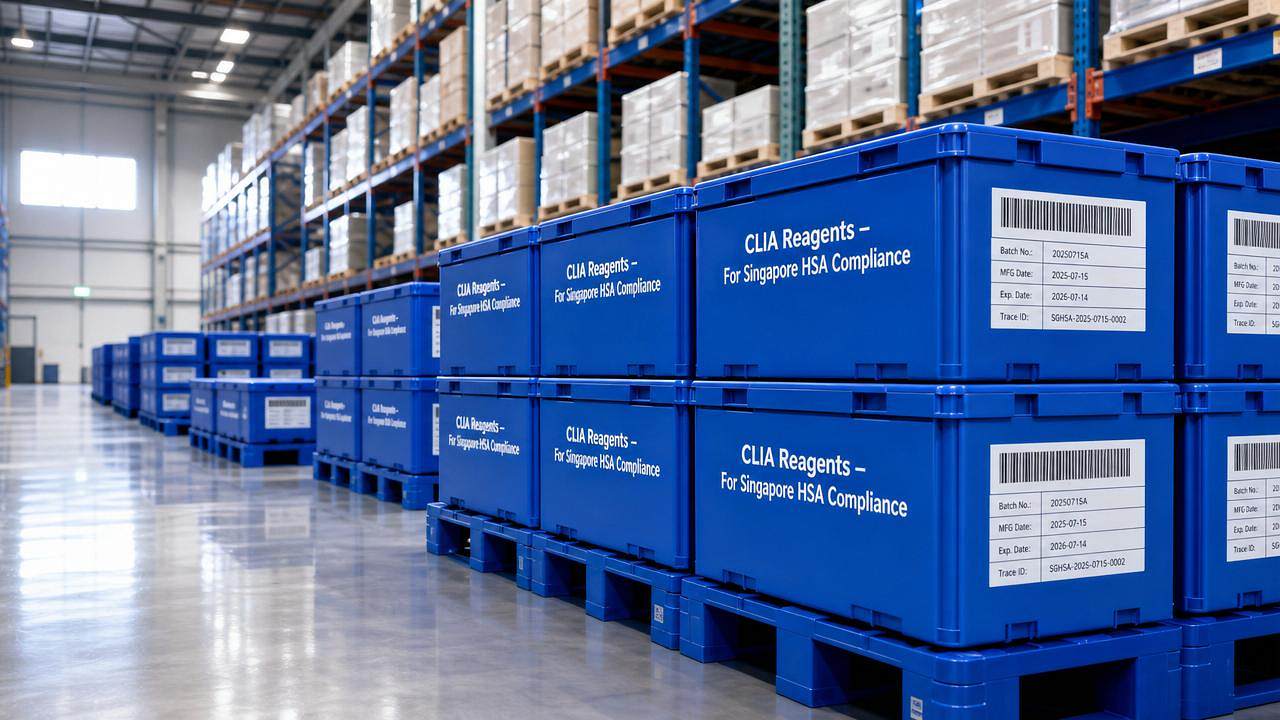




On 14 May 2026, the Health Sciences Authority (HSA) of Singapore updated its Guidelines for In Vitro Diagnostic (IVD) Reagent Import Registration, introducing new requirements for chemiluminescence-based IVD reagents. Effective 1 July 2026, these measures will significantly affect cross-border supply chains serving Singapore’s clinical diagnostics market — particularly manufacturers and distributors based in China and other Asia-Pacific countries without established local quality infrastructure.
Event Overview
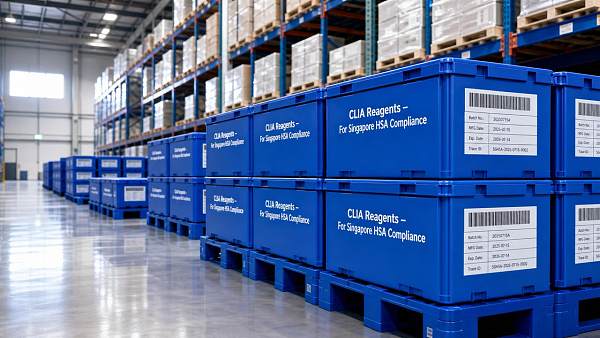
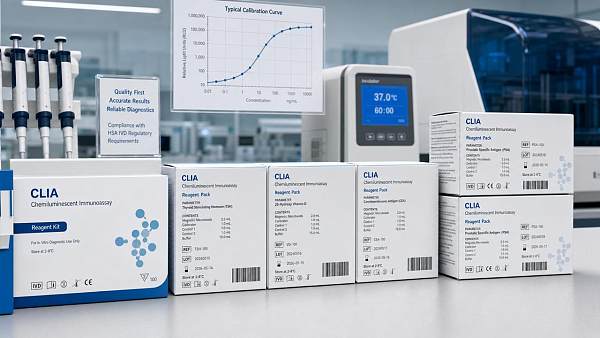
On 14 May 2026, the Singapore Health Sciences Authority (HSA) published an update to its IVD Reagent Import Registration Guidelines. From 1 July 2026, all imported chemiluminescence reagents must be accompanied by: (1) full traceability documentation for critical raw materials — including country-of-origin certificates for key enzymes and antibodies; and (2) performance comparison reports issued by at least two Singapore-based reference laboratories. The requirement applies to all importers, regardless of manufacturer location or registration history.
Industries Affected
Direct trading enterprises — Importers and regional distributors that act as legal registrants or authorized representatives for foreign IVD manufacturers will face extended clearance timelines and increased administrative burden. Without pre-submitted, HSA-accepted documentation, shipments may be held at customs pending verification, directly impacting order fulfillment cycles and contract compliance.
Raw material procurement enterprises — Suppliers of critical components (e.g., horseradish peroxidase, anti-human IgG monoclonal antibodies) must now provide auditable, jurisdictionally verified origin evidence — not just supplier declarations. This raises due diligence expectations across upstream sourcing, especially where multi-tier subcontracting is common.
Manufacturing enterprises — Chinese and ASEAN-based IVD manufacturers relying on centralized production and export-only models will need to adapt internal quality systems to support dual-track documentation: one aligned with domestic regulatory standards (e.g., NMPA), another tailored to Singapore’s traceability and local validation demands. Absence of a formalized local quality collaboration mechanism — such as joint method transfer or shared reference material protocols — increases risk of non-acceptance.
Supply chain service enterprises — Logistics providers, regulatory consultants, and lab accreditation intermediaries must expand service scope to include traceability mapping, local laboratory coordination, and pre-submission dossier review. Demand is expected to rise for bilingual (English–Mandarin) technical liaisons familiar with both HSA’s evaluation criteria and China’s GMP for IVDs.
Key Considerations and Recommended Actions
Verify and map material provenance ahead of submission
Importers should audit existing bills of materials for chemiluminescence kits and obtain notarized origin certificates from each critical raw material supplier — especially for enzymes and capture/detection antibodies. Retrospective certification is unlikely to satisfy HSA’s ‘full溯源 chain’ expectation.
Engage Singapore reference labs early
Performance comparison reports require method alignment, sample sets, and statistical concordance analysis. Initiating discussions with at least two HSA-recognized labs (e.g., Singapore General Hospital’s Clinical Pathology Lab, Duke-NUS Diagnostic Innovation Centre) by Q3 2026 is advisable to avoid bottlenecks during peak submission periods.
Assess feasibility of local quality delegation
For manufacturers without Singapore-based entities, appointing a qualified local Authorized Representative with documented quality oversight capacity — beyond registration-only functions — may mitigate delays. HSA explicitly references ‘local quality collaborative mechanisms’ as a mitigating factor in its guidance notes.
Editorial Perspective / Industry Observation
Observably, this policy shift reflects a broader regional trend toward granular supply chain accountability — moving beyond final-product conformity to upstream control points. While framed as a quality assurance measure, the dual emphasis on origin documentation and local empirical validation suggests HSA is prioritizing diagnostic reliability in high-volume automated platforms (e.g., Roche Cobas, Siemens Atellica), where reagent variability can cascade into patient-level misclassification. Analysis shows that similar requirements are under discussion in Malaysia’s MOH and Thailand’s FDA — indicating potential harmonization pressure across ASEAN markets. From an industry perspective, this is less about ‘compliance overhead’ and more about recalibrating R&D-to-regulatory handoffs for export-oriented IVD firms.
Conclusion
This update signals a structural inflection point for IVD exporters targeting Singapore: regulatory access is increasingly contingent on demonstrable, locally anchored quality governance — not just technical equivalence. For companies still operating under ‘submit-and-wait’ regulatory paradigms, the window to build adaptive, evidence-based market entry strategies is narrowing. A measured, phased response — combining documentation readiness, lab engagement, and local representation — remains the most pragmatic path forward.
Source Attribution
Primary source: Health Sciences Authority (HSA) Singapore, Revised Guidelines for Import Registration of In Vitro Diagnostic Reagents, issued 14 May 2026 (Ref: HSA/IVD/GUIDE/2026/05). Official notice accessible via https://www.hsa.gov.sg. Note: HSA has indicated that a formal consultation period for implementation clarifications will open in June 2026; further details on acceptable formats for traceability documentation and lab accreditation criteria remain pending and are under active monitoring.
Recommended News
 May 16, 2026World's First Medical-Grade Carbon Fiber Digital OR Table Line Enters Mass ProductionWorld's first medical-grade carbon fiber digital OR table line now in mass production—faster lead times, ISO/IEC compliance, and HIS/PACS integration. Discover the impact on global medtech supply chains.
 May 16, 2026FDA Updates IVD Software Validation GuidanceFDA IVD software validation guidance updated: Real-time algorithm re-validation now required for PCR & cloud-based SaMD—act before Aug 7, 2026.
 May 16, 2026EU MDR Annex XVI Extended to Endoscope AccessoriesEU MDR Annex XVI now covers endoscope accessories—light sources, video processors & camera controls. Act now to ensure CE compliance by 1 June 2026 and avoid EU market access delays.
 May 16, 2026WHO Adds 5 Portable Capsule Endoscope Kits to EML AnnexWHO adds 5 portable capsule endoscope kits to EML Annex—key for exporters, regulators & health tech buyers in LMICs. Learn implications now.
 May 16, 2026China Customs Introduces New HS Code for Superconducting MRI Liquid Helium Cooling ModulesSuperconducting MRI liquid helium cooling modules now qualify for a 13% export VAT rebate under new China Customs HS code 8412.90.91 — act before June 1!
 May 16, 2026India NPPA Adds ECMO Systems to National Emergency Reserve ListECMO systems now on India’s NPPA emergency reserve list—key implications for Chinese exporters, local service mandates, and tender eligibility in 2026–27.
 May 16, 2026Middle East Expands Digital OR Mutual Recognition to Include Chinese 4K Flexible Endoscopy SystemsMiddle East expands Digital OR mutual recognition to include Chinese 4K flexible endoscopy systems—unlock GCC public procurement access without redundant certifications.
 May 16, 2026Philippines FDA Mandates Tropical Adaptation Testing for ICU VentilatorsPhilippines FDA mandates tropical adaptation testing for ICU ventilators: 72h @45°C/95% RH, NMI-validated only. Act now to avoid delays & ensure market access.
 May 16, 2026Singapore HSA Tightens Chemiluminescence Reagent Import RulesSingapore HSA tightens chemiluminescence reagent import rules — traceability, local lab validation & origin certs now mandatory from 1 July 2026. Act now to avoid delays!
 May 16, 2026TÜV Rheinland Launches First Photon-Counting CT Imaging Chain CertificationPhoton-counting CT Imaging Chain Certification by TÜV Rheinland — the world’s first end-to-end clinical compliance standard for detectors, AI reconstruction & DICOM quality. Act now to secure EU/US market access.
 May 15, 2026Clinical Compliance Standards: 7 Risks That Delay Market AccessClinical compliance standards: discover 7 hidden MedTech risks that delay market access, stall approvals, and disrupt launches—plus how distributors can spot them early.
 May 15, 2026Digital Radiography ROI: When Upgrade Costs Start Paying BackMedical imaging equipment ROI explained: learn when digital radiography upgrade costs start paying back through faster workflows, lower operating costs, and stronger utilization.
 May 15, 2026PCR Platforms in 2026: What Changes Matter for Test Menu PlanningPrecision medicine technology is reshaping PCR platform choices for 2026. Discover how menu flexibility, automation, compliance, and data integration drive smarter test planning.
 May 15, 2026Hematology Analyzers: Common Accuracy Issues in Daily Lab OperationIVD instruments in hematology can face daily accuracy issues from calibration drift, sample quality, and reagent control. Discover practical fixes to improve CBC reliability and lab efficiency.
 May 15, 2026ICU Ventilators: Performance Checks That Support Safer Critical CareCritical care equipment performance checks for ICU ventilators help improve alarm accuracy, oxygen delivery, and patient safety. Learn practical steps for safer, compliant care.
 May 15, 2026Surgical Lights and Cameras: What Matters for Hybrid OR UpgradesOperating room technology upgrades for hybrid ORs: learn what matters in surgical lights and cameras, from visibility and integration to compliance, workflow, and long-term ROI.
 May 15, 2026Electrosurgical Units: Cost Drivers Behind Service and Replacement CyclesOperating room technology costs go beyond purchase price. Learn what drives electrosurgical unit service intervals, compliance risk, downtime, and replacement timing to protect budgets and OR efficiency.
 May 15, 2026Rigid Endoscopy Systems: Setup Tips That Reduce OR DelaysMinimally invasive surgery equipment users can cut OR delays with these rigid endoscopy setup tips. Learn faster checks, troubleshooting steps, and workflow fixes for safer, smoother procedures.
 May 15, 2026Flexible Videoscopes: Key Failure Points to Check Before PurchaseMedical endoscope systems buyers: learn the key flexible videoscope failure points to check before purchase, reduce downtime, control repair costs, and make safer, ROI-driven decisions.
 May 15, 2026How to Compare Capsule Endoscope Systems by Image Quality and ThroughputMedical endoscope systems for capsule imaging compared by image quality, throughput, AI workflow, and reliability. Learn how to choose the best platform with confidence.
 May 15, 2026Singapore HSA Tightens Chemiluminescence Reagent Import RulesChemiluminescence reagent import rules tightened by Singapore HSA — discover what the new GMP & local validation requirements mean for your IVD business.
 May 15, 2026WHO Adds Capsule Endoscopes to Essential Medicines ListCapsule endoscopes now on WHO Essential Medicines List—key for global health procurement, PQ certification & AI-powered primary care diagnostics.
 May 15, 2026World's First Medical-Grade Carbon Fiber Digital OR Table Line Launches in JiangsuWorld's first ASTM F2953-23–compliant carbon fiber digital OR table line launches in Jiangsu—8-week delivery, DICOM-OR/OR.NET ready. OEMs & hospitals: accelerate OR modernization.
 May 15, 2026India to Add ECMO Systems to National Emergency ReserveECMO systems now slated for India’s National Emergency Reserve — discover key ISO 13485 & local service requirements for global suppliers.






Weekly Insights
Stay ahead with our curated technology reports delivered every Monday.