
How interventional radiology equipment affects uptime
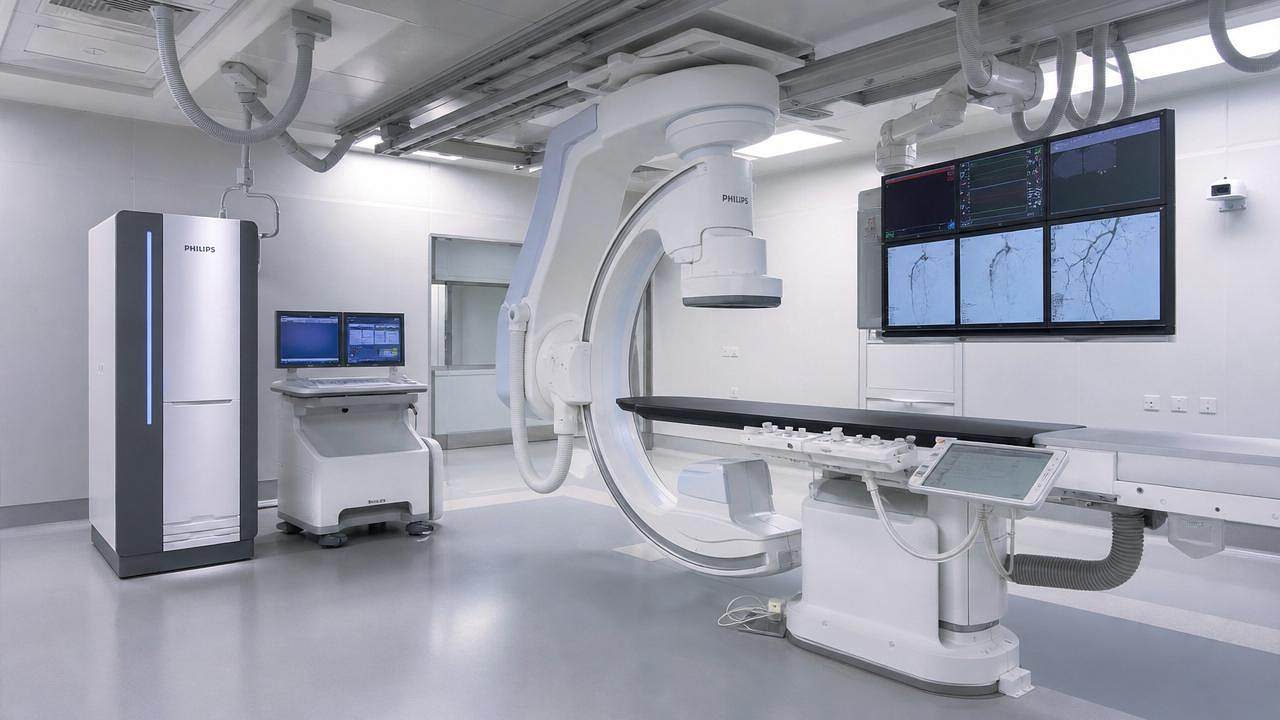




For service and maintenance teams, interventional radiology equipment directly shapes uptime, workflow continuity, and patient safety. From imaging chains and generators to detector performance and table motion systems, every component affects reliability under high procedural demand. Understanding how equipment design, serviceability, and preventive maintenance influence availability is essential for reducing downtime, accelerating repairs, and supporting consistent clinical performance.
Why does interventional radiology equipment have such a strong impact on uptime?
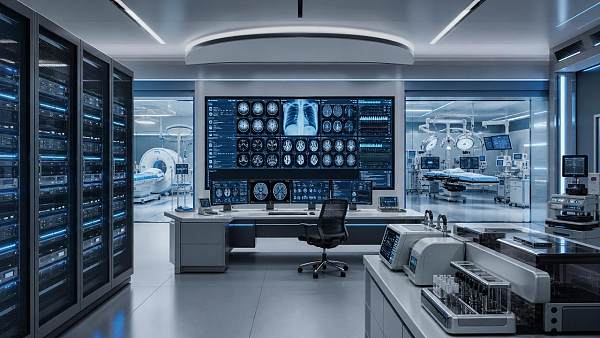
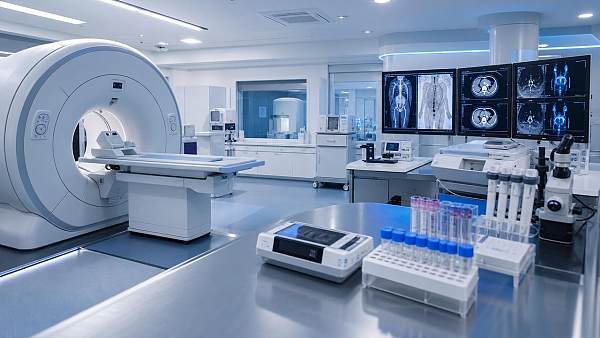
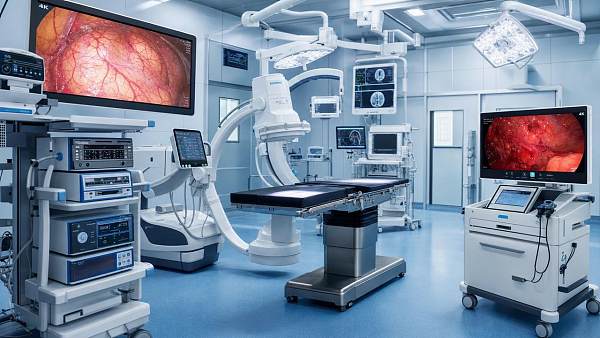
Interventional radiology equipment is not a single device. It is a connected clinical system with imaging, mechanics, software, power, cooling, and networking working together.
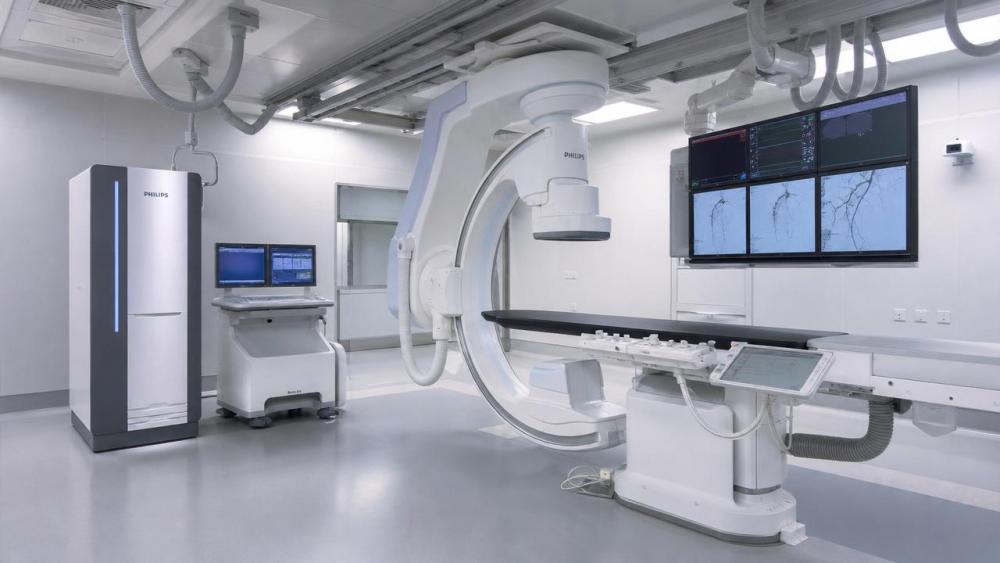
When one subsystem weakens, the whole procedure room slows down. Even minor faults can delay cases, extend patient preparation time, or force schedule changes.
This is why interventional radiology equipment affects uptime more than many stand-alone medical devices. It supports continuous, procedure-driven clinical operations.
In high-volume hospitals, uptime means more than technical availability. It also includes image readiness, predictable table movement, clean fluoro output, and stable software response.
A room can appear operational but still underperform. Slow boot cycles, detector artifacts, or gantry positioning issues can reduce usable uptime.
For AMDS, this links directly to the broader digital healthcare picture. Precision diagnostics and minimally invasive treatment depend on dependable equipment behavior.
Which components usually drive downtime?
- X-ray generators that drift under repeated load
- Flat panel detectors with artifact development
- Table motion assemblies with wear or calibration loss
- Cooling systems unable to manage long case sequences
- Control software with unstable updates or interface delays
- Cables, connectors, and power distribution points
Reliable interventional radiology equipment is therefore defined by system stability, not only image quality specifications on paper.
How do design and engineering choices influence serviceability?
Design decisions made early in product development strongly affect field uptime later. Serviceability begins with access, modularity, diagnostics, and documented maintenance pathways.
Interventional radiology equipment with modular detector units or isolated power boards can often be repaired faster than tightly integrated systems.
Built-in diagnostics also matter. Clear fault codes shorten troubleshooting and reduce unnecessary part replacement.
Remote monitoring adds another uptime advantage. Service teams can identify thermal trends, voltage instability, or software conflicts before visible failure occurs.
Mechanical accessibility is often underestimated. If replacing a drive assembly requires excessive disassembly, repair windows become longer and procedural disruption increases.
Software architecture is equally important. Interventional radiology equipment must support secure updates without creating compatibility problems across imaging, archiving, and navigation workflows.
What should be reviewed in design-related uptime planning?
- Time required to access high-failure components
- Availability of event logs and self-test records
- Swap-and-return versus bench repair strategy
- Software rollback capability after updates
- Cooling and power resilience during peak procedural loads
Well-designed interventional radiology equipment reduces not only repair time, but also uncertainty during diagnosis and scheduling.
What maintenance practices improve uptime the most?
Preventive maintenance is the most direct way to protect interventional radiology equipment uptime. However, routine tasks must match actual usage intensity and environment.
A fixed calendar alone is not enough. Rooms with dense vascular, oncology, or emergency procedures often need usage-based checks.
Critical maintenance actions include detector calibration, generator verification, table alignment checks, cooling inspection, cable wear review, and software health assessment.
Cleaning discipline also plays a hidden role. Dust accumulation, blocked airflow, and fluid exposure can shorten component life in interventional radiology equipment.
Another strong practice is trend-based maintenance. Repeated minor alarms often appear before a major service event.
When data is tracked over time, teams can intervene earlier, avoid emergency shutdowns, and align service with clinical downtime windows.
Recommended maintenance focus areas
How can teams judge whether interventional radiology equipment is truly reliable?
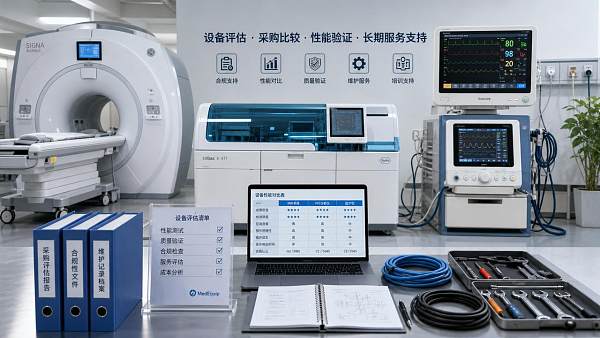
Reliability should be measured through operational evidence, not only brochure claims. The best review combines technical data, service history, and procedural fit.
Start with mean time between failures, mean time to repair, and repeat fault patterns. Then connect these metrics to room utilization and case complexity.
Interventional radiology equipment that performs well in moderate workloads may behave differently under intensive daily use.
Parts logistics are another deciding factor. Excellent equipment still creates downtime if key modules have long delivery cycles.
Support infrastructure matters too. Access to trained engineers, remote diagnostics, and validated spare inventory all affect real uptime performance.
Quick reliability checklist
- Does the interventional radiology equipment have transparent service records?
- Are common failure parts locally available?
- Can remote diagnosis shorten first response time?
- Do software updates follow controlled validation steps?
- Is performance stable during long, complex procedures?
This practical review helps distinguish nominal availability from dependable clinical readiness.
What are the most common uptime risks and misconceptions?
One common misconception is that newer interventional radiology equipment automatically means higher uptime. Advanced features may add performance, but also complexity.
Another mistake is focusing only on major failures. In practice, repeated minor faults often cause more workflow loss than one large breakdown.
Environmental conditions are also underestimated. Room temperature control, electrical quality, and cleaning protocols directly affect system stability.
Some organizations also delay maintenance to maximize daily case volume. This can create short-term gains but larger future outages.
A final risk is weak documentation. Without accurate service records, recurring issues in interventional radiology equipment remain hidden and root causes stay unresolved.
Risk comparison table
How should uptime planning connect with cost, compliance, and long-term value?
Uptime is not only a technical target. It also influences cost control, patient scheduling, regulatory readiness, and return on investment.
Interventional radiology equipment with unstable availability creates hidden costs through canceled procedures, overtime, rescheduling pressure, and emergency service calls.
Compliance is also affected. In highly regulated healthcare environments, poor documentation or unresolved performance drift can become audit concerns.
Long-term value comes from balancing acquisition quality, service support, maintenance planning, and operational visibility. The lowest purchase price rarely delivers the highest availability.
AMDS consistently observes that resilient clinical technology requires both engineering depth and service intelligence. This is especially true for interventional radiology equipment.
The most effective next step is simple. Audit current downtime causes, map them to subsystems, review maintenance intervals, and compare them with actual room usage.
Then prioritize serviceability, diagnostics, and spare readiness alongside image performance. That approach turns interventional radiology equipment into a stronger uptime asset.
When uptime strategy is treated as part of clinical quality, equipment decisions become clearer, repairs become faster, and procedure continuity becomes more dependable.
Recommended News
 May 16, 2026How interventional radiology equipment affects uptimeInterventional radiology equipment has a direct impact on uptime. Learn how design, maintenance, and service strategy reduce downtime, protect workflow, and improve clinical reliability.
 May 16, 2026Medical device compliance risks that delay market accessMedical device compliance risks can quietly delay approvals and market entry. Learn the hidden gaps, key checklist items, and practical steps to speed access and protect product credibility.
 May 16, 2026Digital healthcare solutions can fail without this planDigital healthcare solutions fail when planning ignores workflow, data, compliance, and scale. Discover the framework that turns pilots into safe, scalable clinical success.
 May 16, 2026Is medical imaging molecular diagnostics worth the cost?Medical imaging molecular diagnostics: is it worth the cost? Explore ROI, faster diagnosis, lower repeat testing, and smarter hospital investment decisions.
 May 16, 2026Why surgical imaging technology matters in complex casesSurgical imaging technology improves precision, workflow, and safety in complex procedures. Discover how to compare solutions, control costs, and choose with confidence.
 May 16, 2026How to compare advanced diagnostic systems before buyingAdvanced diagnostic systems buying guide: compare performance, compliance, interoperability, service, and total cost to choose the right solution with confidence.
 May 16, 2026When do biochemical molecular diagnostics add real value?Biochemical molecular diagnostics add real value when speed, precision, and treatment decisions matter. Discover where they improve outcomes, workflow efficiency, and ROI.
 May 16, 2026Healthcare intelligence is reshaping smarter care decisionsHealthcare intelligence helps buyers turn complex MedTech data into smarter care decisions, faster evaluations, stronger compliance confidence, and long-term ROI.
 May 16, 2026How outdated hospital technology infrastructure slows careHospital technology infrastructure impacts diagnosis speed, safety, and ROI. Learn how outdated systems slow care and what hospitals can modernize first.
 May 16, 2026What is driving medical equipment innovation in 2026?Medical equipment innovation in 2026 is driven by AI diagnostics, precision imaging, IVD automation, compliance, and hospital ROI. Discover the trends shaping MedTech growth.
 May 16, 2026World's First Medical-Grade Carbon Fiber Digital OR Table Line Enters Mass ProductionWorld's first medical-grade carbon fiber digital OR table line now in mass production—faster lead times, ISO/IEC compliance, and HIS/PACS integration. Discover the impact on global medtech supply chains.
 May 16, 2026FDA Updates IVD Software Validation GuidanceFDA IVD software validation guidance updated: Real-time algorithm re-validation now required for PCR & cloud-based SaMD—act before Aug 7, 2026.
 May 16, 2026EU MDR Annex XVI Extended to Endoscope AccessoriesEU MDR Annex XVI now covers endoscope accessories—light sources, video processors & camera controls. Act now to ensure CE compliance by 1 June 2026 and avoid EU market access delays.
 May 16, 2026WHO Adds 5 Portable Capsule Endoscope Kits to EML AnnexWHO adds 5 portable capsule endoscope kits to EML Annex—key for exporters, regulators & health tech buyers in LMICs. Learn implications now.
 May 16, 2026China Customs Introduces New HS Code for Superconducting MRI Liquid Helium Cooling ModulesSuperconducting MRI liquid helium cooling modules now qualify for a 13% export VAT rebate under new China Customs HS code 8412.90.91 — act before June 1!
 May 16, 2026India NPPA Adds ECMO Systems to National Emergency Reserve ListECMO systems now on India’s NPPA emergency reserve list—key implications for Chinese exporters, local service mandates, and tender eligibility in 2026–27.
 May 16, 2026Middle East Expands Digital OR Mutual Recognition to Include Chinese 4K Flexible Endoscopy SystemsMiddle East expands Digital OR mutual recognition to include Chinese 4K flexible endoscopy systems—unlock GCC public procurement access without redundant certifications.
 May 16, 2026Philippines FDA Mandates Tropical Adaptation Testing for ICU VentilatorsPhilippines FDA mandates tropical adaptation testing for ICU ventilators: 72h @45°C/95% RH, NMI-validated only. Act now to avoid delays & ensure market access.
 May 16, 2026Singapore HSA Tightens Chemiluminescence Reagent Import RulesSingapore HSA tightens chemiluminescence reagent import rules — traceability, local lab validation & origin certs now mandatory from 1 July 2026. Act now to avoid delays!
 May 16, 2026TÜV Rheinland Launches First Photon-Counting CT Imaging Chain CertificationPhoton-counting CT Imaging Chain Certification by TÜV Rheinland — the world’s first end-to-end clinical compliance standard for detectors, AI reconstruction & DICOM quality. Act now to secure EU/US market access.
 May 15, 2026Clinical Compliance Standards: 7 Risks That Delay Market AccessClinical compliance standards: discover 7 hidden MedTech risks that delay market access, stall approvals, and disrupt launches—plus how distributors can spot them early.
 May 15, 2026Digital Radiography ROI: When Upgrade Costs Start Paying BackMedical imaging equipment ROI explained: learn when digital radiography upgrade costs start paying back through faster workflows, lower operating costs, and stronger utilization.
 May 15, 2026PCR Platforms in 2026: What Changes Matter for Test Menu PlanningPrecision medicine technology is reshaping PCR platform choices for 2026. Discover how menu flexibility, automation, compliance, and data integration drive smarter test planning.
 May 15, 2026Hematology Analyzers: Common Accuracy Issues in Daily Lab OperationIVD instruments in hematology can face daily accuracy issues from calibration drift, sample quality, and reagent control. Discover practical fixes to improve CBC reliability and lab efficiency.





Related News
- 00
0000-00
How interventional radiology equipment affects uptime - 00
0000-00
Digital Radiography ROI: When Upgrade Costs Start Paying Back - 00
0000-00
Healthcare Data Analytics Is Only Useful if Imaging Systems Connect - 00
0000-00
How Accurate Is AI in Medical Imaging Outside Flagship Centers? - 00
0000-00
Medical Imaging Analysis Errors That Start With Bad Data
Weekly Insights
Stay ahead with our curated technology reports delivered every Monday.