
Hematology Analyzers: Common Accuracy Issues in Daily Lab Operation
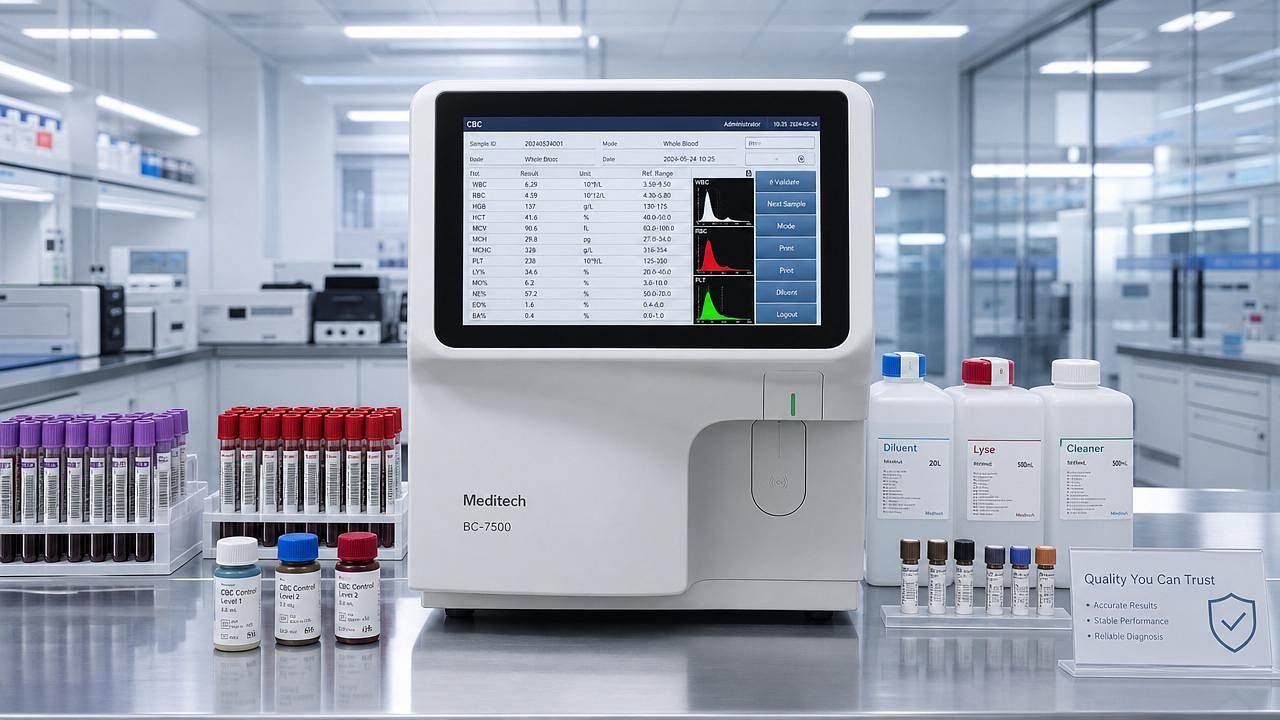




Accuracy pressure is rising across daily hematology testing
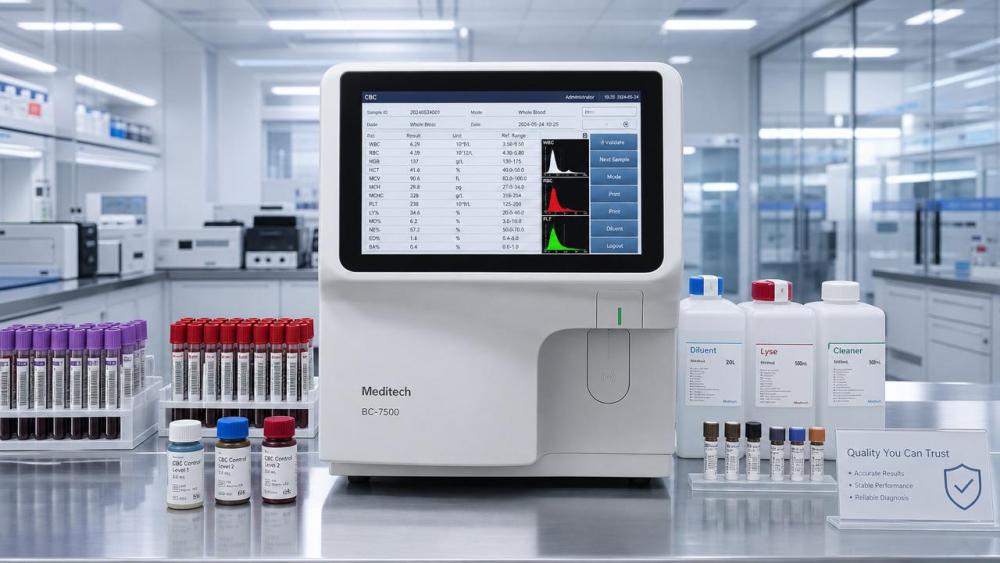
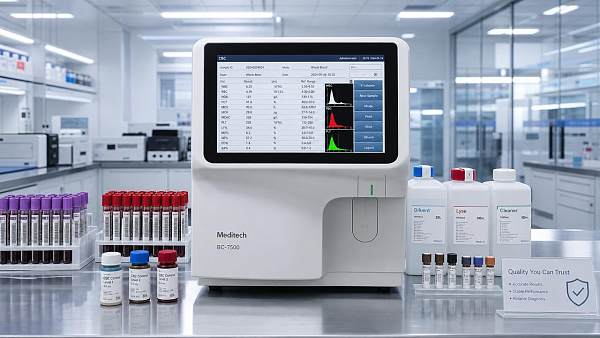
In daily laboratory workflows, hematology analyzers remain central to fast and dependable CBC testing.
Yet even advanced IVD instruments can show accuracy drift under routine operating pressure.
Small errors in sample handling, reagent control, or analyzer maintenance can reshape clinical interpretation.
That matters because CBC results influence infection evaluation, anemia management, oncology monitoring, and emergency decisions.
For organizations tracking the evolution of IVD instruments, hematology accuracy is now a daily performance issue, not only a technical topic.
The wider diagnostics sector is also changing.
Automation is expanding, test volumes are rising, and expectations for traceable quality are becoming stricter worldwide.
Against that background, common accuracy issues deserve closer attention because they affect speed, cost, confidence, and downstream care.
Routine lab signals show a shift from basic operation to precision control
The main trend is clear.
Laboratories are no longer judged only by analyzer uptime or sample throughput.
They are increasingly evaluated by result stability across shifts, operators, lots, and patient populations.
This change is especially visible in hematology, where preanalytical variation can quickly distort otherwise capable IVD instruments.
A modern analyzer may deliver strong specifications in validation studies.
However, daily operation introduces real-world variables that challenge those specifications.
Examples include aged samples, incomplete mixing, clot formation, temperature stress, and delayed testing.
At the same time, digital quality systems are making hidden errors more visible.
Labs can now compare flags, delta checks, repeat rates, and lot-to-lot patterns with greater precision.
As a result, accuracy gaps that once seemed occasional now appear as systematic workflow risks.
Why this trend matters beyond the hematology bench
Hematology analyzers are part of a larger connected ecosystem of IVD instruments.
When one section produces unstable data, repeat testing rises and laboratory coordination weakens.
That can affect turnaround expectations, resource planning, and confidence in integrated diagnostic pathways.
The most common accuracy issues are driven by a few repeating factors
Although analyzers vary by method and complexity, daily errors often cluster around several practical causes.
Calibration drift remains an underestimated risk
Calibration drift rarely appears dramatic at first.
Instead, it slowly moves values away from expected performance windows.
When QC review is superficial, those trends may be missed until patient comparisons become difficult.
Among IVD instruments, hematology systems need disciplined calibration verification because high volumes can magnify small bias.
Sample quality issues are still the biggest source of hidden error
EDTA clots, poor inversion, wrong fill volume, and transport delay remain common daily problems.
Platelet counts are especially vulnerable to clumping and partial clotting.
Leukocyte morphology and red cell indices can also shift when samples age before analysis.
Reagent and environmental control now influence consistency more visibly
As IVD instruments become more sensitive, storage discipline matters more.
Temperature excursions, expired reagents, or unstable diluents can disturb counting channels and differential performance.
Environmental dust, humidity, and power fluctuations can also affect system stability over time.
These accuracy issues reshape performance across the diagnostic workflow
The impact of hematology inaccuracy goes beyond one instrument or one report.
- Repeat testing increases reagent consumption and staff workload.
- Manual smear review becomes more frequent, slowing result release.
- Critical value confirmation may take longer during peak hours.
- Clinicians may question trends when CBC values do not match patient presentation.
- Data comparability across connected IVD instruments may weaken in networked labs.
In a broader healthcare setting, unstable CBC output can undermine confidence in precision diagnostics.
That is why reliable hematology operation aligns with the AMDS vision of absolute clinical safety and measurable efficacy.
The business effect is operational, financial, and reputational
Every unresolved inaccuracy has a cost.
It consumes consumables, delays reporting, complicates audits, and weakens trust in laboratory quality systems.
For platforms managing multiple IVD instruments, consistent hematology output becomes a marker of total diagnostic discipline.
The most effective response is tighter control at a few critical points
Improvement does not always require major system replacement.
In many labs, better accuracy comes from sharper control of routine details.
- Review QC trends daily, not only pass or fail status.
- Verify calibration after maintenance, lot change, or unusual QC movement.
- Standardize sample inversion, transport time, and storage conditions.
- Track clot-related recollection rates and platelet flag frequency.
- Control reagent inventory by temperature, expiry, and lot traceability.
- Document operator interventions for recurring alarms or cleaning steps.
- Compare analyzer performance across shifts to identify handling variation.
Priority checkpoints for daily lab teams
Future-ready hematology practice will depend on smarter quality visibility
The next phase for hematology analyzers is not just faster automation.
It is better visibility into where accuracy degrades during normal operation.
That means combining analyzer data, QC history, maintenance logs, and sample rejection patterns.
Across the IVD instruments landscape, this approach supports traceability, standardization, and stronger clinical confidence.
A practical next step is to audit one month of CBC repeats, flags, and QC deviations.
Then map each issue to calibration, sample quality, reagents, environment, or operator action.
This simple review often reveals the fastest path to better accuracy.
For organizations following AMDS insights on medical technology, hematology offers a clear lesson.
Precision diagnostics depend not only on advanced IVD instruments, but also on disciplined daily execution.
When those two elements stay aligned, laboratories reduce repeats, protect result integrity, and support more confident decisions.
Recommended News
 May 15, 2026Clinical Compliance Standards: 7 Risks That Delay Market AccessClinical compliance standards: discover 7 hidden MedTech risks that delay market access, stall approvals, and disrupt launches—plus how distributors can spot them early.
 May 15, 2026Digital Radiography ROI: When Upgrade Costs Start Paying BackMedical imaging equipment ROI explained: learn when digital radiography upgrade costs start paying back through faster workflows, lower operating costs, and stronger utilization.
 May 15, 2026PCR Platforms in 2026: What Changes Matter for Test Menu PlanningPrecision medicine technology is reshaping PCR platform choices for 2026. Discover how menu flexibility, automation, compliance, and data integration drive smarter test planning.
 May 15, 2026Hematology Analyzers: Common Accuracy Issues in Daily Lab OperationIVD instruments in hematology can face daily accuracy issues from calibration drift, sample quality, and reagent control. Discover practical fixes to improve CBC reliability and lab efficiency.
 May 15, 2026ICU Ventilators: Performance Checks That Support Safer Critical CareCritical care equipment performance checks for ICU ventilators help improve alarm accuracy, oxygen delivery, and patient safety. Learn practical steps for safer, compliant care.
 May 15, 2026Surgical Lights and Cameras: What Matters for Hybrid OR UpgradesOperating room technology upgrades for hybrid ORs: learn what matters in surgical lights and cameras, from visibility and integration to compliance, workflow, and long-term ROI.
 May 15, 2026Electrosurgical Units: Cost Drivers Behind Service and Replacement CyclesOperating room technology costs go beyond purchase price. Learn what drives electrosurgical unit service intervals, compliance risk, downtime, and replacement timing to protect budgets and OR efficiency.
 May 15, 2026Rigid Endoscopy Systems: Setup Tips That Reduce OR DelaysMinimally invasive surgery equipment users can cut OR delays with these rigid endoscopy setup tips. Learn faster checks, troubleshooting steps, and workflow fixes for safer, smoother procedures.
 May 15, 2026Flexible Videoscopes: Key Failure Points to Check Before PurchaseMedical endoscope systems buyers: learn the key flexible videoscope failure points to check before purchase, reduce downtime, control repair costs, and make safer, ROI-driven decisions.
 May 15, 2026How to Compare Capsule Endoscope Systems by Image Quality and ThroughputMedical endoscope systems for capsule imaging compared by image quality, throughput, AI workflow, and reliability. Learn how to choose the best platform with confidence.
 May 15, 2026Singapore HSA Tightens Chemiluminescence Reagent Import RulesChemiluminescence reagent import rules tightened by Singapore HSA — discover what the new GMP & local validation requirements mean for your IVD business.
 May 15, 2026WHO Adds Capsule Endoscopes to Essential Medicines ListCapsule endoscopes now on WHO Essential Medicines List—key for global health procurement, PQ certification & AI-powered primary care diagnostics.
 May 15, 2026World's First Medical-Grade Carbon Fiber Digital OR Table Line Launches in JiangsuWorld's first ASTM F2953-23–compliant carbon fiber digital OR table line launches in Jiangsu—8-week delivery, DICOM-OR/OR.NET ready. OEMs & hospitals: accelerate OR modernization.
 May 15, 2026India to Add ECMO Systems to National Emergency ReserveECMO systems now slated for India’s National Emergency Reserve — discover key ISO 13485 & local service requirements for global suppliers.
 May 15, 2026Middle East Launches Digital OR Compliance Mutual Recognition PlanMiddle East launches Digital OR Compliance Mutual Recognition Plan—key for surgical lights & 4K cameras exporters. Align with IEC 62304 + HL7 FHIR v4.0.1 now to unlock GCC market access.
 May 15, 2026TÜV Rheinland Launches First PC-CT Imaging Chain CertificationPC-CT ChainCert™: TÜV Rheinland’s world-first certification for photon-counting CT imaging chains — boosting trust, market access & OEM collaboration.
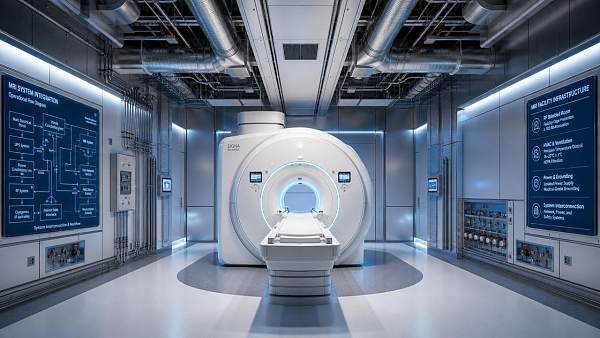
 May 15, 2026China Customs Adds HS Code for Superconducting MRI Helium Cooling ModulesSuperconducting MRI helium cooling modules now have dedicated HS code 8418.99.92—unlocking a 13% export VAT rebate. Act now to optimize customs compliance and boost margins.
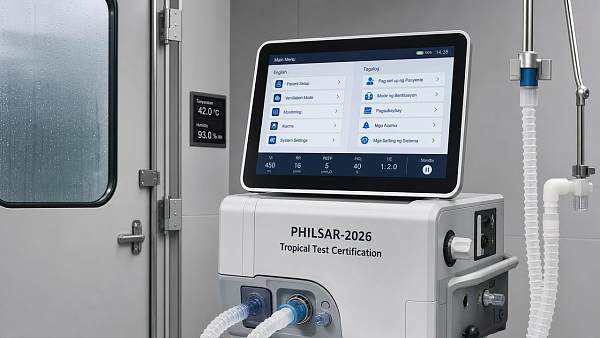
 May 15, 2026Philippines FDA Mandates Local UI & Tropical Testing for ICU VentilatorsPhilippines FDA mandates local UI & tropical testing for ICU ventilators—meet PHILSAR-2026, Tagalog interface, and 40°C/95% RH compliance now.
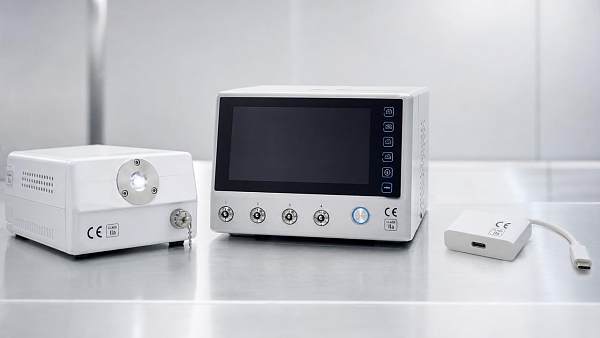
 May 15, 2026EU MDR Annex XVI Extended to Endoscope Accessories Effective June 2026EU MDR Annex XVI now covers endoscope accessories like cold light sources & USB-C adapters—Class IIa CE marking required by June 2026. Act now!
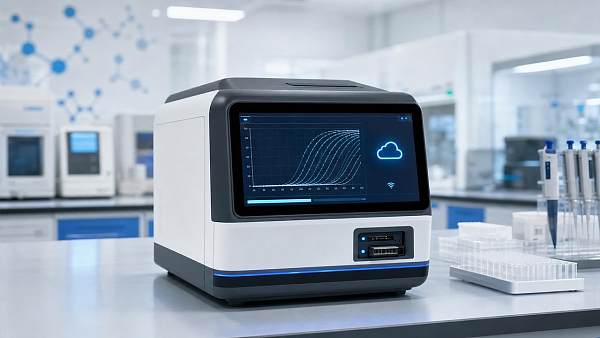
 May 15, 2026FDA Updates IVD Software Validation Guidance for PCR and Molecular DiagnosticsFDA's updated IVD software validation guidance (v2.1) impacts PCR & molecular diagnostics—key for AI, cloud, and remote-data IVD exporters. Act now to align submissions.
 May 14, 2026Biomedical Engineering Priorities Are Changing in New MRI BuildsBiomedical engineering is redefining new MRI builds through lifecycle planning, interoperability, compliance, and cybersecurity—discover how smarter design drives uptime, value, and clinical performance.
 May 14, 2026Healthcare Data Analytics Is Only Useful if Imaging Systems ConnectHealthcare data analytics delivers real value only when imaging systems connect. Learn how unified imaging data improves diagnosis, workflow, compliance, and ROI.
 May 14, 2026When Clinical Decision Support Adds Friction Instead of ClarityClinical decision support should improve care, not add friction. Discover why alerts fail, what frontline teams need, and how to build faster, smarter workflows.
 May 14, 2026Medical Imaging Diagnostics Choice Gets Harder as CT AdvancesMedical imaging diagnostics is getting harder to evaluate as CT advances. Discover how buyers can compare image quality, AI, compliance, workflow, and long-term value before investing.



Weekly Insights
Stay ahead with our curated technology reports delivered every Monday.