
Clinical validation standards are changing faster than expected
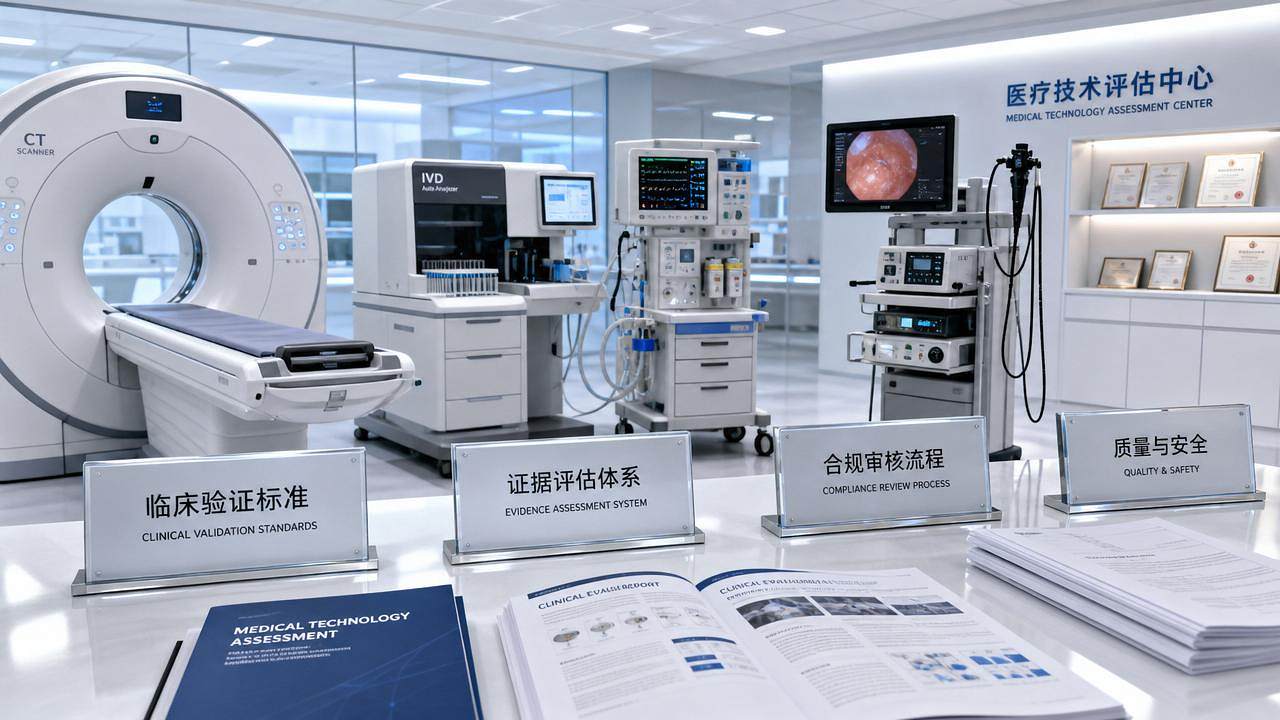




Clinical validation standards are evolving faster than many market stakeholders anticipated, reshaping how medical imaging, IVD, life support, and minimally invasive technologies are assessed for credibility, access, and investment value. For business evaluators, understanding these shifts is no longer optional—it is essential to judging regulatory readiness, clinical differentiation, and long-term commercial viability in an increasingly evidence-driven global MedTech market.
Why are clinical validation standards moving so quickly?
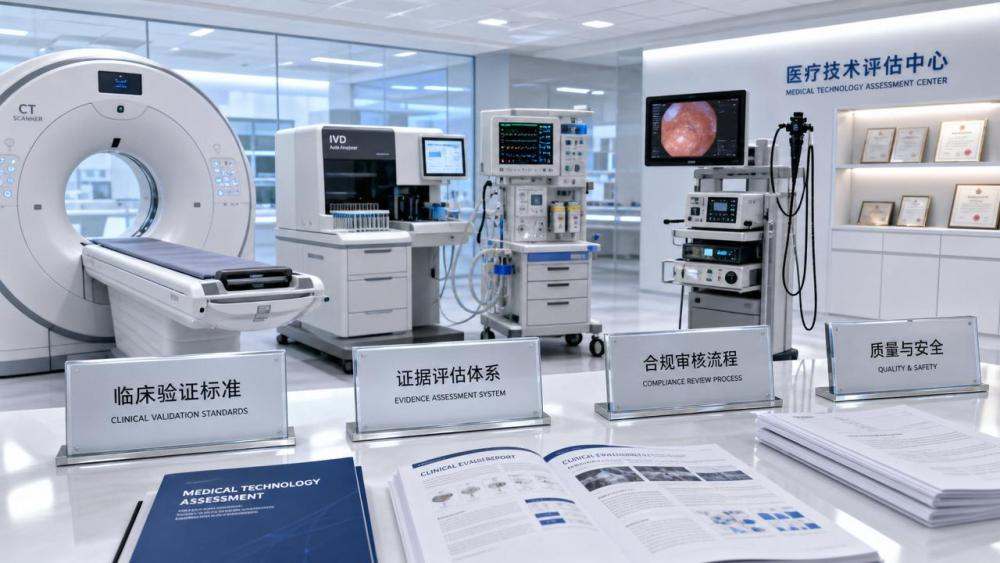
The pace of change is no longer driven by regulation alone. Clinical validation standards now evolve under pressure from AI-enabled devices, precision diagnostics, real-world evidence expectations, and tighter scrutiny from hospital buyers, notified bodies, and reimbursement stakeholders.
For business evaluation teams, this means a product can appear technically strong yet remain commercially fragile if its evidence package does not align with current clinical validation standards across intended use, performance claims, and post-market follow-up.
The shift is especially visible in sectors covered by AMDS: imaging systems, IVD platforms, life support equipment, operating room infrastructure, and endoscopic systems. In all five pillars, buyers increasingly ask not only whether a device works, but for whom, under what workflow conditions, and with what level of reproducible evidence.
- AI functions now require clearer proof of consistency across patient populations, operators, and institutions.
- Cross-border market access demands alignment between regional compliance frameworks and clinical claims strategy.
- Procurement committees want outcome relevance, not just laboratory or engineering performance metrics.
- Post-market surveillance is becoming a business issue because weak field evidence can undermine renewals, tenders, and channel confidence.
What do clinical validation standards mean in practical business terms?
In practical terms, clinical validation standards define how convincingly a manufacturer can connect technical design, clinical use, and measurable outcomes. They help evaluators determine whether a claim is merely plausible or sufficiently supported for market entry, procurement, and scaling.
This matters because evidence is no longer interpreted in a single dimension. A ventilator, PCR analyzer, CT platform, or endoscope may pass internal tests, yet still face objections if its clinical validation standards do not demonstrate relevance to intended users, target settings, and risk profile.
Core evidence layers business evaluators should review
- Analytical or technical performance: signal quality, detection accuracy, image fidelity, system stability, or response control.
- Clinical performance: sensitivity, specificity, diagnostic concordance, procedural utility, or physiological support outcomes in realistic settings.
- Usability and workflow evidence: operator variability, training burden, alarm management, sample handling, or procedure time impact.
- Post-market evidence: complaint trends, adverse event patterns, field corrections, and real-world consistency after deployment.
When these layers are disconnected, the product may look innovative but still fail due diligence. AMDS helps bridge that gap by connecting engineering logic, compliance interpretation, and commercial decision context into one evaluable intelligence framework.
How do standards shift across imaging, IVD, life support, and minimally invasive systems?
Clinical validation standards do not change in the same way across all MedTech categories. Business evaluators should avoid using one evidence template for every product family, because risk tolerance, outcome measurement, and clinical endpoints differ substantially.
The comparison below shows how evidence expectations often vary by device type and why category-specific assessment matters before investment, partnership, or procurement decisions are made.
This comparison shows why clinical validation standards must be interpreted in relation to the care pathway. AMDS follows this category logic closely, combining clinical engineering analysis with access and economic considerations so evaluators can identify which evidence gaps are strategic and which are manageable.
What are business evaluators most likely to miss?
One common mistake is treating clinical validation as a regulatory checkbox instead of a market durability indicator. A product may pass initial review but still underperform commercially if the validation package cannot withstand distributor questions, hospital committee review, or payer skepticism.
Frequent blind spots in commercial due diligence
- Assuming technical superiority automatically proves clinical superiority, especially in imaging algorithms and optical enhancement features.
- Ignoring population transferability, such as whether validation data from one geography, disease mix, or care level applies elsewhere.
- Overlooking workflow dependence, where good test results collapse under high-volume labs, emergency settings, or limited training conditions.
- Undervaluing post-market commitments, which increasingly shape renewals, tender credibility, and distributor confidence.
These are not minor technical issues. They influence forecast reliability, launch timing, negotiation power, and brand risk. For this reason, clinical validation standards should be reviewed together with intended claims, service model, and expansion roadmap.
How should procurement and investment teams assess evidence quality?
A structured review model helps teams compare vendors more fairly. Instead of asking whether evidence exists, ask whether the evidence is decision-grade for the target market, user environment, and product lifecycle stage.
The table below can be used as a practical checklist when clinical validation standards become part of sourcing, partnership screening, or portfolio review.
Using this framework, evaluators can separate devices that are simply documented from those that are truly scalable. That distinction is critical in high-value MedTech, where the cost of evidence weakness often appears after contract signing.
How do changing standards affect cost, timing, and ROI?
Faster-moving clinical validation standards usually increase upfront planning requirements, but they can also reduce downstream waste. A stronger evidence package often shortens objection cycles, supports premium positioning, and improves trust among channel partners and hospital decision groups.
For business evaluators, the key is not to ask whether validation costs money. It always does. The better question is whether underinvestment in validation creates larger hidden costs through launch delay, restricted claims, retesting, or weak adoption.
Typical cost-impact pathways
- Incomplete evidence can trigger redesign of studies, comparator selection, or target indication language.
- Weak clinical relevance may reduce the ability to justify higher pricing, especially under cost-sensitive procurement and DRG-linked budgeting.
- Insufficient post-market plans can increase service, complaint, and distributor support burdens later.
- Clear validation strategy can strengthen negotiations with hospitals that require evidence beyond brochures and technical sheets.
AMDS is particularly useful at this intersection because it does not isolate compliance from economics. By linking clinical claims to access barriers and return logic, the platform helps evaluators judge whether evidence spending supports commercial endurance rather than short-lived launch optics.
What role does AMDS play when the evidence landscape becomes harder to read?
AMDS operates as a strategic intelligence bridge for advanced medical equipment categories where clinical validation standards are becoming more nuanced. Its value lies in translating specialist complexity into decision-ready insight for manufacturers, investors, and commercial assessment teams.
Where AMDS adds decision value
- Compliance interpretation for target-market access, especially where CE MDR and FDA expectations shape evidence strategy.
- Technical deconstruction of imaging algorithms, IVD detection logic, optical enhancements, and support-system reliability claims.
- Commercial framing of high-end equipment ROI in environments where hospital capital spending is constrained and evidence scrutiny is rising.
- Cross-functional insight that helps align engineering, regulatory, and market access priorities before costly misalignment appears.
This is especially relevant for business evaluators who need more than technical summaries. They need to know whether evidence supports a durable market story, whether claims will survive review, and whether the product can hold value as standards continue to tighten.
FAQ: the questions business evaluators ask most about clinical validation standards
How should we compare two products when both claim compliance?
Start with claim specificity and evidence relevance. Two products may both claim compliance, but one may rely on narrow data, non-representative populations, or weak comparators. Review whether the clinical validation standards are met in a way that supports the exact use case, target site, and decision pathway you care about.
Do clinical validation standards matter more for AI-enabled devices?
Yes, often they do. AI features raise additional questions about dataset diversity, drift, reader interaction, update control, and consistency across institutions. In imaging and endoscopy especially, validation must show that algorithmic benefit is clinically meaningful, not merely statistically interesting.
What is the biggest warning sign in a vendor’s evidence package?
A mismatch between bold market claims and narrow evidence scope is a major warning sign. Another is when technical validation is detailed, but workflow performance, user variability, or post-market follow-up is barely addressed. That often signals future friction in adoption and support.
Can strong validation improve procurement outcomes?
Usually yes. Better clinical validation standards can support stronger tender responses, reduce objections from clinical departments, and help justify total-cost decisions. In high-acuity or high-capital categories, credible evidence can influence both selection and long-term utilization.
Why contact AMDS when your evaluation team needs clearer answers?
If you are reviewing imaging systems, IVD platforms, life support devices, operating room equipment, or endoscopic solutions, AMDS can help you assess whether current clinical validation standards support real commercial readiness rather than superficial market positioning.
You can consult AMDS on practical issues such as parameter confirmation, product selection logic, target-market certification requirements, delivery cycle expectations, evidence-gap identification, customized evaluation frameworks, and quotation discussions linked to technical and clinical positioning.
For business evaluators, the benefit is direct: clearer comparison criteria, lower due-diligence uncertainty, and a stronger basis for deciding which advanced MedTech solutions are credible, scalable, and worth deeper commercial engagement.
Recommended News
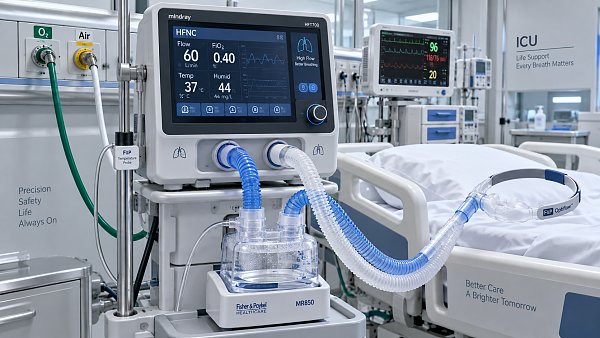
 Oct 02, 2026High-Flow ICU Ventilators: Key Selection Criteria for Acute Respiratory CareICU ventilators high flow: discover key selection criteria for accurate gas delivery, NIV performance, humidification, alarms, reliability, and safer acute respiratory care.
 Oct 01, 2026How to Evaluate Medical Equipment Intelligence Suppliers for Hospital ProcurementMedical equipment intelligence suppliers: learn how hospitals can assess evidence quality, total cost, compliance, interoperability, and cybersecurity for smarter procurement decisions.
 Sep 30, 2026ISO 13485 Requirements for Blood Testing Instruments: A Buyer’s ChecklistBlood testing instruments ISO 13485 buyer’s checklist: verify certification scope, traceability, installation, consumables, and supplier support before you buy.
 Sep 29, 2026How to Evaluate Integrated Operating Room Systems for Workflow, Imaging, and IT IntegrationIntegrated operating room systems: evaluate workflow, imaging, IT integration, cybersecurity, and lifecycle value to select a scalable surgical solution.
 Sep 28, 2026How to Evaluate a Genetic Testing Equipment Supplier for PCR Lab ProcurementGenetic testing equipment supplier evaluation guide for PCR labs: compare performance, compliance, workflow, service, supply resilience, and total cost.
 Sep 27, 2026How to Specify Custom Benchtop Diagnostic Instruments for Your Assay WorkflowCustom diagnostic instruments benchtop guide: specify optics, fluidics, automation, software integration, and support to build a reliable assay workflow.
 Sep 26, 2026How Cardiac Imaging Analysis Tools Turn CT and MRI Data into Clinical MetricsMedical imaging analysis cardiology tools transform cardiac CT and MRI into reliable metrics. Explore segmentation, validation, workflow integration, and AI review.
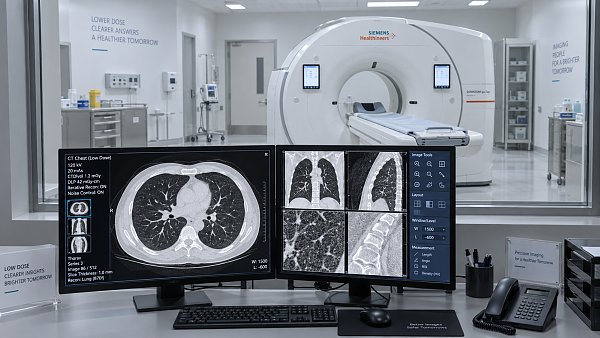
 Sep 25, 2026How Iterative Image Reconstruction Algorithms Balance CT Dose, Noise, and DetailIterative image reconstruction algorithms help CT teams balance dose, noise, and diagnostic detail. Explore practical insights for confident imaging decisions.
 Sep 24, 2026What Drives the Total Cost of Medical Technology Solutions Over Their Lifecycle?Medical technology solutions cost goes far beyond purchase price—explore lifecycle drivers from installation and service to software, training, compliance, and downtime.
 Sep 24, 2026Diagnostic Imaging Technology: How Modalities Support Different Clinical DecisionsDiagnostic imaging technology supports smarter clinical decisions across CT, MRI, ultrasound, and nuclear imaging. Explore modality strengths, workflows, and selection factors.
 Sep 22, 2026How Life Science Labs Can Select Biomedical Research Equipment by Workflow and ThroughputBiomedical research equipment life science labs can select with confidence by aligning workflow, throughput, automation, data integrity, and scalable support.
 Sep 21, 2026How to Plan LIS Connectivity for Chemiluminescence Analyzers Without Data GapsChemiluminescence analyzers LIS connectivity: learn how to prevent data gaps with field mapping, exception workflows, end-to-end validation, and reliable go-live planning.
 Sep 20, 2026Selecting Fluorescence PCR Instruments: Detection Channels, Sensitivity, and Workflow FitPCR diagnostic instruments fluorescence detection guide: compare channels, sensitivity, multiplexing, and workflow fit to select a reliable platform.
 Sep 19, 2026Biomedical Signal Processing: From Sensor Data to Clinical Decision SupportBiomedical signal processing transforms sensor data into reliable clinical decision support. Explore AI, imaging, IVD, ICU monitoring, and compliance-ready MedTech insights.
 Sep 18, 2026How to Evaluate a Diagnostic Imaging Platform for Multi-Modality Workflow IntegrationDiagnostic imaging platform evaluation guide: assess multi-modality workflows, interoperability, AI integration, image integrity, security, and scalability for safer clinical decisions.
 Sep 17, 2026ISO 13485 for Medical Imaging Equipment: What Manufacturers Must DocumentMedical imaging equipment ISO 13485: discover essential documentation for design controls, risk management, traceability, software, and post-market quality.
 Sep 16, 2026Robotic MIS Equipment: What Hospitals Should Evaluate Before AdoptionMinimally invasive surgical equipment robotic adoption guide: evaluate workflow, safety, imaging, costs, cybersecurity, and service readiness.
 Sep 15, 2026How to Evaluate Biomedical Signal Processing Suppliers for Clinical Device ProjectsBiomedical signal processing supplier evaluation guide for clinical device teams—compare signal fidelity, regulatory evidence, cybersecurity, integration, and lifecycle support.
 Sep 14, 2026How Integrated Clinical Diagnostics Solutions Reduce Turnaround Time Across Lab WorkflowsIntegrated clinical diagnostics solutions reduce lab turnaround time by connecting workflows, automation, and data. Discover practical strategies for faster, traceable results.
 Sep 13, 2026ECMO System Market Outlook: Demand Drivers, Investment Risks, and Growth OpportunitiesECMO system market outlook explores demand drivers, investment risks, regulatory factors, and growth opportunities shaping critical-care innovation and adoption.
 Sep 12, 2026Where to Find Reliable Medical Device Information for Research and Due DiligenceMedical device information resource guide for due diligence: verify regulatory, clinical, safety, and technical evidence to make confident decisions.
 Sep 11, 2026Medical Equipment Intelligence: A Resource for Comparing Clinical TechnologiesMedical equipment intelligence resource for comparing clinical technologies by clinical fit, compliance, workflow, and total cost—make confident, evidence-led decisions.
 Sep 10, 2026How to Integrate Application-Specific Medical Solutions Into Existing Clinical WorkflowsApplication-specific medical solutions integration: learn how to align clinical workflows, interoperability, safety, and measurable outcomes for reliable deployment.
 Sep 09, 2026Medical Supplier Evaluation Checklist: How to Verify Quality, Compliance, and Delivery RiskMedical supplier evaluation checklist for verifying quality, compliance, service capacity, configuration accuracy, and delivery risk before purchase approval.

















Related News
- 00
0000-00
ISO 13485 Requirements for Blood Testing Instruments: A Buyer’s Checklist - 00
0000-00
ISO 13485 for Medical Imaging Equipment: What Manufacturers Must Document - 00
0000-00
Where to Find Reliable Medical Device Information for Research and Due Diligence - 00
0000-00
Medical Supplier Evaluation Checklist: How to Verify Quality, Compliance, and Delivery Risk - 00
0000-00
Do You Need a Local Distributor to Register Medical Devices in Southeast Asia?
Weekly Insights
Stay ahead with our curated technology reports delivered every Monday.