
How clinical engineering solutions reduce downtime risks
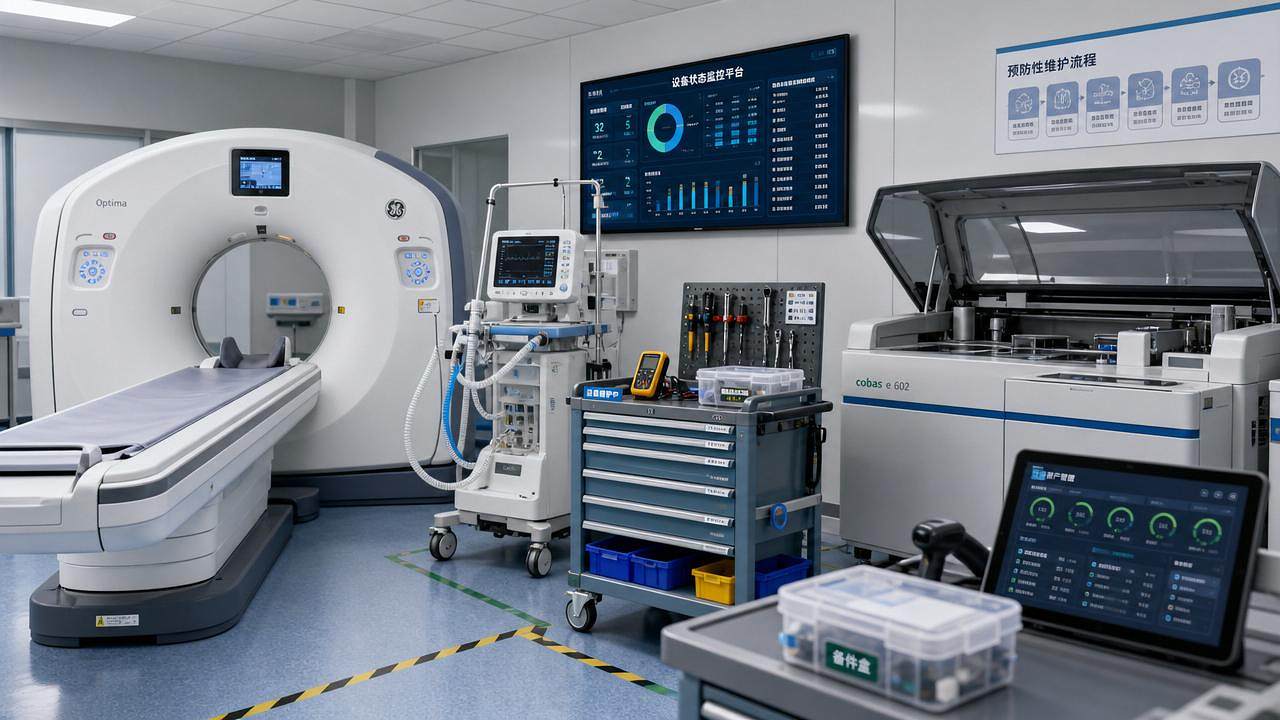




For project managers and engineering leaders, equipment uptime shapes clinical continuity, regulatory readiness, and financial stability. Clinical engineering solutions reduce downtime risks by uniting preventive maintenance, asset visibility, analytics, and coordinated response workflows across high-dependency healthcare systems.
In modern care environments, a delayed CT scan, unavailable ventilator, or interrupted IVD analyzer can quickly affect diagnosis, treatment timing, staffing efficiency, and patient safety. That is why clinical engineering solutions have become a strategic operating discipline, not only a repair function.
What are clinical engineering solutions, and why do they matter for downtime reduction?
Clinical engineering solutions are structured methods, tools, and service processes used to manage medical technology performance throughout its lifecycle. They support inspection, maintenance, troubleshooting, asset planning, parts control, compliance documentation, and reliability improvement.
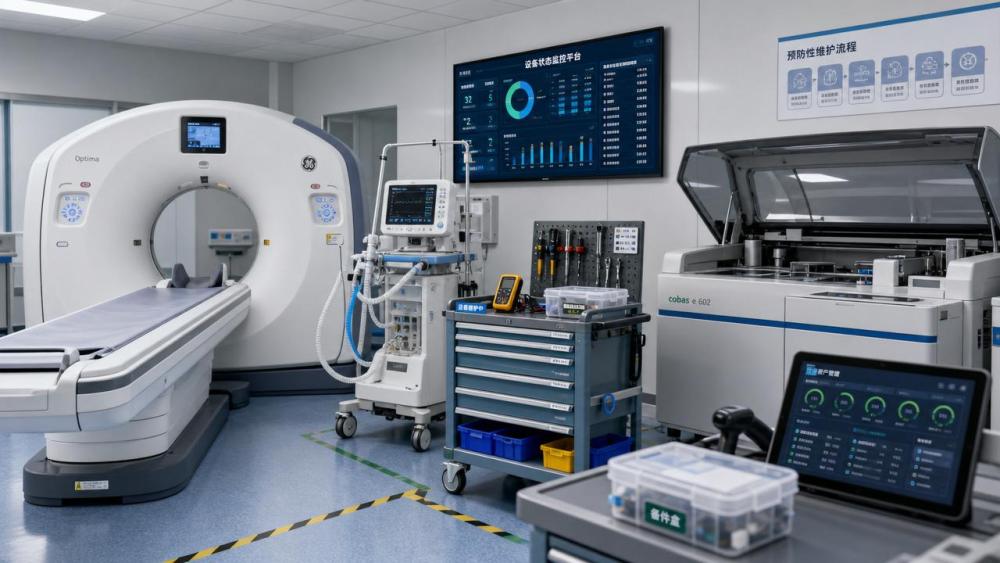
Their value becomes clear in complex equipment fleets. MRI systems, PCR platforms, anesthesia machines, endoscopy towers, and ECMO units all require uptime discipline. A single failure can ripple across schedules, care pathways, and revenue capture.
Well-designed clinical engineering solutions reduce downtime risks through four connected mechanisms:
- Preventing failures before they interrupt service
- Detecting performance drift earlier
- Accelerating diagnosis and repair response
- Improving replacement and capital planning
This matters especially in the advanced medical sectors observed by AMDS. Imaging, IVD, life support, surgical infrastructure, and endoscopic systems all operate under strict reliability expectations and clinical compliance pressures.
How do clinical engineering solutions reduce unplanned downtime in daily operations?
The biggest difference comes from moving beyond reactive repair. Many organizations still wait for equipment alarms, user complaints, or complete stoppage. That approach increases service delays, overtime pressure, and emergency vendor dependence.
Clinical engineering solutions create a more controlled operating model. Preventive maintenance schedules are aligned with utilization, risk class, and manufacturer guidance. Service history is centralized, making repeat failures easier to spot and address.
Key operational methods that lower downtime risk
- Asset tracking for real-time equipment location and status
- Work order systems that prioritize clinical criticality
- Remote diagnostics for faster fault identification
- Failure trend analysis by model, department, and age
- Spare parts planning for high-risk components
For example, an imaging suite may experience recurring coil errors or cooling instability. Without data review, each incident appears isolated. With clinical engineering solutions, patterns emerge, root causes are validated, and recurring downtime can be reduced permanently.
The same logic applies to IVD analyzers. Small calibration drift, reagent interface issues, or thermal irregularities may not stop operation immediately. However, early intervention prevents larger interruptions, repeat testing, and quality reporting risk.
Which healthcare equipment categories benefit most from clinical engineering solutions?
Almost every medical technology category benefits, but downtime sensitivity differs by device role, clinical dependency, and replacement flexibility. Clinical engineering solutions are most valuable where interruption causes cascading clinical or operational consequences.
High-priority categories
- Medical imaging: MRI, CT, ultrasound, and digital radiography require uptime because scheduling bottlenecks quickly spread across departments.
- IVD systems: Chemistry, immunoassay, hematology, and PCR platforms support time-sensitive diagnosis and treatment decisions.
- Life support equipment: Ventilators, infusion systems, patient monitors, and ECMO carry direct patient safety implications.
- Operating room infrastructure: Surgical lights, tables, insufflators, and electrosurgical units affect room turnover and procedural continuity.
- Endoscopy systems: Processors, scopes, light sources, and imaging chains need stable performance for minimally invasive procedures.
In these categories, clinical engineering solutions do more than reduce repair time. They also improve readiness, utilization visibility, and replacement timing, which supports broader hospital performance goals.
How can organizations judge whether their current approach is too reactive?
A reactive maintenance culture often hides behind acceptable short-term performance. Equipment appears available most days, yet service teams are constantly interrupted, costs rise unpredictably, and recurring issues remain unsolved.
Several warning signs suggest stronger clinical engineering solutions are needed:
- Frequent emergency calls for the same device family
- Missing or outdated maintenance documentation
- No clear uptime baseline by department or asset type
- Long parts wait times for predictable failures
- Repeated scheduling disruption in imaging or surgery
- Limited visibility into vendor versus in-house service performance
Another common issue is treating all devices the same. High-acuity systems should not receive the same planning intensity as low-risk accessories. Clinical engineering solutions work best when maintenance and escalation match clinical criticality.
Quick comparison table
What should be evaluated when selecting or improving clinical engineering solutions?
Selection should go beyond vendor promises or software features alone. Effective clinical engineering solutions depend on fit between technology, workflow design, service capability, and the medical device mix being managed.
Essential evaluation points
- Asset criticality mapping: Confirm whether systems can rank devices by clinical risk and operational importance.
- Maintenance intelligence: Look for scheduling linked to utilization, age, and known failure patterns.
- Integration capability: Equipment data, service tickets, and compliance records should be connected, not isolated.
- Response workflow: Escalation paths must support urgent life support, imaging, and surgical cases.
- Reporting quality: Dashboards should show uptime, mean time to repair, repeat failure rate, and service backlog.
- Regulatory support: Documentation should align with audit expectations and quality system discipline.
It is also useful to compare in-house management, outsourced support, and hybrid service models. Some fleets need strong local first response. Others benefit from specialist escalation for advanced imaging or molecular diagnostics.
For organizations operating globally or preparing international expansion, the compliance perspective matters even more. AMDS emphasizes that engineering performance, market access discipline, and evidence-backed lifecycle control increasingly influence long-term competitiveness.
What are the most common mistakes that weaken downtime prevention?
Many downtime programs underperform because they focus only on repair speed. Fast repair matters, but it does not replace risk classification, service planning, usage visibility, or recurring fault analysis.
Frequent mistakes to avoid
- Using calendar-based maintenance without checking real utilization
- Ignoring minor performance drift until failure becomes visible
- Separating engineering data from clinical scheduling impact
- Keeping weak spare parts planning for known vulnerable components
- Failing to review repeated alarms across multiple sites
Another mistake is viewing clinical engineering solutions as only a cost center. In reality, reduced downtime supports throughput, patient confidence, staff efficiency, and quality assurance. Those gains often exceed direct maintenance savings.
FAQ summary table
Clinical engineering solutions reduce downtime risks because they connect technical service with clinical reality. They help organizations prevent failures, respond faster, document better, and plan capital replacement with stronger evidence.
For advanced healthcare environments, especially across imaging, diagnostics, life support, surgery, and endoscopy, that connection is essential. The practical next step is simple: review your highest-risk assets, measure current downtime patterns, and align service workflows with clinical impact.
With disciplined clinical engineering solutions, uptime becomes more than a maintenance target. It becomes an operational safeguard for precision diagnostics, safer care delivery, and resilient long-term performance.
Recommended News
 Oct 02, 2026High-Flow ICU Ventilators: Key Selection Criteria for Acute Respiratory CareICU ventilators high flow: discover key selection criteria for accurate gas delivery, NIV performance, humidification, alarms, reliability, and safer acute respiratory care.
 Oct 01, 2026How to Evaluate Medical Equipment Intelligence Suppliers for Hospital ProcurementMedical equipment intelligence suppliers: learn how hospitals can assess evidence quality, total cost, compliance, interoperability, and cybersecurity for smarter procurement decisions.
 Sep 30, 2026ISO 13485 Requirements for Blood Testing Instruments: A Buyer’s ChecklistBlood testing instruments ISO 13485 buyer’s checklist: verify certification scope, traceability, installation, consumables, and supplier support before you buy.
 Sep 29, 2026How to Evaluate Integrated Operating Room Systems for Workflow, Imaging, and IT IntegrationIntegrated operating room systems: evaluate workflow, imaging, IT integration, cybersecurity, and lifecycle value to select a scalable surgical solution.
 Sep 28, 2026How to Evaluate a Genetic Testing Equipment Supplier for PCR Lab ProcurementGenetic testing equipment supplier evaluation guide for PCR labs: compare performance, compliance, workflow, service, supply resilience, and total cost.
 Sep 27, 2026How to Specify Custom Benchtop Diagnostic Instruments for Your Assay WorkflowCustom diagnostic instruments benchtop guide: specify optics, fluidics, automation, software integration, and support to build a reliable assay workflow.
 Sep 26, 2026How Cardiac Imaging Analysis Tools Turn CT and MRI Data into Clinical MetricsMedical imaging analysis cardiology tools transform cardiac CT and MRI into reliable metrics. Explore segmentation, validation, workflow integration, and AI review.
 Sep 25, 2026How Iterative Image Reconstruction Algorithms Balance CT Dose, Noise, and DetailIterative image reconstruction algorithms help CT teams balance dose, noise, and diagnostic detail. Explore practical insights for confident imaging decisions.
 Sep 24, 2026What Drives the Total Cost of Medical Technology Solutions Over Their Lifecycle?Medical technology solutions cost goes far beyond purchase price—explore lifecycle drivers from installation and service to software, training, compliance, and downtime.
 Sep 24, 2026Diagnostic Imaging Technology: How Modalities Support Different Clinical DecisionsDiagnostic imaging technology supports smarter clinical decisions across CT, MRI, ultrasound, and nuclear imaging. Explore modality strengths, workflows, and selection factors.
 Sep 22, 2026How Life Science Labs Can Select Biomedical Research Equipment by Workflow and ThroughputBiomedical research equipment life science labs can select with confidence by aligning workflow, throughput, automation, data integrity, and scalable support.
 Sep 21, 2026How to Plan LIS Connectivity for Chemiluminescence Analyzers Without Data GapsChemiluminescence analyzers LIS connectivity: learn how to prevent data gaps with field mapping, exception workflows, end-to-end validation, and reliable go-live planning.
 Sep 20, 2026Selecting Fluorescence PCR Instruments: Detection Channels, Sensitivity, and Workflow FitPCR diagnostic instruments fluorescence detection guide: compare channels, sensitivity, multiplexing, and workflow fit to select a reliable platform.
 Sep 19, 2026Biomedical Signal Processing: From Sensor Data to Clinical Decision SupportBiomedical signal processing transforms sensor data into reliable clinical decision support. Explore AI, imaging, IVD, ICU monitoring, and compliance-ready MedTech insights.
 Sep 18, 2026How to Evaluate a Diagnostic Imaging Platform for Multi-Modality Workflow IntegrationDiagnostic imaging platform evaluation guide: assess multi-modality workflows, interoperability, AI integration, image integrity, security, and scalability for safer clinical decisions.
 Sep 17, 2026ISO 13485 for Medical Imaging Equipment: What Manufacturers Must DocumentMedical imaging equipment ISO 13485: discover essential documentation for design controls, risk management, traceability, software, and post-market quality.
 Sep 16, 2026Robotic MIS Equipment: What Hospitals Should Evaluate Before AdoptionMinimally invasive surgical equipment robotic adoption guide: evaluate workflow, safety, imaging, costs, cybersecurity, and service readiness.
 Sep 15, 2026How to Evaluate Biomedical Signal Processing Suppliers for Clinical Device ProjectsBiomedical signal processing supplier evaluation guide for clinical device teams—compare signal fidelity, regulatory evidence, cybersecurity, integration, and lifecycle support.
 Sep 14, 2026How Integrated Clinical Diagnostics Solutions Reduce Turnaround Time Across Lab WorkflowsIntegrated clinical diagnostics solutions reduce lab turnaround time by connecting workflows, automation, and data. Discover practical strategies for faster, traceable results.
 Sep 13, 2026ECMO System Market Outlook: Demand Drivers, Investment Risks, and Growth OpportunitiesECMO system market outlook explores demand drivers, investment risks, regulatory factors, and growth opportunities shaping critical-care innovation and adoption.
 Sep 12, 2026Where to Find Reliable Medical Device Information for Research and Due DiligenceMedical device information resource guide for due diligence: verify regulatory, clinical, safety, and technical evidence to make confident decisions.
 Sep 11, 2026Medical Equipment Intelligence: A Resource for Comparing Clinical TechnologiesMedical equipment intelligence resource for comparing clinical technologies by clinical fit, compliance, workflow, and total cost—make confident, evidence-led decisions.
 Sep 10, 2026How to Integrate Application-Specific Medical Solutions Into Existing Clinical WorkflowsApplication-specific medical solutions integration: learn how to align clinical workflows, interoperability, safety, and measurable outcomes for reliable deployment.
 Sep 09, 2026Medical Supplier Evaluation Checklist: How to Verify Quality, Compliance, and Delivery RiskMedical supplier evaluation checklist for verifying quality, compliance, service capacity, configuration accuracy, and delivery risk before purchase approval.










Related News
- 00
0000-00
How to Evaluate Integrated Operating Room Systems for Workflow, Imaging, and IT Integration - 00
0000-00
How Cardiac Imaging Analysis Tools Turn CT and MRI Data into Clinical Metrics - 00
0000-00
Diagnostic Imaging Technology: How Modalities Support Different Clinical Decisions - 00
0000-00
How Life Science Labs Can Select Biomedical Research Equipment by Workflow and Throughput - 00
0000-00
Biomedical Signal Processing: From Sensor Data to Clinical Decision Support
Weekly Insights
Stay ahead with our curated technology reports delivered every Monday.