
Why medical device market access fails in early planning
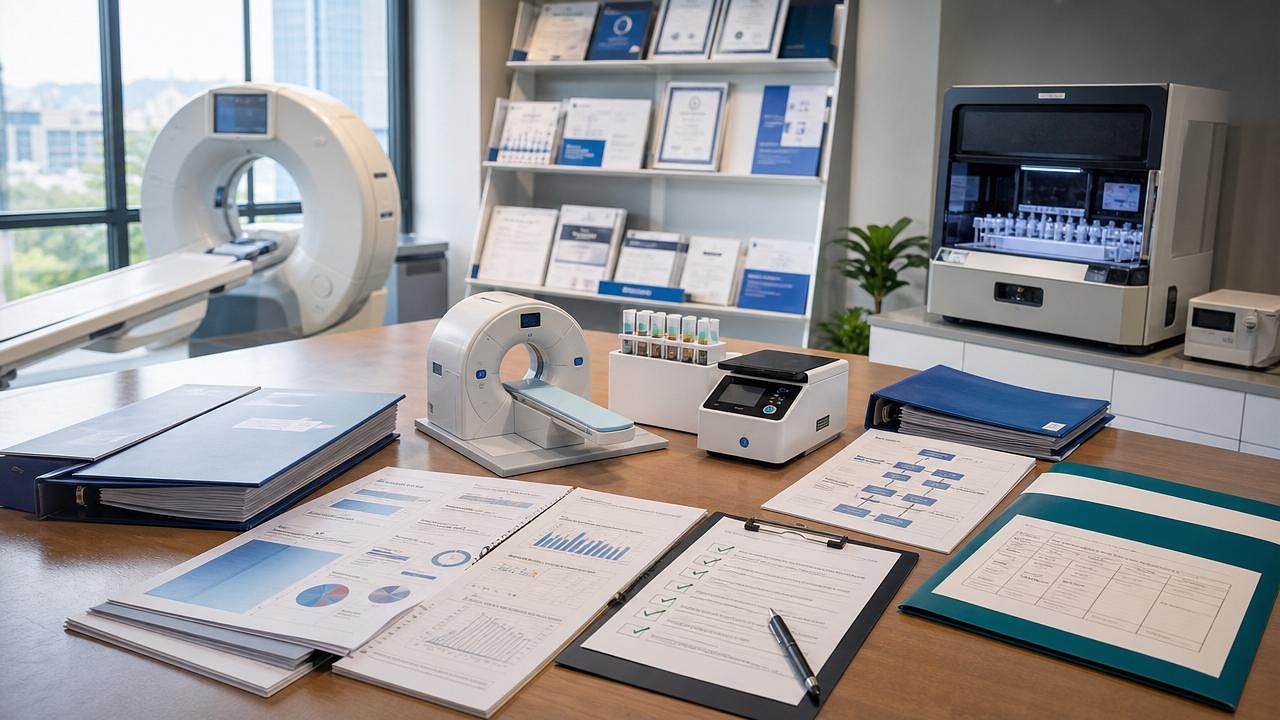




Why does medical device market access so often fail before a product even reaches submission? For project managers and engineering leaders, the answer usually lies in early planning gaps—unclear regulatory pathways, weak clinical evidence strategy, misaligned cross-functional execution, and overlooked reimbursement realities. Understanding these early risks is essential to reducing delays, controlling costs, and improving global commercialization success.
Why medical device market access breaks down long before submission
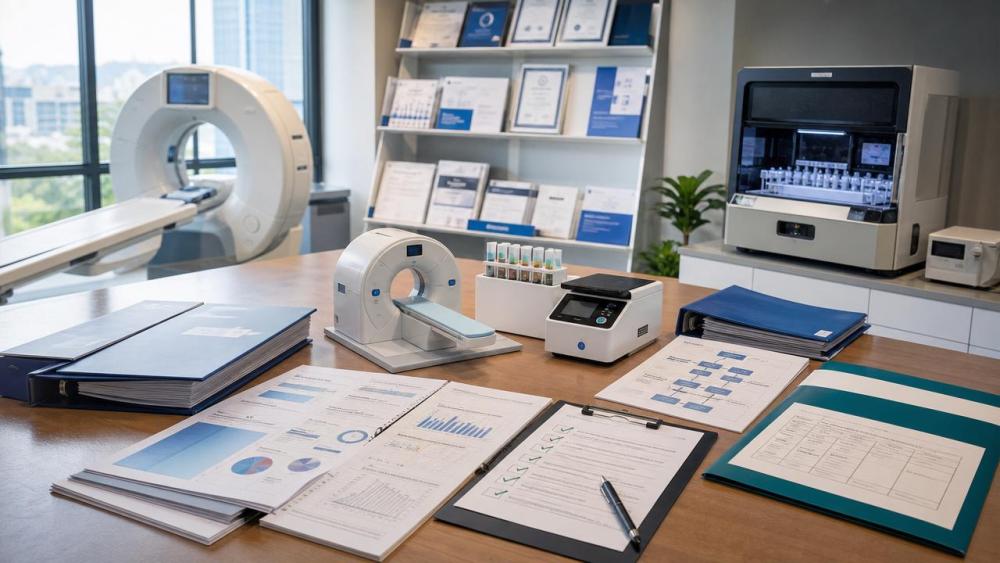
In practice, medical device market access rarely fails because a single submission file is weak. It fails because the product, evidence plan, quality system, claims strategy, and launch economics were never aligned at the start.
For project managers, that means missed milestones, redesign loops, unstable budgets, and difficult conversations with regulatory, clinical, and commercial teams. For engineering leads, it often means discovering too late that the device architecture does not support the intended market path.
This is especially true in advanced imaging, IVD, life support, surgical infrastructure, and endoscopy. These categories face strict scrutiny around safety, performance, software validation, usability, interoperability, and post-market obligations.
AMDS focuses on these high-stakes device segments because market access is never just a paperwork issue. It is a system issue that links technology design, clinical logic, compliance planning, and hospital adoption conditions.
- A CT, MRI, or AI-assisted imaging platform may meet technical expectations but still face delays if intended use, cybersecurity, and image reconstruction claims are not framed correctly.
- An IVD analyzer may generate excellent analytical performance data but fail market access planning if sample workflow, comparator strategy, and regional reimbursement coding were not considered early.
- A ventilator, ECMO-related component, or endoscope system may suffer redesigns when biocompatibility, human factors, cleaning validation, or serviceability were treated as downstream tasks.
What early planning gaps most often damage medical device market access?
The most common failure pattern is not lack of effort. It is fragmented planning. Different teams optimize for different targets, while no one owns the full market access logic from product concept to commercial entry.
1. Regulatory pathway is assumed, not verified
Teams often assume that a device will follow a familiar FDA, CE MDR, or other regional pathway because the technology looks similar to an existing product. But small differences in intended use, software function, accessories, or risk classification can change requirements significantly.
2. Clinical evidence planning starts too late
A clinical plan built after design freeze is usually inefficient. By then, endpoints may not match product claims, data collection may not support target markets, and test protocols may not satisfy both regulatory review and payer expectations.
3. Engineering design does not reflect access constraints
Medical device market access is affected by sterilization choices, materials, software architecture, audit trail logic, alarm design, image processing transparency, and service workflows. If these are not built into early requirements, access timelines become vulnerable.
4. Reimbursement and hospital procurement are ignored
A device can be technically approvable and still commercially weak. Hospital buyers, IDN procurement teams, and finance departments increasingly ask how the device fits DRG pressure, staffing constraints, throughput targets, and maintenance budgets.
5. Cross-functional governance is too loose
When regulatory, R&D, quality, clinical, manufacturing, and commercial groups work in sequence instead of coordination, hidden contradictions accumulate. Market access then fails not at one gate, but across many small gates.
The table below summarizes how early planning mistakes translate into medical device market access delays and budget pressure.
For project leaders, the lesson is clear: market access risk must be managed as a front-end design and program management issue, not merely as a final documentation task.
How project managers should plan medical device market access from day one
The strongest programs treat medical device market access as a parallel workstream running beside product development. That approach improves design quality and reduces expensive surprises during verification, validation, and submission.
Build an access blueprint before design lock
Before major architecture decisions are fixed, teams should map intended markets, likely classifications, core claims, expected evidence types, applicable standards, and reimbursement assumptions. This becomes the reference point for scope decisions.
Use milestone gates that include compliance and commercial logic
A development gate should not pass only because engineering performance looks strong. It should also confirm whether risk management, usability assumptions, evidence generation, and target hospital economics remain on track.
Treat claims as controlled assets
Claims influence classification, testing depth, competitive positioning, and review burden. Ambitious claims can help sales, but unsupported claims can harm market access, especially in AI-assisted diagnostics and critical care equipment.
- Define the clinical problem precisely, including user type, care setting, and workflow position.
- Match each proposed claim to evidence sources such as bench testing, analytical validation, software validation, literature, or clinical studies.
- Check whether the claim supports reimbursement, procurement logic, or hospital efficiency goals.
- Remove or narrow claims that create disproportionate regulatory burden without meaningful commercial advantage.
AMDS is particularly effective in this stage because its intelligence model connects regulatory reading, technical device interpretation, and health economics. That integrated view is valuable for complex modalities where the technology story alone is not enough.
Which planning priorities differ by device category?
Not all devices fail medical device market access for the same reasons. A useful planning method is to identify category-specific access pressure early, then adjust evidence, testing, and commercialization strategy accordingly.
The comparison below highlights planning differences across key MedTech segments covered by AMDS.
This category view helps teams avoid generic planning. A ventilator program should not be governed like an endoscopy program, and an AI imaging platform should not be justified like a conventional hardware-only device.
What should be in a practical market access checklist?
Project managers need a working checklist that translates medical device market access into accountable tasks. The checklist should be reviewed at concept, feasibility, design transfer, and launch preparation stages.
- Target market map: Identify initial geographies, sequence logic, and whether evidence can be reused across regions or must be localized.
- Intended use control: Confirm wording discipline across requirements, labeling, protocols, risk files, and commercial materials.
- Standards and testing plan: Align electrical safety, EMC, software lifecycle, usability, biocompatibility, sterilization, and performance testing with device type.
- Clinical and performance evidence: Define what must be generated internally and what can be supported through literature, equivalence logic, or post-market data.
- Health economics narrative: Prepare an adoption case based on throughput, staffing efficiency, complication reduction, diagnostic confidence, or consumable savings.
- Supply and service readiness: Check whether service models, spare parts, training, remote support, and installation capability match launch markets.
A good checklist does more than prevent omissions. It exposes trade-offs. For example, broader claims may require more data; more complex accessories may increase service burden; faster launch sequencing may reduce initial geographic scope.
How reimbursement and procurement shape medical device market access
Many engineering-led teams still think market access ends with regulatory approval. In reality, hospital adoption depends on whether the device can survive procurement review and fit local reimbursement logic.
That is why AMDS integrates health economics into its strategic intelligence work. In high-end imaging, IVD, and critical care, the buyer may be convinced less by technical novelty than by measurable operational impact.
Questions buyers often ask
- Will this device shorten scan time, improve lab turnaround, or reduce ICU workflow pressure?
- Does it require new training, new infrastructure, or new service contracts?
- Can the hospital recover value through DRG efficiency, reduced repeat procedures, or stronger diagnostic confidence?
- Are consumables, accessories, and maintenance costs predictable over the equipment lifecycle?
If those questions are ignored during early planning, the device may reach approval but still underperform commercially. Strong market access planning therefore links reimbursement evidence, procurement readiness, and product positioning from the beginning.
Common misconceptions that delay medical device market access
“We can solve access after engineering is finished”
This mindset usually creates rework. Late access planning can force new tests, redesigns, claim reductions, or market sequencing changes that could have been avoided earlier.
“If the device is innovative, the market will adapt”
Innovation does not replace evidence. Hospitals, reviewers, and procurement committees still need proof of safe use, reliable performance, workflow fit, and economic rationale.
“One global evidence package will work everywhere”
Some evidence is reusable, but access requirements differ by region. Regulatory expectations, language rules, local standards references, reimbursement conditions, and distributor capability can all change the launch equation.
FAQ for project managers planning medical device market access
When should a medical device market access strategy begin?
It should begin at concept stage, before key architecture and claims decisions are locked. The earlier the strategy starts, the easier it is to align evidence, standards, budget, and launch sequence.
What is the biggest early warning sign of future access failure?
A major warning sign is inconsistent intended use language across R&D, regulatory, and commercial teams. That inconsistency often leads to conflicting test plans, unstable labeling, and weak reviewer confidence.
How can engineering teams support better market access outcomes?
Engineering teams can support access by documenting design rationale clearly, involving regulatory and clinical stakeholders in requirement setting, and understanding how software, usability, serviceability, and materials affect approval and adoption.
Is reimbursement really part of medical device market access?
Yes. Regulatory clearance enables entry, but reimbursement and procurement logic influence whether the device is actually purchased, installed, and used at scale. Ignoring this creates a gap between approval and commercialization.
Why choose us for complex medical device market access planning
AMDS supports manufacturers working in medical imaging, IVD, life support, operating room systems, and endoscopy where market access decisions carry high technical and commercial consequences. Our perspective is built for teams that need more than generic regulatory commentary.
We help project managers and engineering leaders clarify regulatory pathways, refine claim boundaries, evaluate evidence readiness, interpret technical-commercial trade-offs, and prepare stronger hospital value narratives. That is particularly useful when programs involve AI-assisted systems, critical care functions, advanced optics, or complex procurement cycles.
You can contact us to discuss specific issues such as parameter confirmation, product positioning, target market sequencing, expected certification requirements, clinical evidence planning, delivery timeline risks, customized intelligence support, or quotation communication for deeper advisory work.
If your team is facing uncertainty around medical device market access, early alignment is usually the fastest way to protect schedule, budget, and commercialization success. A focused review at the planning stage can prevent months of avoidable delay later.
Recommended News
 Jun 17, 2026Clinical Engineering Solutions vs In-House Support: Cost, Risk, and Service ScopeClinical engineering solutions vs in-house support: compare true costs, compliance risk, uptime impact, and service scope to choose the smarter support model.
 Jun 17, 2026Medical Device Compliance Checklist: FDA, CE, ISO 13485, and Post-Market RequirementsMedical device compliance checklist covering FDA, CE MDR, ISO 13485, and post-market requirements. Learn how to reduce risk, strengthen audits, and speed market readiness.
 Jun 17, 2026Advanced Clinical Imaging for High-Acuity Care: When MRI, CT, or DR Makes SenseAdvanced clinical imaging for high-acuity care: learn when MRI, CT, or DR delivers the best speed, detail, and workflow value to improve urgent decisions and patient outcomes.
 Jun 17, 2026How to Evaluate IVD Instruments: Throughput, Automation, and Workflow FitIVD instruments evaluation starts with real lab needs. Learn how to compare throughput, automation, and workflow fit to improve efficiency, compliance, and diagnostic value.
 Jun 17, 2026IVD Molecular Testing Explained: Key Methods, Clinical Uses, and LimitsIVD molecular testing explained: explore key methods, clinical uses, and real-world limits to make smarter diagnostic, investment, and precision care decisions.
 Jun 17, 2026CMEF Shanghai 2026 Closes as AI Imaging Draws BuyersCMEF Shanghai 2026 reveals rising buyer demand for AI imaging, Photon-counting CT, MRI, and DR systems. Explore key procurement signals, interoperability trends, and export opportunities.
 Jun 17, 2026China ECMO Exports Surge as Bearing Reliance PersistsChina ECMO exports surge 368% in Q1 2026, but bearing reliance still threatens delivery timelines. Learn what it means for manufacturers, buyers, and supply chain planning.
 Jun 17, 2026GCC Launches Photon-Counting CT Tender With CE and ISO 13485 RuleGCC launches a photon-counting CT tender worth over $1.2B, requiring CE and ISO 13485 compliance. Explore what this means for bidders, delivery planning, and market access.
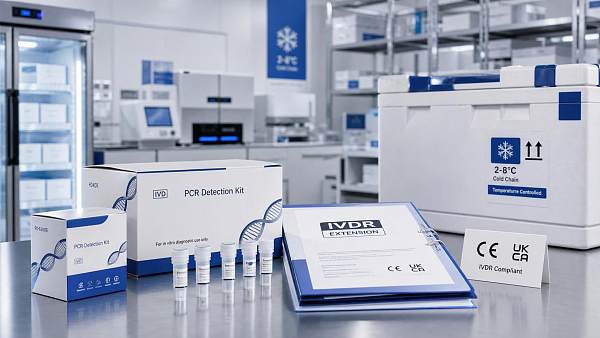
 Jun 17, 2026EU Extends IVDR Transition to 2028, Reopens PCR Fast TrackEU Extends IVDR Transition to 2028 and reopens the PCR fast track for CE and UKCA-certified products. Learn what this means for IVD exporters, compliance teams, and European market access.
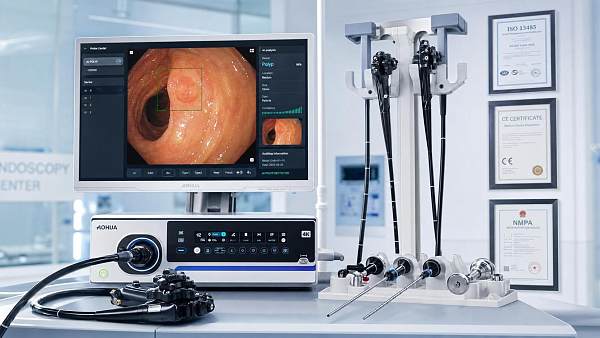
 Jun 17, 2026FDA Sets New Evidence Rule for AI EndoscopyFDA Sets New Evidence Rule for AI Endoscopy: learn how the new clinical data requirement may delay clearance, reshape export timelines, and impact AI-enabled endoscopy suppliers.
 Jun 16, 2026Medical Compliance Analytics: Key Standards, Audit Metrics, and Data Review PointsMedical compliance analytics explained: explore key standards, audit metrics, and critical data review points to strengthen MedTech risk control, audit readiness, and market access.
 Jun 16, 2026IVD Molecular Testing vs Traditional Lab Methods: What Buyers Should Compare FirstIVD molecular testing vs traditional lab methods: compare accuracy, workflow, cost, compliance, and scalability first to choose the right diagnostic platform with confidence.
 Jun 16, 2026How Clinical Decision Support Helps Reduce Diagnostic Delays and Reporting ErrorsClinical decision support helps reduce diagnostic delays and reporting errors across imaging, IVD, and ICU workflows. See how smarter alerts and structured logic improve care.
 Jun 16, 2026Advanced Diagnostic Systems Selection Guide: Key Specs, Integration, and Workflow FitAdvanced diagnostic systems selection guide covering key specs, integration, workflow fit, compliance, and lifecycle cost—learn how to choose the right platform with confidence.
 Jun 16, 2026What Is Biochemical Molecular Diagnostics and When Is It Used in Clinical Testing?Biochemical molecular diagnostics explains how genes, proteins, and biomarkers guide earlier detection, precision treatment, and smarter clinical testing across infection, cancer, and monitoring.
 Jun 16, 2026FDA Tightens Evidence Rules for AI EndoscopyFDA Tightens Evidence Rules for AI Endoscopy: learn how the new FDA guidance raises clinical validation standards, reshapes U.S. approval strategy, and impacts timelines, trials, and market entry.
 Jun 16, 2026ECMO Exports Surge as Bearing Dependence PersistsECMO exports surge to a record high as bearing dependence persists, raising delivery and compliance risks. Explore what import reliance means for supply chains, buyer scrutiny, and export strategy.
 Jun 16, 2026IVDR Deadline Extended as PCR Fast Track ReturnsIVDR deadline extended to 2028 as the PCR fast track returns for dual-certified CE MDR and UKCA kits. Learn what it means for IVD exporters, compliance teams, and EU-UK market access.
 Jun 16, 2026GCC Six-Nation Tender Sets Dual Certification Bar for Photon-Counting CTGCC Six-Nation Tender for Photon-Counting CT sets a dual CE MDR and ISO 13485:2016 bar. Learn how the USD 920M bid and 180-day delivery rule reshape access, compliance, and service strategy.
 Jun 15, 2026Precision Diagnostics Technology in Molecular Testing: Accuracy Drivers and Common PitfallsPrecision diagnostics technology in molecular testing: learn the key accuracy drivers, common pitfalls, and practical controls that improve compliance, reduce risk, and strengthen reliable results.
 Jun 15, 2026Advanced Clinical Imaging vs Standard Imaging: When Higher Resolution Changes DecisionsAdvanced clinical imaging vs standard imaging: discover when higher resolution improves diagnosis, speeds decisions, and delivers stronger ROI for modern healthcare providers.
 Jun 15, 2026Operating Room Technology Checklist for New OR Projects: Lighting, Imaging, Tables, and AVOperating room technology checklist for new OR projects: compare lighting, imaging, tables, and AV with a practical, workflow-led guide to avoid costly design mistakes.
 Jun 15, 2026Medical Equipment AI Integration: How to Evaluate Workflow Fit, Data Quality, and ROIMedical equipment AI integration explained: learn how to assess workflow fit, data quality, compliance, and ROI to choose solutions that deliver measurable clinical and operational value.
 Jun 15, 2026Medical Imaging Diagnostics Explained: Modalities, Use Cases, and Key Selection FactorsMedical imaging diagnostics explained clearly: compare major modalities, clinical use cases, and key selection factors to choose smarter, safer, and more cost-effective imaging solutions.





















Related News
- 00
0000-00
Medical Device Compliance Checklist: FDA, CE, ISO 13485, and Post-Market Requirements - 00
0000-00
Medical Compliance Analytics: Key Standards, Audit Metrics, and Data Review Points - 00
0000-00
AI in Medical Imaging: What to Check Before Procurement, Validation, and Deployment - 00
0000-00
EUDAMED UDI/Device Registry Becomes Mandatory on June 28 - 00
0000-00
EUDAMED UDI/Device Module Becomes Mandatory June 28
Weekly Insights
Stay ahead with our curated technology reports delivered every Monday.