
How biomedical signal processing improves alarm accuracy
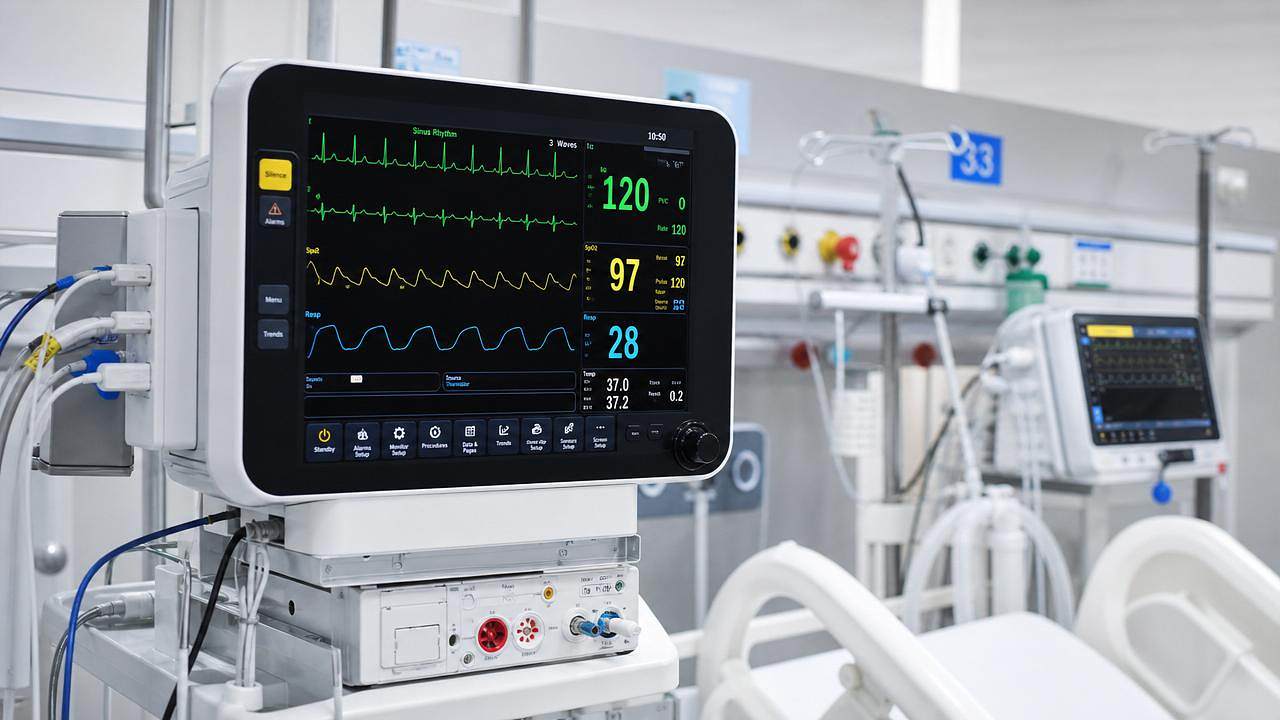




In safety-critical care, alarm quality shapes both outcomes and operational stability.
When monitors trigger too often, clinicians experience fatigue, attention drifts, and truly urgent events may be delayed.
When alarms fail, the consequences are more severe, affecting response time, compliance exposure, and patient safety.
Biomedical signal processing improves alarm accuracy by separating true physiological change from motion artifacts, poor sensor contact, environmental interference, and transient anomalies.
For modern MedTech systems, this capability supports safer monitoring, stronger risk control, and more reliable clinical decision support.
Biomedical signal processing and its role in alarm accuracy
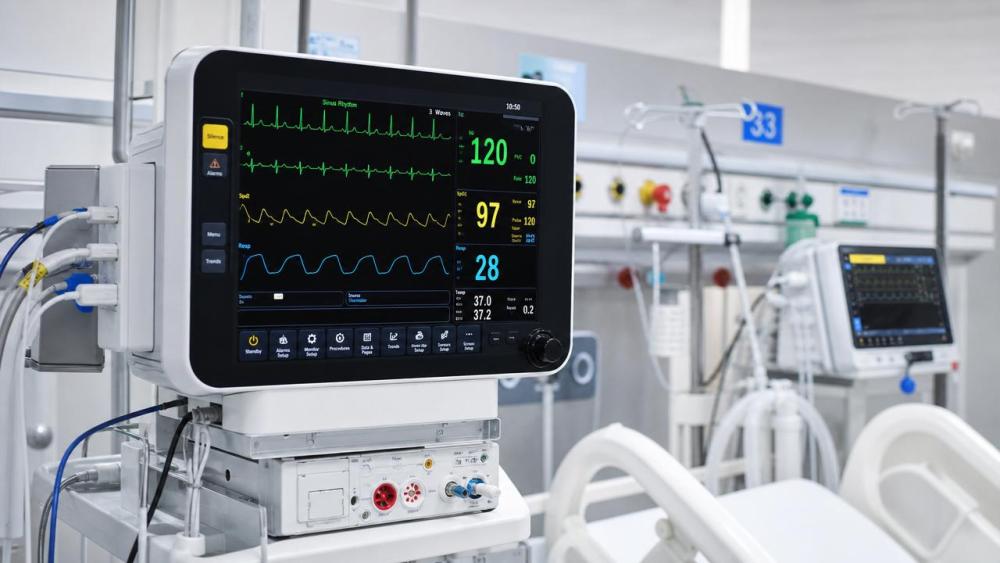
Biomedical signal processing refers to methods that acquire, clean, analyze, and interpret physiological data from medical devices.
Common inputs include ECG, SpO2, respiration, invasive pressure, EEG, temperature, and waveform data from life support systems.
Its main purpose is not only signal visibility.
It also determines whether an alarm should activate, escalate, suppress, or wait for confirmation.
In practice, biomedical signal processing improves alarm accuracy through four core functions.
- Noise filtering that removes electrical interference, baseline drift, and motion disturbance.
- Feature extraction that detects meaningful waveform patterns instead of isolated raw values.
- Multi-parameter correlation that compares several signals before triggering an alert.
- Adaptive thresholding that accounts for trend behavior, patient condition, and signal confidence.
This is why biomedical signal processing is central to alarm management in monitoring, imaging support, diagnostics, and critical care platforms.
Current industry focus in digital healthcare systems
Healthcare systems are becoming more connected, data-rich, and algorithm-dependent.
As a result, alarm accuracy is no longer a simple hardware issue.
It now reflects software quality, interoperability design, cybersecurity discipline, and clinical workflow alignment.
In sectors observed by AMDS, alarm reliability matters across five technology pillars.
Across these areas, biomedical signal processing improves alarm accuracy by making devices more context-aware and less reactive to isolated noise.
How biomedical signal processing reduces false alarms
False alarms often begin with low-quality data rather than wrong thresholds.
Loose electrodes, patient movement, suction events, electrosurgical interference, and transport vibration can distort physiological signals.
Biomedical signal processing improves alarm accuracy by handling these disruptions before they become alarm events.
Signal conditioning
Digital filters remove frequencies unlikely to represent real physiology.
Baseline correction reduces drift that may otherwise mimic respiratory or cardiac instability.
Artifact detection
Algorithms can identify waveform segments corrupted by motion, clipping, or sensor detachment.
Instead of alarming immediately, the system may request signal reacquisition or lower confidence scoring.
Time-based confirmation
Many dangerous values are meaningful only if sustained.
A short desaturation during repositioning may not warrant the same response as persistent oxygen decline.
Cross-signal verification
If heart rate changes without corresponding perfusion or pressure evidence, the event may be technical rather than clinical.
This multi-channel logic is one reason biomedical signal processing improves alarm accuracy in intensive care systems.
Why accurate alarms matter for safety, compliance, and economics
Alarm performance affects more than bedside convenience.
It influences safety metrics, staff burden, quality audits, and technology investment value.
- Improved patient safety through earlier recognition of true deterioration.
- Lower alarm fatigue and better staff attention allocation.
- Stronger documentation for regulatory expectations and post-market surveillance.
- Reduced workflow interruptions in ICU, OR, imaging, and recovery settings.
- Better return on connected monitoring investments through usable data quality.
For global systems facing FDA, CE MDR, and hospital risk management review, alarm logic must be explainable, validated, and traceable.
That requirement makes biomedical signal processing not only a technical feature, but a governance issue.
Typical application scenarios across medical equipment
Biomedical signal processing improves alarm accuracy in many device categories, though each category uses different physiological logic.
These examples show how biomedical signal processing improves alarm accuracy by matching analysis methods to the physics and physiology of each system.
Implementation considerations for reliable alarm design
Good alarm design starts with signal integrity, but it cannot end there.
Practical deployment requires technical validation, clinical review, and lifecycle monitoring.
- Define alarm intent clearly, including hazard severity and acceptable response delay.
- Use representative datasets with noise, movement, and edge-case physiology.
- Measure sensitivity, specificity, false alarm rate, and time-to-detection together.
- Document algorithm assumptions, confidence limits, and failure modes.
- Review interoperability effects when signals are imported from external systems.
- Maintain post-market feedback loops to refine thresholds and logic safely.
Where AI is introduced, explainability becomes especially important.
Black-box outputs may improve detection, yet they must still support verification and clinical trust.
A balanced strategy combines transparent rules, robust biomedical signal processing, and evidence-based model updates.
A practical next step for evaluating alarm performance
A useful starting point is to review which alarms originate from raw threshold breaches and which depend on processed physiological context.
That comparison often reveals where biomedical signal processing improves alarm accuracy most effectively.
Next, compare nuisance alarm frequency, missed event reports, and signal quality logs across device categories.
Then link those findings to compliance documentation, service records, and clinical workflow impact.
For organizations tracking advanced medical technologies, this approach creates a clearer view of device maturity and risk control readiness.
Ultimately, biomedical signal processing improves alarm accuracy because it transforms physiological data into actionable, trustworthy, and clinically relevant alerts.
That makes it a foundational capability for safer digital healthcare systems and more dependable medical equipment evaluation.
Recommended News
 Oct 02, 2026High-Flow ICU Ventilators: Key Selection Criteria for Acute Respiratory CareICU ventilators high flow: discover key selection criteria for accurate gas delivery, NIV performance, humidification, alarms, reliability, and safer acute respiratory care.
 Oct 01, 2026How to Evaluate Medical Equipment Intelligence Suppliers for Hospital ProcurementMedical equipment intelligence suppliers: learn how hospitals can assess evidence quality, total cost, compliance, interoperability, and cybersecurity for smarter procurement decisions.
 Sep 30, 2026ISO 13485 Requirements for Blood Testing Instruments: A Buyer’s ChecklistBlood testing instruments ISO 13485 buyer’s checklist: verify certification scope, traceability, installation, consumables, and supplier support before you buy.
 Sep 29, 2026How to Evaluate Integrated Operating Room Systems for Workflow, Imaging, and IT IntegrationIntegrated operating room systems: evaluate workflow, imaging, IT integration, cybersecurity, and lifecycle value to select a scalable surgical solution.
 Sep 28, 2026How to Evaluate a Genetic Testing Equipment Supplier for PCR Lab ProcurementGenetic testing equipment supplier evaluation guide for PCR labs: compare performance, compliance, workflow, service, supply resilience, and total cost.
 Sep 27, 2026How to Specify Custom Benchtop Diagnostic Instruments for Your Assay WorkflowCustom diagnostic instruments benchtop guide: specify optics, fluidics, automation, software integration, and support to build a reliable assay workflow.
 Sep 26, 2026How Cardiac Imaging Analysis Tools Turn CT and MRI Data into Clinical MetricsMedical imaging analysis cardiology tools transform cardiac CT and MRI into reliable metrics. Explore segmentation, validation, workflow integration, and AI review.
 Sep 25, 2026How Iterative Image Reconstruction Algorithms Balance CT Dose, Noise, and DetailIterative image reconstruction algorithms help CT teams balance dose, noise, and diagnostic detail. Explore practical insights for confident imaging decisions.
 Sep 24, 2026What Drives the Total Cost of Medical Technology Solutions Over Their Lifecycle?Medical technology solutions cost goes far beyond purchase price—explore lifecycle drivers from installation and service to software, training, compliance, and downtime.
 Sep 24, 2026Diagnostic Imaging Technology: How Modalities Support Different Clinical DecisionsDiagnostic imaging technology supports smarter clinical decisions across CT, MRI, ultrasound, and nuclear imaging. Explore modality strengths, workflows, and selection factors.
 Sep 22, 2026How Life Science Labs Can Select Biomedical Research Equipment by Workflow and ThroughputBiomedical research equipment life science labs can select with confidence by aligning workflow, throughput, automation, data integrity, and scalable support.
 Sep 21, 2026How to Plan LIS Connectivity for Chemiluminescence Analyzers Without Data GapsChemiluminescence analyzers LIS connectivity: learn how to prevent data gaps with field mapping, exception workflows, end-to-end validation, and reliable go-live planning.
 Sep 20, 2026Selecting Fluorescence PCR Instruments: Detection Channels, Sensitivity, and Workflow FitPCR diagnostic instruments fluorescence detection guide: compare channels, sensitivity, multiplexing, and workflow fit to select a reliable platform.
 Sep 19, 2026Biomedical Signal Processing: From Sensor Data to Clinical Decision SupportBiomedical signal processing transforms sensor data into reliable clinical decision support. Explore AI, imaging, IVD, ICU monitoring, and compliance-ready MedTech insights.
 Sep 18, 2026How to Evaluate a Diagnostic Imaging Platform for Multi-Modality Workflow IntegrationDiagnostic imaging platform evaluation guide: assess multi-modality workflows, interoperability, AI integration, image integrity, security, and scalability for safer clinical decisions.
 Sep 17, 2026ISO 13485 for Medical Imaging Equipment: What Manufacturers Must DocumentMedical imaging equipment ISO 13485: discover essential documentation for design controls, risk management, traceability, software, and post-market quality.
 Sep 16, 2026Robotic MIS Equipment: What Hospitals Should Evaluate Before AdoptionMinimally invasive surgical equipment robotic adoption guide: evaluate workflow, safety, imaging, costs, cybersecurity, and service readiness.
 Sep 15, 2026How to Evaluate Biomedical Signal Processing Suppliers for Clinical Device ProjectsBiomedical signal processing supplier evaluation guide for clinical device teams—compare signal fidelity, regulatory evidence, cybersecurity, integration, and lifecycle support.
 Sep 14, 2026How Integrated Clinical Diagnostics Solutions Reduce Turnaround Time Across Lab WorkflowsIntegrated clinical diagnostics solutions reduce lab turnaround time by connecting workflows, automation, and data. Discover practical strategies for faster, traceable results.
 Sep 13, 2026ECMO System Market Outlook: Demand Drivers, Investment Risks, and Growth OpportunitiesECMO system market outlook explores demand drivers, investment risks, regulatory factors, and growth opportunities shaping critical-care innovation and adoption.
 Sep 12, 2026Where to Find Reliable Medical Device Information for Research and Due DiligenceMedical device information resource guide for due diligence: verify regulatory, clinical, safety, and technical evidence to make confident decisions.
 Sep 11, 2026Medical Equipment Intelligence: A Resource for Comparing Clinical TechnologiesMedical equipment intelligence resource for comparing clinical technologies by clinical fit, compliance, workflow, and total cost—make confident, evidence-led decisions.
 Sep 10, 2026How to Integrate Application-Specific Medical Solutions Into Existing Clinical WorkflowsApplication-specific medical solutions integration: learn how to align clinical workflows, interoperability, safety, and measurable outcomes for reliable deployment.
 Sep 09, 2026Medical Supplier Evaluation Checklist: How to Verify Quality, Compliance, and Delivery RiskMedical supplier evaluation checklist for verifying quality, compliance, service capacity, configuration accuracy, and delivery risk before purchase approval.





Related News
- 00
0000-00
High-Flow ICU Ventilators: Key Selection Criteria for Acute Respiratory Care - 00
0000-00
Ventilator Comparison for ICU and Transport Use: Which Features Matter Most? - 00
0000-00
What Pre-Market Testing Is Mandatory for Ventilator CE Marking? - 00
0000-00
ICU Ventilator Comparison: Which Features Matter for Patient Acuity Levels? - 00
0000-00
Critical Care Equipment Market Trends: Which Segments Are Growing Fastest?
Weekly Insights
Stay ahead with our curated technology reports delivered every Monday.