
How biochemical molecular detection reduces false results
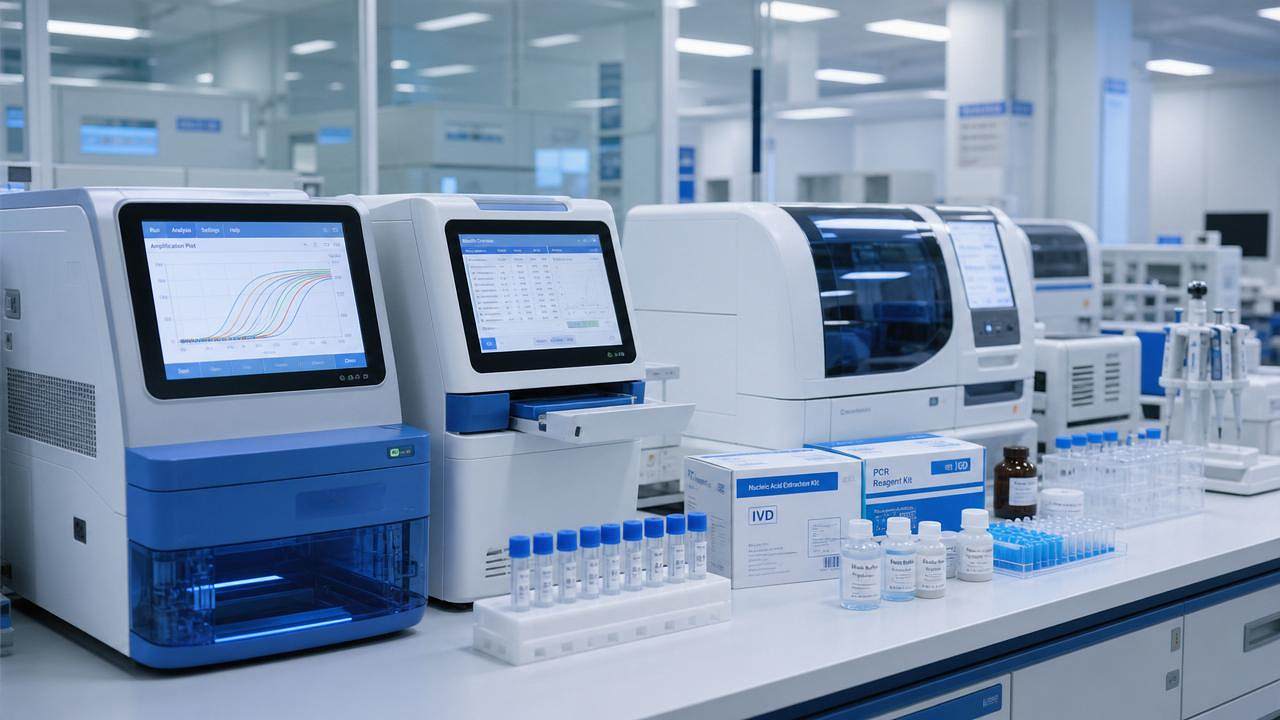




For quality control and safety management teams, even a small diagnostic error can trigger major compliance, operational, and patient-risk consequences. Biochemical molecular detection helps reduce false results by identifying targets at the molecular level with higher specificity and sensitivity, strengthening decision-making across modern diagnostic workflows. Understanding how this approach improves accuracy is essential for building safer, more reliable, and regulation-ready testing systems.
In hospitals, IVD laboratories, and medical device environments, false positives and false negatives do more than affect a single report. They can delay treatment, distort workflow priorities, increase repeat testing by 10%–30% in some routine scenarios, and expose organizations to audit pressure under CE MDR, FDA, ISO 13485, and internal risk-control systems.
For B2B decision-makers evaluating diagnostic platforms, biochemical molecular detection is not only a technical topic. It is a quality assurance strategy that supports precision diagnostics, traceable operations, and safer integration across imaging, IVD, critical care, and minimally invasive clinical pathways.
Why biochemical molecular detection matters in false-result control
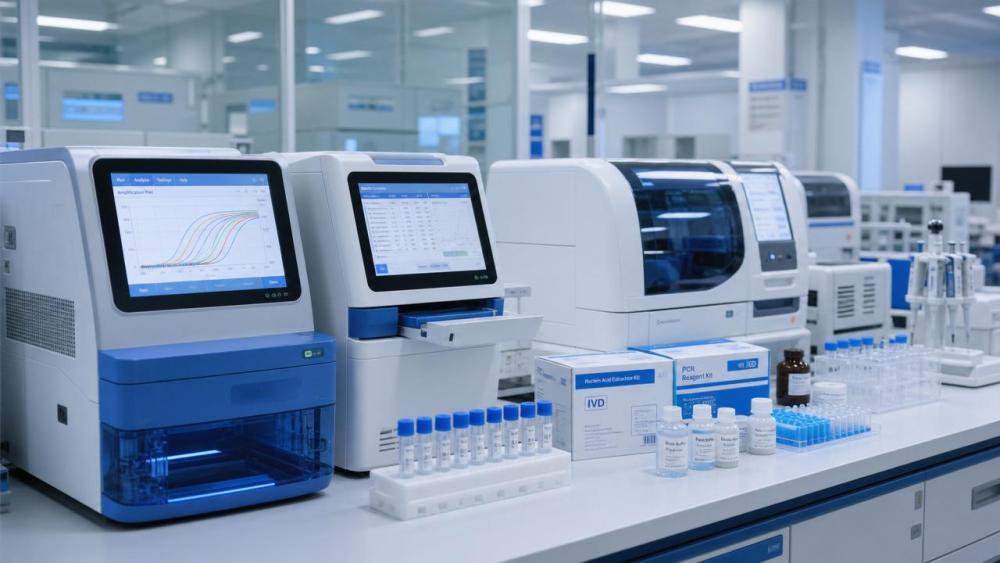
Biochemical molecular detection refers to analytical methods that identify nucleic acids, proteins, enzymes, or other disease-related markers at the molecular level. In practical terms, this includes PCR-based amplification, chemiluminescent immunoassays, molecular probes, and signal-enhanced biochemical assays used in modern IVD systems.
Compared with conventional methods that rely mainly on broad physiological signals or late-stage symptom correlation, biochemical molecular detection works closer to the origin of disease activity. That shift improves both specificity and sensitivity, two core performance indicators that directly influence false-result rates.
The two false-result risks that concern quality teams most
A false positive can lead to unnecessary isolation, treatment changes, procurement of emergency supplies, or avoidable instrument utilization. A false negative is often more dangerous because it may delay intervention by 24–72 hours, especially in infectious disease, oncology screening, and ICU-linked diagnostic pathways.
- False positives increase repeat verification steps, reagent consumption, and documentation workload.
- False negatives weaken patient safety barriers and can trigger downstream escalation in critical care.
- Both types raise nonconformance risk during internal audits and external regulatory review.
Why molecular-level targeting improves result integrity
At the molecular level, the system detects a defined target sequence or biomarker structure instead of a broad indirect signal. This reduces cross-reactivity, lowers background interference, and improves signal discrimination, especially when the sample volume is small, often in the μL range.
For safety managers, that matters because many false results emerge from 4 predictable sources: sample contamination, low target concentration, reagent instability, and poor threshold setting. Biochemical molecular detection addresses all 4 more effectively than less specific screening approaches.
Common control points in a detection workflow
- Sample collection and labeling within 5–10 minutes of intake confirmation.
- Pre-analytical preservation under validated temperature ranges such as 2°C–8°C or frozen conditions.
- Target extraction, amplification, or signal preparation using controlled reagent lots.
- Instrument run validation with internal controls and calibration review.
- Result interpretation with threshold verification, repeat criteria, and release authorization.
The table below shows how different detection approaches influence false-result management in routine diagnostic operations.
The key conclusion is not that one method replaces all others. Instead, biochemical molecular detection is most valuable when accuracy thresholds are high, turnaround decisions carry safety consequences, and traceability must stand up to audit review.
How biochemical molecular detection reduces false positives and false negatives
The reduction of false results comes from a combination of analytical precision and process control. In quality terms, it is not only the assay design that matters but also the full chain from sample entry to result release. High-performing organizations usually monitor at least 6 checkpoints across pre-analytical, analytical, and post-analytical stages.
1. Higher specificity reduces cross-reaction noise
When an assay is designed to bind a defined molecular sequence or a highly characterized biomarker epitope, the chance of unrelated materials triggering a positive signal falls significantly. This is especially important in respiratory panels, oncology markers, and pathogen screening where similar biological signals may coexist in the same sample.
2. Higher sensitivity improves low-load detection
False negatives often happen when target concentration sits near the lower detection limit. Molecular methods improve signal capture in early infection, minimal residual disease, and low-volume specimen analysis. In many workflows, validated lower-limit performance can determine whether a case is detected on day 1 instead of day 3.
3. Internal controls expose hidden process failures
Well-designed biochemical molecular detection systems use positive controls, negative controls, and inhibition controls in the same run or batch. This creates a 3-layer verification model that can identify extraction failure, contamination, or signal suppression before a report is released.
4. Better threshold setting supports release decisions
Threshold management is central to false-result reduction. If cutoffs are too loose, false positives rise. If they are too strict, false negatives increase. Molecular workflows often allow more refined threshold calibration through cycle-based, intensity-based, or multi-marker interpretation rules, giving QC teams a more defendable release framework.
Practical indicators worth reviewing monthly
- Repeat test rate by assay type, ideally tracked every 30 days.
- Contamination event count per 1,000 samples.
- Control failure frequency by reagent lot and instrument line.
- Turnaround time deviation beyond target windows such as 2 hours, 8 hours, or 24 hours.
- Percentage of reports requiring manual override or secondary review.
The following table outlines common false-result drivers and how biochemical molecular detection helps mitigate them.
For quality and safety leaders, the most important point is consistency. The same method that improves analytical accuracy also strengthens CAPA documentation, deviation review, and release governance across large-scale diagnostic operations.
Where this matters most across modern clinical MedTech workflows
AMDS focuses on the intersection of imaging, IVD, life support, operating room infrastructure, and endoscopic systems. In that environment, biochemical molecular detection creates value not as an isolated test, but as a decision trigger that affects broader clinical equipment use and patient management timing.
IVD and laboratory medicine
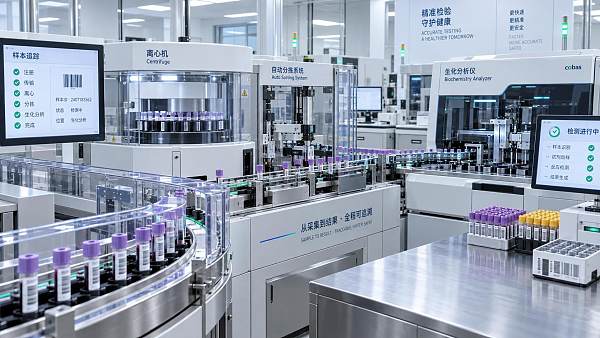
This is the most direct application. Molecular and biochemical assays support infectious disease screening, oncology marker detection, endocrine assessment, and transplant monitoring. In high-throughput labs processing hundreds to thousands of samples per day, even a 1% reduction in repeat testing can materially improve capacity planning.
Critical care and life support decisions
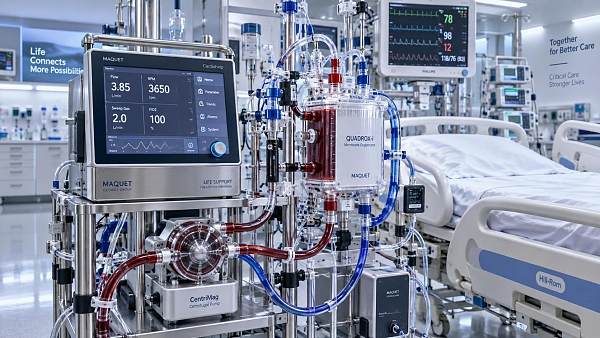
In ICU settings, false results may influence ventilator adjustment, antibiotic escalation, isolation procedures, or ECMO-related infection management. When turnaround time is measured in 1–4 hours, result integrity becomes a safety control, not just a lab metric.
Imaging and intervention planning
Molecular evidence can complement MRI, CT, or endoscopic findings by confirming whether a suspicious lesion is inflammatory, infectious, or neoplastic. This reduces unnecessary procedures and improves triage accuracy before biopsy, surgery, or minimally invasive intervention.
Operating room and infection-control readiness
Pre-operative molecular screening supports patient flow segregation, instrument preparation planning, and environmental control decisions. For infection-sensitive departments, avoiding one false negative can be more operationally important than gaining a few minutes in throughput.
Four scenarios where buyers should prioritize higher-accuracy detection
- When the test result drives immediate treatment or isolation decisions.
- When patient samples are low-volume, degraded, or time-sensitive.
- When the organization faces frequent audits or cross-border compliance review.
- When multiple device systems depend on one reliable diagnostic trigger.
What quality control and safety managers should evaluate before adoption
Choosing a biochemical molecular detection solution requires more than comparing brochure claims. Procurement teams should assess technical fit, workflow compatibility, compliance readiness, and lifecycle support over at least a 3- to 5-year planning horizon.
Core evaluation criteria
- Analytical performance: sensitivity, specificity, detection limit, and interference profile.
- Operational fit: throughput per run, turnaround time, staffing requirement, and training complexity.
- Quality system support: calibration logic, control design, audit trail, and result traceability.
- Supply reliability: reagent shelf life, storage conditions, and multi-lot consistency.
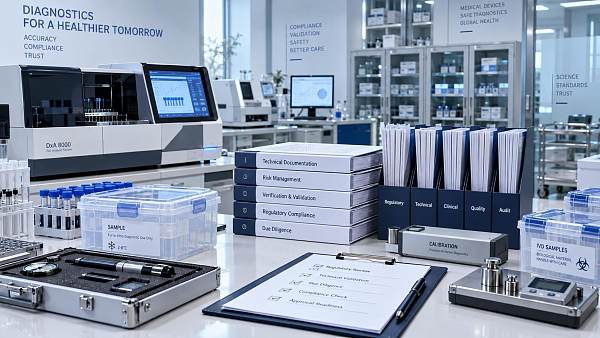
- Regulatory alignment: document package quality, validation support, and market access relevance.
The table below can help procurement and QA teams compare vendors or platforms in a structured way.
A strong platform should help the organization lower error exposure while keeping implementation practical. If a system offers high theoretical performance but weak traceability, unstable supply, or slow onboarding, the quality benefit may not scale in real operations.
Implementation advice for safer rollout
A phased rollout typically works best. Many organizations use a 3-stage model: validation, controlled pilot, and full deployment. Each stage should include predefined acceptance criteria such as repeatability, invalid-run frequency, operator competency, and data integration stability.
Training should cover not only operation, but also contamination prevention, exception handling, and escalation criteria. In practice, 2–3 rounds of competency checks during the first 60–90 days can reduce avoidable handling errors significantly.
Frequent mistakes to avoid
Mistake 1: Focusing only on instrument speed
Fast throughput is useful, but not if invalid runs, retests, or manual reviews increase. Quality teams should measure total effective turnaround time, not machine speed alone.
Mistake 2: Underestimating pre-analytical risk
Even advanced biochemical molecular detection can be undermined by poor sample handling, wrong storage, or delayed transport. In many audits, pre-analytical variation remains one of the top 3 error sources.
Mistake 3: Weak documentation linkage
If result logs, lot tracking, maintenance records, and control histories are fragmented, the organization loses the full compliance value of the technology. Safety managers should ensure document linkage from sample receipt to final release.
Building a regulation-ready diagnostic system with AMDS-aligned insight
For organizations operating across imaging, IVD, life support, and surgical pathways, the real objective is not simply to buy a more advanced assay. It is to build a diagnostic architecture where molecular evidence, equipment performance, and compliance control work together with fewer weak points.
That is where strategic intelligence matters. Buyers and quality leaders need clarity on detection mechanisms, workflow fit, documentation readiness, and the downstream impact on ICU decisions, OR planning, and precision treatment pathways. Biochemical molecular detection becomes most valuable when it is integrated into a wider safety and governance framework.
For quality control personnel and safety management teams, reducing false results means protecting patients, stabilizing operations, and improving confidence in every linked clinical decision. If you are evaluating diagnostic systems, upgrading IVD workflows, or aligning testing capability with stricter regulatory expectations, AMDS can help you assess the technical and operational path more clearly.
Contact us to discuss your diagnostic accuracy priorities, request a tailored solution framework, or learn more about how biochemical molecular detection can support safer, more reliable, and compliance-ready medical workflows.
Recommended News
 Oct 02, 2026High-Flow ICU Ventilators: Key Selection Criteria for Acute Respiratory CareICU ventilators high flow: discover key selection criteria for accurate gas delivery, NIV performance, humidification, alarms, reliability, and safer acute respiratory care.
 Oct 01, 2026How to Evaluate Medical Equipment Intelligence Suppliers for Hospital ProcurementMedical equipment intelligence suppliers: learn how hospitals can assess evidence quality, total cost, compliance, interoperability, and cybersecurity for smarter procurement decisions.
 Sep 30, 2026ISO 13485 Requirements for Blood Testing Instruments: A Buyer’s ChecklistBlood testing instruments ISO 13485 buyer’s checklist: verify certification scope, traceability, installation, consumables, and supplier support before you buy.
 Sep 29, 2026How to Evaluate Integrated Operating Room Systems for Workflow, Imaging, and IT IntegrationIntegrated operating room systems: evaluate workflow, imaging, IT integration, cybersecurity, and lifecycle value to select a scalable surgical solution.
 Sep 28, 2026How to Evaluate a Genetic Testing Equipment Supplier for PCR Lab ProcurementGenetic testing equipment supplier evaluation guide for PCR labs: compare performance, compliance, workflow, service, supply resilience, and total cost.
 Sep 27, 2026How to Specify Custom Benchtop Diagnostic Instruments for Your Assay WorkflowCustom diagnostic instruments benchtop guide: specify optics, fluidics, automation, software integration, and support to build a reliable assay workflow.
 Sep 26, 2026How Cardiac Imaging Analysis Tools Turn CT and MRI Data into Clinical MetricsMedical imaging analysis cardiology tools transform cardiac CT and MRI into reliable metrics. Explore segmentation, validation, workflow integration, and AI review.
 Sep 25, 2026How Iterative Image Reconstruction Algorithms Balance CT Dose, Noise, and DetailIterative image reconstruction algorithms help CT teams balance dose, noise, and diagnostic detail. Explore practical insights for confident imaging decisions.
 Sep 24, 2026What Drives the Total Cost of Medical Technology Solutions Over Their Lifecycle?Medical technology solutions cost goes far beyond purchase price—explore lifecycle drivers from installation and service to software, training, compliance, and downtime.
 Sep 24, 2026Diagnostic Imaging Technology: How Modalities Support Different Clinical DecisionsDiagnostic imaging technology supports smarter clinical decisions across CT, MRI, ultrasound, and nuclear imaging. Explore modality strengths, workflows, and selection factors.
 Sep 22, 2026How Life Science Labs Can Select Biomedical Research Equipment by Workflow and ThroughputBiomedical research equipment life science labs can select with confidence by aligning workflow, throughput, automation, data integrity, and scalable support.
 Sep 21, 2026How to Plan LIS Connectivity for Chemiluminescence Analyzers Without Data GapsChemiluminescence analyzers LIS connectivity: learn how to prevent data gaps with field mapping, exception workflows, end-to-end validation, and reliable go-live planning.
 Sep 20, 2026Selecting Fluorescence PCR Instruments: Detection Channels, Sensitivity, and Workflow FitPCR diagnostic instruments fluorescence detection guide: compare channels, sensitivity, multiplexing, and workflow fit to select a reliable platform.
 Sep 19, 2026Biomedical Signal Processing: From Sensor Data to Clinical Decision SupportBiomedical signal processing transforms sensor data into reliable clinical decision support. Explore AI, imaging, IVD, ICU monitoring, and compliance-ready MedTech insights.
 Sep 18, 2026How to Evaluate a Diagnostic Imaging Platform for Multi-Modality Workflow IntegrationDiagnostic imaging platform evaluation guide: assess multi-modality workflows, interoperability, AI integration, image integrity, security, and scalability for safer clinical decisions.
 Sep 17, 2026ISO 13485 for Medical Imaging Equipment: What Manufacturers Must DocumentMedical imaging equipment ISO 13485: discover essential documentation for design controls, risk management, traceability, software, and post-market quality.
 Sep 16, 2026Robotic MIS Equipment: What Hospitals Should Evaluate Before AdoptionMinimally invasive surgical equipment robotic adoption guide: evaluate workflow, safety, imaging, costs, cybersecurity, and service readiness.
 Sep 15, 2026How to Evaluate Biomedical Signal Processing Suppliers for Clinical Device ProjectsBiomedical signal processing supplier evaluation guide for clinical device teams—compare signal fidelity, regulatory evidence, cybersecurity, integration, and lifecycle support.
 Sep 14, 2026How Integrated Clinical Diagnostics Solutions Reduce Turnaround Time Across Lab WorkflowsIntegrated clinical diagnostics solutions reduce lab turnaround time by connecting workflows, automation, and data. Discover practical strategies for faster, traceable results.
 Sep 13, 2026ECMO System Market Outlook: Demand Drivers, Investment Risks, and Growth OpportunitiesECMO system market outlook explores demand drivers, investment risks, regulatory factors, and growth opportunities shaping critical-care innovation and adoption.
 Sep 12, 2026Where to Find Reliable Medical Device Information for Research and Due DiligenceMedical device information resource guide for due diligence: verify regulatory, clinical, safety, and technical evidence to make confident decisions.
 Sep 11, 2026Medical Equipment Intelligence: A Resource for Comparing Clinical TechnologiesMedical equipment intelligence resource for comparing clinical technologies by clinical fit, compliance, workflow, and total cost—make confident, evidence-led decisions.
 Sep 10, 2026How to Integrate Application-Specific Medical Solutions Into Existing Clinical WorkflowsApplication-specific medical solutions integration: learn how to align clinical workflows, interoperability, safety, and measurable outcomes for reliable deployment.
 Sep 09, 2026Medical Supplier Evaluation Checklist: How to Verify Quality, Compliance, and Delivery RiskMedical supplier evaluation checklist for verifying quality, compliance, service capacity, configuration accuracy, and delivery risk before purchase approval.


Related News
- 00
0000-00
How to Plan LIS Connectivity for Chemiluminescence Analyzers Without Data Gaps - 00
0000-00
FDA Draft IVD Rule Raises Clinical Evidence Bar - 00
0000-00
EU Extends MDR Transition, Tightens Rules for Chemiluminescence IVDs - 00
0000-00
EU MDR Transition Ends, Hitting 1,200+ Chinese IVD Firms - 00
0000-00
EU MDR Transition Ends, 1,200+ China IVD Firms at Risk
Weekly Insights
Stay ahead with our curated technology reports delivered every Monday.