
Why hospital technology integration fails after rollout
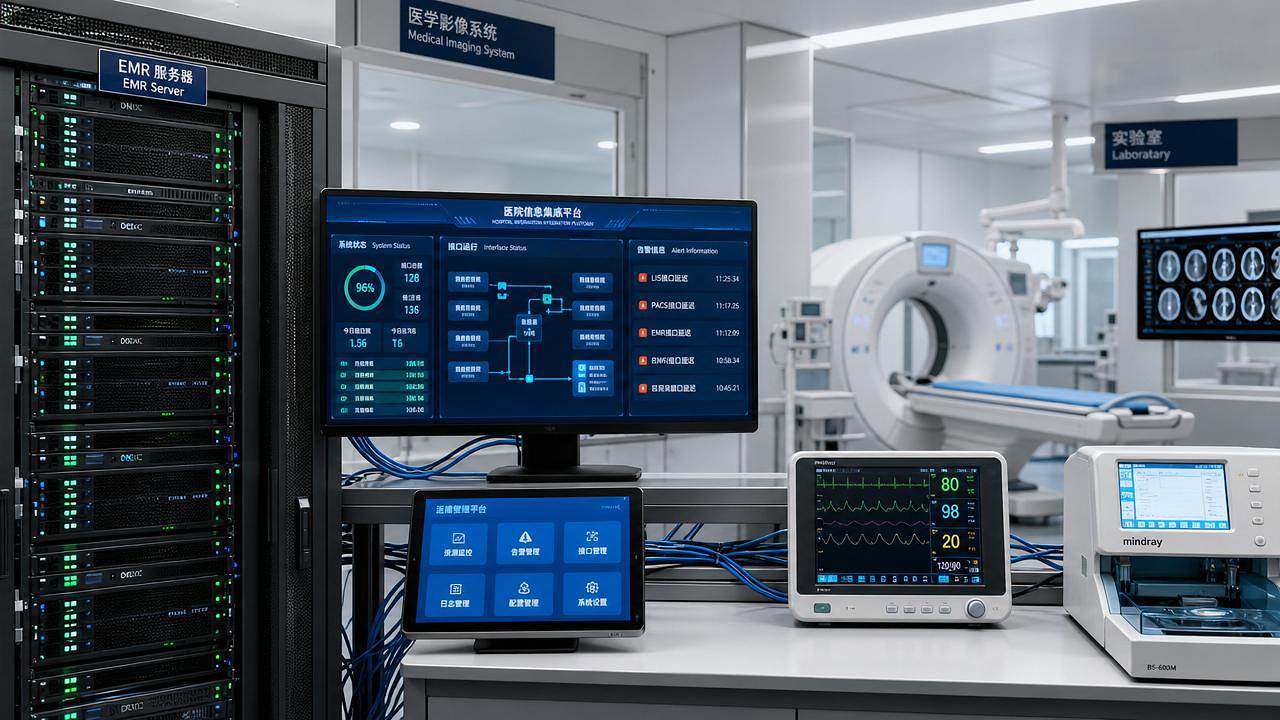




Hospital technology integration often appears successful at go-live, but many failures surface only after rollout, when systems meet real clinical pressure, compliance demands, and maintenance realities. For project managers and engineering leads, the core issue is rarely installation alone. It is whether the integrated environment can remain usable, secure, interoperable, and accountable under everyday hospital operations.
The main search intent behind hospital technology integration in this context is practical diagnosis. Readers want to understand why seemingly completed projects lose performance, user trust, or financial value after deployment. They are not looking for abstract digital transformation language. They want post-rollout failure patterns, root causes, warning signs, and concrete prevention methods.
For project leaders, the biggest concerns usually cluster around six questions: Why do clinicians work around the system? Why does data stop flowing cleanly across platforms? Why do service issues grow after handover? Why does compliance risk increase instead of decrease? Why does ROI become difficult to prove? And what governance model could have prevented the breakdown?
The most useful article, therefore, should focus on operational causes, stakeholder misalignment, integration governance, lifecycle ownership, and measurable decision criteria. Generic introductions to hospital IT modernization should be minimized. What matters is what fails after rollout, how to detect it early, and how to design integration programs that survive real-world hospital complexity.
Why rollout success is often a false signal in hospital technology integration
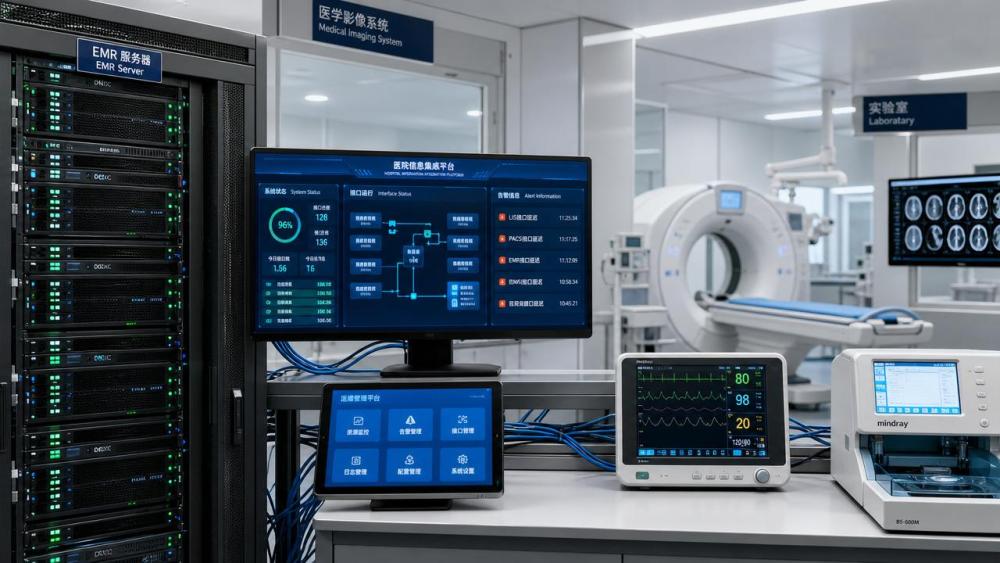
In hospitals, launch day is a milestone, not proof of success. A system can pass testing, connect to required platforms, and still fail once it faces full patient volume, unpredictable workflows, and multiple departmental priorities.
That is why hospital technology integration often fails after rollout. The project team may have delivered interfaces, devices, user accounts, and dashboards. Yet the hospital only starts discovering the real integration quality when clinicians depend on it during busy shifts.
During implementation, project plans usually emphasize technical completion: installation, interface mapping, device connectivity, basic validation, and acceptance criteria. After rollout, however, the definition of success changes. The system must support continuity, resilience, usability, escalation response, and compliance under non-ideal conditions.
For project managers, this shift is critical. A technically “completed” integration can still break operationally if ownership, workflow design, and lifecycle support were not built into the original program structure.
The most common reason: workflow alignment was weaker than technical alignment
Many post-rollout failures begin with a simple mismatch. The integrated technology was designed around how stakeholders said work should happen, not how work actually happens in imaging departments, laboratories, operating rooms, ICUs, or endoscopy units.
Hospitals are not static environments. Clinical pathways vary by shift, acuity, staffing level, specialty preference, emergency load, and local policy. If hospital technology integration does not account for these realities, users quickly create workarounds.
Those workarounds are dangerous because they are often invisible to leadership at first. Clinicians may manually re-enter data, bypass alerts, store images outside expected pathways, delay documentation, or avoid using advanced features entirely.
Once workarounds spread, the integration begins to fail in practical terms. Data quality drops, traceability weakens, response times increase, and training assumptions collapse. From the project perspective, the system is live. From the clinical perspective, it is already compromised.
Project leaders should treat workflow validation as a post-go-live discipline, not a pre-launch checkbox. Real observation, user shadowing, exception-case mapping, and department-specific feedback loops are often more valuable than broad but shallow training completion metrics.
Interoperability problems rarely end at interface delivery
Another major reason hospital technology integration fails after rollout is that interoperability was defined too narrowly. Teams may focus on whether systems can exchange data, but not whether the data remains timely, complete, normalized, and useful across the care process.
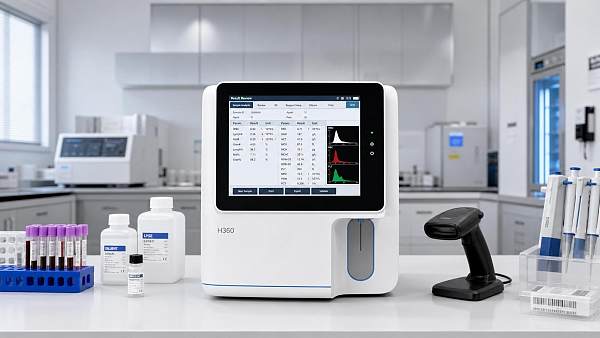
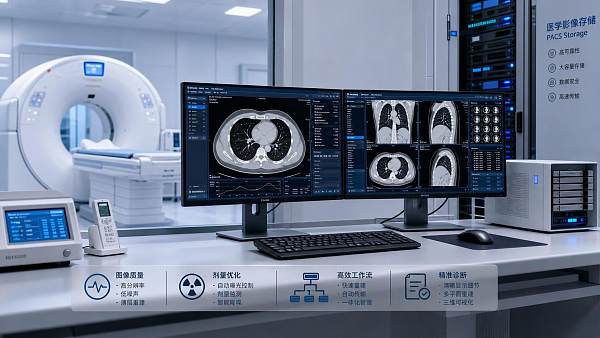
In hospitals, connecting imaging equipment, IVD instruments, monitoring systems, EMRs, PACS, LIS, RIS, OR platforms, and life support devices is only the first layer. The harder question is whether data semantics, timestamps, identifiers, and status logic remain consistent.
A project can appear interoperable during testing while hiding serious operational weaknesses. For example, patient matching may fail in edge cases, modality worklists may not update reliably, structured results may not land in the right clinical context, or alarms may not escalate correctly.
These issues are especially costly in high-dependency settings. In critical care, surgical environments, and diagnostic workflows, delayed or misrouted information is not just inefficient. It can affect patient safety, staff trust, and regulatory exposure.
Engineering leaders should push beyond interface status dashboards. They need transaction-level visibility, exception reporting, downtime pathways, and ownership for data quality correction. Interoperability should be measured by clinical usefulness, not only by successful message exchange.
Compliance and cybersecurity often become harder after handover
Many teams assume that regulatory and security requirements are mostly pre-launch concerns. In reality, hospital technology integration can become more exposed after rollout because systems begin interacting continuously with live users, live patients, and evolving network environments.
Medical device integration sits at the intersection of safety, privacy, access control, auditability, software lifecycle management, and vendor responsibility boundaries. Once the system is operational, patching schedules, role permissions, data retention, and change control become daily governance issues.
This is where hidden gaps appear. A hospital may discover that vendor update cycles do not align, device operating systems age faster than expected, third-party connectors lack sufficient logging, or user provisioning rules do not reflect clinical staffing patterns.
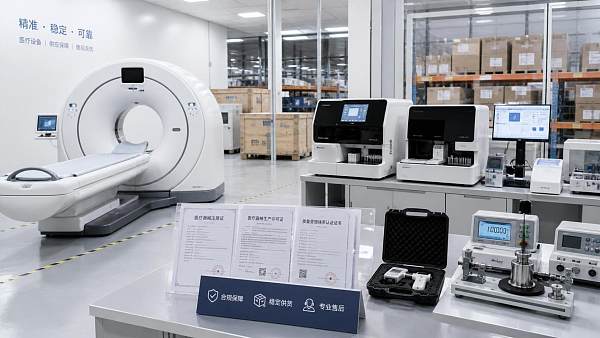
For organizations operating across regions or planning international equipment strategies, compliance complexity increases further. Different market expectations around traceability, device software documentation, clinical risk management, and post-market obligations can reshape integration priorities after deployment.
Project managers should therefore avoid treating cybersecurity and compliance as separate streams. In hospital technology integration, they are operational design factors. If they are weak after rollout, the system becomes progressively harder and more expensive to sustain.
Ownership breaks down when no one governs the system as a living environment
A frequent post-rollout failure pattern is not technical at all. It is organizational. Integration projects often have clear delivery teams, but unclear long-term owners once the implementation phase ends.
Hospitals typically involve IT, biomedical engineering, clinical operations, procurement, compliance, quality, and external vendors. During rollout, these groups may collaborate intensely. After handover, responsibilities can fragment. Each group assumes another one is monitoring the whole environment.
That gap creates slow response, unresolved incidents, and unmanaged changes. A minor interface issue becomes a recurring operational burden. A firmware update creates downstream workflow effects. A reporting field changes and no one updates the affected analytics logic.
Without lifecycle governance, hospital technology integration gradually drifts away from its validated state. The system still exists, but its performance, trust, and accountability decline over time.
Effective programs assign named owners for clinical workflow integrity, interface reliability, security controls, vendor coordination, change approval, and outcome measurement. A steering committee alone is not enough. The integrated environment needs day-to-day operational governance.
Training fails when it is event-based instead of role-based
Many hospitals underestimate how quickly user capability decays after go-live. Training is often delivered as a launch activity, but post-rollout success depends on whether different user groups can keep using the integrated system correctly under pressure.
Radiology staff, lab teams, ICU nurses, surgeons, anesthesiologists, biomedical engineers, and administrators do not interact with technology in the same way. A generic training package rarely supports this complexity.
When training is shallow, users understand basic functions but not exception handling. They may know how to use the ideal workflow, but not how to respond to incomplete patient records, temporary interface downtime, emergency overrides, device swaps, or reconciliation tasks.
That weakness directly affects adoption. Users lose confidence, revert to local habits, and stop trusting the integrated process. Once that happens, even well-designed hospital technology integration begins to underperform.
Project leaders should build role-based refresh training, floor support during stabilization, super-user networks, and feedback-led updates to training materials. Integration resilience depends as much on human readiness as on system architecture.
Vendors may deliver components, but not end-to-end operational accountability
In complex hospital environments, no single vendor always owns the entire integrated ecosystem. One supplier may provide imaging hardware, another the archive, another the middleware, another the EMR, and another the network or cybersecurity layer.
This multi-vendor structure creates a predictable post-rollout risk. When failures appear, each party may defend its own component rather than resolve the whole clinical outcome. The hospital is left managing the gaps between contracts, service levels, and technical boundaries.
For project managers, this is where integration strategy must become commercial strategy. If responsibilities for troubleshooting, validation after updates, escalation timing, and cross-platform testing are not written clearly into governance and supplier agreements, delays are inevitable.
The problem is especially visible in advanced medical environments involving imaging reconstruction, diagnostic analyzers, minimally invasive surgical platforms, or critical life support systems. These technologies operate in workflows where uptime, latency, and traceability are not optional.
Strong integration programs define not only what vendors install, but what they must prove in operational continuity. That includes rollback plans, compatibility commitments, event logging expectations, and response responsibilities across shared failure scenarios.
Why ROI disappears even when the technology works
Some post-rollout integration failures are financial before they are technical. The platform may remain operational, but the hospital cannot demonstrate the expected business value because benefits were never tied to measurable operational outcomes.
Project leaders often inherit high-level promises: better efficiency, better patient flow, fewer errors, stronger data visibility, improved diagnostic speed. Those goals are valid, but unless they are translated into tracked metrics, value becomes difficult to defend after rollout.
Hospitals need clearer links between integration and outcomes such as scan turnaround time, lab result availability, OR utilization, ICU alarm response reliability, repeat test reduction, documentation burden, service downtime, and reimbursement-supporting data quality.
If those indicators are absent, leadership sees only cost: maintenance contracts, support escalations, retraining, patches, workflow redesign, and vendor coordination. Even successful hospital technology integration can then be judged as underperforming.
To protect investment value, project teams should establish a benefits baseline before deployment and review it after stabilization. Post-rollout governance should include both technical KPIs and business KPIs. Otherwise, the integration may function, but still be considered a failure.
How project managers can reduce post-rollout failure risk
The most effective prevention strategy is to treat integration as a lifecycle program rather than an implementation event. That mindset changes planning, budgeting, stakeholder engagement, and acceptance criteria from the start.
First, define success in operational terms. Include workflow reliability, exception handling, update governance, support escalation, data quality, and adoption metrics alongside technical go-live milestones.
Second, validate real workflows, not only designed workflows. Use pilot environments, shift-based testing, clinical simulation, and post-launch observation to identify where the integrated process breaks under realistic pressure.
Third, create clear ownership after handover. Assign responsible leaders for interoperability monitoring, clinical optimization, cybersecurity maintenance, supplier coordination, and outcome reporting.
Fourth, build a structured stabilization period. The first weeks after rollout should include rapid issue triage, visible decision-making, super-user support, and disciplined change logging. Many failures become permanent simply because early issues are normalized instead of resolved.
Fifth, connect integration governance to strategic value. In advanced diagnostic and therapeutic environments, the real return comes from reliable data flow, safe clinical execution, compliance readiness, and service continuity. Those outcomes should guide post-rollout decisions.
Conclusion: hospital technology integration fails after rollout when delivery is mistaken for durability
The central lesson is straightforward. Hospital technology integration usually does not fail because teams forgot to install systems. It fails because installation was treated as the finish line, while workflow reality, governance, interoperability quality, compliance, and lifecycle ownership were treated as secondary.
For project management and engineering leaders, the better question is not “Did we go live?” but “Can this integrated environment remain clinically trusted, technically resilient, and financially defensible over time?”
When hospitals plan for that wider definition of success, post-rollout performance improves significantly. The integration becomes more than a technical connection. It becomes a sustainable operational capability that protects patient safety, staff efficiency, and long-term investment value.
That is the standard modern healthcare environments increasingly require, especially in high-stakes domains such as imaging, IVD, life support, operating rooms, and minimally invasive surgery. In those settings, durable integration is not a nice-to-have. It is infrastructure for safe and precise care.
Recommended News
 Aug 28, 2026Planning Operating Room Technology for a High-Throughput Surgery CenterOperating room technology for a surgery center: plan workflows, integration, uptime, and safety to boost throughput and create future-ready surgical rooms.
 Aug 27, 2026Building Medical Compliance Analytics for Middle East Market AccessMedical compliance analytics Middle East: build device-specific evidence maps, align local requirements, and accelerate market access with confidence.
 Aug 26, 2026How Surgical Equipment Digitalization Is Reshaping Hospital Investment in Latin AmericaSurgical equipment digitalization Latin America is reshaping hospital investment, from smart ORs to ROI-driven upgrades. Explore what buyers now value most.
 Aug 25, 2026How to Evaluate a Medical Compliance Intelligence Provider for Global Market AccessMedical compliance intelligence provider selection can make or break global market access. Learn how to assess technical depth, update quality, and commercial fit before choosing.
 Aug 24, 2026How Advanced Clinical Imaging Is Improving Cardiology Diagnosis and Treatment PlanningAdvanced clinical imaging cardiology is transforming diagnosis and treatment planning with clearer anatomy, tissue insight, and procedural guidance. Discover how it reduces uncertainty and supports smarter cardiac decisions.
 Aug 23, 2026How to Source Medical Devices in North America: Supplier Vetting and Market Access RisksMedical device sourcing North America made practical: learn how to vet suppliers, reduce compliance risks, and protect market access with smarter procurement decisions.
 Aug 22, 2026What Are Integrated Critical Care Systems and How Do Hospitals Evaluate Them?Critical care systems integrated: learn how hospitals assess ICU platforms for interoperability, alarm safety, workflow efficiency, and long-term value before buying.
 Aug 21, 2026How to Evaluate High-Resolution Diagnostic Imaging Systems for Detail-Critical ExamsDiagnostic imaging systems high resolution: learn how to compare detail-critical performance, workflow fit, dose efficiency, and ROI to choose the right system with confidence.
 Aug 20, 2026How to Evaluate Medical Equipment Performance Before Purchase?Medical equipment evaluation performance starts before purchase. Learn how to assess safety, workflow fit, compliance, uptime, and total cost to choose devices that truly perform.
 Aug 19, 2026How to Evaluate Small-Footprint Laboratory Diagnostic Equipment for Space-Limited LabsLaboratory diagnostic equipment small footprint choices require more than size checks. Learn how to assess workflow, throughput, compliance, and service access for smarter lab buying.
 Aug 18, 2026Biochemical Molecular Diagnostics Explained: Methods, Clinical Uses, and Lab Selection CriteriaBiochemical molecular diagnostics explained: compare key methods, clinical applications, and lab selection criteria to choose reliable, compliant testing with confidence.
 Aug 17, 2026How to Choose Diagnostic Equipment Solutions for a Clinic: Key Factors That Affect Workflow and CostDiagnostic equipment solutions clinic buyers can use to improve workflow, control total cost, and avoid hidden service risks. Learn the key factors before you invest.
 Aug 16, 2026How to Choose a Blood Cell Analyzer for a Small Lab: Throughput, CBC Menu, and CostBlood cell analyzers small lab buyers can compare throughput, CBC menu, and total operating cost with confidence. Learn how to avoid waste, reduce downtime, and choose the right fit.
 Aug 16, 2026FDA Approval of AMDS Hybrid Prosthesis Removes IRB Step for Faster U.S. AccessFDA approval of AMDS Hybrid Prosthesis removes the IRB step, speeding U.S. access for acute aortic dissection care and reshaping hospital procurement and supporting equipment demand.
 Aug 15, 2026What Hospital Technology Infrastructure Is Needed for Reliable Interoperability?Hospital technology infrastructure interoperability depends on secure networks, integration engines, identity services, and governance. Discover what hospitals need for reliable, scalable connectivity.
 Aug 14, 2026What to Look for in an Advanced Diagnostic Systems Distributor Before You BuyAdvanced diagnostic systems distributor: learn what to check before buying, from compliance and technical depth to delivery reliability and after-sales support. Make a smarter procurement decision today.
 Aug 14, 2026China Temporarily Bans Helium ExportsChina Temporarily Bans Helium Exports: learn how the July 10, 2026 rule may disrupt MRI, ECMO, and anesthesia device supply chains, compliance, and delivery planning for global buyers.
 Aug 13, 2026How CT Reconstruction Technology Impacts Image Quality, Dose, and WorkflowMedical imaging reconstruction technology CT shapes image quality, dose, and workflow. Learn how smarter CT reconstruction improves diagnostics and efficiency.
 Aug 13, 2026FDA clears AMDS PMA, easing U.S. hospital accessFDA clears AMDS PMA, easing U.S. hospital access for Artivion’s aortic arch device and speeding procurement, compliance, and deployment.
 Aug 12, 2026Hospital Diagnostic Equipment Comparison: What Buyers Should Evaluate Beyond PriceDiagnostic equipment comparison hospital buyers can trust: learn how to evaluate clinical performance, uptime, compliance, integration, and long-term ROI beyond price.
 Aug 12, 2026FDA Draft Guidance Reshapes AI Device ComplianceFDA Draft Guidance reshapes AI device compliance with new postmarket monitoring expectations for AI/ML-enabled SaMD. Learn what it means for U.S. market access, distributors, and exporters.
 Aug 11, 2026How to Evaluate a Diagnostic Medical Systems Manufacturer for Quality and Market AccessDiagnostic medical systems manufacturer selection starts with more than specs. Learn how to assess quality systems, regulatory readiness, service uptime, and market access before you buy.
 Aug 11, 2026EU MDR Deadline Extended for ECMO and ICU DevicesEU MDR deadline extended for ECMO and ICU devices to 2027. Learn what Regulation (EU) 2026/1347 means for compliance, exports, procurement, and roadmap filing.
 Aug 10, 2026How to Evaluate Laboratory Automation Systems in Europe for Multi-Site Lab OperationsLaboratory automation systems Europe buyers can use this guide to compare interoperability, compliance, service coverage, and ROI for multi-site lab operations with confidence.










Related News
- 00
0000-00
Planning Operating Room Technology for a High-Throughput Surgery Center - 00
0000-00
How Advanced Clinical Imaging Is Improving Cardiology Diagnosis and Treatment Planning - 00
0000-00
What Are Integrated Critical Care Systems and How Do Hospitals Evaluate Them? - 00
0000-00
How to Evaluate High-Resolution Diagnostic Imaging Systems for Detail-Critical Exams - 00
0000-00
How to Evaluate Medical Equipment Performance Before Purchase?
Weekly Insights
Stay ahead with our curated technology reports delivered every Monday.