
Brazil Tightens Entry Rules for Hematology Analyzers
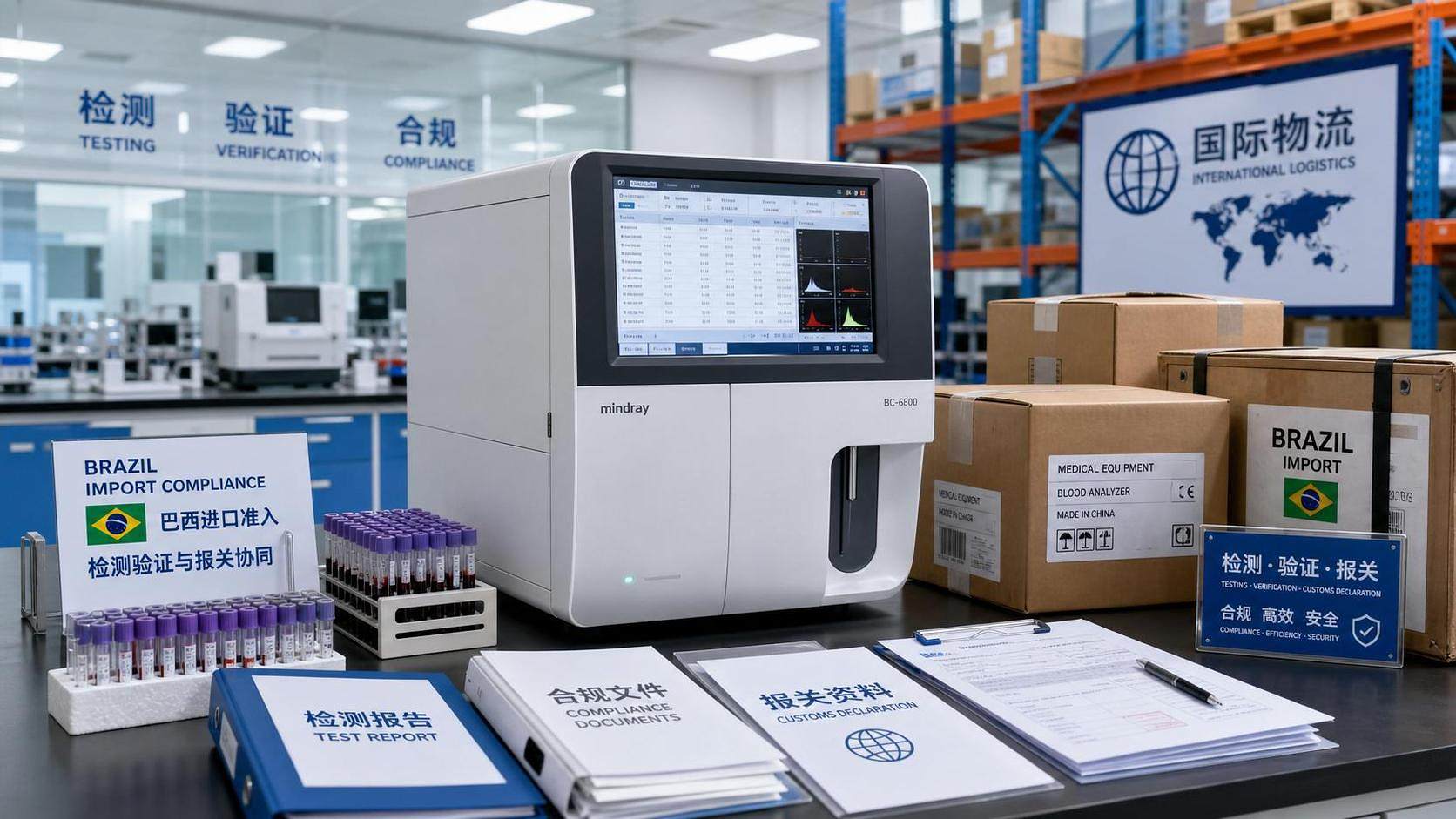




As of July 12, 2026, Brazil has put a new compliance gate in place for imported Hematology Analyzers seeking new registration. Under ANVISA Resolution RDC No. 45/2026, applicants must pre-submit a full in vitro diagnostic performance validation report based on ISO 15197:2023 through the ANVISA e-Sistema platform before a registration filing can be accepted. Because the same requirement has also been incorporated into pre-clearance checks for customs under HS code 8471.50.90, the change matters not only for regulatory teams, but also for import planning, document readiness, customs handling, and delivery scheduling.
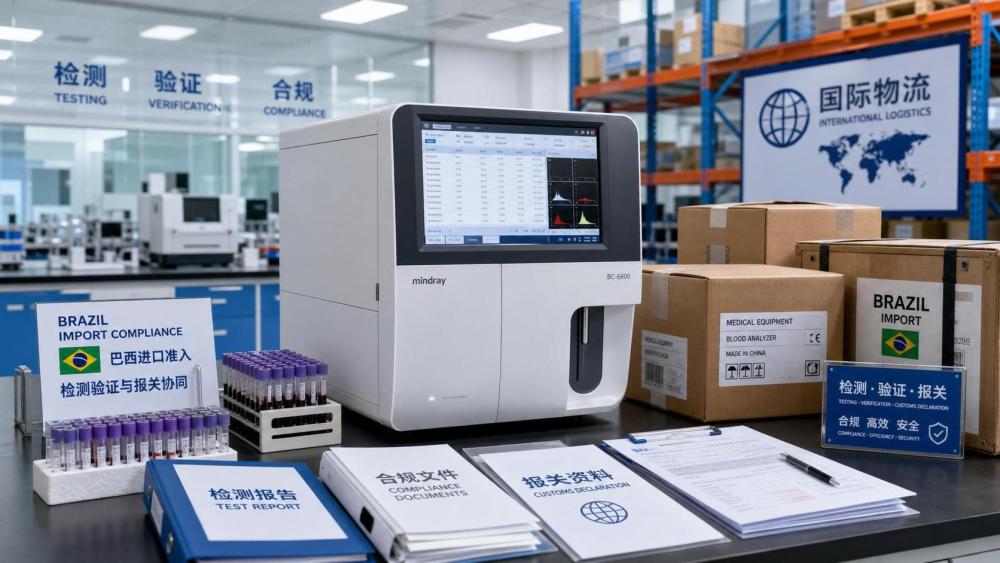
What the new Brazilian requirement now covers
The confirmed change is specific and already in force. ANVISA began implementing Resolution RDC No. 45/2026 at 00:00 on July 12, 2026. For all newly registered imported Hematology Analyzers, a performance validation report completed in accordance with ISO 15197:2023 must be submitted in advance on the ANVISA e-Sistema platform. The required report must include precision, accuracy, linear range, and interference testing. If that documentation is not pre-submitted, the registration application will not be accepted. The same requirement has also been added to Brazil customs pre-clearance validation rules for HS code 8471.50.90.
Where the operational pressure is likely to appear
Registration and market-entry teams face a stricter front-end checkpoint
From an industry perspective, the main immediate effect for importers and registration holders is that technical documentation is no longer only a supporting file within a broader registration workflow. It now acts as a front-end acceptance condition for new registration filings. That means teams handling Brazil market entry need to pay close attention to whether the ISO 15197:2023-based validation package is complete before submission, especially where filing schedules depend on a planned registration window.
Export and supply planning may become more document-dependent
Analysis shows that exporters and supply-chain planners may feel the impact through timing and shipment coordination rather than through the rule text alone. Since the requirement has also been tied to customs pre-clearance under a specified HS code, companies involved in export preparation, shipping documentation, and delivery commitments should watch for any mismatch between regulatory filing readiness and trade execution readiness. In practical terms, documentation gaps could affect sequencing between registration, shipment release planning, and customer delivery expectations.
Testing and compliance support functions become more central
Observably, the required report content places greater weight on performance verification evidence, including precision, accuracy, linear range, and interference testing. For manufacturers, authorized representatives, and service providers involved in compliance preparation, the focus is likely to shift toward whether existing validation files can be presented in the required format and standard reference, and whether internal technical records align with the submission expectations of the ANVISA e-Sistema process.
Procurement and downstream buyers may need closer document review
For procurement teams, distributors, and downstream buyers, the rule change is relevant because it can influence onboarding conditions for newly registered imported products. What deserves closer attention is not only product availability, but also whether suppliers can demonstrate that the required validation documentation has been prepared for the applicable Brazil filing and customs context. This is especially relevant where delivery schedules or purchasing decisions depend on new product registration status.
What companies should watch in current practice
Check whether technical files are aligned before filing starts
Analysis shows that companies should first review whether their performance validation materials clearly cover all parameters named in the rule summary: precision, accuracy, linear range, and interference testing. The practical issue is not simply having technical data somewhere in the file set, but whether the documentation is ready for pre-submission in the manner now required for new registration acceptance.
Track the interaction between registration and customs workflows
Because the requirement has also been linked to customs pre-clearance validation for HS code 8471.50.90, firms should follow how regulatory and trade documentation workflows are coordinated internally. It is more appropriate to understand this as a cross-functional compliance issue rather than a purely regulatory filing issue, particularly for teams managing order timing, shipment release, and import handover.
Review supplier and partner document readiness
For companies relying on external manufacturers, laboratories, regulatory consultants, or logistics partners, current attention should center on document ownership and submission readiness. Observably, the rule increases the importance of knowing which party holds the performance validation report, who is responsible for preparing it for ANVISA e-Sistema pre-submission, and whether the same documentation posture supports customs-facing checks.
Continue monitoring how the requirement is applied in practice
The input information confirms the rule change and its effective date, but it does not provide further operational detail on review practice, documentary formatting expectations, or case-by-case enforcement. For that reason, companies should continue monitoring subsequent official wording, filing practice, procurement documentation requirements, and market feedback before treating any single internal interpretation as settled execution guidance.
Why this looks like an execution signal, not only a policy notice
From an industry perspective, this development is better read as an implemented access condition than as a preliminary policy direction. The rule is described as effective from a defined date, and the consequence for non-submission is explicit: the registration application will not be accepted. At the same time, it would be premature to overstate downstream outcomes beyond that confirmed point. Observably, the more useful reading for companies is that Brazil has moved the compliance burden earlier in the import entry process for newly registered Hematology Analyzers, while the detailed market impact still requires continued observation through actual execution, customs handling, and industry response.
How this update is best understood for now
This update indicates a concrete tightening of pre-registration and pre-clearance expectations for imported Hematology Analyzers entering Brazil under the stated conditions. The immediate significance lies in document readiness, standard-based performance validation, and the closer linkage between regulatory acceptance and trade movement. Analysis shows that the market should currently understand this less as a broad sector forecast and more as a live compliance requirement with practical implications for filing sequence, shipment planning, and supplier coordination.
Basis of this article and what still needs verification
This article is based on the user-provided news title, event date, and event summary. For developments of this kind, relevant source categories often include official regulatory notices, publications from supervisory authorities, customs or trade administration updates, industry association releases, standards organization documents, and reporting by authoritative trade media. No specific official source link was provided in the input, so the underlying official link still needs to be verified on an ongoing basis. What also remains worth monitoring includes detailed implementation language, certification and submission interpretation, changes in tender or procurement documents, market feedback, and how companies execute against the requirement in practice.
Recommended News
 Aug 27, 2026Building Medical Compliance Analytics for Middle East Market AccessMedical compliance analytics Middle East: build device-specific evidence maps, align local requirements, and accelerate market access with confidence.
 Aug 26, 2026How Surgical Equipment Digitalization Is Reshaping Hospital Investment in Latin AmericaSurgical equipment digitalization Latin America is reshaping hospital investment, from smart ORs to ROI-driven upgrades. Explore what buyers now value most.
 Aug 25, 2026How to Evaluate a Medical Compliance Intelligence Provider for Global Market AccessMedical compliance intelligence provider selection can make or break global market access. Learn how to assess technical depth, update quality, and commercial fit before choosing.
 Aug 24, 2026How Advanced Clinical Imaging Is Improving Cardiology Diagnosis and Treatment PlanningAdvanced clinical imaging cardiology is transforming diagnosis and treatment planning with clearer anatomy, tissue insight, and procedural guidance. Discover how it reduces uncertainty and supports smarter cardiac decisions.
 Aug 23, 2026How to Source Medical Devices in North America: Supplier Vetting and Market Access RisksMedical device sourcing North America made practical: learn how to vet suppliers, reduce compliance risks, and protect market access with smarter procurement decisions.
 Aug 22, 2026What Are Integrated Critical Care Systems and How Do Hospitals Evaluate Them?Critical care systems integrated: learn how hospitals assess ICU platforms for interoperability, alarm safety, workflow efficiency, and long-term value before buying.
 Aug 21, 2026How to Evaluate High-Resolution Diagnostic Imaging Systems for Detail-Critical ExamsDiagnostic imaging systems high resolution: learn how to compare detail-critical performance, workflow fit, dose efficiency, and ROI to choose the right system with confidence.
 Aug 20, 2026How to Evaluate Medical Equipment Performance Before Purchase?Medical equipment evaluation performance starts before purchase. Learn how to assess safety, workflow fit, compliance, uptime, and total cost to choose devices that truly perform.
 Aug 19, 2026How to Evaluate Small-Footprint Laboratory Diagnostic Equipment for Space-Limited LabsLaboratory diagnostic equipment small footprint choices require more than size checks. Learn how to assess workflow, throughput, compliance, and service access for smarter lab buying.
 Aug 18, 2026Biochemical Molecular Diagnostics Explained: Methods, Clinical Uses, and Lab Selection CriteriaBiochemical molecular diagnostics explained: compare key methods, clinical applications, and lab selection criteria to choose reliable, compliant testing with confidence.
 Aug 17, 2026How to Choose Diagnostic Equipment Solutions for a Clinic: Key Factors That Affect Workflow and CostDiagnostic equipment solutions clinic buyers can use to improve workflow, control total cost, and avoid hidden service risks. Learn the key factors before you invest.
 Aug 16, 2026How to Choose a Blood Cell Analyzer for a Small Lab: Throughput, CBC Menu, and CostBlood cell analyzers small lab buyers can compare throughput, CBC menu, and total operating cost with confidence. Learn how to avoid waste, reduce downtime, and choose the right fit.
 Aug 16, 2026FDA Approval of AMDS Hybrid Prosthesis Removes IRB Step for Faster U.S. AccessFDA approval of AMDS Hybrid Prosthesis removes the IRB step, speeding U.S. access for acute aortic dissection care and reshaping hospital procurement and supporting equipment demand.
 Aug 15, 2026What Hospital Technology Infrastructure Is Needed for Reliable Interoperability?Hospital technology infrastructure interoperability depends on secure networks, integration engines, identity services, and governance. Discover what hospitals need for reliable, scalable connectivity.
 Aug 14, 2026What to Look for in an Advanced Diagnostic Systems Distributor Before You BuyAdvanced diagnostic systems distributor: learn what to check before buying, from compliance and technical depth to delivery reliability and after-sales support. Make a smarter procurement decision today.
 Aug 14, 2026China Temporarily Bans Helium ExportsChina Temporarily Bans Helium Exports: learn how the July 10, 2026 rule may disrupt MRI, ECMO, and anesthesia device supply chains, compliance, and delivery planning for global buyers.
 Aug 13, 2026How CT Reconstruction Technology Impacts Image Quality, Dose, and WorkflowMedical imaging reconstruction technology CT shapes image quality, dose, and workflow. Learn how smarter CT reconstruction improves diagnostics and efficiency.
 Aug 13, 2026FDA clears AMDS PMA, easing U.S. hospital accessFDA clears AMDS PMA, easing U.S. hospital access for Artivion’s aortic arch device and speeding procurement, compliance, and deployment.
 Aug 12, 2026Hospital Diagnostic Equipment Comparison: What Buyers Should Evaluate Beyond PriceDiagnostic equipment comparison hospital buyers can trust: learn how to evaluate clinical performance, uptime, compliance, integration, and long-term ROI beyond price.
 Aug 12, 2026FDA Draft Guidance Reshapes AI Device ComplianceFDA Draft Guidance reshapes AI device compliance with new postmarket monitoring expectations for AI/ML-enabled SaMD. Learn what it means for U.S. market access, distributors, and exporters.
 Aug 11, 2026How to Evaluate a Diagnostic Medical Systems Manufacturer for Quality and Market AccessDiagnostic medical systems manufacturer selection starts with more than specs. Learn how to assess quality systems, regulatory readiness, service uptime, and market access before you buy.
 Aug 11, 2026EU MDR Deadline Extended for ECMO and ICU DevicesEU MDR deadline extended for ECMO and ICU devices to 2027. Learn what Regulation (EU) 2026/1347 means for compliance, exports, procurement, and roadmap filing.
 Aug 10, 2026How to Evaluate Laboratory Automation Systems in Europe for Multi-Site Lab OperationsLaboratory automation systems Europe buyers can use this guide to compare interoperability, compliance, service coverage, and ROI for multi-site lab operations with confidence.
 Aug 10, 2026FDA Tightens AI Validation Rules for IVD DevicesFDA Tightens AI Validation Rules for IVD Devices: learn how new FDA requirements for AI-enabled PCR and chemiluminescence IVDs may impact 510(k), De Novo filings, exports, and U.S. market access.
















Related News
- 00
0000-00
How to Choose a Blood Cell Analyzer for a Small Lab: Throughput, CBC Menu, and Cost - 00
0000-00
How to Compare Hematology Analyzers With Low Reagent Use for Cost Control - 00
0000-00
Brazil Tightens Entry Rules for Hematology Analyzers - 00
0000-00
FDA-Approved IVD Analyzers: Key Performance Specs and Compliance Checks - 00
0000-00
IVD Analyzers Explained: Key Throughput, Accuracy, and Integration Specs
Weekly Insights
Stay ahead with our curated technology reports delivered every Monday.