
IVD molecular testing costs more, but where is the return?
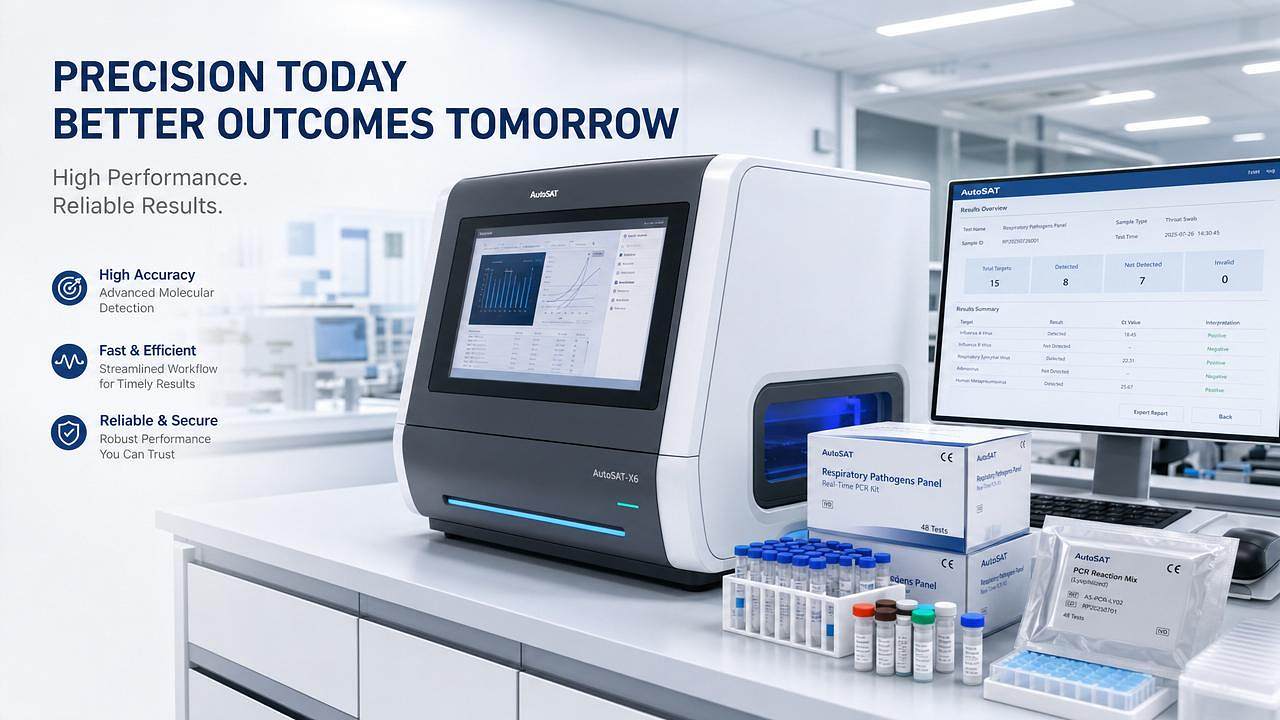




IVD molecular testing promises earlier detection, faster clinical decisions, and stronger precision medicine outcomes, but its higher upfront cost raises a critical question for business evaluators: where does measurable return actually emerge? From reimbursement and workflow efficiency to diagnostic accuracy and long-term care savings, understanding the real value of IVD molecular testing is essential for smarter investment decisions in today’s competitive healthcare landscape.
Why does IVD molecular testing cost more in the first place?
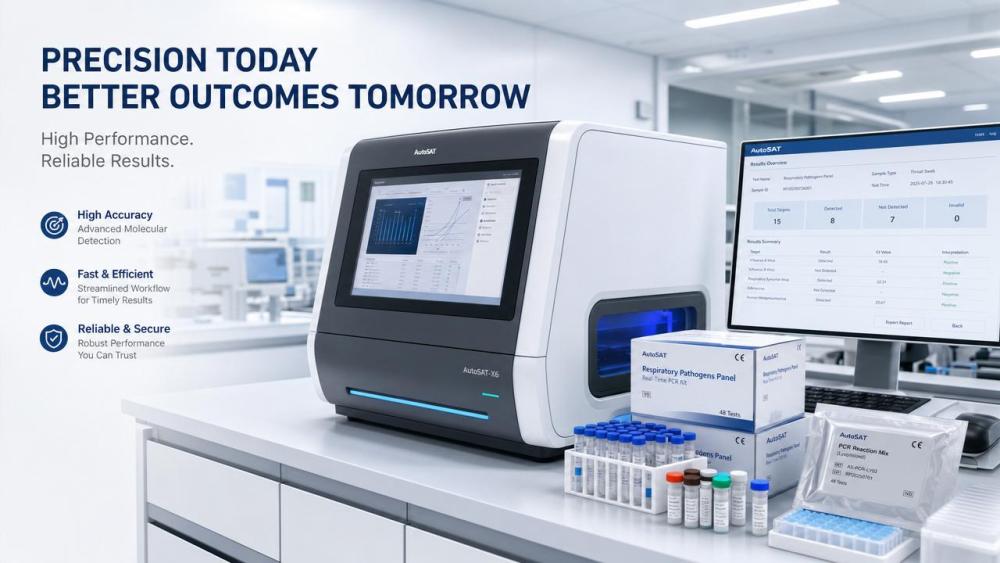
For many procurement and investment teams, the first reaction to IVD molecular testing is simple: the price per test, analyzer cost, reagent burden, and compliance requirements often look higher than conventional immunoassay or routine pathology workflows.
That cost gap is real, but it is also incomplete. Molecular diagnostics should be evaluated as a decision acceleration tool, a clinical risk reduction tool, and a revenue protection tool, not only as a laboratory expense line.
In practical terms, IVD molecular testing often includes higher-value components that drive cost:
- Specialized instruments for PCR, real-time amplification, or automated sample preparation that require validation, maintenance, and trained operators.
- Higher reagent complexity, including extraction kits, controls, calibration materials, and contamination management procedures.
- Stricter quality management expectations linked to result traceability, contamination control, analytical sensitivity, and clinical interpretation.
- Integration needs across LIS, reporting workflows, reimbursement coding, and regulatory documentation, especially for cross-border commercialization.
AMDS frequently examines these costs in the wider MedTech environment, where imaging, IVD, life support, and surgical systems are all judged by the same commercial reality: a premium technology only succeeds if it improves measurable outcomes and survives compliance review.
The key business mistake: looking only at purchase price
Business evaluators often compare a molecular platform against a lower-cost legacy assay and stop there. That approach ignores misdiagnosis risk, delayed therapy, repeat visits, inpatient extension, and the strategic value of high-confidence detection in oncology, infectious disease, and targeted treatment pathways.
The better question is not “Why is IVD molecular testing expensive?” but “Which cost centers shrink when molecular evidence arrives earlier and more accurately?”
Where does the return from IVD molecular testing actually appear?
Return on IVD molecular testing rarely appears in one single line item. It usually emerges across multiple layers of hospital finance, care delivery, and market access. For business assessment teams, this multi-point return is exactly what must be modeled before procurement.
The table below shows the most common return channels associated with IVD molecular testing in real-world evaluation frameworks.
For many organizations, the strongest return does not come from a larger test menu alone. It comes from using IVD molecular testing where the result changes treatment timing, admission intensity, or referral patterns.
Four return signals procurement teams should quantify
- Turnaround time reduction from sample receipt to actionable report.
- Avoided costs from unnecessary imaging, broad-spectrum treatment, isolation, or repeat testing.
- Incremental revenue or reimbursement capture linked to advanced diagnostics.
- Clinical pathway improvement under DRG or bundled payment environments where delays erode margin.
Which scenarios justify premium molecular diagnostics fastest?
Not every laboratory or care setting receives the same return profile. IVD molecular testing creates the clearest business case in scenarios where speed, specificity, and treatment relevance directly affect cost or capacity.
For commercial planning, it helps to separate high-value deployment scenarios from broad but lower-yield expansion efforts.
- Infectious disease panels where rapid pathogen identification can reduce isolation misuse, unnecessary antibiotics, and emergency congestion.
- Oncology pathways where mutation detection supports targeted therapy and avoids delayed or ineffective regimens.
- Transplant and immunocompromised care where viral load monitoring influences high-cost intervention timing.
- Women’s health and prenatal screening where earlier molecular confirmation can reduce referral uncertainty and repeat visits.
AMDS evaluates these scenarios within the broader digital hospital stack. The same institution investing in imaging, ICU support, and minimally invasive systems increasingly needs diagnostics that shorten decision loops rather than extend them.
Scenario-to-value mapping for business evaluators
The next table helps procurement teams align IVD molecular testing with operational priorities instead of buying technology based only on trend pressure.
This scenario approach is especially important for budget-limited institutions. A well-targeted molecular rollout usually outperforms a broad installation with weak demand planning.
How should business evaluators compare IVD molecular testing with lower-cost alternatives?
IVD molecular testing should never be assessed in isolation. The right comparison is between decision quality per episode of care, not just between test prices. A cheaper method may still be more expensive if it triggers retesting, longer stays, delayed therapy, or lower clinician confidence.
A practical comparison framework
- Compare analytical sensitivity and specificity only where they matter clinically. Not every test needs the same performance threshold.
- Include full pathway cost: sample logistics, repeat testing, physician follow-up, isolation impact, drug utilization, and referral delay.
- Check throughput against actual volume. Overcapacity weakens return even when technology is strong.
- Review menu relevance. A broad system with low-used assays may underperform a narrower but high-impact platform.
AMDS often sees purchasing friction when stakeholders use separate evaluation logic. Laboratory leaders focus on accuracy, finance teams focus on capital, and executives focus on service line growth. A stronger decision model links all three.
What hidden costs should not be ignored?
The lowest quotation can become the highest ownership burden when pre-analytical complexity, consumable lock-in, service coverage gaps, or software integration delays are underestimated.
Common hidden-cost areas include:
- Operator training and competency maintenance for contamination-sensitive workflows.
- Instrument downtime risk where a backup testing strategy is not defined.
- Regulatory documentation effort for new assays, especially in export or multi-market programs.
- Data integration effort if molecular reports need structured linkage to hospital systems and treatment pathways.
What should procurement teams check before investing?
A disciplined procurement framework reduces the risk of buying an impressive platform that never reaches expected utilization. For business evaluators, the strongest projects start with care pathway design, not brochure comparison.
Core procurement checklist for IVD molecular testing
- Define the target use case: screening, confirmatory diagnosis, therapy selection, monitoring, or outbreak response.
- Estimate realistic volume by month, not by optimistic launch assumptions.
- Assess turnaround time requirements by department, especially emergency, oncology, ICU, and outpatient service lines.
- Map reimbursement, coding logic, and payer acceptability before final capital approval.
- Review service response, consumable supply reliability, and contingency planning for critical assays.
- Verify compliance expectations such as documentation readiness under FDA, CE MDR, ISO 13485-aligned quality systems, or local laboratory regulations where relevant.
This is where AMDS adds practical value. Because molecular testing does not exist in a vacuum, procurement decisions should connect laboratory capability with compliance access, engineering logic, and health economics. That cross-functional viewpoint is often missing in fragmented sourcing processes.
How do compliance and market access affect the return equation?
For manufacturers, distributors, and strategic sourcing teams, the return from IVD molecular testing is influenced not only by performance but also by whether the solution can move smoothly through regulatory and market-entry pathways.
A platform with attractive economics can still lose value if documentation is weak, labeling is incomplete, post-market obligations are underestimated, or clinical evidence packages do not align with target regions.
Why compliance should be modeled early
- Delayed approvals extend revenue realization timelines and reduce forecast reliability.
- Poor evidence planning can create rework costs in validation, labeling, and intended-use claims.
- Cross-border commercialization requires coordinated technical, clinical, and access documentation rather than isolated product claims.
AMDS supports this strategic layer by connecting clinical technology understanding with compliance and health economics logic. That matters because many business evaluators are not just buying a system; they are assessing whether the system can scale across markets and sustain a credible ROI story.
Common misconceptions about IVD molecular testing ROI
“Higher test cost means lower value”
Not necessarily. A higher per-test cost may still produce better economic value if it reduces admissions, shortens treatment delays, or avoids ineffective therapies.
“Only large academic centers benefit”
Large institutions often gain scale advantages, but smaller hospitals can also benefit when they target high-impact assays, reduce send-out dependence, or support urgent infectious and oncology pathways.
“Broad test menus guarantee return”
Return depends on utilization, clinical relevance, and reimbursement alignment. A selective menu with strong departmental demand can outperform a wider menu with low activation.
“The analyzer is the main decision point”
The analyzer matters, but the real decision includes assay mix, reporting workflow, service support, compliance readiness, and the strategic fit with broader digital healthcare infrastructure.
FAQ: what do business evaluators ask most about IVD molecular testing?
How should we measure ROI for IVD molecular testing?
Use a blended model. Include capital expense, reagent cost, service burden, staffing, turnaround time improvement, avoided repeat testing, referral retention, reimbursement capture, and treatment pathway savings. A single cost-per-test metric is too narrow.
Which departments usually benefit most from IVD molecular testing?
Emergency, infectious disease, oncology, ICU, transplant, and women’s health often show stronger value because the diagnostic result influences time-sensitive or high-cost decisions.
What is the biggest risk in procurement?
Overestimating test volume and underestimating workflow integration. Many projects struggle not because the science is weak, but because demand forecasting, reimbursement planning, and service logistics were not validated early.
Is IVD molecular testing only for premium healthcare markets?
No. It can be valuable in cost-sensitive markets when deployed selectively around high-burden diseases, referral bottlenecks, or pathways where faster diagnosis prevents larger downstream cost.
Why work with AMDS when evaluating molecular diagnostics?
IVD molecular testing sits at the intersection of clinical evidence, engineering complexity, reimbursement logic, and regulatory scrutiny. That is why business evaluators need more than vendor specifications. They need intelligence that connects technical performance with market reality.
AMDS brings that cross-disciplinary perspective through its focus on advanced medical imaging, IVD, life support, operating room infrastructure, and minimally invasive systems. This broader clinical MedTech view helps decision-makers judge how molecular diagnostics fit into the hospital’s full precision care architecture.
- Need help validating whether a molecular testing platform matches your throughput and menu requirements?
- Need support comparing capital models, reagent strategies, and total ownership cost?
- Need clarity on compliance expectations, delivery timing, assay scope, or target-market access requirements?
- Need a more defensible ROI narrative for internal budget approval or external commercialization planning?
Contact AMDS to discuss parameter confirmation, product selection logic, delivery cycle planning, certification considerations, customized evaluation frameworks, sample support strategy, and quotation communication. For organizations deciding whether IVD molecular testing costs more than it returns, the right answer starts with a sharper evaluation model.
Recommended News
 Jun 06, 2026Biochemical Molecular Detection vs PCR: Differences, Accuracy, and Best-Fit Clinical ScenariosBiochemical molecular detection vs PCR: compare accuracy, workflow fit, costs, and compliance to choose the best diagnostic strategy for screening, oncology, and precision medicine.
 Jun 06, 2026Patient Monitoring Technology in ICU Settings: What to Track and How to Reduce Alarm FatiguePatient monitoring technology in ICU settings: learn what to track, how to cut alarm fatigue, and how smarter thresholds improve safety, workflow, and faster clinical action.
 Jun 06, 2026AI in Medical Imaging Use Cases: Where It Helps Radiology Workflow and Where It Falls ShortAI in medical imaging delivers the most value when matched to real radiology workflow needs. Explore proven use cases, key limits, and smart adoption insights.
 Jun 06, 2026How to Evaluate Medical Imaging Equipment for Hospitals: Key Specs, Workflow, and Lifecycle CostMedical imaging equipment evaluation for hospitals: compare key specs, workflow fit, integration, compliance, and lifecycle cost to choose a system that improves uptime, throughput, and ROI.
 Jun 06, 2026Pathological Reconstruction Algorithms Explained: How They Improve CT and MRI Image QualityPathological reconstruction algorithms improve CT and MRI image quality by reducing noise, preserving subtle lesions, and supporting faster, safer imaging—learn how they boost diagnostic confidence.
 Jun 06, 2026CMEF 2026 Ends With Gulf Orders, 180-Day Lead TimesCMEF 2026 ends with Gulf orders topping $1.2B for Photon-counting CT and Superconducting MRI. Discover why 180-day lead times and FDA QMSR/EUDAMED demands are reshaping exports.
 Jun 06, 2026FDA Issues Urgent Cybersecurity Alert for ICU DevicesFDA issues urgent cybersecurity alert for ICU devices as ventilators and ECMO systems face rising ransomware risks. See key SBOM, MFA, and response SLA requirements before the U.S. deadline.
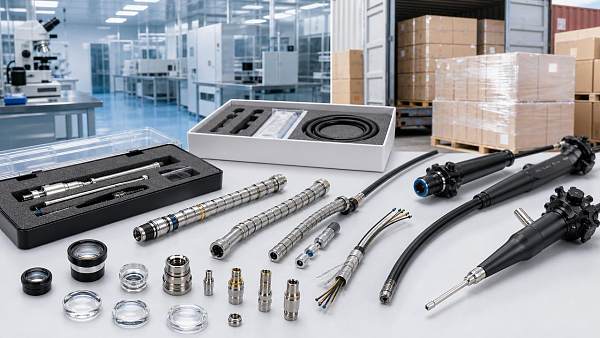
 Jun 06, 2026China Reviews Duties on Flexible Endoscope PartsChina reviews duties on flexible endoscope parts from South Korea, Thailand, and Malaysia. Learn the cost, compliance, and export risks facing sourcing and supply-chain teams.
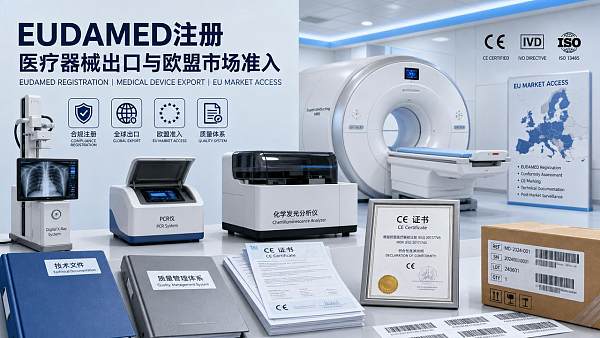
 Jun 06, 2026EUDAMED Mandate Starts June 28 for Imaging and IVDEUDAMED mandate starts June 28, 2026 for imaging and IVD devices. Learn how UDI-DI, Annex II/III files, and CE renewal risks affect EU market access readiness.
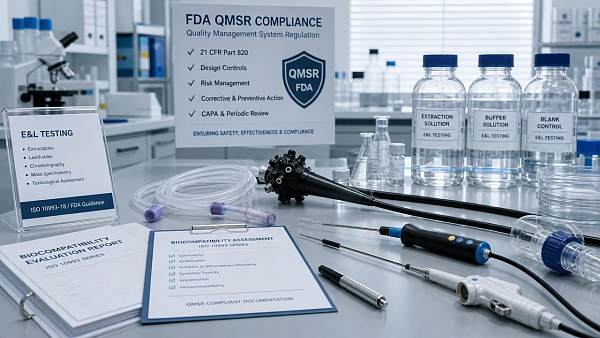
![]() Jun 06, 2026FDA QMSR Enforcement Adds E&L Filing DutyFDA QMSR enforcement now makes E&L filing mandatory for 510(k), De Novo, IDE, and annual updates. See what IVD and imaging exporters must prepare to avoid delays, inspections, or U.S. market access risks.
Jun 06, 2026FDA QMSR Enforcement Adds E&L Filing DutyFDA QMSR enforcement now makes E&L filing mandatory for 510(k), De Novo, IDE, and annual updates. See what IVD and imaging exporters must prepare to avoid delays, inspections, or U.S. market access risks. Jun 05, 2026Clinical Equipment Compliance Checklist: Key Documents, Tests, and Audit RisksClinical equipment compliance checklist covering key documents, site tests, and top audit risks across imaging, IVD, ICU, and OR settings—build safer, audit-ready deployment decisions.
 Jun 05, 2026Clinical Engineering Solutions for Hospitals: When to Upgrade vs Retrofit EquipmentClinical engineering solutions help hospitals decide when to upgrade or retrofit equipment, balancing compliance, uptime, workflow, and ROI for smarter capital planning.
 Jun 05, 2026Clinical Compliance Standards Explained: What Hospitals Need for Device ApprovalClinical compliance standards explained for hospitals: learn how to strengthen device approval with clearer evidence, risk control, and faster review readiness.
 Jun 05, 2026Medical Imaging Innovation in Hospitals: Which Upgrades Improve Diagnosis and Throughput?Medical imaging innovation helps hospitals improve diagnostic accuracy, speed up CT and MRI workflows, reduce repeat scans, and increase patient throughput with smarter upgrade strategies.
 Jun 05, 2026Advanced Clinical Imaging: How to Compare Resolution, Dose, and Workflow FitAdvanced clinical imaging is more than image sharpness. Learn how to compare resolution, dose, workflow fit, interoperability, and compliance to choose a smarter clinical platform.
 Jun 05, 2026AI Ransomware Targets ICU Ventilators and ECMOAI ransomware targets ICU ventilators and ECMO systems as attacks surge 217%. Learn the compliance, CE/FDA, and cyber resilience risks now affecting medical device makers and hospitals.
 Jun 05, 2026Chongqing Medtech Orders Signal New SEA Buying RulesChongqing medtech orders reveal new SEA buying rules as hospitals shift to bundled procurement with localized service and 3-year maintenance. See what exporters and buyers must do next.
 Jun 05, 2026China’s Anti-Dumping Rules Hit Endoscope ComponentsChina’s anti-dumping rules on endoscope components are reshaping costs and supply chains. See how Rigid Endoscopy Systems and Flexible Videoscopes may be affected now.
 Jun 05, 2026EUDAMED Rules Start June 28 for Imaging and IVD DevicesEUDAMED rules start June 28, 2026, making registration mandatory for imaging and IVD devices. Learn how MRI, PCR, and analyzer exporters can avoid EU market access risks.
 Jun 05, 2026FDA QMSR Enforcement Raises E&L Bar for ExportsFDA QMSR enforcement raises the E&L bar for exports. Learn how chemical characterization, E&L testing, and ISO 10993-1:2025 risk assessment affect 510(k) readiness and market access.
![]() Jun 04, 2026Healthcare Technology Assessment for Capital Purchases: Clinical Value vs Total CostHealthcare technology assessment helps hospital leaders balance clinical value, compliance, workflow fit, and total cost for smarter capital purchases across imaging, IVD, life support, and surgery.
Jun 04, 2026Healthcare Technology Assessment for Capital Purchases: Clinical Value vs Total CostHealthcare technology assessment helps hospital leaders balance clinical value, compliance, workflow fit, and total cost for smarter capital purchases across imaging, IVD, life support, and surgery.![]() Jun 04, 2026How to Evaluate Biomedical Signal Intelligence for ICU Monitoring and Alarm AccuracyBiomedical signal intelligence is key to safer ICU monitoring. Learn how to evaluate alarm accuracy, reduce false alarms, improve compliance, and choose reliable monitoring solutions.
Jun 04, 2026How to Evaluate Biomedical Signal Intelligence for ICU Monitoring and Alarm AccuracyBiomedical signal intelligence is key to safer ICU monitoring. Learn how to evaluate alarm accuracy, reduce false alarms, improve compliance, and choose reliable monitoring solutions.![]() Jun 04, 2026Medical Imaging Reconstruction Explained: How Resolution, Noise, and Speed Trade OffMedical imaging reconstruction explained: learn how resolution, noise, and speed trade off in CT and MRI, and discover what matters most for image quality, workflow, and smarter buying decisions.
Jun 04, 2026Medical Imaging Reconstruction Explained: How Resolution, Noise, and Speed Trade OffMedical imaging reconstruction explained: learn how resolution, noise, and speed trade off in CT and MRI, and discover what matters most for image quality, workflow, and smarter buying decisions.![]() Jun 04, 2026Biomedical Engineering in Clinical Devices: Key Design Inputs, Risks, and Validation StepsBiomedical engineering drives safer clinical devices through stronger design inputs, smarter risk control, and real-world validation. Explore key steps to improve compliance, performance, and market success.
Jun 04, 2026Biomedical Engineering in Clinical Devices: Key Design Inputs, Risks, and Validation StepsBiomedical engineering drives safer clinical devices through stronger design inputs, smarter risk control, and real-world validation. Explore key steps to improve compliance, performance, and market success.







Related News
- 00
0000-00
Biochemical Molecular Detection vs PCR: Differences, Accuracy, and Best-Fit Clinical Scenarios - 00
0000-00
FDA QMSR Enforcement Adds E&L Filing Duty - 00
0000-00
Biochemical Molecular Detection Methods Compared: PCR, Sequencing, and Immunoassay Use Cases - 00
0000-00
IVD Molecular Testing Selection Guide: PCR Platforms, Workflow, and QC Needs - 00
0000-00
Advanced diagnostic systems are changing lab accuracy
Weekly Insights
Stay ahead with our curated technology reports delivered every Monday.