
FDA QMSR Enforcement Raises E&L Bar for Exports
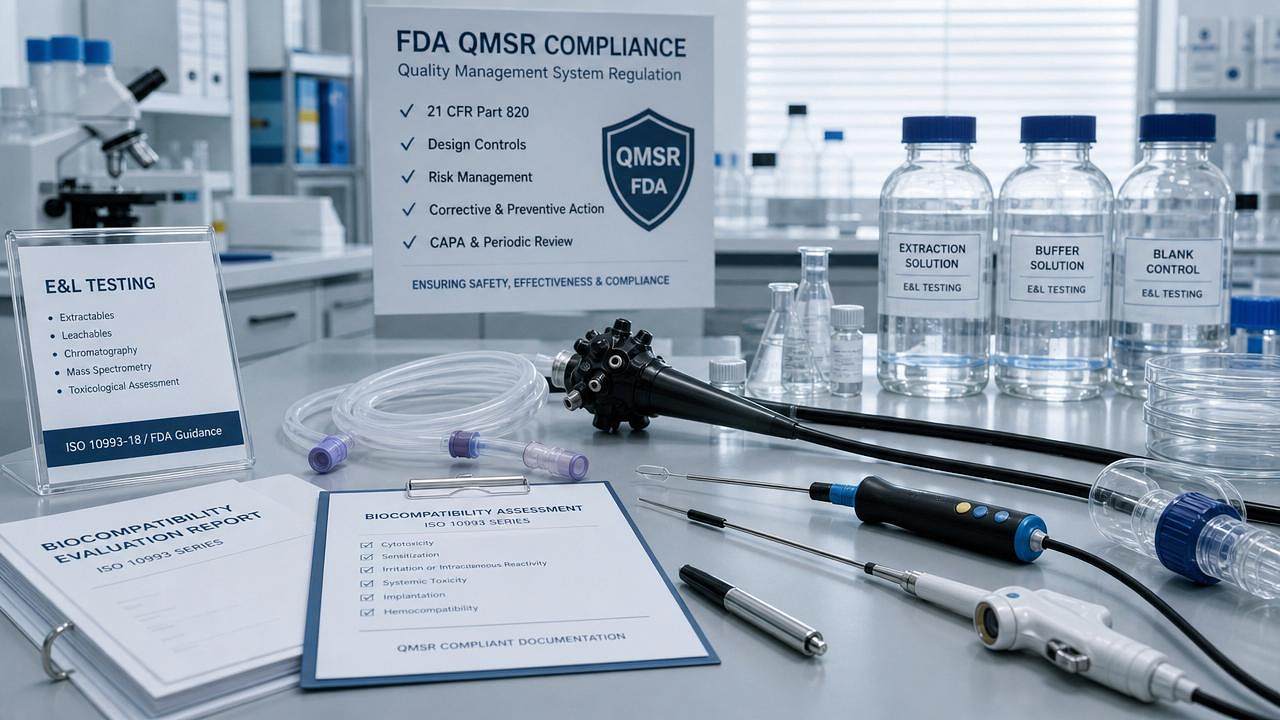




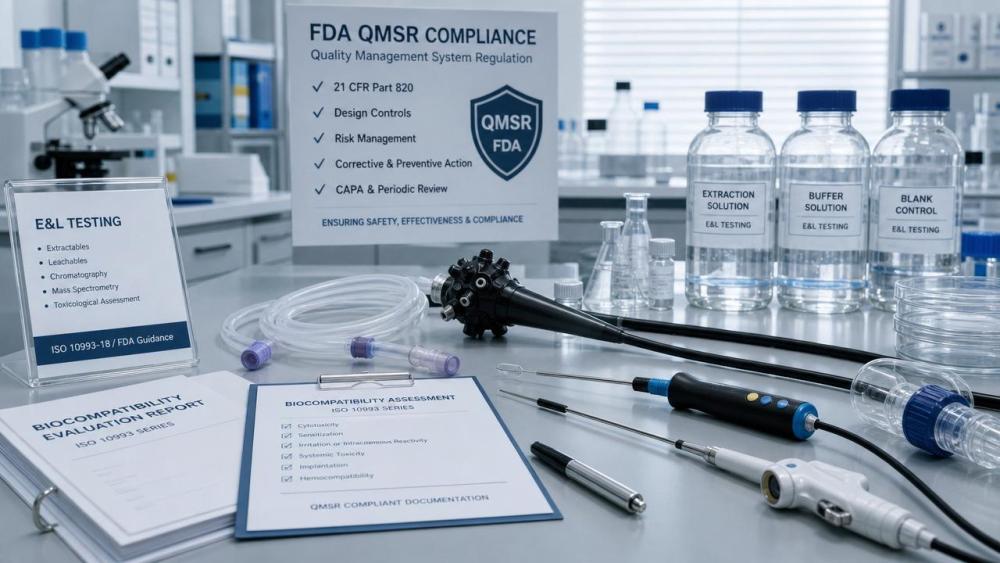
On February 2, 2026, the U.S. FDA moved from transition to full mandatory enforcement of the revised Quality Management System Regulation (QMSR), and the practical impact is already visible for exporters of higher-value medical consumables. For Class II and above products, chemical characterization, extractables and leachables (E&L) testing, and a toxicological risk assessment aligned with ISO 10993-1:2025 have become critical parts of market access preparation. With Q1 2026 data showing a 42% year-on-year increase in 510(k) refuse-to-accept cases linked to incomplete biocompatibility data, this development deserves close attention from manufacturers, export teams, testing partners, regulatory staff, and procurement planners involved in flexible endoscope systems, electrosurgical devices, anesthesia workstations, and related product lines.
What the enforcement change clearly requires
The confirmed change is that, from February 2, 2026, the FDA formally and fully enforced the revised QMSR. Under this implementation, Class II and above medical consumables are required to provide chemical characterization, E&L testing, and a toxicological risk assessment report under ISO 10993-1:2025.
The confirmed market signal in the input is that Q1 2026 data showed a 42% year-on-year rise in 510(k) refuse-to-accept cases caused by incomplete biocompatibility data. The policy impact identified in the input directly concerns the compliance access path for high-value export categories including flexible endoscope systems, electrosurgical equipment, and anesthesia workstations.
Where the pressure is likely to appear across the business chain
For export manufacturers, dossier completeness becomes a front-end issue
From an industry perspective, manufacturers exporting Class II and above products may feel the impact first at the submission preparation stage. The reason is straightforward: the rule change is tied not only to quality system expectations, but also to the completeness of supporting biocompatibility evidence. In practical terms, regulatory documentation, test planning, technical files, and submission sequencing may all require closer coordination before a product is put on the export path.
For regulatory and certification teams, missing evidence can affect filing rhythm
Analysis shows that internal compliance teams and external regulatory support providers will need to pay closer attention to whether chemical characterization, E&L data, and toxicological risk assessment materials are aligned and submission-ready. The 42% increase in refuse-to-accept cases tied to incomplete biocompatibility data indicates that document sufficiency is not a secondary issue; it can directly affect whether a filing proceeds into review.
For testing and documentation partners, timing may become a delivery variable
Observably, laboratories and technical documentation partners connected to exporters may face greater workload sensitivity around report completeness and handoff timing. Even without additional execution details in the input, the rule change points to a higher dependence on test data readiness, report consistency, and traceable technical support materials in the compliance chain.
For procurement and supply coordination, material and component evidence may matter more
What deserves closer attention is that procurement, supplier management, and supply-chain coordination may also be affected where product materials or contact-related characteristics influence chemical characterization and E&L work. Companies involved in sourcing and manufacturing may therefore need to pay closer attention to technical records, supplier documentation, and the availability of supporting compliance evidence during delivery planning.
What companies should watch in the current execution phase
Review whether current files can support the new submission threshold
Analysis shows that companies should first examine whether existing submission packages for Class II and above products already contain complete chemical characterization, E&L testing, and ISO 10993-1:2025 toxicological risk assessment materials. Where files were assembled under an earlier evidence structure, the immediate issue may not be product design alone, but whether the dossier can still pass the initial acceptance screen.
Pay closer attention to product categories already named in the impact scope
The input specifically points to flexible endoscope systems, electrosurgical equipment, and anesthesia workstations as directly affected high-value export categories. For companies active in these segments, current attention should focus on whether ongoing registrations, planned submissions, and shipment-linked compliance schedules need adjustment.
Track how documentation and testing affect lead times
Observably, even where no further official execution detail is provided in the input, firms should monitor whether added testing and risk assessment requirements begin to influence internal approval schedules, external testing queues, document closing dates, and submission timing. This is especially relevant for businesses balancing export delivery plans with regulatory filing milestones.
Keep watching for evolving wording in market-facing documents
It is more appropriate to understand the current stage as one that requires continued attention to how the rule is reflected in technical files, quality records, customer qualification materials, and other compliance-facing documents. If downstream buyers, channel partners, or tender-related materials begin referencing these evidence expectations more explicitly, the operational effect could extend beyond regulatory teams alone.
Why this looks less like a headline change and more like an execution signal
Analysis shows that this development is better understood as an implemented compliance change rather than a distant policy direction. The enforcement date is explicit, and the Q1 2026 refuse-to-accept increase linked to incomplete biocompatibility data suggests that the rule is already influencing review entry conditions. At the same time, it would be premature to treat every downstream impact as settled, because the input does not provide fuller detail on evolving review practice, documentation interpretation, or category-specific execution patterns.
From an industry perspective, the practical significance lies in the shift of biocompatibility-related evidence from a technical support item to a more visible access condition. That does not automatically define final commercial outcomes, but it does indicate that compliance readiness, test evidence planning, and dossier completeness should be treated as immediate operational concerns.
How the market may best read this development now
At this stage, the event is best read as a landed rule change with immediate compliance consequences for affected export products, especially where U.S. market access depends on complete biocompatibility-related submissions. A rational reading is not that all trade flows or product approvals will be disrupted in the same way, but that the threshold for acceptable submission support has become more concrete. For exporters, testing partners, and compliance teams, the more useful takeaway is to treat document completeness and evidence preparation as near-term execution priorities rather than later-stage corrections.
Basis of this article and points that still need verification
This article is based on the user-provided news title, event date, and event summary. For developments of this type, source categories typically relevant for follow-up verification include official regulatory announcements, releases from supervisory authorities, trade or customs-related updates, industry association notices, standards organization documents, and reporting by authoritative industry media.
No specific official source link was provided in the input, so the exact official reference still needs to be verified on an ongoing basis. What also warrants continued observation includes any further policy detail, interpretation of certification and submission practice, changes in tender or buyer documentation, industry feedback, and how affected companies implement the requirements in actual export and compliance workflows.
Recommended News
![]() Jun 09, 2026Hospital Technology Integration Costs: What Drives Budget, Timeline, and RiskHospital technology integration costs go far beyond equipment. Learn what drives budget, timeline, and risk to plan smarter, avoid overruns, and improve ROI.
Jun 09, 2026Hospital Technology Integration Costs: What Drives Budget, Timeline, and RiskHospital technology integration costs go far beyond equipment. Learn what drives budget, timeline, and risk to plan smarter, avoid overruns, and improve ROI.![]() Jun 09, 2026Common AI Medical Diagnostics Implementation Problems and How Hospitals Solve ThemAI medical diagnostics implementation often fails on workflow, data quality, and compliance—not model accuracy alone. Learn how hospitals solve integration barriers and scale safer adoption.
Jun 09, 2026Common AI Medical Diagnostics Implementation Problems and How Hospitals Solve ThemAI medical diagnostics implementation often fails on workflow, data quality, and compliance—not model accuracy alone. Learn how hospitals solve integration barriers and scale safer adoption.![]() Jun 09, 2026Medical Imaging Software Selection Guide: DICOM, AI Tools, and Integration PointsMedical imaging software selection made simple: compare DICOM performance, AI tools, and PACS/RIS/EHR integration points to choose a scalable, compliant platform.
Jun 09, 2026Medical Imaging Software Selection Guide: DICOM, AI Tools, and Integration PointsMedical imaging software selection made simple: compare DICOM performance, AI tools, and PACS/RIS/EHR integration points to choose a scalable, compliant platform.![]() Jun 09, 2026Surgical Navigation Intelligence: Key Functions, Workflow Fit, and OR Use CasesSurgical navigation intelligence explained: discover key functions, workflow fit, and real OR use cases to improve accuracy, integration, and confident surgical decision-making.
Jun 09, 2026Surgical Navigation Intelligence: Key Functions, Workflow Fit, and OR Use CasesSurgical navigation intelligence explained: discover key functions, workflow fit, and real OR use cases to improve accuracy, integration, and confident surgical decision-making.![]() Jun 09, 2026How to Evaluate Precision Medicine Solutions for Oncology ProgramsPrecision medicine solutions for oncology: learn how to evaluate accuracy, workflow integration, compliance, vendor fit, and ROI to choose a platform that improves cancer care.
Jun 09, 2026How to Evaluate Precision Medicine Solutions for Oncology ProgramsPrecision medicine solutions for oncology: learn how to evaluate accuracy, workflow integration, compliance, vendor fit, and ROI to choose a platform that improves cancer care. Jun 09, 2026EUDAMED UDI/Device Module Becomes Mandatory on June 28EUDAMED UDI/Device Module becomes mandatory on June 28, 2026. Learn how UDI-DI registration, completeness checks, and a 21-day buffer may affect EU market entry.
 Jun 09, 2026FDA Sets 2FA Rule for ICU VentilatorsFDA Sets 2FA Rule for ICU Ventilators: learn how the new FDA cybersecurity guidance affects 510(k) review, firmware upgrades, remote access audit logs, and U.S. market compliance timelines.
 Jun 09, 2026CE Mark Speeds EU Access for Helium-Free MRICE Mark speeds EU access for helium-free MRI as 1.5T and 3.0T systems gain TÜV SÜD certification, cutting installation barriers and helping hospitals shorten procurement cycles.
 Jun 09, 2026Middle East Bulk Orders Extend Photon-counting CT Lead TimesPhoton-counting CT lead times are stretching as Middle East bulk orders surge. Learn how UDI lock-in, import permits, and shipment planning now shape export success.
 Jun 09, 2026IVDR QMS Checks Tighten as Class C Transition ExtendsIVDR QMS checks tighten from June 1, 2026, while the Class C transition extends to 2028. See how stricter QMS compliance affects CE planning, renewals, and supply-chain decisions.
 Jun 08, 2026Clinical Equipment Compliance Checklist: Standards, Documentation, and Audit RisksClinical equipment compliance checklist for standards, documentation, and audit risks. Learn how to reduce gaps, improve readiness, and protect patient safety.
 Jun 08, 2026Minimally Invasive Tools vs Open Surgery Instruments: What Affects Cost and ROI?Minimally invasive tools vs open surgery instruments: discover what drives cost, ROI, reimbursement, turnover, and long-term value before your next capital purchase.
 Jun 08, 2026How to Evaluate a Medical Intelligence Platform for Hospital DeploymentMedical intelligence platform evaluation for hospital deployment: learn how to assess data depth, interoperability, compliance, workflow fit, security, and ROI for smarter decisions.
 Jun 08, 2026Surgical Imaging Technology Explained: Key Modalities, Use Cases, and Integration LimitsSurgical imaging technology explained: explore key modalities, real-world use cases, and integration limits to choose smarter OR imaging systems with confidence.
 Jun 08, 2026How to Plan Surgical Equipment Infrastructure for a New OR: Power, Gas, Data, and WorkflowSurgical equipment infrastructure planning for a new OR starts early. Learn how to align power, gas, data, and workflow to avoid costly redesigns and build a safer, future-ready operating room.
 Jun 08, 2026IVDR Shift: Class C Deadline Extended, QMS Checks TightenIVDR Shift updates the Class C deadline extension to 2028 while tightening QMS checks for CE applications. Learn what IVD manufacturers, distributors, and buyers must do now.
 Jun 08, 2026CE Approval Opens EU Path for Helium-Free MRI MagnetCE Approval for a helium-free MRI magnet opens a practical EU path for OEMs, exporters, and procurement teams. Explore the compliance signal, delivery impact, and market-ready opportunities.
 Jun 08, 2026Middle East Orders Stretch Photon-counting CT Lead TimesPhoton-counting CT lead times are stretching as Middle East bulk orders tighten capacity and CZT detector supply. See how exporters, distributors, and buyers can adapt procurement, delivery, and inventory plans.
 Jun 08, 2026EU Sets June 28 Start for EUDAMED Device RegistrationEU Sets June 28 Start for EUDAMED Device Registration. Learn how the 2026 EUDAMED UDI/Device rule impacts CE marking, customs clearance, and EU medical device launch timelines.
 Jun 08, 2026FDA Tightens ICU Ventilator Cybersecurity RulesFDA Tightens ICU Ventilator Cybersecurity Rules: learn how new 2FA and firmware signature mandates affect U.S. market access, compliance, delivery, and liability.
 Jun 07, 2026Clinical Imaging Innovation in Photon-Counting CT: Where It Adds Value in DiagnosisClinical imaging innovation in photon-counting CT reveals where sharper detail, lower dose, and stronger diagnostic confidence create real value in cardiology, oncology, and strategic care decisions.
 Jun 07, 2026Minimally Invasive Tools Selection Guide: Key Features for Endoscopy and OR UseMinimally invasive tools selection guide for endoscopy and OR teams: compare key features, compatibility, compliance, and lifecycle cost to choose smarter, safer, high-value solutions.
 Jun 07, 2026Medical Equipment Economics: How Hospitals Compare ROI, Utilization, and Lifecycle CostMedical equipment economics explained: learn how hospitals compare ROI, utilization, reimbursement, and lifecycle cost to make smarter capital decisions with less financial risk.
 Jun 07, 2026Clinical Validation Standards for AI Imaging Software: What Evidence Matters Most?Clinical validation standards define whether AI imaging software earns real clinical trust. Discover which evidence—datasets, reader studies, endpoints, and post-market plans—matters most.


















Related News
- 00
0000-00
EUDAMED UDI/Device Module Becomes Mandatory on June 28 - 00
0000-00
Clinical Equipment Compliance Checklist: Standards, Documentation, and Audit Risks - 00
0000-00
EU Sets June 28 Start for EUDAMED Device Registration - 00
0000-00
Clinical Validation Standards for AI Imaging Software: What Evidence Matters Most? - 00
0000-00
EUDAMED UDI Deadline Nears for New EU Devices
Weekly Insights
Stay ahead with our curated technology reports delivered every Monday.