
ECMO Exports Surge as Bearing Dependence Persists





On June 10, 2026, the latest trade signal around China’s ECMO sector pointed to two developments at the same time: a sharp export jump and a more visible compliance expectation in supply-chain disclosure. First-quarter ECMO system exports reached a record level, but the continued reliance on imported high-precision magnetic-levitation centrifugal pump bearings means procurement, delivery scheduling, export contracting, and technical documentation may come under closer review, especially as some overseas buyers have started asking suppliers to disclose the supply-chain map of critical components.

What the current record shows in confirmed terms
According to the information provided, China’s ECMO system exports reached USD 1.48 billion in the first quarter of 2026, up 368% year on year, based on customs data, marking a record high.
The same information also confirms that a core component, the high-precision magnetic-levitation centrifugal pump bearing, remains heavily dependent on imports from Germany and Japan. The domestic substitution rate is below 18%, while import dependence remains above 82%.
Because of that component structure, delivery lead times remain volatile and cost sensitivity remains high. In parallel, some overseas customers have already begun requiring suppliers to disclose supply-chain maps for key components.
Why disclosure and delivery control now matter more across the chain
Export-facing manufacturers are under greater document pressure
From an industry perspective, manufacturers shipping ECMO systems may be affected first because the new buyer behavior described in the event summary goes beyond price and product delivery alone. If overseas customers request visibility into key component sourcing, the impact is likely to fall on technical files, procurement traceability, bill-of-material consistency, and delivery commitments made during quotation and contracting.
What deserves closer attention is whether export teams can align product specifications, source declarations, and shipment schedules with the actual availability of imported bearings. Where a core part has a high external dependency, even routine commitments on lead time and configuration may require closer internal verification.
Procurement and supply-chain teams face tighter scrutiny on critical parts
For procurement and supply-chain service functions, the practical issue is not only cost but also controllability. Analysis shows that when a key part still relies predominantly on imported supply, purchase planning, safety stock decisions, supplier qualification records, and substitute-part evaluation can become more sensitive in both trade execution and customer review.
If overseas clients increasingly ask for key-component supply-chain mapping, procurement teams may need to prepare clearer supporting materials around supplier origin, continuity risks, and document consistency. This is especially relevant where delivery promises depend on a narrow component base.
Buyers, distributors, and service partners may adjust review focus
For buyers, channel partners, and after-sales participants, the issue is likely to extend into qualification review and service readiness. Observably, a request to disclose the supply chain of critical components can affect not only pre-purchase assessment but also expectations around spare-parts planning, maintenance support, and product traceability after delivery.
Even without any confirmed new formal rule in the input, this type of customer requirement can function as an execution-level threshold in tenders, vendor onboarding, or technical review. That means downstream participants may begin paying closer attention to whether supporting documents and supply-chain statements are complete and internally consistent.
What companies should monitor in the next phase
Track how customer-side disclosure requests are being translated into documents
Analysis shows that the immediate operational question is how broadly the request for key-component supply-chain maps will be used in quotations, tenders, audits, or contract attachments. Companies should pay attention to whether these requests remain case-specific or begin appearing more regularly in customer technical and procurement documentation.
Recheck certification and compliance files against actual component sourcing
Where critical parts are imported and delivery timing is unstable, companies should closely review whether technical descriptions, test materials, quality records, and export documentation remain consistent with the actual sourced configuration. This is not evidence of a new formal certification rule by itself, but it is a practical compliance issue once buyers start asking for deeper visibility.
Adjust delivery planning around component concentration risk
Observably, the combination of record export growth and continued dependence on imported bearings makes delivery planning more sensitive. Exporters and manufacturing teams should closely watch lead-time assumptions, procurement sequencing, and any contractual language tied to shipment timing or component availability.
Watch for changes in tender language and market feedback
It is more appropriate to understand the current development as an execution signal rather than a fully defined new regulatory regime. For that reason, companies should monitor whether buyer requirements begin to appear in technical bid documents, supplier access reviews, service obligations, or post-delivery traceability requests.
A stronger execution signal than a settled rule change
Analysis shows that this development is important less because the export figure is high on its own and more because market access conditions may be tightening through customer-side scrutiny of critical components. The confirmed facts do not establish a new published regulation, standard, or certification rule. However, the requirement from some overseas customers to disclose key-component supply chains suggests that transparency, traceability, and delivery credibility may be gaining weight in real transactions.
From an industry perspective, this is better understood as an operational compliance signal already entering commercial practice. Whether it evolves into a broader market norm still requires observation, especially in how buyers phrase requirements and how suppliers are expected to substantiate them.
How this development is best understood for now
The current event combines a record export result with a structural supply-chain constraint that has not yet been resolved. That combination matters because it can influence procurement discipline, export document preparation, customer review standards, and delivery risk management at the same time.
At this stage, it is more appropriate to understand the news as a meaningful execution-level signal: export momentum is real, but supply-chain transparency around critical imported parts may become a more visible condition in trade practice. The market impact therefore deserves continued observation rather than simplified conclusions.
Basis of this article and what still needs verification
This article is generated on the basis of the user-provided news title, event date, and event summary. The specific official source link was not provided in the input, so any further interpretation should continue to be verified against relevant materials that typically include official notices, information released by regulators, customs or trade authorities, industry association updates, standard-setting documents, and reporting by authoritative media.
What still requires ongoing observation includes any later official wording, changes in certification or compliance interpretation, updates in tender documentation, customer-side disclosure practices, industry feedback, and how companies implement supply-chain transparency and delivery controls in actual export business.
Recommended News
 Sep 14, 2026How Integrated Clinical Diagnostics Solutions Reduce Turnaround Time Across Lab WorkflowsIntegrated clinical diagnostics solutions reduce lab turnaround time by connecting workflows, automation, and data. Discover practical strategies for faster, traceable results.
 Sep 13, 2026ECMO System Market Outlook: Demand Drivers, Investment Risks, and Growth OpportunitiesECMO system market outlook explores demand drivers, investment risks, regulatory factors, and growth opportunities shaping critical-care innovation and adoption.
 Sep 12, 2026Where to Find Reliable Medical Device Information for Research and Due DiligenceMedical device information resource guide for due diligence: verify regulatory, clinical, safety, and technical evidence to make confident decisions.
 Sep 11, 2026Medical Equipment Intelligence: A Resource for Comparing Clinical TechnologiesMedical equipment intelligence resource for comparing clinical technologies by clinical fit, compliance, workflow, and total cost—make confident, evidence-led decisions.
 Sep 10, 2026How to Integrate Application-Specific Medical Solutions Into Existing Clinical WorkflowsApplication-specific medical solutions integration: learn how to align clinical workflows, interoperability, safety, and measurable outcomes for reliable deployment.
 Sep 09, 2026Medical Supplier Evaluation Checklist: How to Verify Quality, Compliance, and Delivery RiskMedical supplier evaluation checklist for verifying quality, compliance, service capacity, configuration accuracy, and delivery risk before purchase approval.
 Sep 08, 2026Selecting IVD Instruments With Automatic Sample Loading: Key Workflow CriteriaIVD instruments automatic sample loading: evaluate workflow capacity, traceability, STAT handling, LIS integration, and exceptions for smarter lab selection.
 Sep 07, 2026How to Evaluate a Clinical Diagnostic Systems Supplier for Hospital ProcurementClinical diagnostic systems supplier evaluation guide for hospitals: compare clinical performance, compliance, uptime, interoperability, cybersecurity, and lifecycle value.
 Sep 07, 2026How to Choose Critical Care Equipment for Emergency Room ReadinessCritical care equipment emergency room planning: discover how to select reliable, interoperable devices that strengthen readiness, safety, and lifecycle value.
 Sep 05, 2026Ventilator Comparison for ICU and Transport Use: Which Features Matter Most?Ventilator comparison for ICU and transport use: discover the features that support safer ventilation, reliable monitoring, battery planning, and seamless patient transfers.
 Sep 14, 2026Is Photon-Counting CT Clinically Better Than Conventional CT for Exporters?Is photon-counting CT clinically better than conventional CT for exporters? Explore clinical use cases, compliance, ROI, and market-ready sales strategy.
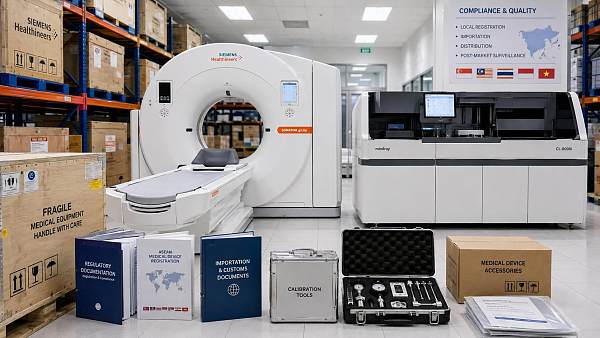
 Sep 14, 2026Do You Need a Local Distributor to Register Medical Devices in Southeast Asia?Do I need a local distributor to register devices in Southeast Asia? Learn how to separate regulatory ownership, import rights, and distribution for smoother market access.
 Sep 13, 2026How Should an MDR Clinical Performance Study Be Designed for IVD Products?How to design a clinical performance study for IVD products MDR: explore claim-driven endpoints, representative specimens, bias control, and audit-ready evidence.
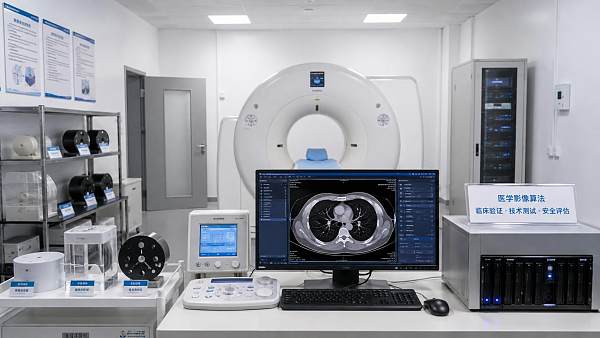
 Sep 13, 2026What Validation Is Required for Medical Imaging Algorithms Under the MDR?What validation is required for medical imaging analysis algorithms MDR? Explore technical, clinical, risk, dataset, and post-market evidence requirements.
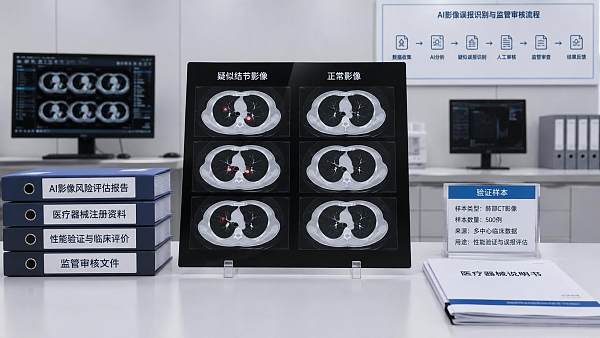
 Sep 12, 2026How Are AI Imaging False Positives Handled in Regulatory Review?How are AI imaging false positives handled under regulatory review? Explore FDA and EU MDR expectations for risk control, clinical validation, labeling, and post-market monitoring.
 Sep 12, 2026What After-Sales Technical Support Is Expected for Life-Support Exports?What after-sales technical support is expected for life support exports? Explore essential service, training, spare-parts, cybersecurity, and compliance requirements.
 Sep 11, 2026What Are the Trade-Offs Between Hematology Analyzer Technologies?What are the trade-offs between different hematology analyzer technologies? Compare impedance, optical, and fluorescence systems for accuracy, workflow, and cost.
 Sep 11, 2026Can One Registration Strategy Cover Imaging Devices in the EU and ASEAN?Can one registration strategy cover both EU and ASEAN for imaging devices? Discover how to build a core dossier, manage local approvals, and accelerate compliant market entry.
 Sep 10, 2026Where Can You Source Compliant Parts for Diagnostic Imaging Equipment?Where to source compliant parts for diagnostic imaging equipment: discover trusted OEM, approved distributor, and qualified supplier options for safer, traceable procurement.
 Sep 10, 2026What Pre-Market Testing Is Mandatory for Ventilator CE Marking?What pre-market testing is mandatory for ventilator system CE marking? Explore MDR requirements for performance, safety, EMC, alarms, software, usability, and clinical evidence.
 Sep 09, 2026Advanced Clinical Diagnostics in Oncology: Tests, Uses, and Selection CriteriaAdvanced clinical diagnostics oncology: explore test selection, imaging, molecular profiling, liquid biopsy, and practical criteria for confident cancer care decisions.
 Sep 09, 2026ECMO System Market Outlook: How Hospitals Assess Capacity and Investment NeedsECMO system market outlook: discover how hospitals evaluate capacity, staffing, supply resilience, compliance, and investment needs for sustainable ECMO programs.
 Sep 08, 2026ICU Ventilator Comparison: Which Features Matter for Patient Acuity Levels?Ventilator comparison for ICUs: discover which ventilation modes, alarms, monitoring, and workflow features best match patient acuity and improve critical-care decisions.
 Sep 08, 2026Critical Care Equipment Market Trends: Which Segments Are Growing Fastest?Critical care equipment market trends reveal fast growth in connected monitoring, advanced ventilation, ECMO, and integrated service solutions. Explore the segments shaping smarter ICUs.















Related News
- 00
0000-00
ECMO System Market Outlook: Demand Drivers, Investment Risks, and Growth Opportunities - 00
0000-00
What After-Sales Technical Support Is Expected for Life-Support Exports? - 00
0000-00
ECMO System Market Outlook: How Hospitals Assess Capacity and Investment Needs - 00
0000-00
FDA Approval of AMDS Hybrid Prosthesis Removes IRB Step for Faster U.S. Access - 00
0000-00
EU MDR Deadline Extended for ECMO and ICU Devices
Weekly Insights
Stay ahead with our curated technology reports delivered every Monday.