
How to Evaluate Patient Monitoring Technology for ICU and Step-Down Units





How to Evaluate Patient Monitoring Technology for ICU and Step-Down Units
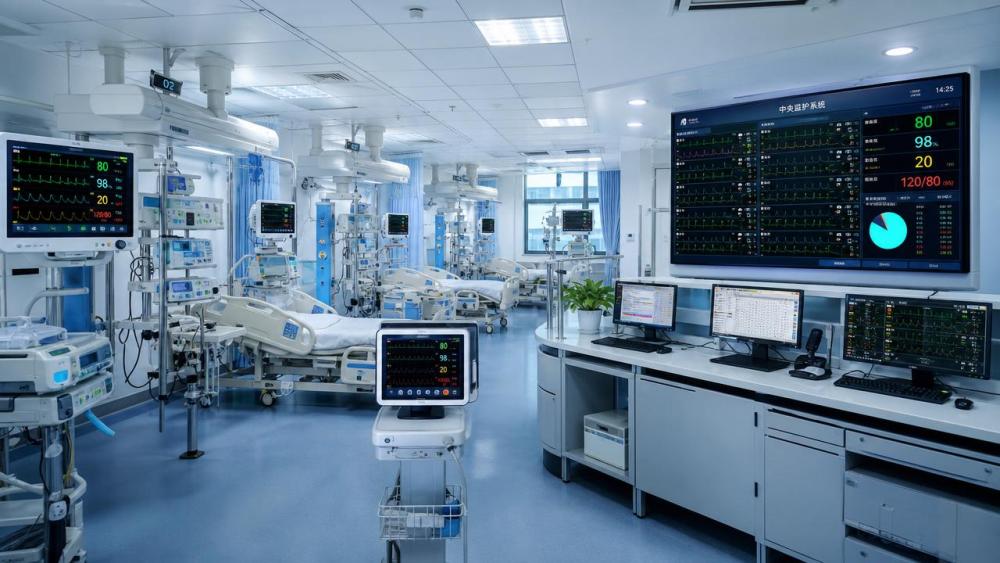
Selecting patient monitoring technology for critical care is rarely a simple feature comparison.
In ICU and step-down units, every monitoring decision affects alarms, response times, workflow, and patient safety.
That is why a strong evaluation framework matters more than a glossy product brochure.
The best patient monitoring technology supports clinicians under pressure while fitting the hospital’s data, compliance, and budget realities.
For technical review teams, the real goal is not just equipment selection.
It is choosing a monitoring platform that performs well today and scales without friction tomorrow.
This guide breaks down how to evaluate patient monitoring technology with a practical, decision-focused lens.
Start with clinical use cases, not product claims
A solid evaluation begins with the environment where the system will actually work.
ICU monitoring needs differ from step-down monitoring, even when vendors use the same platform language.
In the ICU, patient monitoring technology must handle high-acuity patients, multi-parameter tracking, and rapid alarm escalation.
In step-down units, the emphasis often shifts toward mobility, efficient staffing, and continuous surveillance across larger patient groups.
This also means the same device can perform differently depending on workflow intensity and staffing models.
Before comparing vendors, define the exact use cases:
- Bedside monitoring for ventilated or hemodynamically unstable patients
- Central station visibility across ICU and step-down beds
- Telemetry support for ambulating patients
- Post-operative surveillance for deterioration risk
- Transport monitoring between OR, ICU, imaging, and recovery areas
When use cases are clear, patient monitoring technology can be judged by fit, not by marketing language.
Prioritize signal quality and alarm performance
Alarm overload remains one of the biggest operational risks in critical care.
So, evaluating patient monitoring technology means looking beyond the number of parameters displayed on screen.
The more important question is whether the system produces reliable signals with fewer nuisance alarms.
Key checks should include:
- Performance during motion, low perfusion, and poor electrode contact
- Arrhythmia detection sensitivity and specificity
- Customizable alarm thresholds by care area and patient category
- Escalation logic for missed bedside alarms
- Alarm delay settings that reduce unnecessary noise without hiding deterioration
Ask vendors for real-world alarm burden data, not just lab performance figures.
If possible, compare false alarm rates during pilot use in both ICU and step-down settings.
Good patient monitoring technology should improve vigilance while lowering fatigue, not create more background noise.
Assess integration before hardware details
A monitor that works well alone may still fail the broader hospital test.
From recent market shifts, the clearer signal is that integration now drives long-term value.
Patient monitoring technology should connect smoothly with the EMR, clinical information systems, nurse call platforms, and analytics tools.
This reduces manual charting, lowers transcription errors, and improves response coordination.
During evaluation, confirm support for:
- HL7, FHIR, and other relevant interoperability standards
- Automatic charting into the hospital record system
- Bedside to central station data continuity
- Integration with mobile clinician alerts
- Data export for quality review and predictive analytics
Also check how integration is delivered.
Some systems require costly middleware, while others offer more native connectivity.
That difference can reshape total ownership cost faster than many buyers expect.
Review usability where clinicians feel the pressure
Usability often decides whether patient monitoring technology succeeds after installation.
A technically advanced system can still underperform if the interface slows decisions or confuses staff.
In ICU and step-down units, cognitive load is already high.
That makes screen design, navigation speed, and alarm acknowledgment workflows more important than they first appear.
Practical review points include:
- Can staff view trends quickly without opening multiple screens?
- How many steps are needed to adjust alarm settings safely?
- Are transport and reconnection workflows intuitive?
- Can users distinguish critical alerts from advisory notifications instantly?
- Does the layout remain clear during multi-parameter monitoring?
Request hands-on demonstrations using realistic clinical scenarios.
A short scripted demo rarely reveals what happens during a busy shift change or patient deterioration event.
Check scalability, cybersecurity, and lifecycle support
Buying patient monitoring technology is not just a capital purchase.
It is a long operational commitment involving networks, software, training, maintenance, and device replacement cycles.
This is where many evaluations become too narrow.
A platform may fit current ICU needs but struggle when step-down capacity expands or monitoring demand becomes more mobile.
Review these future-facing factors carefully:
- Maximum supported beds, users, and remote views
- Upgrade path for software, modules, and analytics functions
- Wireless stability and network redundancy
- Cybersecurity patching, user access control, and audit logging
- Spare parts availability and service response times
Cybersecurity deserves special attention because connected patient monitoring technology has become part of the hospital’s digital risk surface.
If a vendor cannot explain patch governance clearly, that is a serious warning sign.
Use a structured decision matrix for side-by-side comparison
Once the core review criteria are defined, scoring becomes more objective.
A decision matrix helps prevent high-visibility features from overshadowing operational weaknesses.
It also keeps stakeholders aligned when ICU, step-down, IT, and biomedical teams view risk differently.
Weight each area based on actual clinical priorities, not generic procurement templates.
Look at total value, not just purchase price
Lower upfront cost does not always mean better value.
Patient monitoring technology should be evaluated against clinical outcomes, staffing efficiency, downtime risk, and integration effort.
A cheaper system with high alarm fatigue or poor interoperability may cost more over time.
Include these cost elements in the review:
- Capital equipment and software licenses
- Implementation and interface costs
- Consumables, accessories, and replacement sensors
- Training time for nurses, physicians, and technical staff
- Service contracts and downtime exposure
This is also where evidence from intelligence sources becomes useful.
For example, AMDS tracks how critical care technologies perform against compliance pressure, workflow redesign, and investment return expectations across global healthcare markets.
Final checklist for a smarter purchasing decision
The strongest patient monitoring technology decisions usually come from disciplined evaluation, not rushed negotiation.
Before final approval, confirm that the selected system can:
- Support distinct ICU and step-down workflows
- Deliver dependable signal quality and alarm performance
- Integrate cleanly into the hospital data ecosystem
- Remain usable during high-pressure clinical events
- Scale securely with future care delivery changes
- Show defensible long-term value, not just low entry cost
In practice, the right patient monitoring technology is the one that quietly strengthens care quality every shift.
It helps clinicians trust the data, act faster, and manage complexity with less friction.
That is the standard worth using when evaluating any monitoring platform.
If the review process stays anchored to workflow, safety, integration, and lifecycle value, the purchasing decision becomes much clearer.
Recommended News
 Jun 23, 2026Diagnostic Algorithm Development: Validation Steps, Performance Metrics, and Compliance BasicsDiagnostic algorithm development explained: learn validation steps, key performance metrics, and compliance basics to build safer, audit-ready medical AI with confidence.
 Jun 23, 2026Endoscopic Imaging Technology in Practice: How to Compare Resolution, Lighting, and Scope TypeEndoscopic imaging technology explained in practical terms—compare resolution, lighting, and scope type to improve clinical clarity, workflow efficiency, and smarter system selection.
 Jun 23, 2026ICU Ventilator Selection for Critical Care Ventilation: Which Parameters Matter Most?Critical care ventilation buyers: learn which ICU ventilator parameters matter most, from monitoring accuracy and lung protection to alarms, weaning tools, and long-term value.
 Jun 23, 2026Medical Device Precision Engineering Explained: Key Tolerances, Materials, and Risk PointsMedical device precision engineering explained: explore critical tolerances, material choices, contamination risks, and compliance factors that shape safer, more reliable MedTech performance.
 Jun 23, 2026How to Evaluate Surgical Navigation Systems: Accuracy, Workflow, and OR IntegrationSurgical navigation systems: learn how to evaluate accuracy, workflow, and OR integration to reduce risk, improve efficiency, and choose a platform that fits real clinical needs.
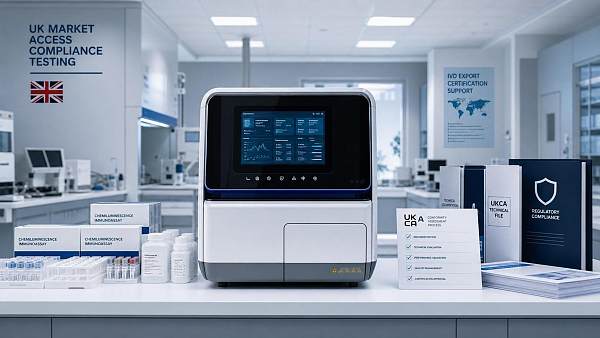
 Jun 23, 2026MHRA Opens 30-Day Fast Track for Chemiluminescence SystemsMHRA opens a 30-day fast track for chemiluminescence systems, reshaping UKCA market access. See what IVD manufacturers, distributors, and regulatory teams must do next.
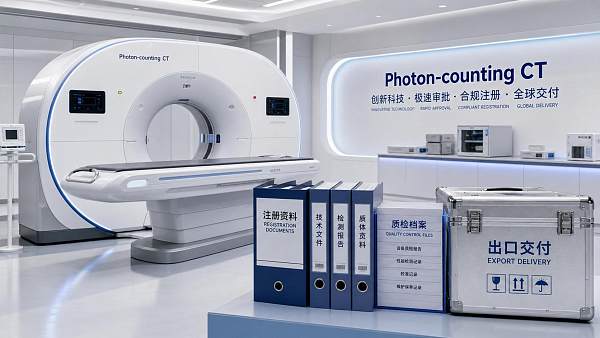
 Jun 23, 2026SFDA Fast Track Cuts Photon-counting CT Review to 45 DaysSFDA Fast Track cuts Photon-counting CT review to 45 working days, reshaping Saudi market entry, compliance planning, and procurement timing. See what manufacturers and distributors should do next.
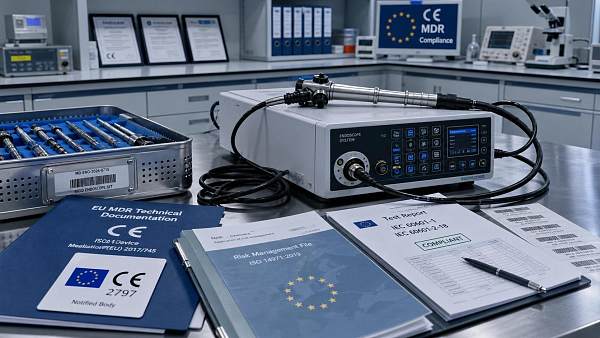
 Jun 23, 2026EU MDR Deadline Nears for Class IIa Rigid EndoscopyEU MDR deadline for Class IIa rigid endoscopy is approaching fast. Learn what the September 21, 2026 CE certification cutoff means for manufacturers, exporters, and EU distributors.
 Jun 23, 2026FDA Requires PCCP for AI Flexible VideoscopesFDA Requires PCCP for AI Flexible Videoscopes: learn what the October 1, 2026 rule means for 510(k) products, new submissions, compliance planning, and uninterrupted U.S. market access.
 Jun 22, 2026Endoscopic Imaging Technology in GI Diagnosis: Key Features and Common Image Quality IssuesEndoscopic imaging technology in GI diagnosis: explore key features, common image quality issues, and practical tips to improve clarity, accuracy, and workflow efficiency.
 Jun 22, 2026Clinical Life Support Systems: How to Compare Cost, Uptime, and Training RequirementsClinical life support buying guide: compare total cost, uptime, training, and compliance to choose safer, higher-value systems and avoid hidden long-term risks.
 Jun 22, 2026Pathological Reconstruction Algorithms Explained: Accuracy, Speed, and Data NeedsPathological reconstruction algorithms explained with a practical focus on accuracy, speed, and data needs. Learn how to compare vendors, validate claims, and choose systems ready for real clinical deployment.
 Jun 22, 2026Healthcare Technology Trends in 2025: Which Investments Matter Most for Providers?Healthcare technology trends in 2025 are reshaping provider investment priorities. Discover which innovations deliver clinical proof, ROI, compliance strength, and operational resilience.
 Jun 22, 2026What Is a Medical Intelligence Platform and How Hospitals Use It for Clinical DecisionsMedical intelligence platform explained: learn how hospitals connect imaging, lab, ICU, and OR data to make faster clinical decisions, improve compliance, and support safer, smarter care.
 Jun 22, 2026Hong Kong Opens Dual-Use MRI Trial PathHong Kong Opens Dual-Use MRI Trial Path: learn how the new Hong Kong route helps superconducting MRI makers cut timelines, support FDA/EMA filings, and speed entry into Southeast Asia and the Middle East.
 Jun 22, 2026SCFI Falls Below 1,200, Cutting ICU Ventilator Export CostsSCFI falls below 1,200, cutting ICU ventilator export costs to Germany, the Netherlands, and Poland. See how this freight window may lower Q3 logistics costs and improve shipment planning.
 Jun 22, 2026EU MDR Annex XVI Expansion Brings ECMO Into Class CEU MDR Annex XVI expansion brings ECMO into Class C from June 2026. Learn key deadlines, cybersecurity, clinical evidence, and EUDAMED duties affecting EU market access.
 Jun 22, 2026Malaysia Opens 30-Day Fast Track for CLIA AnalyzersMalaysia opens a 30-day fast track for CLIA analyzers, linking NMPA, ISO 13485, and IEC 62304 compliance to faster entry and an $85M hospital procurement opportunity.
 Jun 22, 2026Saudi SFDA Fast-Tracks Photon-counting CT to 45 DaysSaudi SFDA fast-tracks photon-counting CT to 45 working days, reshaping Saudi market entry, tender timing, and compliance planning. See what exporters and manufacturers must prepare now.
 Jun 21, 2026How Clinical Engineering Intelligence Helps Reduce Downtime and Improve Preventive MaintenanceClinical engineering intelligence helps reduce medical device downtime, strengthen preventive maintenance, and improve reliability with data-driven insights for smarter healthcare operations.
 Jun 21, 2026Critical Care Ventilation Settings Explained: How to Balance Oxygenation and Lung ProtectionCritical care ventilation explained: learn how FiO2, PEEP, tidal volume, and pressure limits work together to improve oxygenation, protect lungs, and support safer ICU decisions.
 Jun 21, 2026Medical Equipment Economics: How to Calculate Total Cost of Ownership for Capital PurchasesMedical equipment economics made practical: learn how to calculate total cost of ownership for capital purchases, reduce hidden costs, compare vendors smarter, and make more confident buying decisions.
 Jun 21, 2026Medical Intelligence Platform Evaluation: 7 Capabilities Hospitals Should Compare Before AdoptionMedical intelligence platform evaluation starts with 7 must-compare capabilities. Learn how hospitals can assess interoperability, compliance, analytics, and scalability before adoption.
 Jun 21, 2026What Is Critical Life Support Technology and Which Hospital Systems Does It Include?Critical life support technology explained: discover which hospital systems it includes, from ventilators and ECMO to monitoring, transport, and infrastructure.




Related News
- 00
0000-00
Medical Device Precision Engineering Explained: Key Tolerances, Materials, and Risk Points - 00
0000-00
How to Evaluate Surgical Navigation Systems: Accuracy, Workflow, and OR Integration - 00
0000-00
What Is a Medical Intelligence Platform and How Hospitals Use It for Clinical Decisions - 00
0000-00
How Clinical Engineering Intelligence Helps Reduce Downtime and Improve Preventive Maintenance - 00
0000-00
Medical Intelligence Platform Evaluation: 7 Capabilities Hospitals Should Compare Before Adoption
Weekly Insights
Stay ahead with our curated technology reports delivered every Monday.