
ITC Opens 337 Probe Into Smart Medical Device Patents
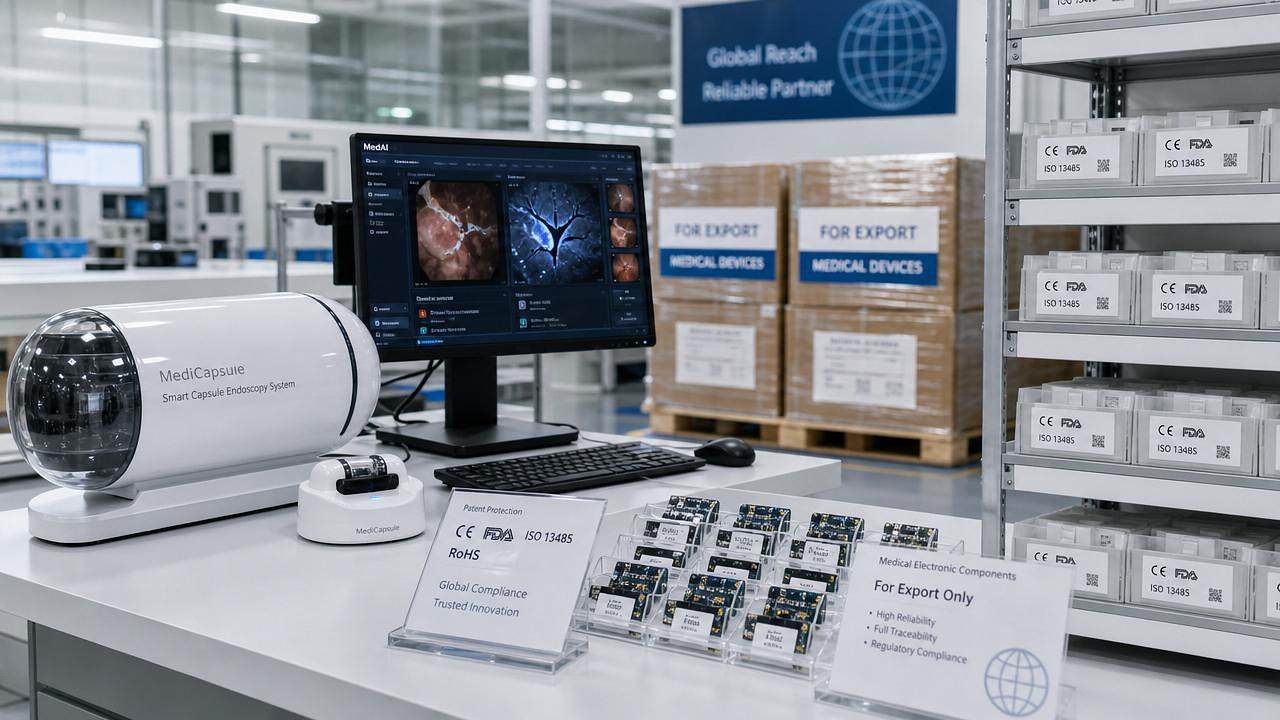




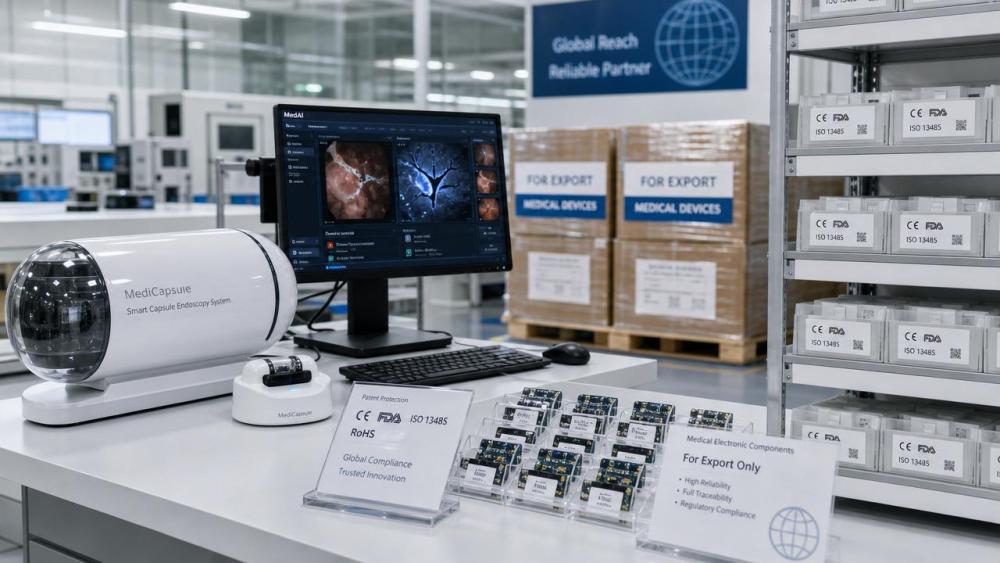
On June 5, 2026, the U.S. International Trade Commission opened a Section 337 investigation into certain smart devices, centering on alleged infringement of multiple U.S. patents tied to AI-based imaging analysis and wireless capsule endoscopy data transmission. For companies involved in AI diagnostic imaging systems, capsule endoscopy products, cross-border distribution, and U.S.-bound medical device trade, this development is worth close attention because it directly touches compliance pathways and market access for Chinese manufacturers exporting these products to the United States.
What the ITC filing confirms
The confirmed facts are limited but commercially significant. The ITC formally instituted the investigation on June 5, 2026, under the title Certain Smart Devices and investigation number 337-TA-1504. The complaint alleges that imported products infringe several U.S. patents, including 8,306,815 and 11,929,073. According to the provided case summary, the patents at issue cover AI-driven image analysis algorithms and wireless data transmission modules used in capsule endoscopy. Amazon is listed as a respondent in the investigation.
The same summary also makes clear that the case has direct relevance for Chinese manufacturers exporting AI imaging diagnostic systems and capsule endoscopy products to the U.S. market, especially in relation to compliance review and market-entry risk.
Where the pressure may emerge across the value chain
Export-facing device makers may face immediate screening pressure
From an industry perspective, manufacturers shipping AI imaging diagnostic systems or capsule endoscopy products to the United States are the most directly exposed group. The reason is straightforward: the investigation concerns imported products and patents linked to core technical functions rather than peripheral components. What deserves closer attention is whether existing product designs, algorithm-related functions, and transmission modules are closely tied to the patent claims identified in the filing.
Channel and platform participants may need closer product-level review
Amazon being named as a respondent suggests that distribution and sales channels are also relevant to the dispute. Analysis shows that this may raise the importance of product documentation, listing accuracy, and technical substantiation in channel operations. For businesses relying on platform-based access to the U.S. market, the practical impact may appear in product onboarding, continued listing stability, and internal compliance checks.
Supply chain and delivery teams may need to watch execution risk
Observably, the issue is not limited to legal teams. Supply chain service providers, order-fulfillment teams, and export operations may also need to monitor the case because market-access uncertainty can affect shipment planning, delivery timing, and customer communication. The key point is not that disruption has already occurred, but that the investigation creates a risk factor that can influence how U.S.-bound business is scheduled and documented.
What companies should monitor now
Follow official procedural developments closely
Companies with relevant exports should first track how the ITC and other official sources describe the scope of the investigation as it progresses. Analysis shows that the opening of a 337 case is an important procedural step, but it is not the same as a final outcome. The distinction between case initiation and any later remedy is critical for business planning.
Review product categories tied to the cited technologies
What deserves closer attention is the technical overlap between affected product lines and the patent areas named in the case summary. For businesses involved in AI imaging diagnosis or capsule endoscopy, internal review may need to focus on algorithm functions, wireless transmission modules, related product descriptions, and supporting technical records used in customer or regulatory communication.
Prepare documentation for customers and channel partners
From a practical standpoint, exporters and distributors may need to organize product records, supplier qualifications, and transaction documentation more carefully. This is particularly relevant where U.S. customers or channel partners ask for clarification on supply continuity, compliance status, or technical scope. Clear communication can matter even before any formal business restriction appears.
Separate policy signal from operational impact
Observably, companies should avoid treating the filing itself as a completed market outcome, but they also should not ignore it as routine litigation noise. The more useful approach is to distinguish between the current signal—heightened scrutiny around specific smart medical device technologies—and any later operational consequences that may emerge through official process.
Why this case is a signal worth watching
Analysis shows that this development is better understood as an active regulatory and intellectual property signal rather than a settled commercial conclusion. The case points to growing sensitivity around technology-intensive medical devices where software functions and hardware transmission capabilities are both commercially central. That matters because AI imaging analysis and capsule endoscopy are not generic features in this context; they are described as part of the patent dispute itself.
It is more appropriate to understand this as a development requiring continued observation. The investigation has already become relevant for exporters, platforms, and channel operators, but the available facts do not support a definitive conclusion about final liability or market exclusion at this stage.
How to read the development at this stage
At present, the most balanced reading is that the ITC investigation raises the compliance importance of patent review for smart medical devices entering the U.S. market, especially for AI imaging diagnostic systems and capsule endoscopy products. For the industry, the significance lies less in immediate certainty and more in the reminder that market access, technology design, and channel participation can become tightly linked when Section 337 claims involve core technical functions.
From an industry perspective, this is not simply a short-term headline, nor can it yet be treated as a final market result. It is best understood as a material case development that deserves sustained monitoring by manufacturers, exporters, distributors, and related service providers with exposure to the U.S. market.
Basis of this article and follow-up watchpoints
This article is based on the user-provided news title, event date, and event summary. The specific official source link was not provided in the input, so further verification remains necessary as the matter develops. For this type of industry update, commonly relevant source categories include official notices, company statements, industry association information, authoritative media reporting, and standard-setting or related technical documentation. Follow-up attention should remain on subsequent official procedural updates, any clarified scope of the asserted patents, and any changes that could affect compliance routes or U.S. market access for related products.
Recommended News
 Sep 13, 2026ECMO System Market Outlook: Demand Drivers, Investment Risks, and Growth OpportunitiesECMO system market outlook explores demand drivers, investment risks, regulatory factors, and growth opportunities shaping critical-care innovation and adoption.
 Sep 12, 2026Where to Find Reliable Medical Device Information for Research and Due DiligenceMedical device information resource guide for due diligence: verify regulatory, clinical, safety, and technical evidence to make confident decisions.
 Sep 11, 2026Medical Equipment Intelligence: A Resource for Comparing Clinical TechnologiesMedical equipment intelligence resource for comparing clinical technologies by clinical fit, compliance, workflow, and total cost—make confident, evidence-led decisions.
 Sep 10, 2026How to Integrate Application-Specific Medical Solutions Into Existing Clinical WorkflowsApplication-specific medical solutions integration: learn how to align clinical workflows, interoperability, safety, and measurable outcomes for reliable deployment.
 Sep 09, 2026Medical Supplier Evaluation Checklist: How to Verify Quality, Compliance, and Delivery RiskMedical supplier evaluation checklist for verifying quality, compliance, service capacity, configuration accuracy, and delivery risk before purchase approval.
 Sep 08, 2026Selecting IVD Instruments With Automatic Sample Loading: Key Workflow CriteriaIVD instruments automatic sample loading: evaluate workflow capacity, traceability, STAT handling, LIS integration, and exceptions for smarter lab selection.
 Sep 07, 2026How to Evaluate a Clinical Diagnostic Systems Supplier for Hospital ProcurementClinical diagnostic systems supplier evaluation guide for hospitals: compare clinical performance, compliance, uptime, interoperability, cybersecurity, and lifecycle value.
 Sep 07, 2026How to Choose Critical Care Equipment for Emergency Room ReadinessCritical care equipment emergency room planning: discover how to select reliable, interoperable devices that strengthen readiness, safety, and lifecycle value.
 Sep 05, 2026Ventilator Comparison for ICU and Transport Use: Which Features Matter Most?Ventilator comparison for ICU and transport use: discover the features that support safer ventilation, reliable monitoring, battery planning, and seamless patient transfers.
 Sep 13, 2026How Should an MDR Clinical Performance Study Be Designed for IVD Products?How to design a clinical performance study for IVD products MDR: explore claim-driven endpoints, representative specimens, bias control, and audit-ready evidence.
 Sep 13, 2026What Validation Is Required for Medical Imaging Algorithms Under the MDR?What validation is required for medical imaging analysis algorithms MDR? Explore technical, clinical, risk, dataset, and post-market evidence requirements.
 Sep 12, 2026How Are AI Imaging False Positives Handled in Regulatory Review?How are AI imaging false positives handled under regulatory review? Explore FDA and EU MDR expectations for risk control, clinical validation, labeling, and post-market monitoring.
 Sep 12, 2026What After-Sales Technical Support Is Expected for Life-Support Exports?What after-sales technical support is expected for life support exports? Explore essential service, training, spare-parts, cybersecurity, and compliance requirements.
 Sep 11, 2026What Are the Trade-Offs Between Hematology Analyzer Technologies?What are the trade-offs between different hematology analyzer technologies? Compare impedance, optical, and fluorescence systems for accuracy, workflow, and cost.
 Sep 11, 2026Can One Registration Strategy Cover Imaging Devices in the EU and ASEAN?Can one registration strategy cover both EU and ASEAN for imaging devices? Discover how to build a core dossier, manage local approvals, and accelerate compliant market entry.
 Sep 10, 2026Where Can You Source Compliant Parts for Diagnostic Imaging Equipment?Where to source compliant parts for diagnostic imaging equipment: discover trusted OEM, approved distributor, and qualified supplier options for safer, traceable procurement.
 Sep 10, 2026What Pre-Market Testing Is Mandatory for Ventilator CE Marking?What pre-market testing is mandatory for ventilator system CE marking? Explore MDR requirements for performance, safety, EMC, alarms, software, usability, and clinical evidence.
 Sep 09, 2026Advanced Clinical Diagnostics in Oncology: Tests, Uses, and Selection CriteriaAdvanced clinical diagnostics oncology: explore test selection, imaging, molecular profiling, liquid biopsy, and practical criteria for confident cancer care decisions.
 Sep 09, 2026ECMO System Market Outlook: How Hospitals Assess Capacity and Investment NeedsECMO system market outlook: discover how hospitals evaluate capacity, staffing, supply resilience, compliance, and investment needs for sustainable ECMO programs.
 Sep 08, 2026ICU Ventilator Comparison: Which Features Matter for Patient Acuity Levels?Ventilator comparison for ICUs: discover which ventilation modes, alarms, monitoring, and workflow features best match patient acuity and improve critical-care decisions.
 Sep 08, 2026Critical Care Equipment Market Trends: Which Segments Are Growing Fastest?Critical care equipment market trends reveal fast growth in connected monitoring, advanced ventilation, ECMO, and integrated service solutions. Explore the segments shaping smarter ICUs.
 Sep 07, 2026What Defines Life-Critical Medical Technology in High-Risk Care Settings?Life-critical medical technology: discover how dependable diagnostics, life support, workflows, and readiness protect patients when every second counts.
 Sep 07, 2026Powered Operating Tables Market: What Is Driving Hospital Procurement?Powered operating tables market insights: discover what drives hospital procurement, from imaging compatibility and workflow efficiency to lifecycle value and surgical flexibility.
 Sep 06, 2026How to Calculate the Total Cost of Ownership for Medical DevicesTotal cost of ownership medical devices: learn to calculate lifecycle costs, downtime, service, compliance, and ROI for smarter hospital investments.















Related News
- 00
0000-00
Endoscopic Imaging Technology in GI Diagnosis: Key Features and Common Image Quality Issues - 00
0000-00
ITC Opens 337 Probe Into Smart Medical Device Patents - 00
0000-00
FDA AI Capsule Rule Requires Clinical Evidence - 00
0000-00
Philippines FDA Launches Capsule Endoscopy Fast Track - 00
0000-00
Philippines FDA Launches Priority Review for Capsule Endoscopes
Weekly Insights
Stay ahead with our curated technology reports delivered every Monday.