
How biomedical signal processing improves alarm accuracy
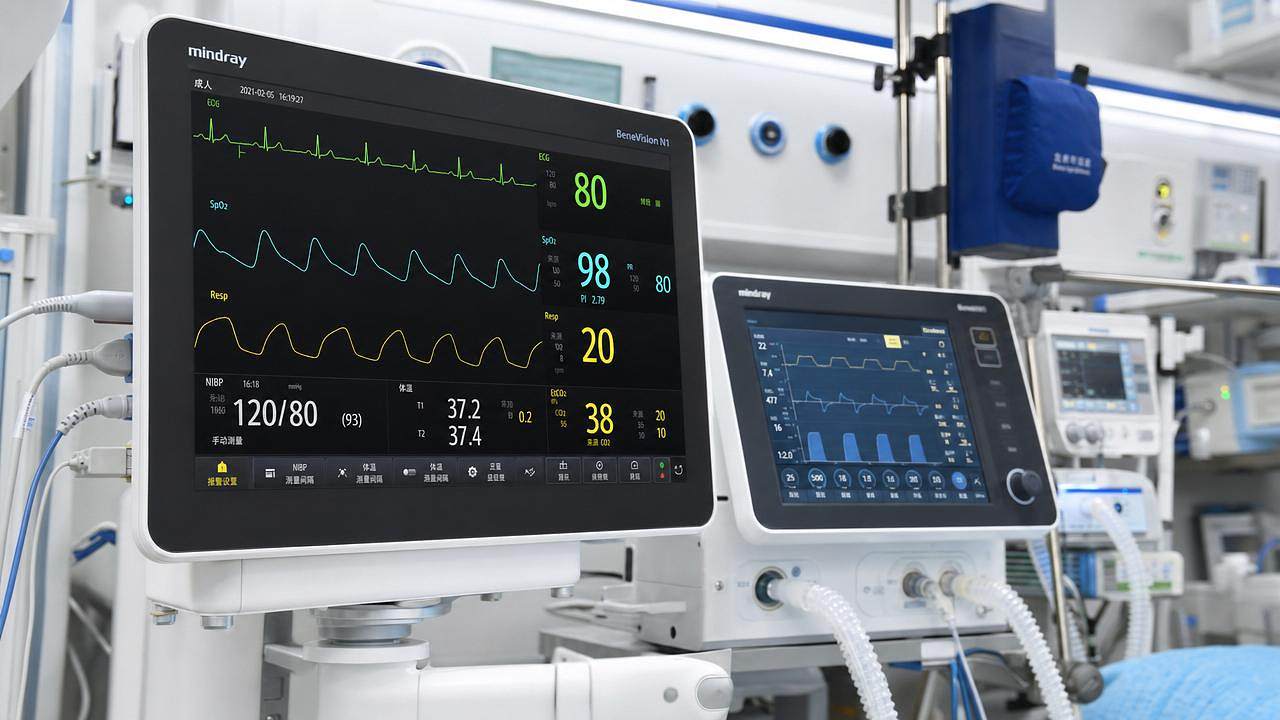




For technical evaluators, alarm performance is no longer judged by volume alone, but by signal fidelity, clinical relevance, and false alarm reduction. Biomedical signal processing plays a central role by filtering noise, detecting meaningful physiological patterns, and improving decision accuracy across critical care and diagnostic systems. This article explores how these capabilities strengthen alarm reliability in modern medical equipment.
Why biomedical signal processing matters when alarm accuracy is under review
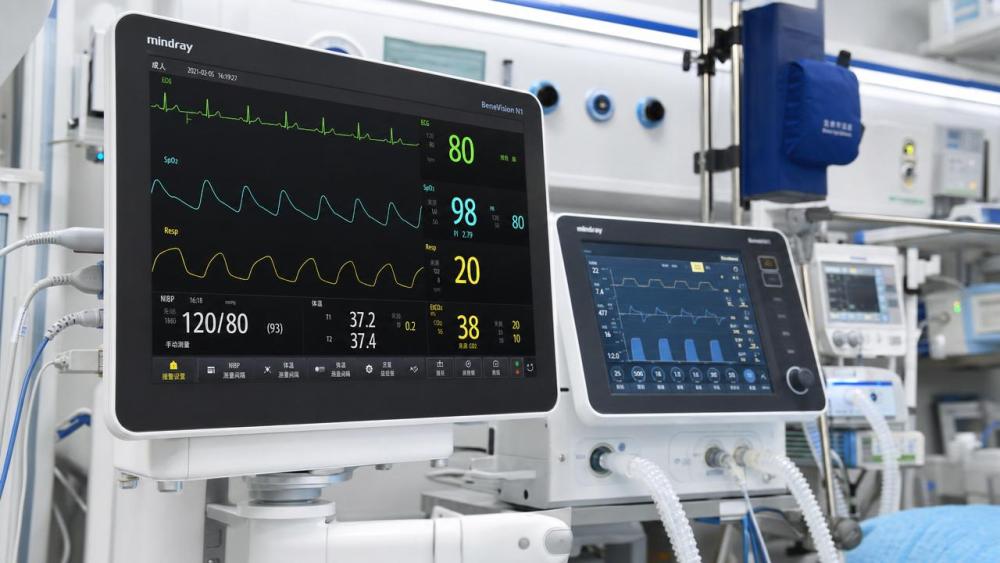
In clinical MedTech, alarm quality directly affects patient safety, staff workload, and procurement value. A loud alarm that triggers too often is not a safety feature. It becomes operational friction, especially in ICU, OR, imaging suites, and high-dependency monitoring environments.
This is where biomedical signal processing changes the evaluation framework. Instead of reacting to raw waveform disturbances, the device interprets physiological data through filtering, feature extraction, signal validation, and event correlation. The result is better alarm specificity without sacrificing sensitivity.
For technical evaluators, the core question is practical: does the system distinguish true patient deterioration from motion artifact, sensor drop-off, electrosurgical interference, poor lead contact, or transient environmental noise? If not, the downstream cost is high.
- False alarms contribute to alarm fatigue, making clinicians slower to respond to real events.
- Missed or delayed alarms increase risk in ventilation, cardiac monitoring, infusion, and life support workflows.
- Poor signal handling raises maintenance complaints, training burden, and post-installation dissatisfaction.
AMDS follows these issues across imaging, IVD, critical life support, operating room infrastructure, and endoscopic systems because alarm behavior is no longer an isolated software matter. It is tied to sensor quality, workflow design, compliance requirements, and clinical economics.
What does biomedical signal processing actually improve in alarm systems?
At the device level, biomedical signal processing improves how physiological data is acquired, cleaned, interpreted, and prioritized. Technical evaluators should not treat it as a black-box feature. It should be mapped to measurable alarm outcomes.
Core functions that affect alarm quality
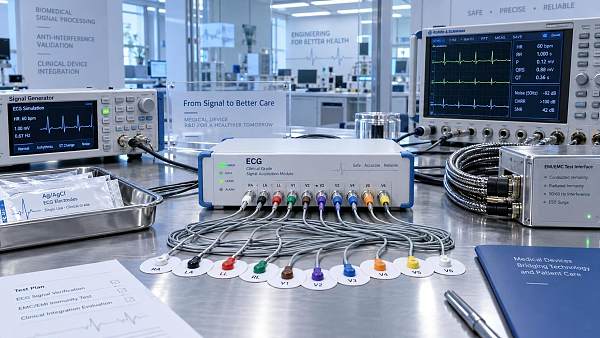
- Noise reduction: removes baseline wander, power-line interference, muscle artifact, and motion contamination.
- Signal quality indexing: determines whether a waveform is reliable enough for alarm generation.
- Feature detection: identifies QRS complexes, respiration cycles, SpO2 pulse quality, pressure trends, and waveform morphology.
- Multi-parameter fusion: cross-checks ECG, SpO2, invasive pressure, capnography, and ventilator values before escalating alarms.
- Trend interpretation: distinguishes sustained deterioration from momentary disturbance.
In many hospital settings, the biggest gain comes from combining signal processing with context logic. For example, a desaturation alert may be weighted differently when plethysmographic signal quality is weak, patient motion is high, and capnography remains stable.
That kind of layered decision path matters to buyers because it affects alarm burden, workflow acceptance, and long-term usability. It also reflects the engineering maturity of the vendor.
The table below summarizes how biomedical signal processing maps to common alarm evaluation criteria used by technical assessment teams.
For evaluators, the most valuable takeaway is that alarm accuracy should be reviewed as a systems-engineering result. The waveform pipeline, sensor interface, timing logic, and escalation policy must work together.
Which clinical and technical scenarios benefit most?
Biomedical signal processing has broad relevance, but some environments benefit more because their alarm load is high and artifacts are common. AMDS frequently sees this issue in critical life support, patient monitoring, imaging support systems, and minimally invasive procedure rooms.
High-priority scenarios for evaluation
- ICU and ventilator monitoring, where unstable waveforms, patient movement, and rapid condition changes can create frequent nuisance alarms.
- Operating rooms, where electrosurgical units and changing physiological states challenge ECG and hemodynamic signal reliability.
- Transport and emergency settings, where motion artifact and intermittent sensor contact reduce raw data quality.
- Sleep and respiratory diagnostics, where apnea detection requires precise pattern recognition rather than simple thresholding.
- Endoscopic and minimally invasive procedures, where integrated monitoring must remain stable during equipment repositioning and workflow congestion.
Even in medical imaging environments, alarm logic matters. MRI-compatible monitoring, sedation support, and interventional imaging workflows require signal resilience under demanding electromagnetic or procedural conditions. Evaluators should therefore assess alarm accuracy in the actual clinical context, not only in showroom demonstrations.
The next table helps compare scenario-specific alarm demands and the biomedical signal processing capabilities that should be prioritized during technical review.
This comparison shows why a single alarm benchmark is often insufficient. The right solution depends on the interference profile, patient acuity, and workflow constraints of the target department.
How should technical evaluators compare solutions during procurement?
Procurement teams often focus on monitor specifications, alarm audibility, or interface design. Those factors matter, but they do not fully predict alarm quality. Biomedical signal processing should be evaluated through a structured acceptance lens.
A practical evaluation checklist
- Ask whether the device provides signal quality indicators visible to users or accessible in logs.
- Review how the system handles transient spikes versus persistent physiological changes.
- Check if alarm generation uses a single parameter or multi-parameter confirmation.
- Request evidence from simulated artifact conditions, not only ideal bench tests.
- Confirm whether settings can be tuned for ICU, OR, transport, neonatal, or procedural workflows.
- Assess how event logs support root-cause analysis after alarm incidents.
Cost pressure also shapes decisions. A lower upfront device price may be offset by staff dissatisfaction, increased service calls, and higher alarm management burden. Technical evaluators should therefore combine engineering review with workflow and health economics considerations.
This is one reason AMDS connects engineering interpretation with compliance and economic reasoning. A system that performs well in laboratory conditions but fails to align with clinical operations or post-market expectations may not be the strongest procurement choice.
What standards, risk controls, and compliance questions should not be overlooked?
Alarm accuracy is not only a technical preference. It sits within risk management, usability engineering, and regulatory review. Biomedical signal processing influences all three because it changes how alarm decisions are made and documented.
Key areas to review
- Risk management files should explain how false positives and false negatives are analyzed.
- Usability documentation should address clinician interpretation, alarm prioritization, and response workflows.
- Software lifecycle and change control should cover algorithm updates that affect alarm behavior.
- Verification and validation should include clinically realistic artifact conditions, not only stable reference signals.
In global market access, technical evaluators should also ask whether the alarm logic and supporting evidence are presented in a way that supports CE MDR, FDA review expectations, and ongoing post-market surveillance. Generic claims about smart alarms are not enough.
For exported equipment, this becomes even more important. The better the algorithm rationale, test design, and traceability, the easier it is to defend performance claims during audits, customer due diligence, and distributor evaluation.
Common misconceptions about biomedical signal processing and alarm performance
Technical teams often encounter oversimplified assumptions during product review. Those assumptions can lead to weak buying decisions or implementation gaps.
Misconceptions worth challenging
- “More alarms mean safer care.” In reality, excess nuisance alarms can reduce effective vigilance.
- “A strong algorithm can compensate for weak sensors.” It cannot fully recover poor acquisition hardware or unstable patient connections.
- “Bench accuracy equals clinical reliability.” Clinical environments introduce motion, workflow interruptions, and competing devices.
- “Alarm settings alone solve false alarms.” Without sound biomedical signal processing, threshold tuning often only shifts the problem.
A mature evaluation process should therefore look beyond brochures. Ask how the device behaves in edge cases, how alarm logic can be audited, and how different departments may require different parameter strategies.
FAQ: what do technical evaluators ask most often?
How do we verify whether biomedical signal processing really reduces false alarms?
Start with scenario-based testing. Review alarm behavior under motion artifact, sensor displacement, electrical interference, and mixed-acuity cases. Ask for event logs, detection latency ranges, and evidence showing how true events are preserved while nuisance triggers are reduced.
Which departments should prioritize this capability first?
ICU, OR, transport monitoring, recovery units, and sedation-support environments usually see the fastest value. These areas combine high alarm density with unstable signal conditions, making biomedical signal processing especially relevant.
What should be included in a vendor discussion?
Ask about signal quality scoring, cross-parameter logic, alarm delay configuration, software update governance, interoperability with hospital systems, and any documentation supporting validation under realistic conditions. These questions reveal engineering maturity quickly.
Is biomedical signal processing only relevant for bedside monitors?
No. It matters across ventilators, anesthesia systems, infusion safety workflows, respiratory diagnostics, wearable monitoring, MRI-compatible systems, and some integrated procedure platforms. Any device that turns physiological data into actionable alarms depends on signal integrity.
Why work with AMDS when evaluating alarm-critical medical systems?
AMDS is positioned at the intersection of deep medical engineering, compliance interpretation, and clinical procurement logic. That matters when biomedical signal processing is not just a feature to describe, but a performance layer to evaluate across imaging, IVD, life support, OR equipment, and endoscopic ecosystems.
Our intelligence approach helps technical evaluators connect waveform-level engineering with market access demands and ROI-sensitive hospital decisions. Instead of reviewing devices in isolation, we help assess whether alarm behavior is credible, scalable, and fit for the target clinical environment.
What you can discuss with us
- Parameter confirmation for alarm thresholds, signal channels, and validation priorities.
- Product selection support for ICU, imaging support, OR, endoscopy, and high-dependency care environments.
- Delivery timeline considerations for evaluation projects, pilot deployments, and multi-site rollouts.
- Custom solution discussions involving integration, workflow fit, and alarm-management strategy.
- Certification and regulatory questions linked to evidence expectations, software changes, and export readiness.
- Quotation alignment based on technical scope, implementation risk, and long-term operating impact.
If your team is comparing devices where alarm accuracy could influence safety, adoption, or compliance outcomes, AMDS can help frame the decision with sharper technical and strategic clarity. That includes support around biomedical signal processing, application fit, validation priorities, and procurement trade-offs.
Recommended News
 Oct 08, 2026Operating Room Systems: Selection Criteria for Integrated Surgical WorkflowsOperating room systems selection guide for integrated surgical workflows—improve safety, interoperability, lifecycle value, and scalable clinical performance.
 Oct 07, 2026Hospital Diagnostic Equipment Procurement: A Framework for Comparing Cost, Capacity, and RiskHospital diagnostic equipment procurement made clearer: compare lifecycle cost, usable capacity, clinical fit, and operational risk to make confident, sustainable buying decisions.
 Oct 06, 2026How to Evaluate an Operating Room Technology Distributor for Hospital ProjectsOperating room technology distributor evaluation guide for hospitals: assess integration, compliance, lifecycle costs, service capacity, and delivery confidence before award.
 Oct 05, 2026Global Medical Procurement Planning: How Hospitals Can Reduce Supply Risk and CostGlobal medical procurement planning helps hospitals reduce supply risk, control lifecycle costs, and protect care continuity through smarter sourcing, service, and compliance strategies.
 Oct 03, 2026How Detection Algorithms Improve Sensitivity and Workflow in Medical ImagingMedical imaging algorithms detection improves sensitivity, manages false positives, and streamlines clinical workflows. Explore validation, integration, and governance essentials.
 Oct 02, 2026High-Flow ICU Ventilators: Key Selection Criteria for Acute Respiratory CareICU ventilators high flow: discover key selection criteria for accurate gas delivery, NIV performance, humidification, alarms, reliability, and safer acute respiratory care.
 Oct 01, 2026How to Evaluate Medical Equipment Intelligence Suppliers for Hospital ProcurementMedical equipment intelligence suppliers: learn how hospitals can assess evidence quality, total cost, compliance, interoperability, and cybersecurity for smarter procurement decisions.
 Sep 30, 2026ISO 13485 Requirements for Blood Testing Instruments: A Buyer’s ChecklistBlood testing instruments ISO 13485 buyer’s checklist: verify certification scope, traceability, installation, consumables, and supplier support before you buy.
 Sep 29, 2026How to Evaluate Integrated Operating Room Systems for Workflow, Imaging, and IT IntegrationIntegrated operating room systems: evaluate workflow, imaging, IT integration, cybersecurity, and lifecycle value to select a scalable surgical solution.
 Sep 28, 2026How to Evaluate a Genetic Testing Equipment Supplier for PCR Lab ProcurementGenetic testing equipment supplier evaluation guide for PCR labs: compare performance, compliance, workflow, service, supply resilience, and total cost.
 Sep 27, 2026How to Specify Custom Benchtop Diagnostic Instruments for Your Assay WorkflowCustom diagnostic instruments benchtop guide: specify optics, fluidics, automation, software integration, and support to build a reliable assay workflow.
 Sep 26, 2026How Cardiac Imaging Analysis Tools Turn CT and MRI Data into Clinical MetricsMedical imaging analysis cardiology tools transform cardiac CT and MRI into reliable metrics. Explore segmentation, validation, workflow integration, and AI review.
 Sep 25, 2026How Iterative Image Reconstruction Algorithms Balance CT Dose, Noise, and DetailIterative image reconstruction algorithms help CT teams balance dose, noise, and diagnostic detail. Explore practical insights for confident imaging decisions.
 Sep 24, 2026What Drives the Total Cost of Medical Technology Solutions Over Their Lifecycle?Medical technology solutions cost goes far beyond purchase price—explore lifecycle drivers from installation and service to software, training, compliance, and downtime.
 Sep 24, 2026Diagnostic Imaging Technology: How Modalities Support Different Clinical DecisionsDiagnostic imaging technology supports smarter clinical decisions across CT, MRI, ultrasound, and nuclear imaging. Explore modality strengths, workflows, and selection factors.
 Sep 22, 2026How Life Science Labs Can Select Biomedical Research Equipment by Workflow and ThroughputBiomedical research equipment life science labs can select with confidence by aligning workflow, throughput, automation, data integrity, and scalable support.
 Sep 21, 2026How to Plan LIS Connectivity for Chemiluminescence Analyzers Without Data GapsChemiluminescence analyzers LIS connectivity: learn how to prevent data gaps with field mapping, exception workflows, end-to-end validation, and reliable go-live planning.
 Sep 20, 2026Selecting Fluorescence PCR Instruments: Detection Channels, Sensitivity, and Workflow FitPCR diagnostic instruments fluorescence detection guide: compare channels, sensitivity, multiplexing, and workflow fit to select a reliable platform.
 Sep 19, 2026Biomedical Signal Processing: From Sensor Data to Clinical Decision SupportBiomedical signal processing transforms sensor data into reliable clinical decision support. Explore AI, imaging, IVD, ICU monitoring, and compliance-ready MedTech insights.
 Sep 18, 2026How to Evaluate a Diagnostic Imaging Platform for Multi-Modality Workflow IntegrationDiagnostic imaging platform evaluation guide: assess multi-modality workflows, interoperability, AI integration, image integrity, security, and scalability for safer clinical decisions.
 Sep 17, 2026ISO 13485 for Medical Imaging Equipment: What Manufacturers Must DocumentMedical imaging equipment ISO 13485: discover essential documentation for design controls, risk management, traceability, software, and post-market quality.
 Sep 16, 2026Robotic MIS Equipment: What Hospitals Should Evaluate Before AdoptionMinimally invasive surgical equipment robotic adoption guide: evaluate workflow, safety, imaging, costs, cybersecurity, and service readiness.
 Sep 15, 2026How to Evaluate Biomedical Signal Processing Suppliers for Clinical Device ProjectsBiomedical signal processing supplier evaluation guide for clinical device teams—compare signal fidelity, regulatory evidence, cybersecurity, integration, and lifecycle support.
 Sep 14, 2026How Integrated Clinical Diagnostics Solutions Reduce Turnaround Time Across Lab WorkflowsIntegrated clinical diagnostics solutions reduce lab turnaround time by connecting workflows, automation, and data. Discover practical strategies for faster, traceable results.




Related News
- 00
0000-00
Operating Room Systems: Selection Criteria for Integrated Surgical Workflows - 00
0000-00
How to Evaluate an Operating Room Technology Distributor for Hospital Projects - 00
0000-00
How Detection Algorithms Improve Sensitivity and Workflow in Medical Imaging - 00
0000-00
How to Evaluate Integrated Operating Room Systems for Workflow, Imaging, and IT Integration - 00
0000-00
How Cardiac Imaging Analysis Tools Turn CT and MRI Data into Clinical Metrics
Weekly Insights
Stay ahead with our curated technology reports delivered every Monday.