
PMDA Tightens Entry Rules for Chemiluminescence IVD Instruments
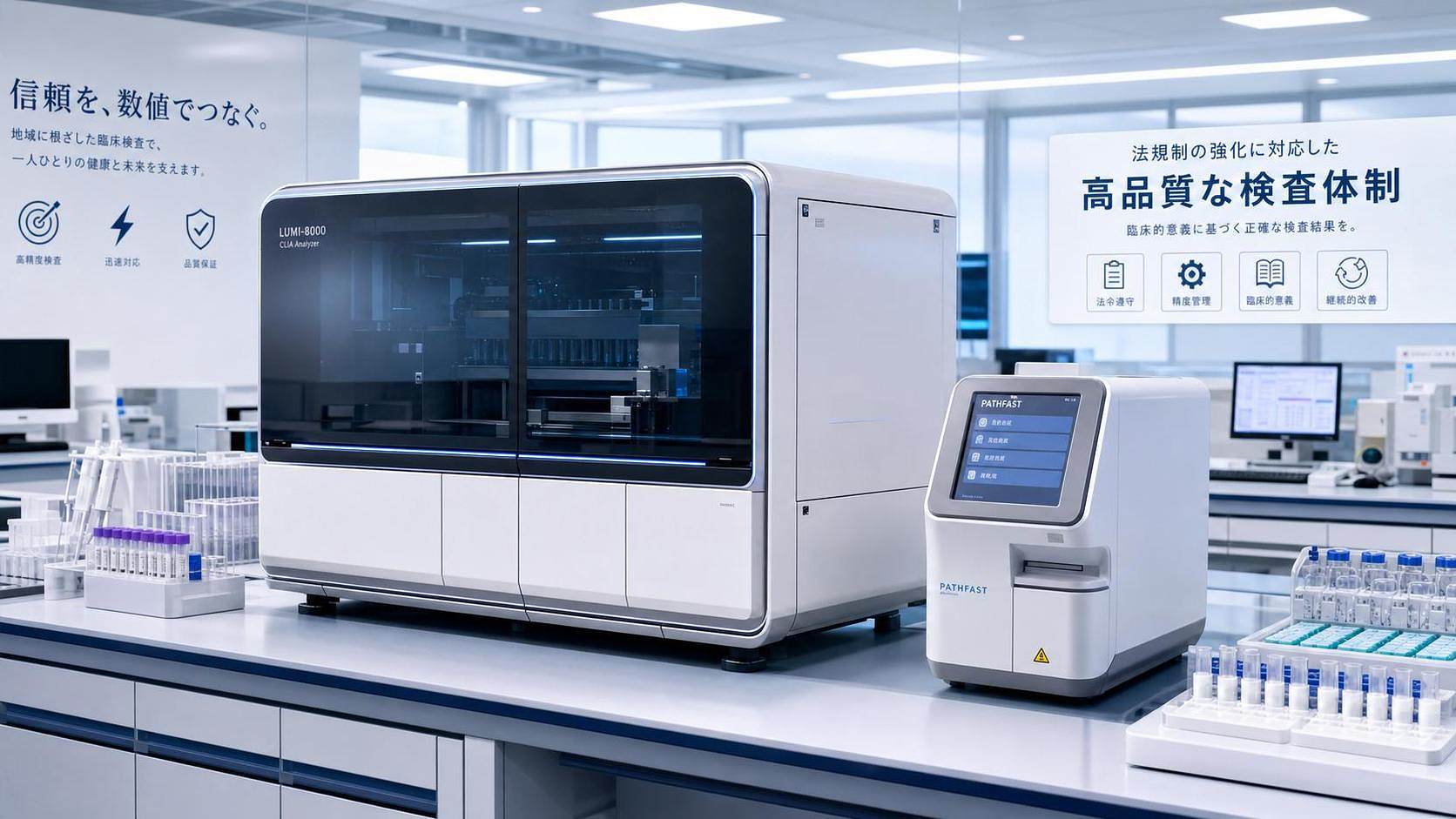




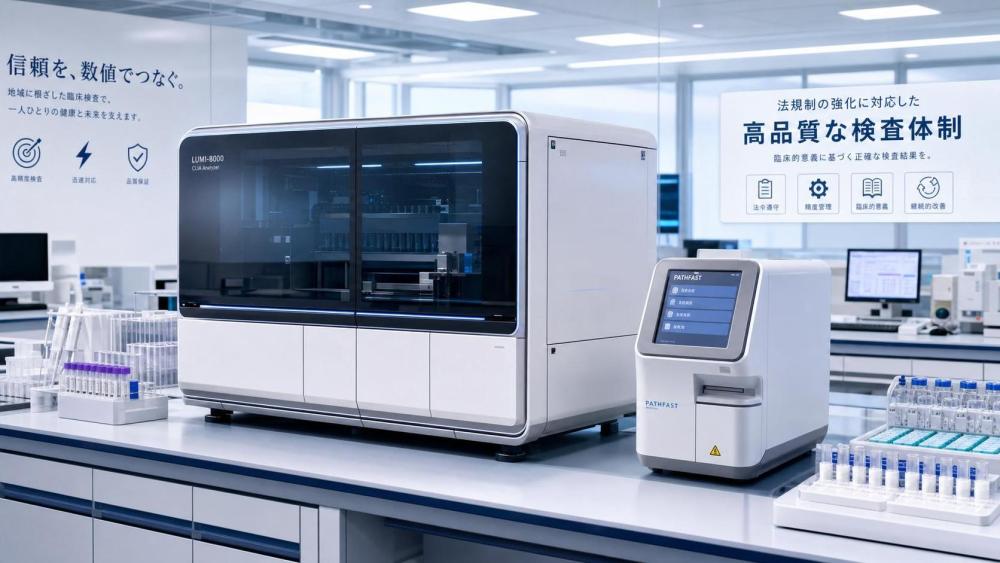
Japan’s PMDA updated its Q&A on the review of companion IVD instruments on July 9, 2026, and the change is set to matter directly to chemiluminescence instrument makers, exporters, local testing partners, and market access teams targeting Japan. From October 2026, applicants seeking PMDA certification for chemiluminescence systems, including fully automated analyzers and POCT platforms, will need Japanese clinical comparison data from at least 200 real samples, with positive cases spanning at least five disease spectra. For the industry, the immediate relevance lies not only in a higher evidence threshold, but also in how this shifts time, cost, and partnership requirements in Japan market entry.
What the Updated PMDA Requirement Says
According to the information provided, PMDA revised its “IVD Companion Instrument Review Q&A” on July 9, 2026. The updated requirement will take effect from October 2026.
Under this update, all chemiluminescence testing instruments applying for PMDA certification must submit clinical comparison data generated in Japanese medical institutions. The requirement covers both fully automated analyzers and POCT platforms.
The submission threshold specified in the provided information is at least 200 real clinical samples, and the positive rate must cover at least five disease spectra.
The same provided summary indicates that this change will significantly raise the localization cost and timeline for Chinese exporting companies, while creating a differentiation advantage for companies that have already established cooperative laboratory resources in Japan.
Where the Pressure Will Be Felt First
Export-oriented instrument manufacturers face a heavier localization burden
From an industry perspective, companies shipping chemiluminescence instruments into Japan are likely to feel the impact most directly. The reason is straightforward: the new rule ties PMDA access more tightly to local Japanese clinical evidence rather than relying only on broader technical preparation. The practical effect is likely to concentrate in validation planning, study execution, submission preparation, and launch scheduling.
What deserves closer attention is that the requirement applies across both fully automated systems and POCT platforms. That means the issue is not limited to one installation model or one customer segment within chemiluminescence diagnostics.
Japanese clinical partners become more important in the approval path
Observably, medical institutions and laboratory partners in Japan now sit closer to the center of the market entry process for affected products. Because the rule explicitly requires data generated in Japanese medical institutions, access to compliant local comparison studies becomes a gating factor in practice.
For service partners involved in study coordination, documentation, or local execution support, the key change is not simply more work volume but a higher operational importance in the approval sequence.
Commercial teams may need to rework launch timing and customer communication
For channel teams, local distributors, and market development functions, the impact is likely to appear in delivery expectations and certification timelines. Analysis shows that when local evidence requirements become more specific, customer conversations often shift toward timing certainty, documentation readiness, and approval progress rather than product positioning alone.
In this case, companies active in Japan-facing business will need to watch how the October 2026 effective date interacts with product planning and pipeline prioritization.
What Companies Should Track Now
Watch for any further clarification in official wording
Analysis shows that the most immediate task is to follow whether PMDA provides additional interpretation around implementation details. The current confirmed information establishes the requirement threshold and scope, but companies will still need to monitor whether any further official clarification changes the practical reading of sample preparation, disease-spectrum coverage, or submission expectations.
Reassess which product lines are still viable on the same timeline
For manufacturers and exporters, a practical focus should be product prioritization. Since the rule applies to chemiluminescence instruments broadly, teams may need to compare which instrument programs can realistically support local Japanese clinical comparison work within the required timeframe and which may face delays.
Separate policy signal from execution readiness
What deserves closer attention is the difference between understanding the rule and being operationally ready for it. A company may recognize the new PMDA threshold, but that does not automatically mean it has access to Japanese medical institutions, compliant study coordination, or a workable document package. The business risk sits in that gap.
Review partner readiness and customer-facing commitments
For firms already using local laboratories or service providers in Japan, the current change makes partner quality and coordination more material. For firms without those resources, the issue is not only added cost, but also whether existing delivery, launch, or customer communication plans still match likely approval timing.
Why This Looks Like More Than a Short-Term Adjustment
Observably, this update should not be read only as an isolated documentation change. It points to a tighter emphasis on locally generated clinical comparison evidence for chemiluminescence companion instruments entering the Japanese market.
Analysis shows that the immediate effect is practical and near term because the implementation date is already defined as October 2026. At the same time, it is more appropriate to understand this as a policy signal with longer relevance for market access planning, especially for overseas companies that have treated local validation capacity as a secondary issue.
That said, this is still not the same as a final verdict on how every company or every product line will be affected in practice. The operational outcome will depend on how applicants organize local studies, manage timelines, and secure Japanese institutional cooperation.
How the Industry May Best Read This Update
At this stage, the PMDA change is best understood as a clear tightening of entry expectations for chemiluminescence IVD instruments in Japan rather than as a complete redefinition of the market. The confirmed message is that local clinical comparison evidence now carries greater weight in the approval path.
For the industry, the significance lies in the shift from general readiness to locally executable readiness. Companies with established Japanese laboratory partnerships may now hold a more defensible position, while others may need to revisit cost, timing, and submission assumptions. A neutral reading is that this is both a near-term operational change and a longer-term signal worth sustained monitoring.
Basis of This Article and Ongoing Verification
This article is based on the user-provided news title, event date, and event summary. The confirmed inputs used here are the July 9, 2026 timing, PMDA’s update to the “IVD Companion Instrument Review Q&A,” the October 2026 implementation point, the requirement for at least 200 real samples from Japanese medical institutions, and the requirement that positive cases cover at least five disease spectra.
For this type of industry update, source categories that are typically relevant include official notices, company disclosures, industry association updates, authoritative media coverage, and standards or regulatory review documents. No specific official source link was provided in the input, so the exact official link remains to be verified on an ongoing basis.
Further follow-up should focus on whether PMDA issues additional clarifications, whether affected companies adjust Japan entry timelines, and how local clinical partnership capacity becomes a competitive differentiator in actual submissions.
Recommended News
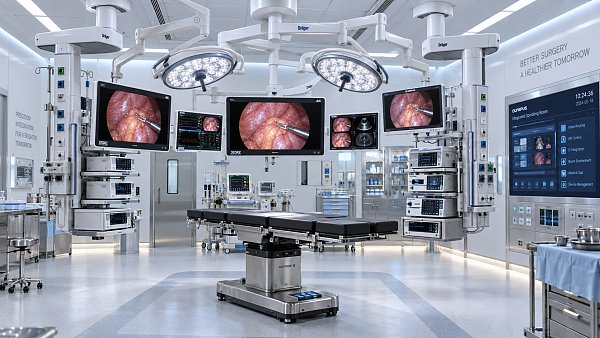
 Oct 08, 2026Operating Room Systems: Selection Criteria for Integrated Surgical WorkflowsOperating room systems selection guide for integrated surgical workflows—improve safety, interoperability, lifecycle value, and scalable clinical performance.
 Oct 07, 2026Hospital Diagnostic Equipment Procurement: A Framework for Comparing Cost, Capacity, and RiskHospital diagnostic equipment procurement made clearer: compare lifecycle cost, usable capacity, clinical fit, and operational risk to make confident, sustainable buying decisions.
 Oct 06, 2026How to Evaluate an Operating Room Technology Distributor for Hospital ProjectsOperating room technology distributor evaluation guide for hospitals: assess integration, compliance, lifecycle costs, service capacity, and delivery confidence before award.
 Oct 05, 2026Global Medical Procurement Planning: How Hospitals Can Reduce Supply Risk and CostGlobal medical procurement planning helps hospitals reduce supply risk, control lifecycle costs, and protect care continuity through smarter sourcing, service, and compliance strategies.
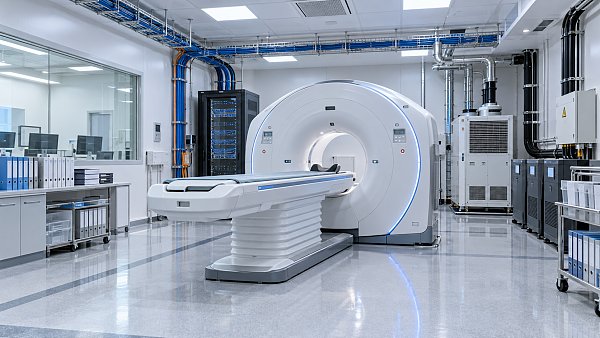
 Oct 03, 2026How Detection Algorithms Improve Sensitivity and Workflow in Medical ImagingMedical imaging algorithms detection improves sensitivity, manages false positives, and streamlines clinical workflows. Explore validation, integration, and governance essentials.
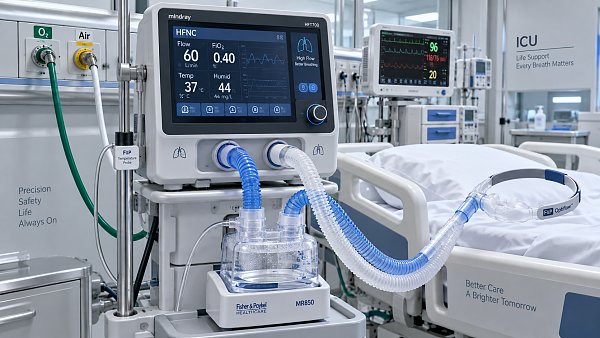
 Oct 02, 2026High-Flow ICU Ventilators: Key Selection Criteria for Acute Respiratory CareICU ventilators high flow: discover key selection criteria for accurate gas delivery, NIV performance, humidification, alarms, reliability, and safer acute respiratory care.
 Oct 01, 2026How to Evaluate Medical Equipment Intelligence Suppliers for Hospital ProcurementMedical equipment intelligence suppliers: learn how hospitals can assess evidence quality, total cost, compliance, interoperability, and cybersecurity for smarter procurement decisions.
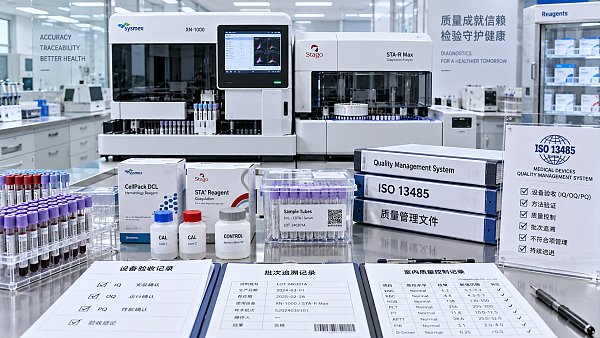
 Sep 30, 2026ISO 13485 Requirements for Blood Testing Instruments: A Buyer’s ChecklistBlood testing instruments ISO 13485 buyer’s checklist: verify certification scope, traceability, installation, consumables, and supplier support before you buy.
 Sep 29, 2026How to Evaluate Integrated Operating Room Systems for Workflow, Imaging, and IT IntegrationIntegrated operating room systems: evaluate workflow, imaging, IT integration, cybersecurity, and lifecycle value to select a scalable surgical solution.
 Sep 28, 2026How to Evaluate a Genetic Testing Equipment Supplier for PCR Lab ProcurementGenetic testing equipment supplier evaluation guide for PCR labs: compare performance, compliance, workflow, service, supply resilience, and total cost.
 Sep 27, 2026How to Specify Custom Benchtop Diagnostic Instruments for Your Assay WorkflowCustom diagnostic instruments benchtop guide: specify optics, fluidics, automation, software integration, and support to build a reliable assay workflow.
 Sep 26, 2026How Cardiac Imaging Analysis Tools Turn CT and MRI Data into Clinical MetricsMedical imaging analysis cardiology tools transform cardiac CT and MRI into reliable metrics. Explore segmentation, validation, workflow integration, and AI review.
 Sep 25, 2026How Iterative Image Reconstruction Algorithms Balance CT Dose, Noise, and DetailIterative image reconstruction algorithms help CT teams balance dose, noise, and diagnostic detail. Explore practical insights for confident imaging decisions.
 Sep 24, 2026What Drives the Total Cost of Medical Technology Solutions Over Their Lifecycle?Medical technology solutions cost goes far beyond purchase price—explore lifecycle drivers from installation and service to software, training, compliance, and downtime.
 Sep 24, 2026Diagnostic Imaging Technology: How Modalities Support Different Clinical DecisionsDiagnostic imaging technology supports smarter clinical decisions across CT, MRI, ultrasound, and nuclear imaging. Explore modality strengths, workflows, and selection factors.
 Sep 22, 2026How Life Science Labs Can Select Biomedical Research Equipment by Workflow and ThroughputBiomedical research equipment life science labs can select with confidence by aligning workflow, throughput, automation, data integrity, and scalable support.
 Sep 21, 2026How to Plan LIS Connectivity for Chemiluminescence Analyzers Without Data GapsChemiluminescence analyzers LIS connectivity: learn how to prevent data gaps with field mapping, exception workflows, end-to-end validation, and reliable go-live planning.
 Sep 20, 2026Selecting Fluorescence PCR Instruments: Detection Channels, Sensitivity, and Workflow FitPCR diagnostic instruments fluorescence detection guide: compare channels, sensitivity, multiplexing, and workflow fit to select a reliable platform.
 Sep 19, 2026Biomedical Signal Processing: From Sensor Data to Clinical Decision SupportBiomedical signal processing transforms sensor data into reliable clinical decision support. Explore AI, imaging, IVD, ICU monitoring, and compliance-ready MedTech insights.
 Sep 18, 2026How to Evaluate a Diagnostic Imaging Platform for Multi-Modality Workflow IntegrationDiagnostic imaging platform evaluation guide: assess multi-modality workflows, interoperability, AI integration, image integrity, security, and scalability for safer clinical decisions.
 Sep 17, 2026ISO 13485 for Medical Imaging Equipment: What Manufacturers Must DocumentMedical imaging equipment ISO 13485: discover essential documentation for design controls, risk management, traceability, software, and post-market quality.
 Sep 16, 2026Robotic MIS Equipment: What Hospitals Should Evaluate Before AdoptionMinimally invasive surgical equipment robotic adoption guide: evaluate workflow, safety, imaging, costs, cybersecurity, and service readiness.
 Sep 15, 2026How to Evaluate Biomedical Signal Processing Suppliers for Clinical Device ProjectsBiomedical signal processing supplier evaluation guide for clinical device teams—compare signal fidelity, regulatory evidence, cybersecurity, integration, and lifecycle support.
 Sep 14, 2026How Integrated Clinical Diagnostics Solutions Reduce Turnaround Time Across Lab WorkflowsIntegrated clinical diagnostics solutions reduce lab turnaround time by connecting workflows, automation, and data. Discover practical strategies for faster, traceable results.






Related News
- 00
0000-00
How to Plan LIS Connectivity for Chemiluminescence Analyzers Without Data Gaps - 00
0000-00
FDA Draft IVD Rule Raises Clinical Evidence Bar - 00
0000-00
EU Extends MDR Transition, Tightens Rules for Chemiluminescence IVDs - 00
0000-00
EU MDR Transition Ends, Hitting 1,200+ Chinese IVD Firms - 00
0000-00
EU MDR Transition Ends, 1,200+ China IVD Firms at Risk
Weekly Insights
Stay ahead with our curated technology reports delivered every Monday.