
G7 Trade Ministers Launch Critical Minerals Partnership in Paris





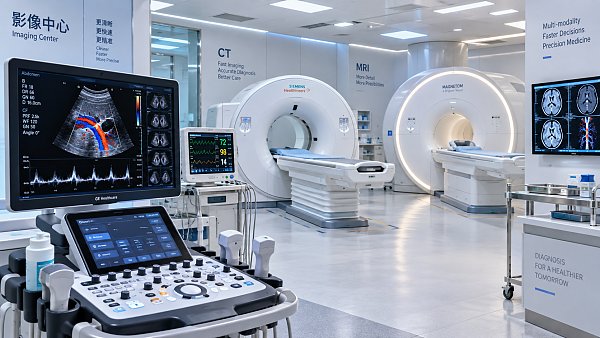
On May 17, 2026, G7 trade ministers issued a joint declaration in Paris launching the 'Critical Minerals Resilience Partnership' (CMRP), designating neodymium, praseodymium, and dysprosium — key rare earth elements used in superconducting MRI magnets and CT rotating anodes — as strategic materials. The initiative aims to establish non-China-led processing and certification frameworks for these minerals, with new traceability and due diligence requirements for permanent magnet components expected to impact MRI and CT equipment importers starting Q3 2026. Medical imaging device manufacturers, diagnostic equipment distributors, and global supply chain managers should closely monitor compliance implications and procurement cost adjustments.
Event Overview
On May 17, 2026, G7 trade ministers met in Paris and jointly announced the launch of the Critical Minerals Resilience Partnership (CMRP). The declaration explicitly identifies neodymium, praseodymium, and dysprosium as strategic materials due to their essential role in superconducting MRI magnets and CT rotating anodes. The CMRP seeks to build alternative processing capacity and certification standards outside China’s dominant supply chain. The declaration also signals intent to impose retrospective due diligence requirements on permanent magnet components originating from specified high-risk regions, with implementation anticipated from Q3 2026 onward.
Industries Affected by This Development
Medical Imaging Equipment Importers
Importers of MRI and CT systems will face heightened compliance obligations: newly mandated traceability documentation for permanent magnet components may trigger audit scrutiny and delay customs clearance. Since many finished devices integrate magnets sourced through multi-tiered, opaque supply chains, verifying origin and processing history could increase administrative burden and lead time.
Raw Material Procurement Teams (in OEMs & Tier-1 Suppliers)
Procurement functions supporting medical imaging hardware development must now assess exposure to magnet suppliers reliant on high-risk regional feedstock or processing routes. The declaration does not specify which regions are designated ‘high-risk’, but the focus on non-China alternatives implies that current sourcing from China — even if final magnet assembly occurs elsewhere — may fall under enhanced scrutiny.
Magnet Component Manufacturers & Assemblers
Firms producing sintered NdFeB magnets or integrating them into subassemblies (e.g., rotor modules for CT gantries) may be required to provide upstream material certifications and process attestations. This adds verification layers previously outside typical commercial contracts, especially where subcontracted melting, milling, or coating steps occur across jurisdictions.
Distribution & Aftermarket Service Providers
Companies managing spare magnet replacements or field upgrades for installed MRI/CT units may encounter new documentation demands during cross-border shipment. Unlike original equipment imports, aftermarket parts often lack full bill-of-materials transparency — making retrospective due diligence more operationally complex.
What Relevant Enterprises or Practitioners Should Focus On Now
Track official definitions of 'high-risk regions' and scope of due diligence requirements
The joint declaration references 'specific high-risk regions' but does not name them. Regulatory agencies in G7 countries are expected to issue implementing guidance in Q2–Q3 2026. Enterprises should subscribe to updates from national trade ministries (e.g., U.S. DOC, EU Commission DG TRADE) and monitor draft technical specifications for magnet component traceability.
Map permanent magnet supply chains down to ore origin and primary separation sites
Current supplier declarations often stop at the magnet manufacturer level. To meet prospective CMRP-aligned requirements, companies should initiate internal mapping exercises — identifying not just magnet vendors, but their rare earth oxide (REO) sources and refining locations. This is especially urgent for magnets used in Class III medical devices subject to regulatory oversight.
Distinguish between policy signaling and enforceable timelines
The CMRP is a framework agreement, not binding legislation. Enforcement mechanisms, penalties, and phased rollout schedules remain undefined. Enterprises should treat Q3 2026 as a planning horizon — not a hard deadline — while recognizing that early adopters of due diligence protocols may gain advantage in tender evaluations and customs pre-clearance programs.
Prepare internal alignment between procurement, regulatory affairs, and quality assurance teams
Traceability requirements will intersect with existing ISO 13485 and FDA 21 CFR Part 820 expectations. Cross-functional workshops — covering documentation retention, supplier qualification updates, and audit readiness — should begin before Q3 to avoid reactive compliance efforts.
Editorial Perspective / Industry Observation
Observably, this declaration functions primarily as a geopolitical coordination signal rather than an immediate regulatory change. It reflects growing consensus among G7 members on the strategic sensitivity of rare earth-dependent medical technologies — particularly as global health infrastructure modernization accelerates. Analysis shows that the CMRP’s real-world impact hinges less on the declaration itself and more on how individual member states translate it into national export controls, certification mandates, or public procurement criteria. From an industry perspective, the shift is not toward decoupling, but toward layered accountability: visibility into mineral origin is becoming a prerequisite for market access, not just a sustainability reporting item.
Current developments are better understood as the formalization of a long-emerging expectation — that critical inputs for life-saving diagnostics must meet verifiable ethical and security thresholds. The pace of implementation will vary significantly across jurisdictions, meaning enterprises with global footprints must prepare for fragmented compliance landscapes, not a single harmonized standard.
Conclusion: This initiative marks a structural recalibration in how critical mineral dependencies are governed within regulated healthcare technology sectors. It does not yet mandate new actions, but it clearly elevates supply chain transparency from a voluntary ESG consideration to a foundational element of trade compliance for medical imaging hardware. Enterprises should interpret the May 17 declaration not as a rule change, but as confirmation that due diligence on permanent magnet provenance is now a material operational priority — one requiring proactive, cross-departmental coordination ahead of formal enforcement.
Information Source: Official G7 Trade Ministers’ Joint Declaration, Paris, May 17, 2026. Note: Designation of 'high-risk regions', detailed due diligence protocols, and enforcement timelines remain pending and are subject to ongoing intergovernmental consultation.
Recommended News
 Oct 08, 2026Operating Room Systems: Selection Criteria for Integrated Surgical WorkflowsOperating room systems selection guide for integrated surgical workflows—improve safety, interoperability, lifecycle value, and scalable clinical performance.
 Oct 07, 2026Hospital Diagnostic Equipment Procurement: A Framework for Comparing Cost, Capacity, and RiskHospital diagnostic equipment procurement made clearer: compare lifecycle cost, usable capacity, clinical fit, and operational risk to make confident, sustainable buying decisions.
 Oct 06, 2026How to Evaluate an Operating Room Technology Distributor for Hospital ProjectsOperating room technology distributor evaluation guide for hospitals: assess integration, compliance, lifecycle costs, service capacity, and delivery confidence before award.
 Oct 05, 2026Global Medical Procurement Planning: How Hospitals Can Reduce Supply Risk and CostGlobal medical procurement planning helps hospitals reduce supply risk, control lifecycle costs, and protect care continuity through smarter sourcing, service, and compliance strategies.
 Oct 03, 2026How Detection Algorithms Improve Sensitivity and Workflow in Medical ImagingMedical imaging algorithms detection improves sensitivity, manages false positives, and streamlines clinical workflows. Explore validation, integration, and governance essentials.
 Oct 02, 2026High-Flow ICU Ventilators: Key Selection Criteria for Acute Respiratory CareICU ventilators high flow: discover key selection criteria for accurate gas delivery, NIV performance, humidification, alarms, reliability, and safer acute respiratory care.
 Oct 01, 2026How to Evaluate Medical Equipment Intelligence Suppliers for Hospital ProcurementMedical equipment intelligence suppliers: learn how hospitals can assess evidence quality, total cost, compliance, interoperability, and cybersecurity for smarter procurement decisions.
 Sep 30, 2026ISO 13485 Requirements for Blood Testing Instruments: A Buyer’s ChecklistBlood testing instruments ISO 13485 buyer’s checklist: verify certification scope, traceability, installation, consumables, and supplier support before you buy.
 Sep 29, 2026How to Evaluate Integrated Operating Room Systems for Workflow, Imaging, and IT IntegrationIntegrated operating room systems: evaluate workflow, imaging, IT integration, cybersecurity, and lifecycle value to select a scalable surgical solution.
 Sep 28, 2026How to Evaluate a Genetic Testing Equipment Supplier for PCR Lab ProcurementGenetic testing equipment supplier evaluation guide for PCR labs: compare performance, compliance, workflow, service, supply resilience, and total cost.
 Sep 27, 2026How to Specify Custom Benchtop Diagnostic Instruments for Your Assay WorkflowCustom diagnostic instruments benchtop guide: specify optics, fluidics, automation, software integration, and support to build a reliable assay workflow.
 Sep 26, 2026How Cardiac Imaging Analysis Tools Turn CT and MRI Data into Clinical MetricsMedical imaging analysis cardiology tools transform cardiac CT and MRI into reliable metrics. Explore segmentation, validation, workflow integration, and AI review.
 Sep 25, 2026How Iterative Image Reconstruction Algorithms Balance CT Dose, Noise, and DetailIterative image reconstruction algorithms help CT teams balance dose, noise, and diagnostic detail. Explore practical insights for confident imaging decisions.
 Sep 24, 2026What Drives the Total Cost of Medical Technology Solutions Over Their Lifecycle?Medical technology solutions cost goes far beyond purchase price—explore lifecycle drivers from installation and service to software, training, compliance, and downtime.
 Sep 24, 2026Diagnostic Imaging Technology: How Modalities Support Different Clinical DecisionsDiagnostic imaging technology supports smarter clinical decisions across CT, MRI, ultrasound, and nuclear imaging. Explore modality strengths, workflows, and selection factors.
 Sep 22, 2026How Life Science Labs Can Select Biomedical Research Equipment by Workflow and ThroughputBiomedical research equipment life science labs can select with confidence by aligning workflow, throughput, automation, data integrity, and scalable support.
 Sep 21, 2026How to Plan LIS Connectivity for Chemiluminescence Analyzers Without Data GapsChemiluminescence analyzers LIS connectivity: learn how to prevent data gaps with field mapping, exception workflows, end-to-end validation, and reliable go-live planning.
 Sep 20, 2026Selecting Fluorescence PCR Instruments: Detection Channels, Sensitivity, and Workflow FitPCR diagnostic instruments fluorescence detection guide: compare channels, sensitivity, multiplexing, and workflow fit to select a reliable platform.
 Sep 19, 2026Biomedical Signal Processing: From Sensor Data to Clinical Decision SupportBiomedical signal processing transforms sensor data into reliable clinical decision support. Explore AI, imaging, IVD, ICU monitoring, and compliance-ready MedTech insights.
 Sep 18, 2026How to Evaluate a Diagnostic Imaging Platform for Multi-Modality Workflow IntegrationDiagnostic imaging platform evaluation guide: assess multi-modality workflows, interoperability, AI integration, image integrity, security, and scalability for safer clinical decisions.
 Sep 17, 2026ISO 13485 for Medical Imaging Equipment: What Manufacturers Must DocumentMedical imaging equipment ISO 13485: discover essential documentation for design controls, risk management, traceability, software, and post-market quality.
 Sep 16, 2026Robotic MIS Equipment: What Hospitals Should Evaluate Before AdoptionMinimally invasive surgical equipment robotic adoption guide: evaluate workflow, safety, imaging, costs, cybersecurity, and service readiness.
 Sep 15, 2026How to Evaluate Biomedical Signal Processing Suppliers for Clinical Device ProjectsBiomedical signal processing supplier evaluation guide for clinical device teams—compare signal fidelity, regulatory evidence, cybersecurity, integration, and lifecycle support.
 Sep 14, 2026How Integrated Clinical Diagnostics Solutions Reduce Turnaround Time Across Lab WorkflowsIntegrated clinical diagnostics solutions reduce lab turnaround time by connecting workflows, automation, and data. Discover practical strategies for faster, traceable results.



















Related News
- 00
0000-00
Operating Room Systems: Selection Criteria for Integrated Surgical Workflows - 00
0000-00
Hospital Diagnostic Equipment Procurement: A Framework for Comparing Cost, Capacity, and Risk - 00
0000-00
How to Evaluate an Operating Room Technology Distributor for Hospital Projects - 00
0000-00
Global Medical Procurement Planning: How Hospitals Can Reduce Supply Risk and Cost - 00
0000-00
How Detection Algorithms Improve Sensitivity and Workflow in Medical Imaging
Weekly Insights
Stay ahead with our curated technology reports delivered every Monday.