
PMDA Tightens Filing Rules for AI Endoscopy Modules





On July 6, 2026, Japan’s PMDA issued a revised Q&A on endoscope software change management that draws a clearer regulatory line around AI-assisted diagnostic functions used with flexible videoscopes. For companies involved in AI endoscopy software, device registration, product delivery, and cross-border market planning, the update is worth close attention because it changes how certain functions may need to be brought to market when they are sold separately or delivered through OTA updates.
What the revised PMDA Q&A states
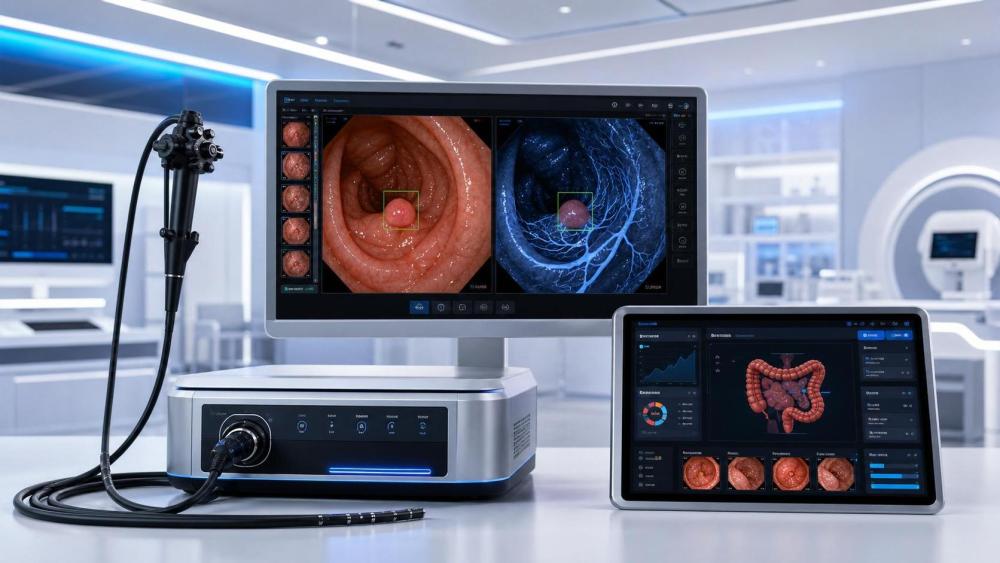
According to the information provided, the PMDA released Endoscope Software Change Management Q&A (Rev.2026-07) on July 6, 2026. The document states that AI-assisted diagnostic functions mounted on flexible videoscopes, including features such as polyp detection and vascular enhancement, must be filed separately for marketing authorization as Class II devices when they are offered as standalone sales modules or provided through OTA upgrades.
The same information indicates that these functions are not to be handled only as ancillary features filed under the main endoscope system in such cases. It is also confirmed that Chinese AI endoscopy companies have already started splitting these functions into separate modules and conducting local clinical validation.
Where the immediate pressure may appear
For AI software developers linked to flexible videoscopes
From an industry perspective, this update may directly affect how AI functions are packaged and commercialized. If a company has treated polyp recognition or vascular enhancement as an add-on under a broader hardware or host-device framework, the new filing expectation may shift work toward module separation, product definition, and market-specific registration planning.
For endoscope manufacturers and system integrators
Observably, the impact is not limited to software teams. Manufacturers and integration partners may need to reassess how core equipment and software-assisted functions are bundled, upgraded, and described in regulatory and commercial materials. The business effect may appear in product architecture, release sequencing, and customer delivery arrangements, especially where OTA functionality is part of the offering.
For clinical validation and local market entry teams
What deserves closer attention is the local evidence path implied by the response from Chinese AI endoscopy companies. Since local clinical validation has already been initiated, companies preparing for Japan-related business may need to pay closer attention to validation timing, submission readiness, and the practical distinction between a software update and a separately regulated module.
What companies should track now
How functions are defined in actual products
Analysis shows that the practical issue is not only whether an AI function exists, but how it is supplied to the market. A function embedded as part of a host configuration may be treated differently from one sold as an independent module or activated later through OTA. Product teams should therefore review how each function is positioned in contracts, technical documents, and upgrade plans.
The gap between a software change and a new filing trigger
It is more appropriate to understand this update as a signal that software delivery method matters. Companies should pay attention to whether planned updates could move a feature into a category that requires separate Class II authorization, rather than assuming every software enhancement can remain under the original host-device pathway.
Local validation and submission preparation
Observably, local clinical validation has already become part of the response for some Chinese AI endoscopy companies. For firms targeting Japan, this points to a need to align regulatory, clinical, and product teams earlier, especially where module separation could change documentation scope, timelines, and communication with partners or customers.
Further wording from regulators and execution details
Analysis shows that companies should continue watching for any further official clarification on implementation details, especially around software change management, OTA deployment, and the boundary between accessory functionality and a separately regulated module. The policy signal is clear, but operational interpretation still deserves close review.
Why this reads as more than a one-off software update
As an editorial observation, this development appears less like a routine wording change and more like a regulatory clarification on commercialization structure for AI-enabled endoscopy functions. It does not by itself confirm how broadly similar logic will be applied in every future case, but it does indicate that the mode of delivery for clinical AI functions is becoming a central regulatory issue, not just a technical one.
From an industry perspective, the update is better understood as a medium- to long-term signal rather than a short-lived procedural adjustment. The reason is that it touches product modularization, upgrade strategy, and local evidence generation, all of which can affect planning well before a submission is made.
How this news is best understood at this stage
At this stage, the most balanced reading is that PMDA has made the filing boundary clearer for certain AI-assisted diagnostic functions used with flexible videoscopes when they are commercialized independently or pushed through OTA. The immediate consequence is not a confirmed market outcome, but a more defined compliance path that may reshape how companies structure AI endoscopy offerings for Japan. For the industry, the key point is to treat this as a concrete regulatory signal with ongoing implementation implications, while continuing to verify how it is applied in practice.
Basis of this article and what still needs verification
This article is based on the user-provided news title, event date, and event summary. For this type of industry update, commonly relevant source categories may include official regulator notices, company statements, industry association releases, authoritative media coverage, and standard-setting or technical guidance documents.
No specific official source link was provided in the input, so the exact document access path still needs to be continuously verified. Follow-up attention should focus on any further official PMDA clarification, subsequent market implementation details, and how companies translate module separation and local clinical validation into actual submission practice.
Recommended News
 Oct 05, 2026Global Medical Procurement Planning: How Hospitals Can Reduce Supply Risk and CostGlobal medical procurement planning helps hospitals reduce supply risk, control lifecycle costs, and protect care continuity through smarter sourcing, service, and compliance strategies.
 Oct 03, 2026How Detection Algorithms Improve Sensitivity and Workflow in Medical ImagingMedical imaging algorithms detection improves sensitivity, manages false positives, and streamlines clinical workflows. Explore validation, integration, and governance essentials.
 Oct 02, 2026High-Flow ICU Ventilators: Key Selection Criteria for Acute Respiratory CareICU ventilators high flow: discover key selection criteria for accurate gas delivery, NIV performance, humidification, alarms, reliability, and safer acute respiratory care.
 Oct 01, 2026How to Evaluate Medical Equipment Intelligence Suppliers for Hospital ProcurementMedical equipment intelligence suppliers: learn how hospitals can assess evidence quality, total cost, compliance, interoperability, and cybersecurity for smarter procurement decisions.
 Sep 30, 2026ISO 13485 Requirements for Blood Testing Instruments: A Buyer’s ChecklistBlood testing instruments ISO 13485 buyer’s checklist: verify certification scope, traceability, installation, consumables, and supplier support before you buy.
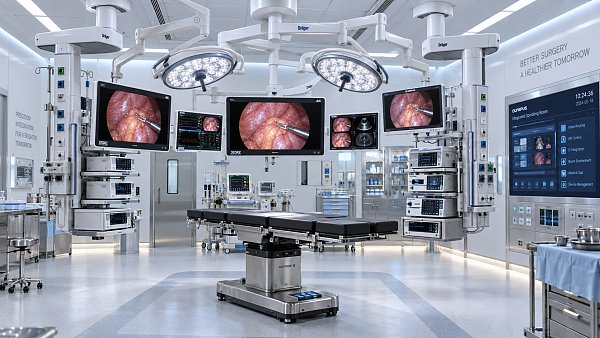
 Sep 29, 2026How to Evaluate Integrated Operating Room Systems for Workflow, Imaging, and IT IntegrationIntegrated operating room systems: evaluate workflow, imaging, IT integration, cybersecurity, and lifecycle value to select a scalable surgical solution.
 Sep 28, 2026How to Evaluate a Genetic Testing Equipment Supplier for PCR Lab ProcurementGenetic testing equipment supplier evaluation guide for PCR labs: compare performance, compliance, workflow, service, supply resilience, and total cost.
 Sep 27, 2026How to Specify Custom Benchtop Diagnostic Instruments for Your Assay WorkflowCustom diagnostic instruments benchtop guide: specify optics, fluidics, automation, software integration, and support to build a reliable assay workflow.
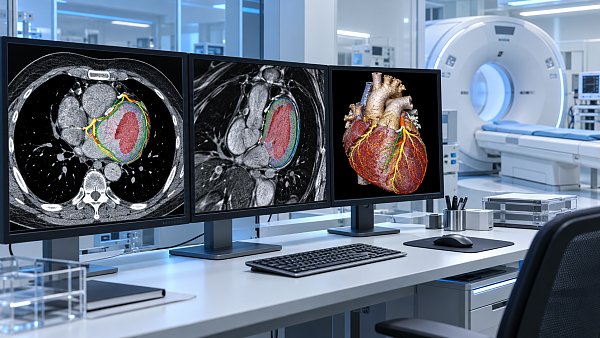
 Sep 26, 2026How Cardiac Imaging Analysis Tools Turn CT and MRI Data into Clinical MetricsMedical imaging analysis cardiology tools transform cardiac CT and MRI into reliable metrics. Explore segmentation, validation, workflow integration, and AI review.
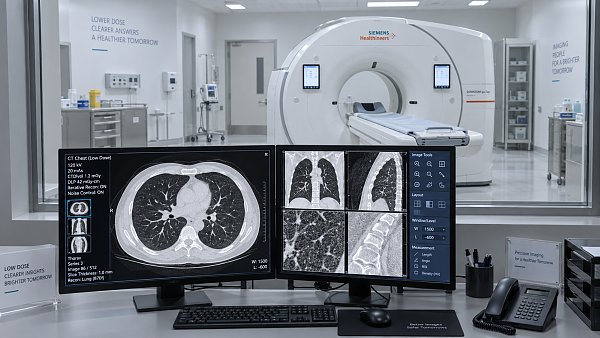
 Sep 25, 2026How Iterative Image Reconstruction Algorithms Balance CT Dose, Noise, and DetailIterative image reconstruction algorithms help CT teams balance dose, noise, and diagnostic detail. Explore practical insights for confident imaging decisions.
 Sep 24, 2026What Drives the Total Cost of Medical Technology Solutions Over Their Lifecycle?Medical technology solutions cost goes far beyond purchase price—explore lifecycle drivers from installation and service to software, training, compliance, and downtime.
 Sep 24, 2026Diagnostic Imaging Technology: How Modalities Support Different Clinical DecisionsDiagnostic imaging technology supports smarter clinical decisions across CT, MRI, ultrasound, and nuclear imaging. Explore modality strengths, workflows, and selection factors.
 Sep 22, 2026How Life Science Labs Can Select Biomedical Research Equipment by Workflow and ThroughputBiomedical research equipment life science labs can select with confidence by aligning workflow, throughput, automation, data integrity, and scalable support.
 Sep 21, 2026How to Plan LIS Connectivity for Chemiluminescence Analyzers Without Data GapsChemiluminescence analyzers LIS connectivity: learn how to prevent data gaps with field mapping, exception workflows, end-to-end validation, and reliable go-live planning.
 Sep 20, 2026Selecting Fluorescence PCR Instruments: Detection Channels, Sensitivity, and Workflow FitPCR diagnostic instruments fluorescence detection guide: compare channels, sensitivity, multiplexing, and workflow fit to select a reliable platform.
 Sep 19, 2026Biomedical Signal Processing: From Sensor Data to Clinical Decision SupportBiomedical signal processing transforms sensor data into reliable clinical decision support. Explore AI, imaging, IVD, ICU monitoring, and compliance-ready MedTech insights.
 Sep 18, 2026How to Evaluate a Diagnostic Imaging Platform for Multi-Modality Workflow IntegrationDiagnostic imaging platform evaluation guide: assess multi-modality workflows, interoperability, AI integration, image integrity, security, and scalability for safer clinical decisions.
 Sep 17, 2026ISO 13485 for Medical Imaging Equipment: What Manufacturers Must DocumentMedical imaging equipment ISO 13485: discover essential documentation for design controls, risk management, traceability, software, and post-market quality.
 Sep 16, 2026Robotic MIS Equipment: What Hospitals Should Evaluate Before AdoptionMinimally invasive surgical equipment robotic adoption guide: evaluate workflow, safety, imaging, costs, cybersecurity, and service readiness.
 Sep 15, 2026How to Evaluate Biomedical Signal Processing Suppliers for Clinical Device ProjectsBiomedical signal processing supplier evaluation guide for clinical device teams—compare signal fidelity, regulatory evidence, cybersecurity, integration, and lifecycle support.
 Sep 14, 2026How Integrated Clinical Diagnostics Solutions Reduce Turnaround Time Across Lab WorkflowsIntegrated clinical diagnostics solutions reduce lab turnaround time by connecting workflows, automation, and data. Discover practical strategies for faster, traceable results.
 Sep 13, 2026ECMO System Market Outlook: Demand Drivers, Investment Risks, and Growth OpportunitiesECMO system market outlook explores demand drivers, investment risks, regulatory factors, and growth opportunities shaping critical-care innovation and adoption.
 Sep 12, 2026Where to Find Reliable Medical Device Information for Research and Due DiligenceMedical device information resource guide for due diligence: verify regulatory, clinical, safety, and technical evidence to make confident decisions.
 Sep 11, 2026Medical Equipment Intelligence: A Resource for Comparing Clinical TechnologiesMedical equipment intelligence resource for comparing clinical technologies by clinical fit, compliance, workflow, and total cost—make confident, evidence-led decisions.









Related News
- 00
0000-00
EU MDR Transition Ends, Endoscope Re-Certification Becomes Urgent - 00
0000-00
EU MDR Annex XVI Now Requires Separate CE for Accessories - 00
0000-00
EU MDR Transition Ends for Endoscopy Device Imports - 00
0000-00
EU MDR Rule Triggers CER Updates for Endoscopy Devices - 00
0000-00
EU MDR Update Sets 12-Month CER Rule for Ultrasound and Endoscopy
Weekly Insights
Stay ahead with our curated technology reports delivered every Monday.