
Brazil ANVISA Enforces Local Leak Testing for Anesthesia Workstations
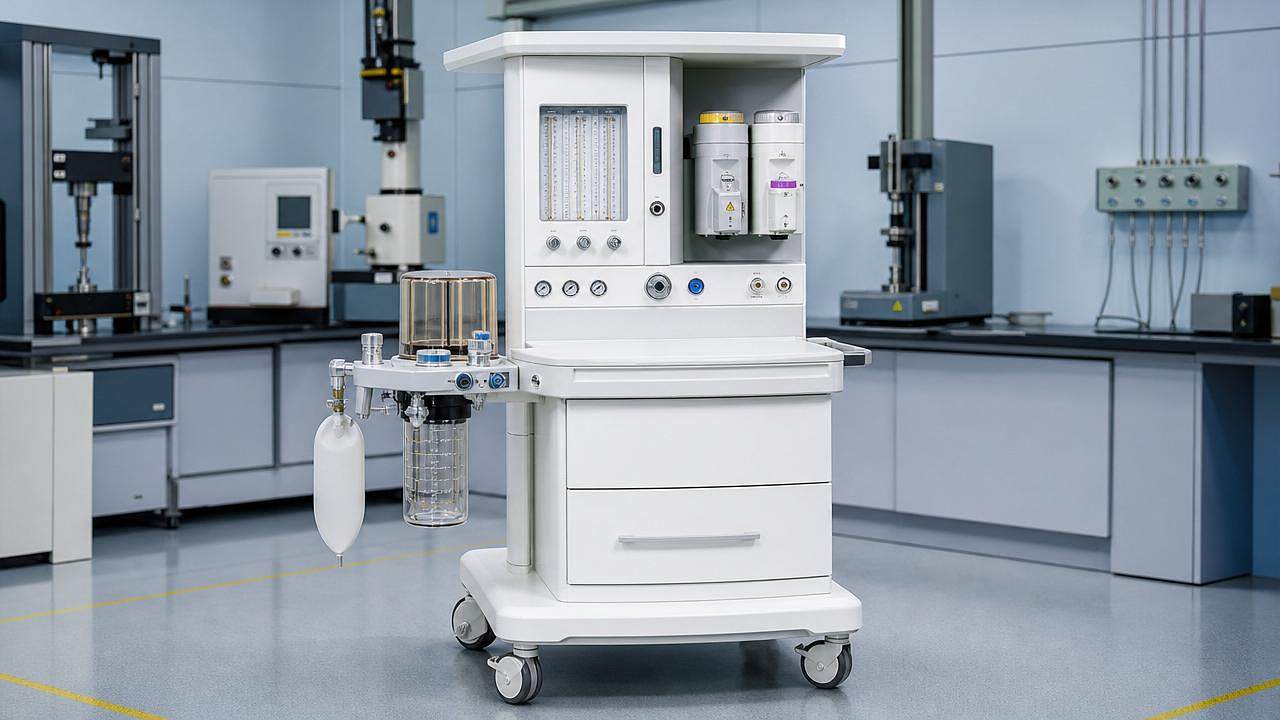




Starting May 28, 2026, Brazil’s National Health Surveillance Agency (ANVISA) will require all imported anesthesia workstations to undergo full-unit gas leakage testing in accredited local laboratories—per NBR IEC 60601-2-13:2025—and obtain test reports issued exclusively by ANVISA-recognized labs. This regulatory shift directly impacts medical device exporters, importers, and distributors serving the Brazilian healthcare market.
Event Overview
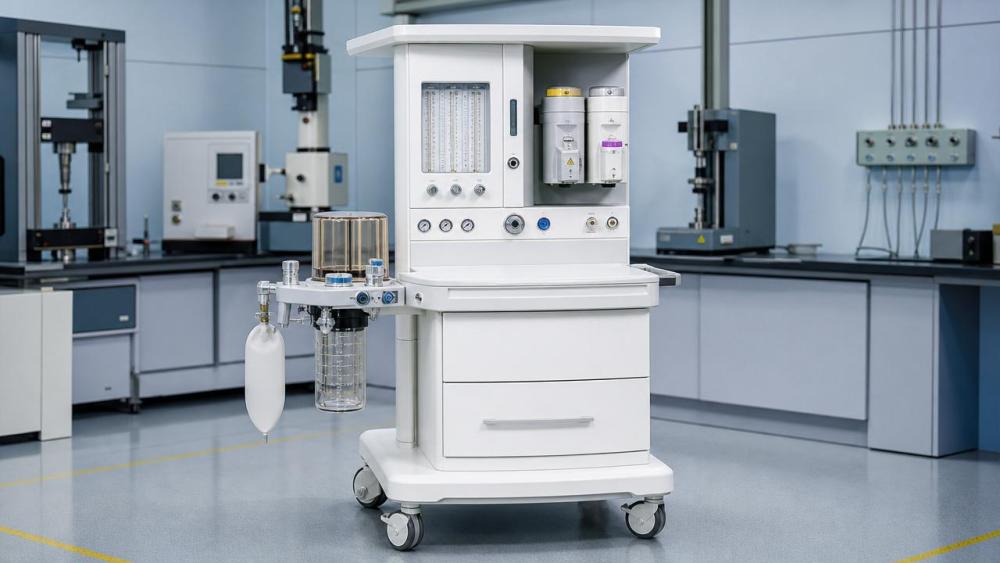
On May 28, 2026, ANVISA’s Portaria RDC No. 48/2026 entered into force. The regulation mandates that all anesthesia workstations imported into Brazil must pass whole-device gas leakage rate testing conducted in Brazil-based laboratories approved by ANVISA. Testing must comply with the national standard NBR IEC 60601-2-13:2025. Third-party CB test reports—including those previously accepted for registration—are no longer valid for conformity assessment under this requirement.
Industries Affected
Medical Device Exporters & Manufacturers
Manufacturers outside Brazil supplying anesthesia workstations to the Brazilian market are now required to arrange and fund physical testing of complete units—not just components—in ANVISA-accredited labs. This introduces new lead time, cost, and logistical dependencies not present under prior CB-report-based evaluation pathways.
Importers & Distributors
Local importers and authorized representatives must verify that each incoming shipment corresponds to a valid, lab-issued leakage test report tied to the exact configuration and serial number of the unit. Previously accepted documentation workflows—such as submission of manufacturer-declared test data or foreign lab reports—no longer satisfy regulatory clearance requirements.
Regulatory Affairs & Compliance Service Providers
Firms offering ANVISA registration support must update internal protocols to include verification of locally performed leakage testing, coordination with ANVISA-recognized labs, and alignment of test reports with product labeling and technical documentation. Pre-submission validation steps now require active lab engagement rather than document review alone.
Key Considerations and Recommended Actions
Monitor official updates on ANVISA-recognized laboratory status
ANVISA maintains a public list of accredited laboratories; however, recognition status may change. Companies should track updates via the ANVISA website and confirm lab eligibility before initiating testing—especially for labs newly added or recently reaccredited.
Validate unit-level test scope and reporting alignment
Testing must cover the complete anesthesia workstation as shipped—including integrated vaporizers, flowmeters, and gas delivery modules. Companies should ensure lab test plans explicitly reference the exact model variant, software version, and accessories included in the commercial unit, as deviations may invalidate the report for registration purposes.
Adjust supply chain timelines and documentation workflows
Local testing adds minimum 4–6 weeks to registration timelines, depending on lab capacity. Exporters and importers should revise internal SOPs to require test report submission prior to customs release and align procurement cycles with lab scheduling windows—not just regulatory submission deadlines.
Distinguish between policy enforcement and transitional allowances
Portaria RDC No. 48/2026 does not provide a grace period for existing registered products. However, ANVISA has not yet published guidance on whether already-cleared devices require retesting upon renewal or modification. Observably, companies should treat current registrations as subject to reassessment if updated technical files are submitted post-May 2026.
Editorial Perspective / Industry Observation
This requirement signals a structural tightening of ANVISA’s post-market and pre-market oversight—shifting emphasis from reliance on international conformity frameworks toward direct, locally verified performance evidence. Analysis shows it is less a temporary adjustment and more a durable recalibration of evidentiary expectations for high-risk life-support equipment. From an industry perspective, it reflects growing regulatory convergence with EU MDR-style traceability and test accountability—but implemented unilaterally and without mutual recognition mechanisms. Current monitoring should focus less on reversal likelihood and more on how ANVISA interprets ‘equivalent testing’ for future standards revisions or multi-model submissions.
While the rule applies narrowly to anesthesia workstations today, its methodological precedent—mandating local physical testing over internationally harmonized reports—may inform future requirements for other critical-care devices such as ventilators or infusion pumps.
Conclusion
This regulation marks a definitive step toward localized technical validation for anesthesia equipment in Brazil—not merely an administrative update. It establishes a new baseline for regulatory compliance, one where physical testing location, lab accreditation status, and report specificity carry direct commercial and operational weight. Currently, it is best understood as an enforceable requirement with immediate procedural consequences, rather than a consultative or transitional measure.
Information Sources
- ANVISA Portaria RDC No. 48/2026 (published April 2026, effective May 28, 2026)
- ANVISA Official Gazette (Diário Oficial da União), April 2026 edition
- NBR IEC 60601-2-13:2025 (ABNT – Brazilian Association of Technical Standards)
Note: Ongoing observation is recommended regarding potential updates to ANVISA’s list of recognized laboratories and any forthcoming technical guidance on test report content requirements.
Recommended News
 Aug 28, 2026Planning Operating Room Technology for a High-Throughput Surgery CenterOperating room technology for a surgery center: plan workflows, integration, uptime, and safety to boost throughput and create future-ready surgical rooms.
 Aug 27, 2026Building Medical Compliance Analytics for Middle East Market AccessMedical compliance analytics Middle East: build device-specific evidence maps, align local requirements, and accelerate market access with confidence.
 Aug 26, 2026How Surgical Equipment Digitalization Is Reshaping Hospital Investment in Latin AmericaSurgical equipment digitalization Latin America is reshaping hospital investment, from smart ORs to ROI-driven upgrades. Explore what buyers now value most.
 Aug 25, 2026How to Evaluate a Medical Compliance Intelligence Provider for Global Market AccessMedical compliance intelligence provider selection can make or break global market access. Learn how to assess technical depth, update quality, and commercial fit before choosing.
 Aug 24, 2026How Advanced Clinical Imaging Is Improving Cardiology Diagnosis and Treatment PlanningAdvanced clinical imaging cardiology is transforming diagnosis and treatment planning with clearer anatomy, tissue insight, and procedural guidance. Discover how it reduces uncertainty and supports smarter cardiac decisions.
 Aug 23, 2026How to Source Medical Devices in North America: Supplier Vetting and Market Access RisksMedical device sourcing North America made practical: learn how to vet suppliers, reduce compliance risks, and protect market access with smarter procurement decisions.
 Aug 22, 2026What Are Integrated Critical Care Systems and How Do Hospitals Evaluate Them?Critical care systems integrated: learn how hospitals assess ICU platforms for interoperability, alarm safety, workflow efficiency, and long-term value before buying.
 Aug 21, 2026How to Evaluate High-Resolution Diagnostic Imaging Systems for Detail-Critical ExamsDiagnostic imaging systems high resolution: learn how to compare detail-critical performance, workflow fit, dose efficiency, and ROI to choose the right system with confidence.
 Aug 20, 2026How to Evaluate Medical Equipment Performance Before Purchase?Medical equipment evaluation performance starts before purchase. Learn how to assess safety, workflow fit, compliance, uptime, and total cost to choose devices that truly perform.
 Aug 19, 2026How to Evaluate Small-Footprint Laboratory Diagnostic Equipment for Space-Limited LabsLaboratory diagnostic equipment small footprint choices require more than size checks. Learn how to assess workflow, throughput, compliance, and service access for smarter lab buying.
 Aug 18, 2026Biochemical Molecular Diagnostics Explained: Methods, Clinical Uses, and Lab Selection CriteriaBiochemical molecular diagnostics explained: compare key methods, clinical applications, and lab selection criteria to choose reliable, compliant testing with confidence.
 Aug 17, 2026How to Choose Diagnostic Equipment Solutions for a Clinic: Key Factors That Affect Workflow and CostDiagnostic equipment solutions clinic buyers can use to improve workflow, control total cost, and avoid hidden service risks. Learn the key factors before you invest.
 Aug 16, 2026How to Choose a Blood Cell Analyzer for a Small Lab: Throughput, CBC Menu, and CostBlood cell analyzers small lab buyers can compare throughput, CBC menu, and total operating cost with confidence. Learn how to avoid waste, reduce downtime, and choose the right fit.
 Aug 16, 2026FDA Approval of AMDS Hybrid Prosthesis Removes IRB Step for Faster U.S. AccessFDA approval of AMDS Hybrid Prosthesis removes the IRB step, speeding U.S. access for acute aortic dissection care and reshaping hospital procurement and supporting equipment demand.
 Aug 15, 2026What Hospital Technology Infrastructure Is Needed for Reliable Interoperability?Hospital technology infrastructure interoperability depends on secure networks, integration engines, identity services, and governance. Discover what hospitals need for reliable, scalable connectivity.
 Aug 14, 2026What to Look for in an Advanced Diagnostic Systems Distributor Before You BuyAdvanced diagnostic systems distributor: learn what to check before buying, from compliance and technical depth to delivery reliability and after-sales support. Make a smarter procurement decision today.
 Aug 14, 2026China Temporarily Bans Helium ExportsChina Temporarily Bans Helium Exports: learn how the July 10, 2026 rule may disrupt MRI, ECMO, and anesthesia device supply chains, compliance, and delivery planning for global buyers.
 Aug 13, 2026How CT Reconstruction Technology Impacts Image Quality, Dose, and WorkflowMedical imaging reconstruction technology CT shapes image quality, dose, and workflow. Learn how smarter CT reconstruction improves diagnostics and efficiency.
 Aug 13, 2026FDA clears AMDS PMA, easing U.S. hospital accessFDA clears AMDS PMA, easing U.S. hospital access for Artivion’s aortic arch device and speeding procurement, compliance, and deployment.
 Aug 12, 2026Hospital Diagnostic Equipment Comparison: What Buyers Should Evaluate Beyond PriceDiagnostic equipment comparison hospital buyers can trust: learn how to evaluate clinical performance, uptime, compliance, integration, and long-term ROI beyond price.
 Aug 12, 2026FDA Draft Guidance Reshapes AI Device ComplianceFDA Draft Guidance reshapes AI device compliance with new postmarket monitoring expectations for AI/ML-enabled SaMD. Learn what it means for U.S. market access, distributors, and exporters.
 Aug 11, 2026How to Evaluate a Diagnostic Medical Systems Manufacturer for Quality and Market AccessDiagnostic medical systems manufacturer selection starts with more than specs. Learn how to assess quality systems, regulatory readiness, service uptime, and market access before you buy.
 Aug 11, 2026EU MDR Deadline Extended for ECMO and ICU DevicesEU MDR deadline extended for ECMO and ICU devices to 2027. Learn what Regulation (EU) 2026/1347 means for compliance, exports, procurement, and roadmap filing.
 Aug 10, 2026How to Evaluate Laboratory Automation Systems in Europe for Multi-Site Lab OperationsLaboratory automation systems Europe buyers can use this guide to compare interoperability, compliance, service coverage, and ROI for multi-site lab operations with confidence.










Related News
- 00
0000-00
Planning Operating Room Technology for a High-Throughput Surgery Center - 00
0000-00
Building Medical Compliance Analytics for Middle East Market Access - 00
0000-00
How Surgical Equipment Digitalization Is Reshaping Hospital Investment in Latin America - 00
0000-00
How to Evaluate a Medical Compliance Intelligence Provider for Global Market Access - 00
0000-00
How Advanced Clinical Imaging Is Improving Cardiology Diagnosis and Treatment Planning
Weekly Insights
Stay ahead with our curated technology reports delivered every Monday.