
US ITC Launches 337 Investigation Targeting Medical Imaging Devices
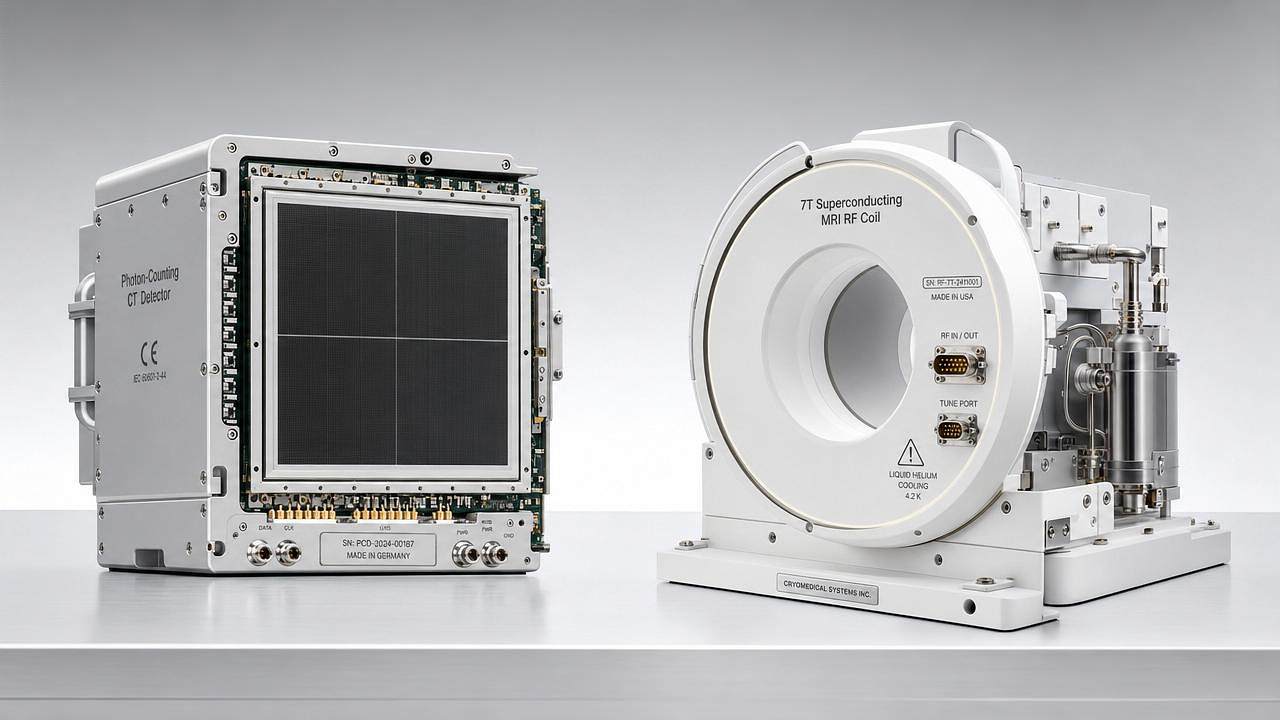




On January 28, 2026, the U.S. International Trade Commission (ITC) initiated a Section 337 investigation (No. 337-TA-1483) concerning certain medical imaging devices, citing alleged infringement of Canadian company MolecuLight’s U.S. Patent No. US10438356. The probe—now entering its critical discovery phase as confirmed in the ITC’s May 24 announcement—directly implicates core components including photon-counting CT detectors and superconducting MRI radiofrequency coils, raising potential export restrictions affecting manufacturers and suppliers based in China.
Confirmed Facts of the Investigation
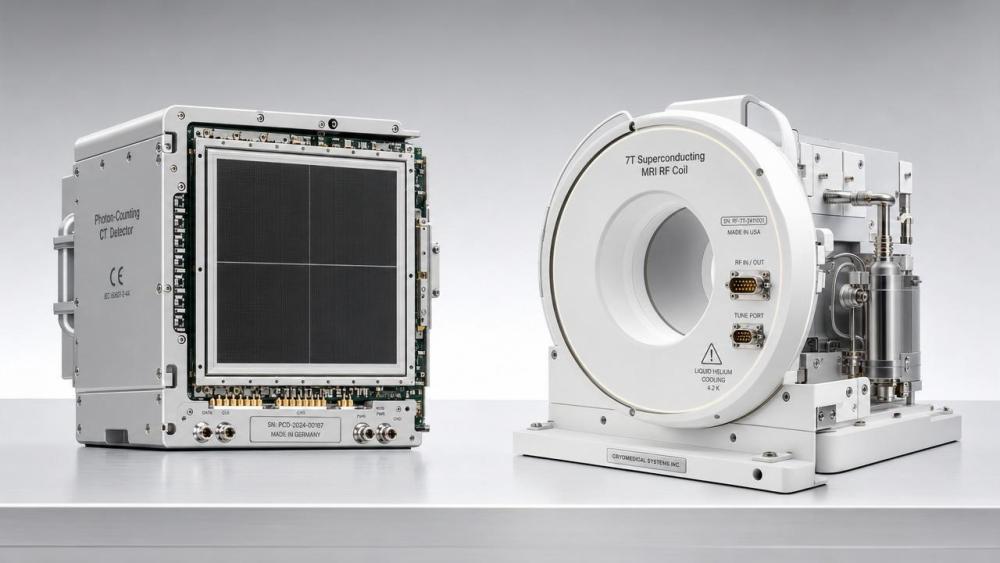
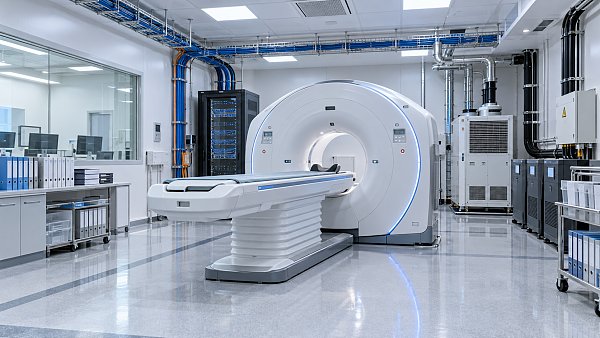
The U.S. International Trade Commission formally instituted Section 337 investigation 337-TA-1483 on January 28, 2026, against ‘Certain Medical Imaging Devices’. The complaint alleges violation of U.S. Patent No. US10438356 owned by MolecuLight Inc., a Canadian entity. While the investigation was launched in late January, the ITC’s public notice dated May 24, 2026 confirmed that the proceeding has advanced to the evidentiary discovery stage. At issue are technical components integral to advanced diagnostic systems—specifically photon-counting CT detectors and superconducting MRI radiofrequency coils. A finding of violation could result in exclusion orders barring importation of infringing products into the United States.
Industry-Wide Impact Across Supply Chain Roles
Direct Exporters and Trading Firms
Companies engaged in exporting medical imaging equipment or subsystems to the U.S. market face heightened customs scrutiny and potential shipment delays. Exclusion orders may apply not only to finished devices but also to discrete components—meaning even non-infringing end-products containing contested detectors or coils could be detained at U.S. ports.
Raw Material and Component Procurement Entities
Firms sourcing specialized semiconductors, cryogenic materials, or RF coil substrates must verify whether upstream suppliers hold freedom-to-operate (FTO) opinions covering US10438356. Absent documented IP clearance, procurement contracts may expose buyers to secondary liability under U.S. contributory infringement doctrines.
Contract Manufacturers and OEMs
Manufacturers assembling photon-counting CT systems or MRI platforms—including those operating under private-label or white-label arrangements—must review design documentation and component bills of material (BOMs) for alignment with asserted patent claims. Design modifications or alternative component qualification may be required before further U.S.-bound shipments.
Logistics and Regulatory Compliance Service Providers
Third-party compliance consultants, customs brokers, and certification bodies are seeing increased demand for pre-shipment IP risk assessments, technical claim mapping, and ITC procedural guidance. Their role is shifting from post-facto documentation support toward proactive supply chain due diligence.
Strategic Priorities and Responsive Actions for Enterprises
Immediate Patent Landscape Review
Companies should commission independent claim charts comparing their photon-counting detector architectures or MRI RF coil configurations against the specifications and claims of US10438356—notably focusing on spectral discrimination methods, pixel-level energy thresholding, and multi-layered coil winding topologies described therein.
Supply Chain Documentation Audit
Traceability records—including supplier declarations, technical datasheets, and design verification reports—must be compiled for all CT detector modules and MRI RF coils shipped to the U.S. since Q4 2025. These documents may become evidence in discovery or serve as basis for a bona fide defense of non-infringement.
Export Strategy Reassessment
Businesses should evaluate contingency pathways—including rerouting via third-country assembly, filing for temporary import licenses (if applicable), or accelerating filings for U.S. FDA 510(k) or De Novo submissions with revised technical narratives that emphasize structural or functional distinctions from the patented technology.
Supplier Qualification Protocol Upgrade
Procurement teams must integrate IP assurance clauses into new supplier agreements—requiring warranties of non-infringement, indemnification commitments, and rights to audit underlying design IP. Existing high-risk suppliers should undergo immediate FTO reassessment.
Industry Observation: Rising IP Barriers in Advanced Diagnostic Hardware
Analysis shows that this investigation reflects a broader trend: increasingly targeted use of Section 337 proceedings against discrete, high-value components—not just full systems—in capital-intensive medical technology sectors. From an industry perspective, what deserves closer attention is the convergence of three developments: (1) growing reliance on patented semiconductor and RF innovations embedded in legacy-style medical hardware; (2) shortened product development cycles compressing time for comprehensive freedom-to-operate analysis; and (3) expanding extraterritorial enforcement reach through supply chain liability doctrines. It is more appropriate to understand this case not as an isolated dispute, but as an indicator of tightening IP governance at the component level across global medtech trade.
Toward Proactive Compliance in Global Medtech Markets
This investigation underscores that regulatory readiness now extends beyond safety certifications and clinical validation—it encompasses granular intellectual property due diligence across layered supply chains. While no final determination has been issued, the timing and scope signal that manufacturers must treat patent landscape awareness as a foundational element of market access strategy—not a legal afterthought. A measured, evidence-based response remains essential; overreaction risks operational disruption, while underestimation may lead to irreversible market exclusion.
Source Attribution and Monitoring Guidance
This article was generated exclusively from the provided title, event date (January 28, 2026), and factual summary. Common authoritative sources for tracking such proceedings include official ITC dockets, the U.S. Federal Register, and publicly accessible court filings via PACER. Specific official source links were not provided in the input and should be verified continuously. Stakeholders are advised to monitor upcoming deadlines in the 337-TA-1483 docket—including initial determination timelines, hearing dates, and any supplemental complaints—as well as evolving guidance from U.S. Customs and Border Protection regarding enforcement of potential exclusion orders.
Recommended News
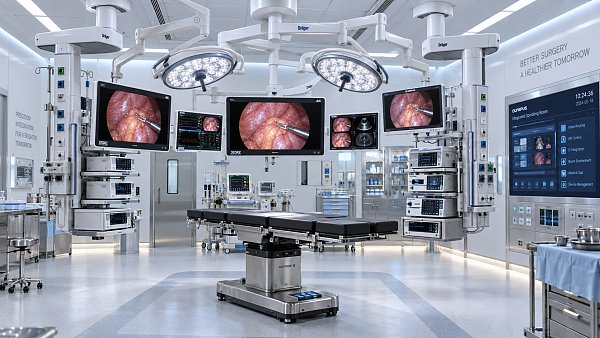
 Oct 08, 2026Operating Room Systems: Selection Criteria for Integrated Surgical WorkflowsOperating room systems selection guide for integrated surgical workflows—improve safety, interoperability, lifecycle value, and scalable clinical performance.
 Oct 07, 2026Hospital Diagnostic Equipment Procurement: A Framework for Comparing Cost, Capacity, and RiskHospital diagnostic equipment procurement made clearer: compare lifecycle cost, usable capacity, clinical fit, and operational risk to make confident, sustainable buying decisions.
 Oct 06, 2026How to Evaluate an Operating Room Technology Distributor for Hospital ProjectsOperating room technology distributor evaluation guide for hospitals: assess integration, compliance, lifecycle costs, service capacity, and delivery confidence before award.
 Oct 05, 2026Global Medical Procurement Planning: How Hospitals Can Reduce Supply Risk and CostGlobal medical procurement planning helps hospitals reduce supply risk, control lifecycle costs, and protect care continuity through smarter sourcing, service, and compliance strategies.
 Oct 03, 2026How Detection Algorithms Improve Sensitivity and Workflow in Medical ImagingMedical imaging algorithms detection improves sensitivity, manages false positives, and streamlines clinical workflows. Explore validation, integration, and governance essentials.
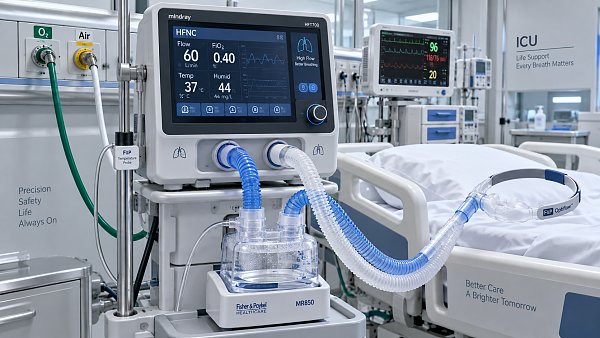
 Oct 02, 2026High-Flow ICU Ventilators: Key Selection Criteria for Acute Respiratory CareICU ventilators high flow: discover key selection criteria for accurate gas delivery, NIV performance, humidification, alarms, reliability, and safer acute respiratory care.
 Oct 01, 2026How to Evaluate Medical Equipment Intelligence Suppliers for Hospital ProcurementMedical equipment intelligence suppliers: learn how hospitals can assess evidence quality, total cost, compliance, interoperability, and cybersecurity for smarter procurement decisions.
 Sep 30, 2026ISO 13485 Requirements for Blood Testing Instruments: A Buyer’s ChecklistBlood testing instruments ISO 13485 buyer’s checklist: verify certification scope, traceability, installation, consumables, and supplier support before you buy.
 Sep 29, 2026How to Evaluate Integrated Operating Room Systems for Workflow, Imaging, and IT IntegrationIntegrated operating room systems: evaluate workflow, imaging, IT integration, cybersecurity, and lifecycle value to select a scalable surgical solution.
 Sep 28, 2026How to Evaluate a Genetic Testing Equipment Supplier for PCR Lab ProcurementGenetic testing equipment supplier evaluation guide for PCR labs: compare performance, compliance, workflow, service, supply resilience, and total cost.
 Sep 27, 2026How to Specify Custom Benchtop Diagnostic Instruments for Your Assay WorkflowCustom diagnostic instruments benchtop guide: specify optics, fluidics, automation, software integration, and support to build a reliable assay workflow.
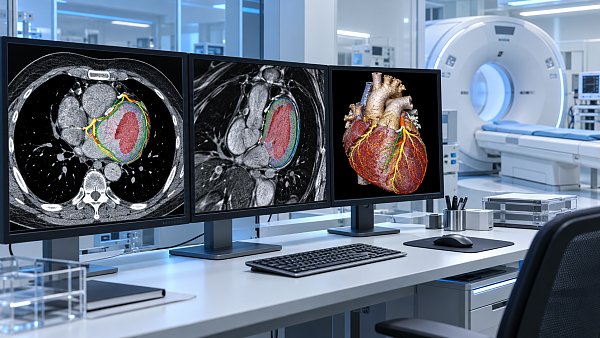
 Sep 26, 2026How Cardiac Imaging Analysis Tools Turn CT and MRI Data into Clinical MetricsMedical imaging analysis cardiology tools transform cardiac CT and MRI into reliable metrics. Explore segmentation, validation, workflow integration, and AI review.
 Sep 25, 2026How Iterative Image Reconstruction Algorithms Balance CT Dose, Noise, and DetailIterative image reconstruction algorithms help CT teams balance dose, noise, and diagnostic detail. Explore practical insights for confident imaging decisions.
 Sep 24, 2026What Drives the Total Cost of Medical Technology Solutions Over Their Lifecycle?Medical technology solutions cost goes far beyond purchase price—explore lifecycle drivers from installation and service to software, training, compliance, and downtime.
 Sep 24, 2026Diagnostic Imaging Technology: How Modalities Support Different Clinical DecisionsDiagnostic imaging technology supports smarter clinical decisions across CT, MRI, ultrasound, and nuclear imaging. Explore modality strengths, workflows, and selection factors.
 Sep 22, 2026How Life Science Labs Can Select Biomedical Research Equipment by Workflow and ThroughputBiomedical research equipment life science labs can select with confidence by aligning workflow, throughput, automation, data integrity, and scalable support.
 Sep 21, 2026How to Plan LIS Connectivity for Chemiluminescence Analyzers Without Data GapsChemiluminescence analyzers LIS connectivity: learn how to prevent data gaps with field mapping, exception workflows, end-to-end validation, and reliable go-live planning.
 Sep 20, 2026Selecting Fluorescence PCR Instruments: Detection Channels, Sensitivity, and Workflow FitPCR diagnostic instruments fluorescence detection guide: compare channels, sensitivity, multiplexing, and workflow fit to select a reliable platform.
 Sep 19, 2026Biomedical Signal Processing: From Sensor Data to Clinical Decision SupportBiomedical signal processing transforms sensor data into reliable clinical decision support. Explore AI, imaging, IVD, ICU monitoring, and compliance-ready MedTech insights.
 Sep 18, 2026How to Evaluate a Diagnostic Imaging Platform for Multi-Modality Workflow IntegrationDiagnostic imaging platform evaluation guide: assess multi-modality workflows, interoperability, AI integration, image integrity, security, and scalability for safer clinical decisions.
 Sep 17, 2026ISO 13485 for Medical Imaging Equipment: What Manufacturers Must DocumentMedical imaging equipment ISO 13485: discover essential documentation for design controls, risk management, traceability, software, and post-market quality.
 Sep 16, 2026Robotic MIS Equipment: What Hospitals Should Evaluate Before AdoptionMinimally invasive surgical equipment robotic adoption guide: evaluate workflow, safety, imaging, costs, cybersecurity, and service readiness.
 Sep 15, 2026How to Evaluate Biomedical Signal Processing Suppliers for Clinical Device ProjectsBiomedical signal processing supplier evaluation guide for clinical device teams—compare signal fidelity, regulatory evidence, cybersecurity, integration, and lifecycle support.
 Sep 14, 2026How Integrated Clinical Diagnostics Solutions Reduce Turnaround Time Across Lab WorkflowsIntegrated clinical diagnostics solutions reduce lab turnaround time by connecting workflows, automation, and data. Discover practical strategies for faster, traceable results.














Related News
- 00
0000-00
Operating Room Systems: Selection Criteria for Integrated Surgical Workflows - 00
0000-00
Hospital Diagnostic Equipment Procurement: A Framework for Comparing Cost, Capacity, and Risk - 00
0000-00
How to Evaluate an Operating Room Technology Distributor for Hospital Projects - 00
0000-00
Global Medical Procurement Planning: How Hospitals Can Reduce Supply Risk and Cost - 00
0000-00
How Detection Algorithms Improve Sensitivity and Workflow in Medical Imaging
Weekly Insights
Stay ahead with our curated technology reports delivered every Monday.