
EU MDR Annex XVI Triggers 37% Suspension Rate
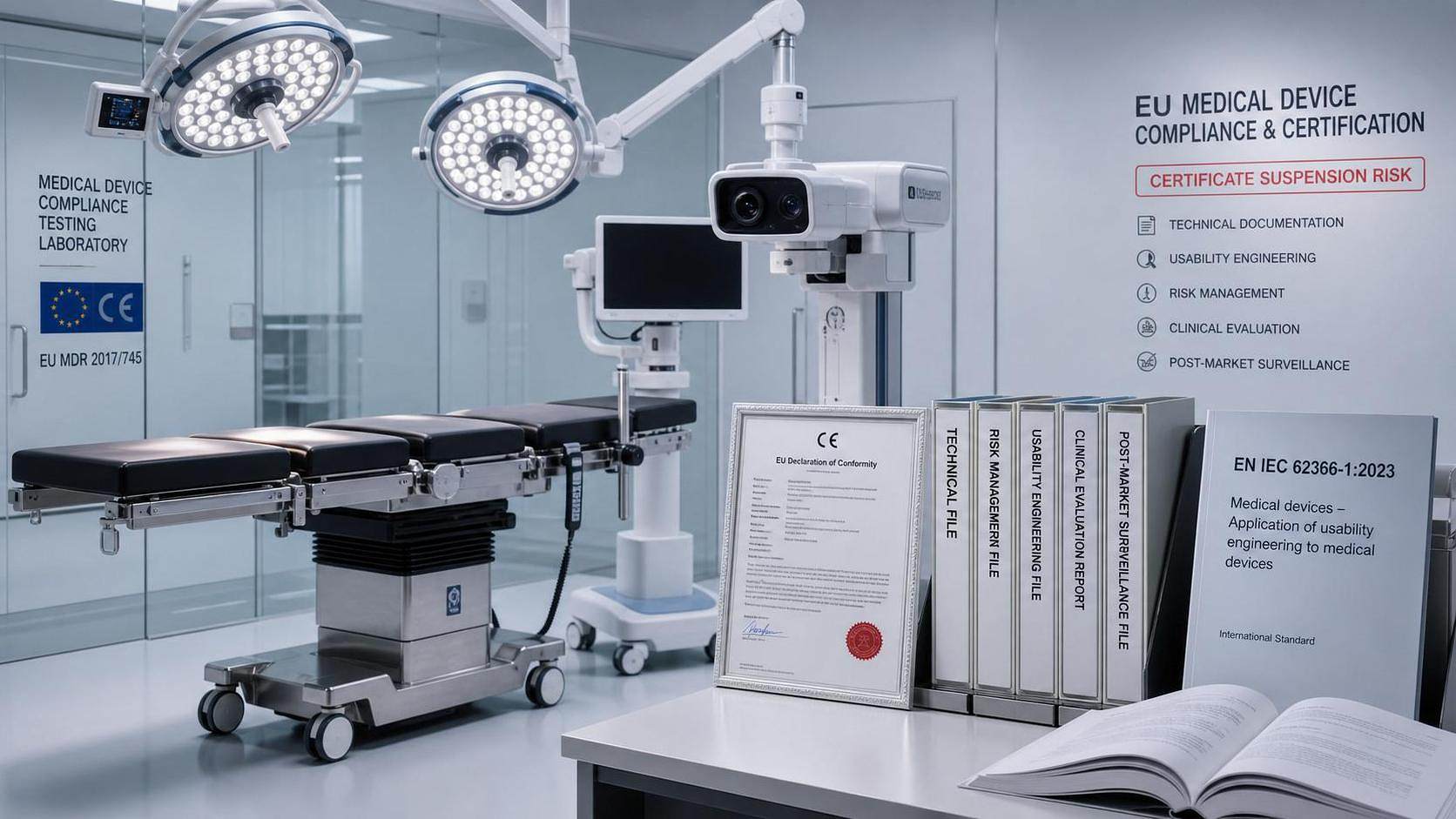




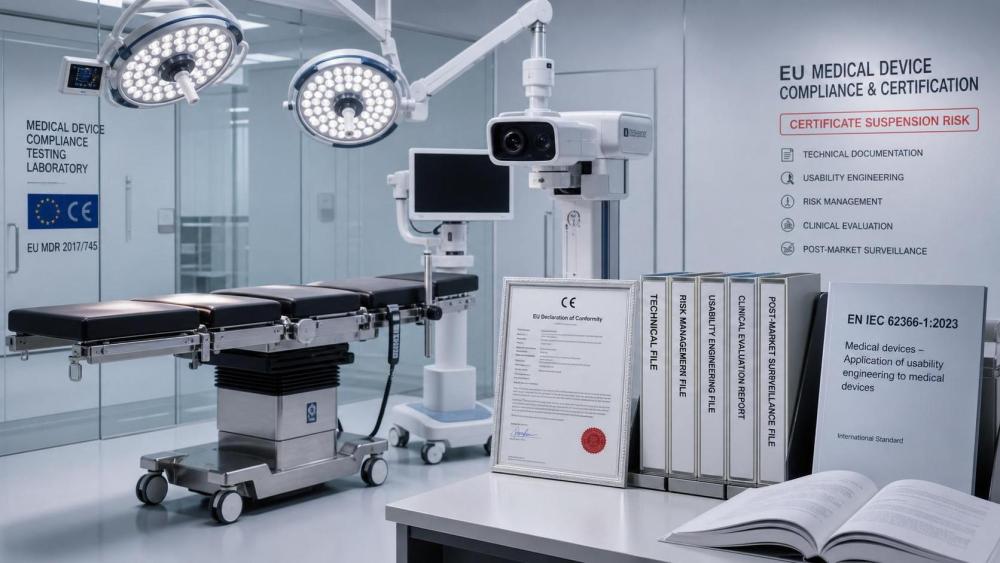
On June 20, 2026, the expanded EU MDR Annex XVI requirements took effect, and the first week of enforcement is already drawing attention across the medical device trade and compliance chain. According to an MDCG notice issued on June 27, 37% of the first 127 imported Digital Operating Tables and Surgical Lights & Cameras sampled were suspended from CE certification because they lacked usability engineering validation reports aligned with EN IEC 62366-1:2023. The issue particularly points to Chinese exporters that had not updated HMI usability test documentation in step with the new requirement, making this a practical compliance signal for manufacturers, exporters, certification teams, and buyers serving the EU market.
What the First-Week Notice Confirmed
The confirmed facts are limited but clear. MDCG reported on June 27 that, following the June 20 effectiveness of the expanded Annex XVI regime, 127 imported units in the categories of Digital Operating Tables and Surgical Lights & Cameras were sampled for inspection.
Of those sampled products, 37% had their CE certificates suspended. The stated reason was the absence of usability engineering validation reports meeting EN IEC 62366-1:2023.
The notice also indicated that the main group involved was Chinese export enterprises whose HMI usability testing documentation had not been updated accordingly.
Where the Pressure May Appear First
Export-facing manufacturers are exposed at the documentation stage
From an industry perspective, manufacturers shipping these product categories into the EU may be affected first at the technical file and certification interface. The immediate pressure is not described as a product design failure in the notice itself, but as a documentation and validation gap tied to usability engineering and HMI testing records.
For these companies, the business impact may show up in certificate continuity, shipment planning, and customer-facing explanations when product release depends on complete and current compliance files.
Trading companies and market-entry teams may face delivery friction
Direct trade enterprises and EU market-entry teams may be affected because certificate suspension can interrupt normal transaction timing. What deserves closer attention is that the trigger in this case was linked to missing EN IEC 62366-1:2023-aligned validation evidence, which means commercial progress may depend on the readiness of compliance paperwork as much as on product availability.
The practical concern for this group is whether existing orders, customs preparation, and handover schedules rely on documentation that has not yet been refreshed.
Distributors and procurement-side participants may need closer file checks
Distributors, importers, and procurement-side participants may not control the original technical documentation, but they can still be affected when a certificate is suspended after sampling. In business terms, the main risk sits in supplier qualification review, order confirmation, and acceptance of compliance documents before delivery.
Observably, these participants should pay closer attention to whether supplier-provided CE-related files reflect the current usability engineering standard cited in the notice.
What Companies Should Watch Now
Check whether HMI usability files match the current cited standard
The immediate practical issue in this notice is not broad policy interpretation but whether the supporting usability engineering validation report actually aligns with EN IEC 62366-1:2023. Companies involved in the affected product categories should focus on whether existing HMI usability test documents were updated in time and whether the current file set is internally consistent.
Separate formal rule effectiveness from internal readiness
Analysis shows that the June 20 effective date and the June 27 notification together highlight a familiar gap: a rule can be in force before all exporters have synchronized documentation, testing records, and internal review processes. For compliance, regulatory, and export teams, the key point is to distinguish between knowing the rule has changed and proving that every required file has been revised accordingly.
Review supplier and certification handoff points
Where multiple parties are involved, attention should go to the handoff between product teams, test teams, documentation teams, and external certification or market-access counterparts. The notice specifically points to missing validation reporting, so firms should focus on how usability evidence is transferred, reviewed, and locked before submission or shipment.
Prepare customer communication around timing and status
For sales, account, and delivery teams, a practical concern is customer communication. If documentation updates are incomplete, counterparties may need clear status explanations around certificate condition, expected review timing, and shipment impact. This is especially relevant where EU-facing orders depend on uninterrupted CE status.
Why This Looks Like More Than a One-Off Filing Issue
Analysis shows that this development is more appropriate to understand as an early enforcement signal rather than a complete picture of long-term market outcomes. The notice does not establish broader market impact, and it does not confirm how widely the issue extends beyond the sampled products. Still, the first-week suspension rate is enough to show that usability engineering documentation is being treated as an actionable compliance point under the new enforcement environment.
From an industry perspective, the sharper message is that HMI-related validation records can become a direct gate for CE continuity in affected categories. That makes this worth continued attention not because a full trend is already proven, but because the first enforcement response was concrete and immediate.
How This News Is Best Understood for Now
At this stage, the most balanced reading is that the June 27 MDCG notice marks a short-term compliance shock with possible longer-term significance if similar findings continue. The confirmed facts are limited to sampled products, certificate suspensions, and missing EN IEC 62366-1:2023 usability engineering validation reports, with Chinese exporters particularly involved where HMI documentation was not updated.
What deserves closer attention is not only the suspension rate itself, but the operational lesson behind it: under the expanded Annex XVI framework, documentation synchronization can directly affect access to the EU market. For now, this is best read as a concrete enforcement signal that still requires ongoing observation rather than a final judgment on the wider market.
Basis of This Article and What Still Needs Verification
This article is based on the user-provided news title, event date, and event summary concerning the first-week enforcement notice after the June 20, 2026 effectiveness of the expanded EU MDR Annex XVI requirements.
For this type of industry update, commonly relevant source categories may include official notices, company statements, industry association updates, authoritative media reporting, and standards-related documents. A specific official source link was not provided in the input, so continued verification is still necessary.
Areas that merit further tracking include whether follow-up official statements provide additional clarification, whether similar documentation issues emerge in later inspections, and how companies in the affected product categories adjust HMI usability validation and submission practices.
Recommended News
 Oct 02, 2026High-Flow ICU Ventilators: Key Selection Criteria for Acute Respiratory CareICU ventilators high flow: discover key selection criteria for accurate gas delivery, NIV performance, humidification, alarms, reliability, and safer acute respiratory care.
 Oct 01, 2026How to Evaluate Medical Equipment Intelligence Suppliers for Hospital ProcurementMedical equipment intelligence suppliers: learn how hospitals can assess evidence quality, total cost, compliance, interoperability, and cybersecurity for smarter procurement decisions.
 Sep 30, 2026ISO 13485 Requirements for Blood Testing Instruments: A Buyer’s ChecklistBlood testing instruments ISO 13485 buyer’s checklist: verify certification scope, traceability, installation, consumables, and supplier support before you buy.
 Sep 29, 2026How to Evaluate Integrated Operating Room Systems for Workflow, Imaging, and IT IntegrationIntegrated operating room systems: evaluate workflow, imaging, IT integration, cybersecurity, and lifecycle value to select a scalable surgical solution.
 Sep 28, 2026How to Evaluate a Genetic Testing Equipment Supplier for PCR Lab ProcurementGenetic testing equipment supplier evaluation guide for PCR labs: compare performance, compliance, workflow, service, supply resilience, and total cost.
 Sep 27, 2026How to Specify Custom Benchtop Diagnostic Instruments for Your Assay WorkflowCustom diagnostic instruments benchtop guide: specify optics, fluidics, automation, software integration, and support to build a reliable assay workflow.
 Sep 26, 2026How Cardiac Imaging Analysis Tools Turn CT and MRI Data into Clinical MetricsMedical imaging analysis cardiology tools transform cardiac CT and MRI into reliable metrics. Explore segmentation, validation, workflow integration, and AI review.
 Sep 25, 2026How Iterative Image Reconstruction Algorithms Balance CT Dose, Noise, and DetailIterative image reconstruction algorithms help CT teams balance dose, noise, and diagnostic detail. Explore practical insights for confident imaging decisions.
 Sep 24, 2026What Drives the Total Cost of Medical Technology Solutions Over Their Lifecycle?Medical technology solutions cost goes far beyond purchase price—explore lifecycle drivers from installation and service to software, training, compliance, and downtime.
 Sep 24, 2026Diagnostic Imaging Technology: How Modalities Support Different Clinical DecisionsDiagnostic imaging technology supports smarter clinical decisions across CT, MRI, ultrasound, and nuclear imaging. Explore modality strengths, workflows, and selection factors.
 Sep 22, 2026How Life Science Labs Can Select Biomedical Research Equipment by Workflow and ThroughputBiomedical research equipment life science labs can select with confidence by aligning workflow, throughput, automation, data integrity, and scalable support.
 Sep 21, 2026How to Plan LIS Connectivity for Chemiluminescence Analyzers Without Data GapsChemiluminescence analyzers LIS connectivity: learn how to prevent data gaps with field mapping, exception workflows, end-to-end validation, and reliable go-live planning.
 Sep 20, 2026Selecting Fluorescence PCR Instruments: Detection Channels, Sensitivity, and Workflow FitPCR diagnostic instruments fluorescence detection guide: compare channels, sensitivity, multiplexing, and workflow fit to select a reliable platform.
 Sep 19, 2026Biomedical Signal Processing: From Sensor Data to Clinical Decision SupportBiomedical signal processing transforms sensor data into reliable clinical decision support. Explore AI, imaging, IVD, ICU monitoring, and compliance-ready MedTech insights.
 Sep 18, 2026How to Evaluate a Diagnostic Imaging Platform for Multi-Modality Workflow IntegrationDiagnostic imaging platform evaluation guide: assess multi-modality workflows, interoperability, AI integration, image integrity, security, and scalability for safer clinical decisions.
 Sep 17, 2026ISO 13485 for Medical Imaging Equipment: What Manufacturers Must DocumentMedical imaging equipment ISO 13485: discover essential documentation for design controls, risk management, traceability, software, and post-market quality.
 Sep 16, 2026Robotic MIS Equipment: What Hospitals Should Evaluate Before AdoptionMinimally invasive surgical equipment robotic adoption guide: evaluate workflow, safety, imaging, costs, cybersecurity, and service readiness.
 Sep 15, 2026How to Evaluate Biomedical Signal Processing Suppliers for Clinical Device ProjectsBiomedical signal processing supplier evaluation guide for clinical device teams—compare signal fidelity, regulatory evidence, cybersecurity, integration, and lifecycle support.
 Sep 14, 2026How Integrated Clinical Diagnostics Solutions Reduce Turnaround Time Across Lab WorkflowsIntegrated clinical diagnostics solutions reduce lab turnaround time by connecting workflows, automation, and data. Discover practical strategies for faster, traceable results.
 Sep 13, 2026ECMO System Market Outlook: Demand Drivers, Investment Risks, and Growth OpportunitiesECMO system market outlook explores demand drivers, investment risks, regulatory factors, and growth opportunities shaping critical-care innovation and adoption.
 Sep 12, 2026Where to Find Reliable Medical Device Information for Research and Due DiligenceMedical device information resource guide for due diligence: verify regulatory, clinical, safety, and technical evidence to make confident decisions.
 Sep 11, 2026Medical Equipment Intelligence: A Resource for Comparing Clinical TechnologiesMedical equipment intelligence resource for comparing clinical technologies by clinical fit, compliance, workflow, and total cost—make confident, evidence-led decisions.
 Sep 10, 2026How to Integrate Application-Specific Medical Solutions Into Existing Clinical WorkflowsApplication-specific medical solutions integration: learn how to align clinical workflows, interoperability, safety, and measurable outcomes for reliable deployment.
 Sep 09, 2026Medical Supplier Evaluation Checklist: How to Verify Quality, Compliance, and Delivery RiskMedical supplier evaluation checklist for verifying quality, compliance, service capacity, configuration accuracy, and delivery risk before purchase approval.




















Related News
- 00
0000-00
Powered Operating Tables Market: What Is Driving Hospital Procurement? - 00
0000-00
EU MDR Tightens Transition for Digital Operating Tables - 00
0000-00
EU Rule Takes Effect for Dual-Test Operating Tables - 00
0000-00
EU MDR Annex XVI Adds Digital Operating Tables - 00
0000-00
EU MDR Annex XVI Triggers 37% Recall Rise in OR Equipment
Weekly Insights
Stay ahead with our curated technology reports delivered every Monday.