
Medical imaging software upgrades fix workflow gaps
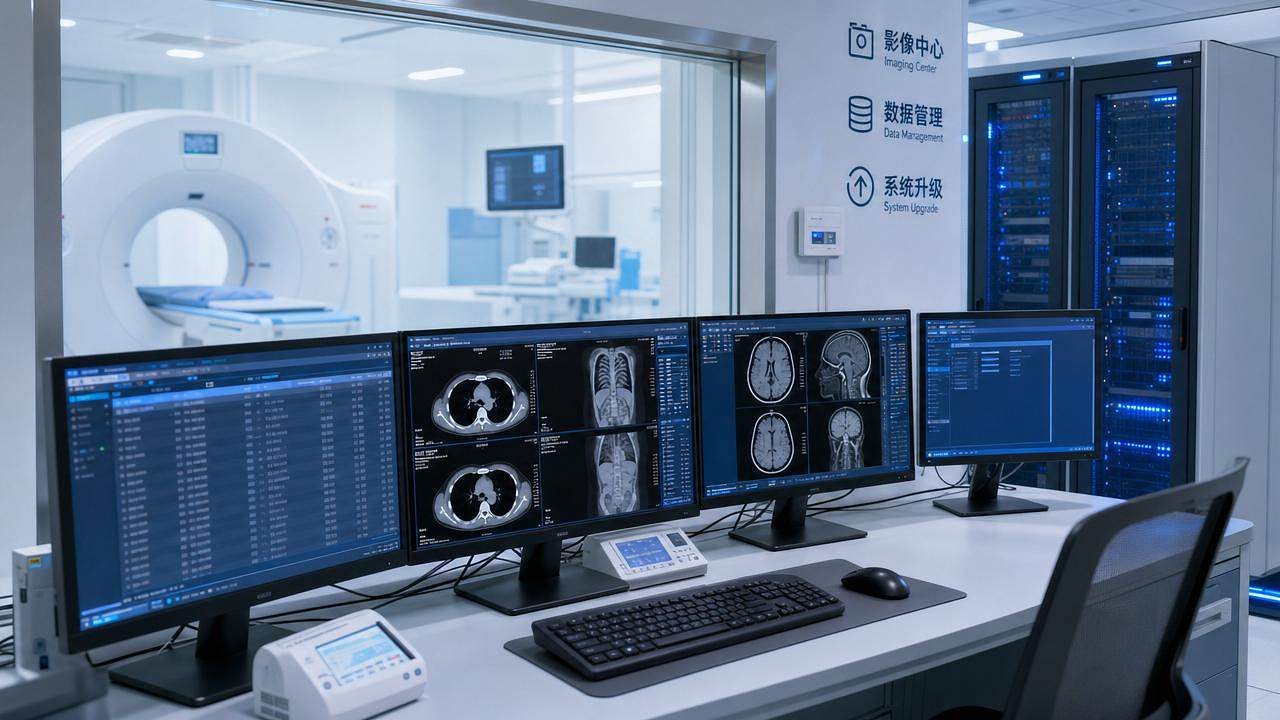




For enterprise decision-makers, medical imaging software is no longer a back-office IT concern—it is a strategic lever for diagnostic speed, compliance, interoperability, and clinical ROI.
As imaging volumes rise, fragmented workflows create delayed reporting, duplicated tasks, and hidden data silos across radiology, cardiology, oncology, and emergency care.
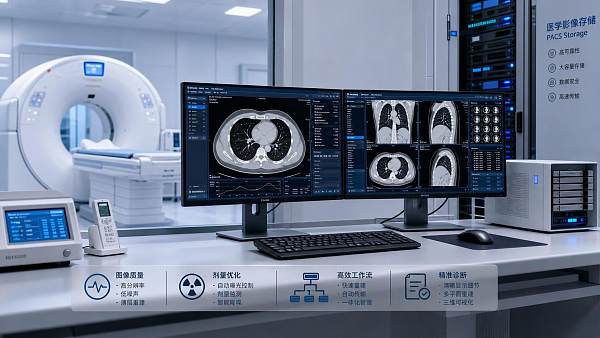
Targeted upgrades can transform medical imaging software into a precision-driven clinical intelligence layer, connecting reconstruction, AI triage, PACS, RIS, reporting, and governance.
Medical imaging software as a clinical workflow foundation
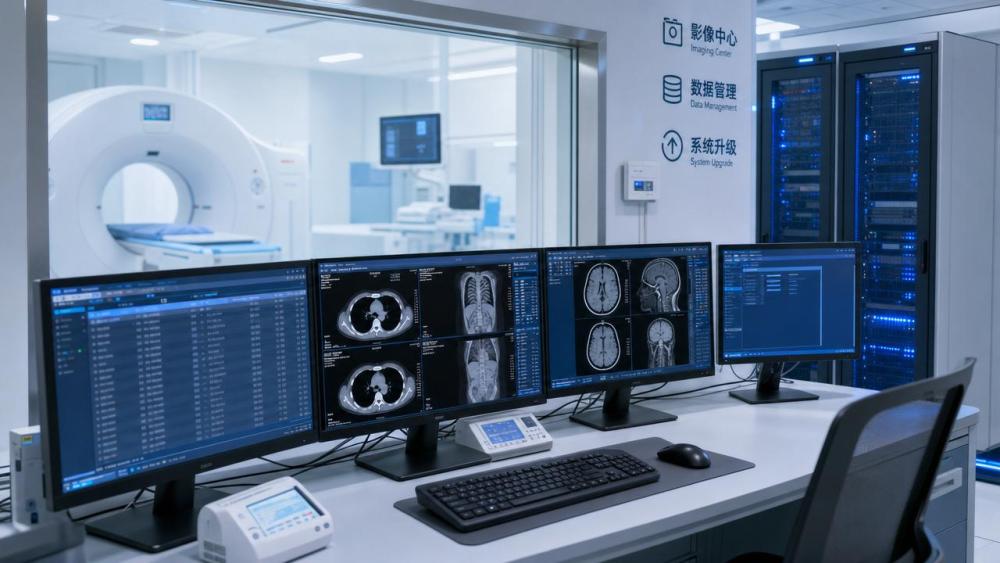
Medical imaging software manages how images are acquired, reconstructed, stored, routed, reviewed, interpreted, and shared across the diagnostic chain.
It supports CT, MRI, ultrasound, digital radiography, mammography, nuclear medicine, endoscopy, and hybrid imaging environments.
In mature hospitals, medical imaging software is connected with PACS, RIS, EHR, VNA, billing systems, AI tools, and compliance archives.
The value is not limited to viewing images. The larger impact comes from orchestration, traceability, decision support, and operational visibility.
A modern platform reduces manual handoffs and gives clinicians timely access to the right study, prior images, and structured clinical context.
For AMDS, this layer reflects the connection between advanced image reconstruction, regulatory discipline, and precision medicine demands.
When medical imaging software is outdated, even premium scanners may underperform because data movement, interpretation, and reporting remain constrained.
Workflow gaps now limiting imaging performance
The pressure on imaging departments is increasing from emergency demand, cancer screening programs, cardiovascular follow-up, and chronic disease management.
Many organizations still operate with mixed vendor equipment, legacy archives, local workstations, and disconnected reporting environments.
These gaps make medical imaging software upgrades essential for institutions seeking faster throughput and safer diagnostic continuity.
A practical assessment starts by mapping every step from order entry to final report distribution.
The strongest business cases usually appear where clinical delays and administrative rework intersect.
Interoperability and data governance priorities
Interoperability is the most visible reason to upgrade medical imaging software, especially in multi-site networks and specialty centers.
A strong platform should support DICOM, HL7, IHE profiles, FHIR interfaces, secure exchange, and vendor-neutral archive integration.
Interoperability also improves clinical resilience. Studies can follow the patient across departments, facilities, and care episodes.
Data governance is equally important because medical imaging software contains protected health data and diagnostically sensitive metadata.
Audit trails, role-based access, encryption, retention policies, and de-identification should be part of the upgrade baseline.
For regulated markets, governance must align with FDA expectations, CE MDR documentation, cybersecurity guidance, and local privacy rules.
This alignment reduces risk when imaging data supports AI validation, clinical research, remote reading, or cross-border collaboration.
AI-enabled reconstruction and diagnostic acceleration
AI is reshaping medical imaging software from passive storage infrastructure into an active diagnostic support environment.
Common uses include image denoising, accelerated MRI reconstruction, lesion detection, lung nodule triage, stroke prioritization, and fracture flagging.
The strongest deployments keep radiologists in control while allowing algorithms to reduce repetitive visual search and prioritization burdens.
AI-assisted medical imaging software can also standardize measurements for oncology response, cardiac function, vascular stenosis, and organ volume tracking.
However, AI value depends on integration depth. Standalone tools often create another workflow gap if results are not embedded.
Effective integration places AI findings inside the viewer, worklist, reporting template, and longitudinal patient record.
Clinical validation remains essential. Algorithms should be reviewed for population fit, modality compatibility, false positives, and explainability.
Business value beyond the radiology reading room
The business value of medical imaging software extends across care quality, capacity planning, reimbursement, and technology utilization.
Faster image access reduces repeat scans, improves emergency decision-making, and helps specialists coordinate treatment plans.
Structured reporting improves coding accuracy and supports disease registries, quality programs, and outcome analytics.
Under DRG-based payment models, imaging efficiency influences length of stay, resource allocation, and total episode cost.
AMDS views this as a health economics issue, not only a software procurement issue.
High-end scanners deliver full ROI only when medical imaging software shortens diagnostic cycles and reduces operational leakage.
- Improved reporting turnaround supports faster clinical decisions.
- Better archive access reduces unnecessary repeat imaging.
- Analytics reveal scanner utilization and referral bottlenecks.
- Governed data supports research and AI development.
Typical upgrade scenarios across medical environments
Different organizations upgrade medical imaging software for different reasons, but the core objective remains consistent: safer and faster imaging intelligence.
These scenarios show why one universal configuration rarely works well across all imaging environments.
A useful upgrade plan balances clinical urgency, infrastructure maturity, cybersecurity posture, and budget discipline.
Implementation practices that reduce upgrade risk
Medical imaging software upgrades carry operational risk because imaging services cannot pause for long migrations.
A phased approach protects clinical continuity while allowing teams to validate performance, interfaces, permissions, and reporting templates.
- Define measurable workflow gaps before selecting technology.
- Audit DICOM tags, study naming, and archive structure.
- Test interfaces with PACS, RIS, EHR, and billing systems.
- Validate AI outputs with local clinical cases.
- Train users through real reporting and escalation scenarios.
Cybersecurity should be considered from the first design stage, not added after deployment.
Backup strategy, disaster recovery, identity management, and vulnerability monitoring are central to medical imaging software reliability.
Performance testing should include peak study volumes, remote reading latency, advanced visualization, and concurrent user behavior.
Evaluation criteria for sustainable platform selection
A sustainable medical imaging software platform should be evaluated beyond feature lists and interface demonstrations.
Decision criteria should include regulatory documentation, upgrade cadence, cybersecurity maturity, AI governance, usability, and total ownership cost.
Cloud readiness is increasingly important, but deployment must reflect local rules, bandwidth conditions, and clinical risk tolerance.
Vendor lock-in should be managed through standards-based data portability and clear exit provisions.
For global operations, multilingual reporting, regional compliance settings, and cross-site analytics can become decisive platform requirements.
- Confirm support for current and future modalities.
- Review evidence for AI safety and clinical benefit.
- Measure usability with actual radiology workflows.
- Model ROI through reduced delays and repeat work.
From software upgrade to clinical intelligence roadmap
The most effective medical imaging software strategy begins with workflow evidence and ends with measurable clinical improvement.
A practical roadmap should prioritize urgent bottlenecks, then expand toward enterprise analytics, AI orchestration, and governed imaging data reuse.
AMDS recommends connecting technical evaluation with compliance review, clinical validation, and health economics modeling.
This approach links absolute clinical safety with frontier efficacy, reflecting the central mission of modern diagnostic medicine.
The next step is a structured workflow audit covering acquisition, routing, reporting, archiving, AI use, and governance gaps.
With that baseline, medical imaging software upgrades can move from IT replacement to a strategic engine for precision diagnostics.
Recommended News
 Aug 31, 2026Clinical Imaging Innovation: Which Technologies Deliver Measurable Diagnostic Gains?Clinical imaging innovation delivers measurable diagnostic gains through photon-counting CT, AI reconstruction, and quantitative MRI—explore evidence-based selection insights.
 Aug 30, 2026How Surgical Navigation Technology Improves Accuracy in Complex Spine SurgerySurgical navigation technology spine surgery: discover how imaging, tracking, and workflow controls improve precision for complex procedures.
 Aug 29, 2026How to Select a Hematology Analyzer With Reliable Reticulocyte CountingHematology analyzers retic selection guide: compare precision, flags, workflow, QC, and connectivity to achieve reliable reticulocyte counting.
 Aug 28, 2026Planning Operating Room Technology for a High-Throughput Surgery CenterOperating room technology for a surgery center: plan workflows, integration, uptime, and safety to boost throughput and create future-ready surgical rooms.
 Aug 27, 2026Building Medical Compliance Analytics for Middle East Market AccessMedical compliance analytics Middle East: build device-specific evidence maps, align local requirements, and accelerate market access with confidence.
 Aug 26, 2026How Surgical Equipment Digitalization Is Reshaping Hospital Investment in Latin AmericaSurgical equipment digitalization Latin America is reshaping hospital investment, from smart ORs to ROI-driven upgrades. Explore what buyers now value most.
 Aug 25, 2026How to Evaluate a Medical Compliance Intelligence Provider for Global Market AccessMedical compliance intelligence provider selection can make or break global market access. Learn how to assess technical depth, update quality, and commercial fit before choosing.
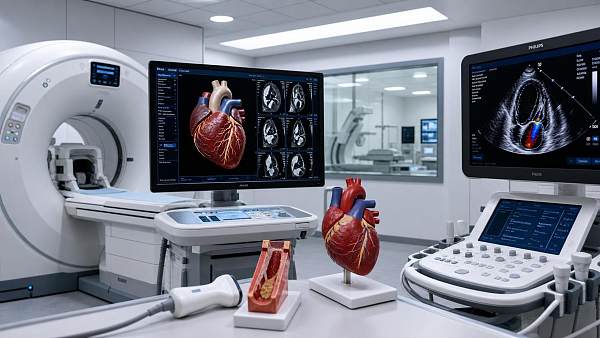
 Aug 24, 2026How Advanced Clinical Imaging Is Improving Cardiology Diagnosis and Treatment PlanningAdvanced clinical imaging cardiology is transforming diagnosis and treatment planning with clearer anatomy, tissue insight, and procedural guidance. Discover how it reduces uncertainty and supports smarter cardiac decisions.
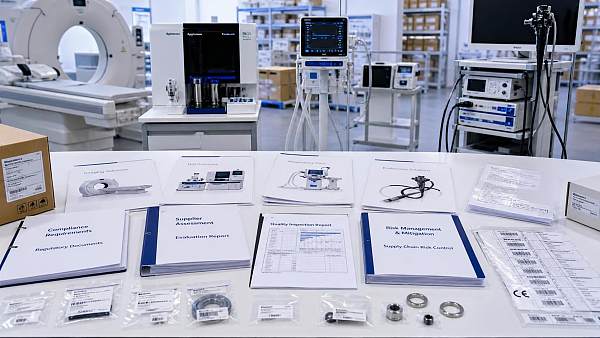
 Aug 23, 2026How to Source Medical Devices in North America: Supplier Vetting and Market Access RisksMedical device sourcing North America made practical: learn how to vet suppliers, reduce compliance risks, and protect market access with smarter procurement decisions.
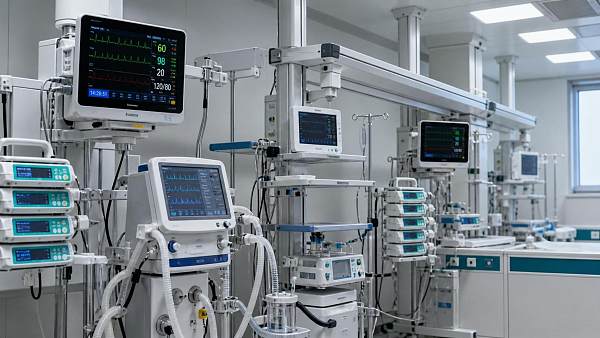
 Aug 22, 2026What Are Integrated Critical Care Systems and How Do Hospitals Evaluate Them?Critical care systems integrated: learn how hospitals assess ICU platforms for interoperability, alarm safety, workflow efficiency, and long-term value before buying.
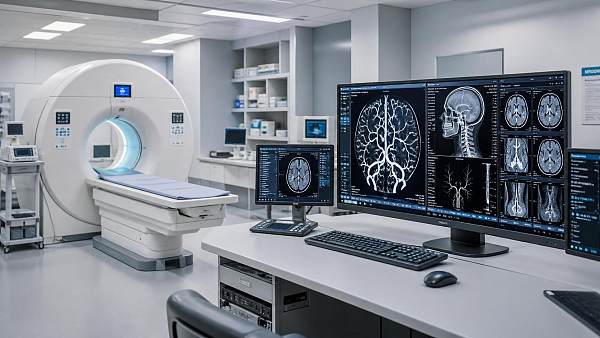
 Aug 21, 2026How to Evaluate High-Resolution Diagnostic Imaging Systems for Detail-Critical ExamsDiagnostic imaging systems high resolution: learn how to compare detail-critical performance, workflow fit, dose efficiency, and ROI to choose the right system with confidence.
 Aug 20, 2026How to Evaluate Medical Equipment Performance Before Purchase?Medical equipment evaluation performance starts before purchase. Learn how to assess safety, workflow fit, compliance, uptime, and total cost to choose devices that truly perform.
 Aug 19, 2026How to Evaluate Small-Footprint Laboratory Diagnostic Equipment for Space-Limited LabsLaboratory diagnostic equipment small footprint choices require more than size checks. Learn how to assess workflow, throughput, compliance, and service access for smarter lab buying.
 Aug 18, 2026Biochemical Molecular Diagnostics Explained: Methods, Clinical Uses, and Lab Selection CriteriaBiochemical molecular diagnostics explained: compare key methods, clinical applications, and lab selection criteria to choose reliable, compliant testing with confidence.
 Aug 17, 2026How to Choose Diagnostic Equipment Solutions for a Clinic: Key Factors That Affect Workflow and CostDiagnostic equipment solutions clinic buyers can use to improve workflow, control total cost, and avoid hidden service risks. Learn the key factors before you invest.
 Aug 16, 2026How to Choose a Blood Cell Analyzer for a Small Lab: Throughput, CBC Menu, and CostBlood cell analyzers small lab buyers can compare throughput, CBC menu, and total operating cost with confidence. Learn how to avoid waste, reduce downtime, and choose the right fit.
 Aug 16, 2026FDA Approval of AMDS Hybrid Prosthesis Removes IRB Step for Faster U.S. AccessFDA approval of AMDS Hybrid Prosthesis removes the IRB step, speeding U.S. access for acute aortic dissection care and reshaping hospital procurement and supporting equipment demand.
 Aug 15, 2026What Hospital Technology Infrastructure Is Needed for Reliable Interoperability?Hospital technology infrastructure interoperability depends on secure networks, integration engines, identity services, and governance. Discover what hospitals need for reliable, scalable connectivity.
 Aug 14, 2026What to Look for in an Advanced Diagnostic Systems Distributor Before You BuyAdvanced diagnostic systems distributor: learn what to check before buying, from compliance and technical depth to delivery reliability and after-sales support. Make a smarter procurement decision today.
 Aug 14, 2026China Temporarily Bans Helium ExportsChina Temporarily Bans Helium Exports: learn how the July 10, 2026 rule may disrupt MRI, ECMO, and anesthesia device supply chains, compliance, and delivery planning for global buyers.
 Aug 13, 2026How CT Reconstruction Technology Impacts Image Quality, Dose, and WorkflowMedical imaging reconstruction technology CT shapes image quality, dose, and workflow. Learn how smarter CT reconstruction improves diagnostics and efficiency.
 Aug 13, 2026FDA clears AMDS PMA, easing U.S. hospital accessFDA clears AMDS PMA, easing U.S. hospital access for Artivion’s aortic arch device and speeding procurement, compliance, and deployment.
 Aug 12, 2026Hospital Diagnostic Equipment Comparison: What Buyers Should Evaluate Beyond PriceDiagnostic equipment comparison hospital buyers can trust: learn how to evaluate clinical performance, uptime, compliance, integration, and long-term ROI beyond price.
 Aug 12, 2026FDA Draft Guidance Reshapes AI Device ComplianceFDA Draft Guidance reshapes AI device compliance with new postmarket monitoring expectations for AI/ML-enabled SaMD. Learn what it means for U.S. market access, distributors, and exporters.





Related News
- 00
0000-00
Medical Imaging Diagnostics Systems: Core Modalities, Use Cases, and Trade-Offs - 00
0000-00
AI in Medical Imaging Radiology: Where It Improves Reading Speed and Where It Falls Short - 00
0000-00
Saudi SFDA Opens 18-Day Fast Track for DR Devices - 00
0000-00
SFDA Fast-Track Cuts DR Device Approval to 22 Days - 00
0000-00
Diagnostic Imaging Technology Comparison: DR vs CT vs MRI for Hospital Planning
Weekly Insights
Stay ahead with our curated technology reports delivered every Monday.