
IVD Analyzers Explained: Key Throughput, Accuracy, and Integration Specs
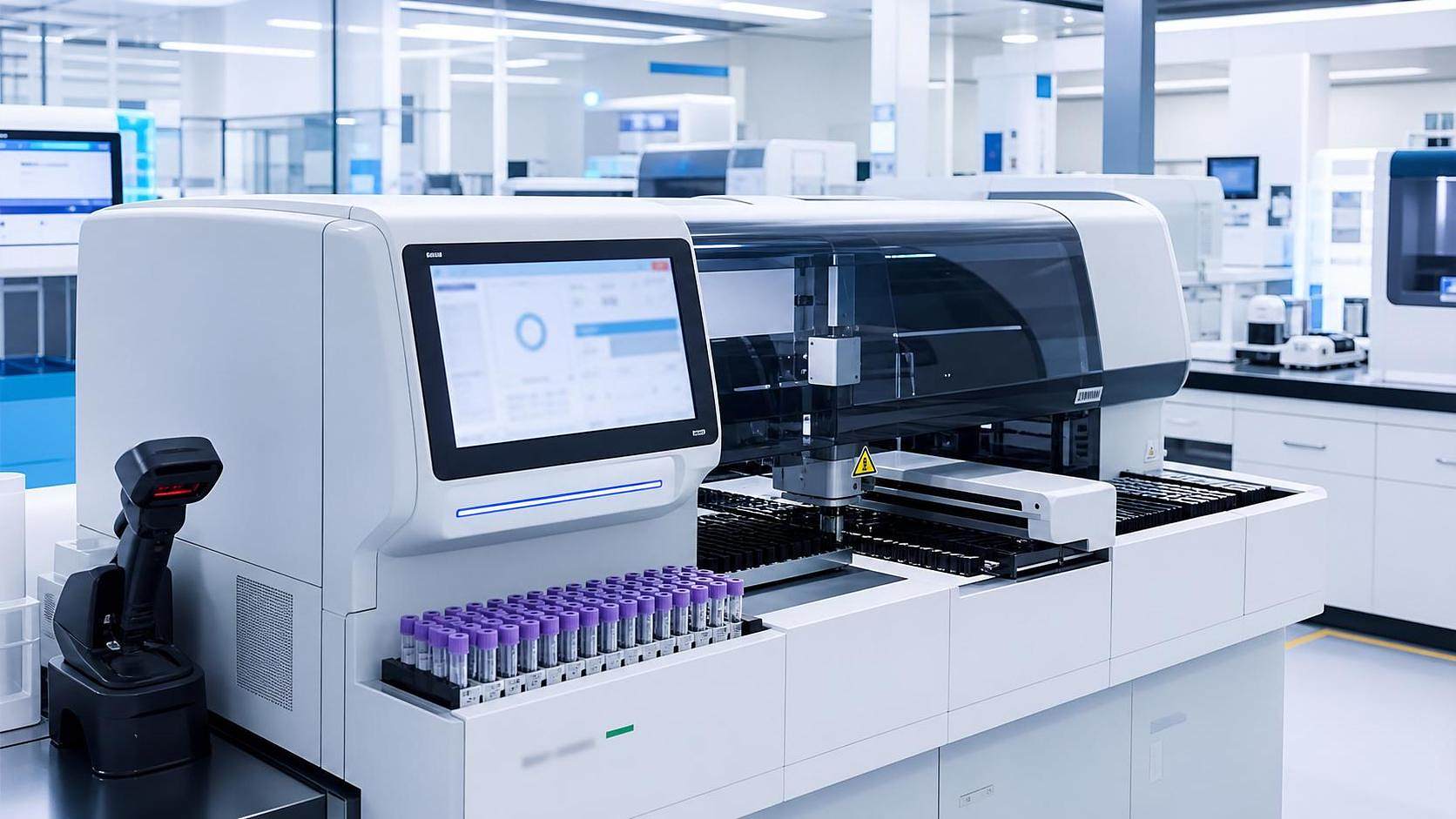




Why IVD analyzers matter now
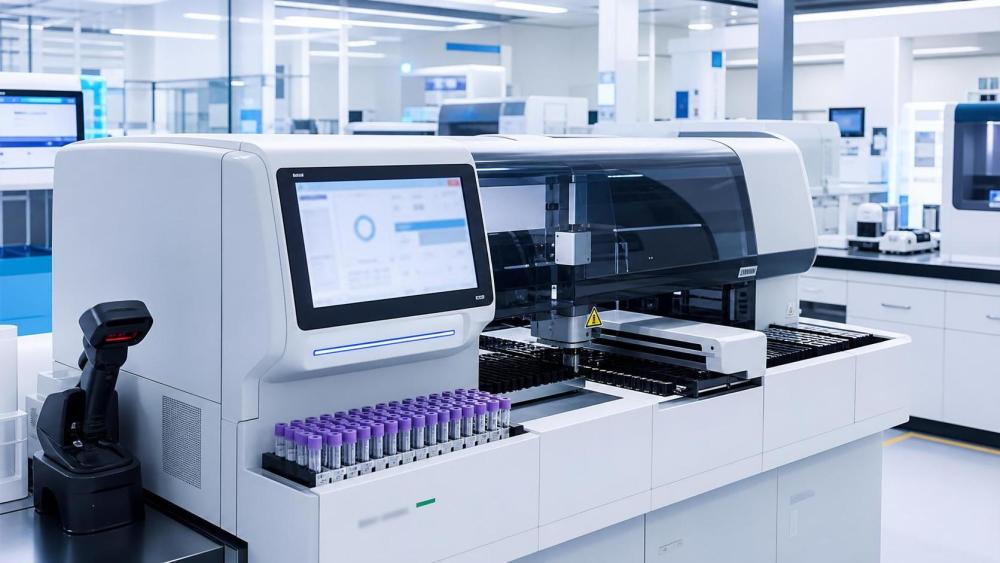
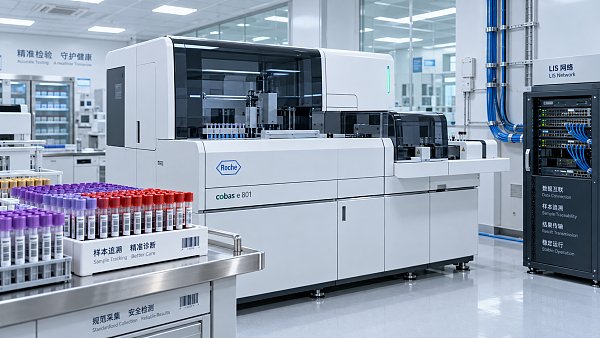
IVD analyzers sit at the center of routine testing, urgent screening, and precision diagnostics.
When results move late or drift off target, clinical decisions slow down or become harder to trust.
That is why throughput, accuracy, and integration specs deserve close attention in daily operation.
In practical terms, these specifications determine how many samples can be processed, how dependable each result is, and how smoothly data moves across the lab.
Across the wider MedTech landscape, IVD analyzers also connect with imaging, life support, surgery, and minimally invasive care.
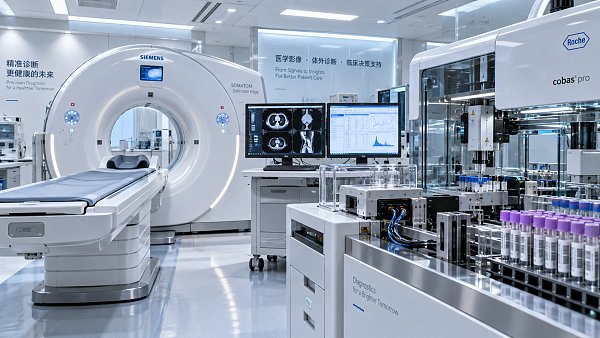
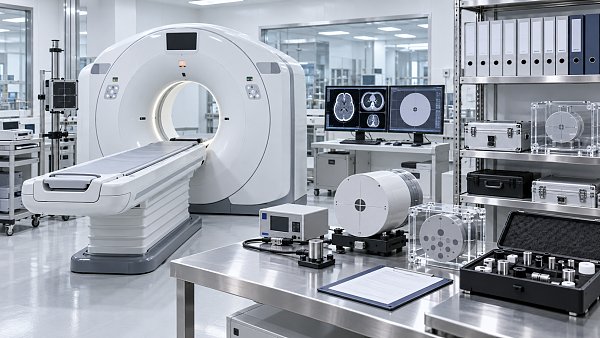
A blood biomarker may confirm what a CT scan first suggests.
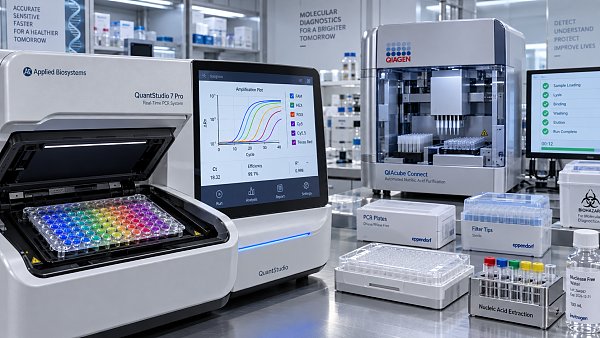
A PCR panel may guide isolation decisions before intensive support is escalated.
This link between molecular evidence and clinical action is central to the AMDS view of modern healthcare.
For that reason, understanding IVD analyzers is not only about equipment features.
It is about keeping diagnostic confidence high while protecting workflow stability.
What the key specifications really mean
Many specification sheets look detailed, yet they do not always explain operational impact.
The most useful reading starts with three questions.
- How fast can the analyzer finish a realistic workload?
- How consistent are the reported values across runs, shifts, and reagent lots?
- How easily does the instrument fit into existing data and sample handling processes?
Throughput is often treated as a headline number, usually tests per hour.
However, headline speed alone can be misleading.
Actual throughput depends on assay mix, calibration frequency, reruns, maintenance pauses, and STAT interruptions.
Accuracy includes analytical correctness, but routine users usually feel it through repeatability and confidence in borderline results.
Integration covers more than LIS connectivity.
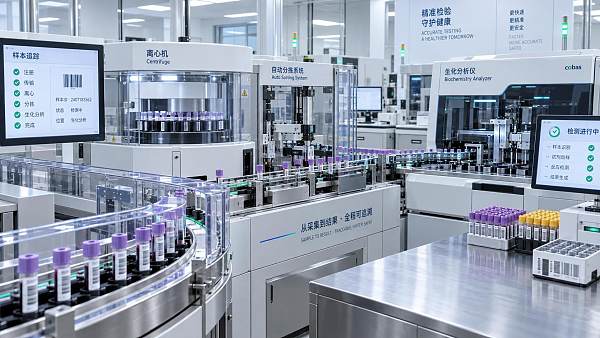
It also includes barcode reading, middleware compatibility, autoverification logic, and traceability for audits.
A practical reading of common terms
Throughput is a workflow question, not just a speed claim
In busy laboratories, the pressure is rarely constant.
Morning peaks, emergency samples, and batch-heavy periods expose the real behavior of IVD analyzers.
A system rated for high output may still struggle if loading is awkward or reagent replacement interrupts runs.
Turnaround time therefore matters as much as raw hourly volume.
For example, chemistry and immunoassay platforms may have different strengths under mixed demand.
PCR-based IVD analyzers may offer excellent clinical value, yet longer amplification cycles change queue planning.
Operators usually benefit from checking these points before judging throughput:
- Time to first result, not only time to final batch completion
- Continuous loading versus batch loading restrictions
- Onboard reagent stability and calibration intervals
- How STAT samples affect routine queues
- Recovery time after alarms or maintenance events
These details often separate nominal performance from usable performance.
Accuracy begins before the result appears
Accuracy in IVD analyzers is shaped by the whole testing chain.
Sample integrity, reagent quality, environmental stability, calibration discipline, and software rules all matter.
Even a strong analyzer can underperform when pre-analytical control is weak.
This matters more in molecular diagnostics and high-sensitivity immunoassays.
Small deviations can shift clinical interpretation, especially near cutoffs.
For daily use, the most valuable indicators are often simple.
- Stable internal QC without unexplained drift
- Low carryover between high and low concentration samples
- Clear flags for hemolysis, clot detection, or reagent issues
- Reliable rerun behavior when results fall outside rules
At the sector level, AMDS often frames precision as a bridge between microscopic reactions and clinical certainty.
That framing is useful here.
The value of IVD analyzers is not only producing numbers.
It is producing numbers that remain defensible under regulatory review and medical scrutiny.
Integration is where hidden efficiency appears
Many labs discover too late that disconnected systems create more friction than low throughput.
Manual result entry, incomplete barcode capture, and weak middleware rules can erase the advantages of advanced IVD analyzers.
Integration affects safety as well as efficiency.
A mislabeled tube or delayed data transfer can create avoidable risk.
Good integration usually shows up in quiet operations.
Orders arrive correctly, sample IDs match, reflex rules trigger properly, and audit trails are complete.
This becomes more important as digital healthcare expands.
Hospitals increasingly expect analyzers to fit larger connected ecosystems, not act as isolated boxes.
Key integration checks include instrument interfaces, middleware compatibility, cybersecurity policies, and service response visibility.
When those elements are aligned, IVD analyzers support cleaner handoffs between lab evidence and treatment pathways.
Where these specifications matter most
The priority balance changes by testing environment.
A central laboratory may emphasize volume and automation depth.
A specialized molecular unit may focus on contamination control and result interpretation support.
Near-patient settings may care more about speed to actionable data.
This is why direct comparison between IVD analyzers should stay close to real use cases.
The best system in one setting may be inefficient in another.
How to judge an analyzer beyond the brochure
A careful review usually combines technical data, workflow observation, and compliance context.
That approach fits the AMDS focus on clinical safety, market standards, and measurable value.
When comparing IVD analyzers, several checks are worth keeping on one page.
- Match assay menu to actual testing demand, not future assumptions alone
- Review QC history and service logs, not only validation summaries
- Measure operator steps per sample during peak periods
- Check software usability for rule setup, flags, and reruns
- Confirm compliance fit with CE MDR, FDA pathways, and local documentation needs
- Estimate downtime impact, reagent waste, and recovery procedures
These points help convert specifications into operational expectations.
They also make vendor discussions more concrete.
A useful next step for selection and optimization
IVD analyzers deliver the most value when their specifications are read through the lens of real diagnostic pathways.
Throughput should support workload patterns.
Accuracy should hold under routine variation.
Integration should remove friction instead of shifting it elsewhere.
A practical next move is to map current sample flow, identify result bottlenecks, and compare those findings against analyzer specifications.
That creates a clearer basis for evaluating existing instruments or shortlisting new IVD analyzers.
In a field where diagnostic timing and confidence shape patient outcomes, that level of discipline is not optional.
It is the standard for making technology work in clinical reality.
Recommended News
 Oct 02, 2026High-Flow ICU Ventilators: Key Selection Criteria for Acute Respiratory CareICU ventilators high flow: discover key selection criteria for accurate gas delivery, NIV performance, humidification, alarms, reliability, and safer acute respiratory care.
 Oct 01, 2026How to Evaluate Medical Equipment Intelligence Suppliers for Hospital ProcurementMedical equipment intelligence suppliers: learn how hospitals can assess evidence quality, total cost, compliance, interoperability, and cybersecurity for smarter procurement decisions.
 Sep 30, 2026ISO 13485 Requirements for Blood Testing Instruments: A Buyer’s ChecklistBlood testing instruments ISO 13485 buyer’s checklist: verify certification scope, traceability, installation, consumables, and supplier support before you buy.
 Sep 29, 2026How to Evaluate Integrated Operating Room Systems for Workflow, Imaging, and IT IntegrationIntegrated operating room systems: evaluate workflow, imaging, IT integration, cybersecurity, and lifecycle value to select a scalable surgical solution.
 Sep 28, 2026How to Evaluate a Genetic Testing Equipment Supplier for PCR Lab ProcurementGenetic testing equipment supplier evaluation guide for PCR labs: compare performance, compliance, workflow, service, supply resilience, and total cost.
 Sep 27, 2026How to Specify Custom Benchtop Diagnostic Instruments for Your Assay WorkflowCustom diagnostic instruments benchtop guide: specify optics, fluidics, automation, software integration, and support to build a reliable assay workflow.
 Sep 26, 2026How Cardiac Imaging Analysis Tools Turn CT and MRI Data into Clinical MetricsMedical imaging analysis cardiology tools transform cardiac CT and MRI into reliable metrics. Explore segmentation, validation, workflow integration, and AI review.
 Sep 25, 2026How Iterative Image Reconstruction Algorithms Balance CT Dose, Noise, and DetailIterative image reconstruction algorithms help CT teams balance dose, noise, and diagnostic detail. Explore practical insights for confident imaging decisions.
 Sep 24, 2026What Drives the Total Cost of Medical Technology Solutions Over Their Lifecycle?Medical technology solutions cost goes far beyond purchase price—explore lifecycle drivers from installation and service to software, training, compliance, and downtime.
 Sep 24, 2026Diagnostic Imaging Technology: How Modalities Support Different Clinical DecisionsDiagnostic imaging technology supports smarter clinical decisions across CT, MRI, ultrasound, and nuclear imaging. Explore modality strengths, workflows, and selection factors.
 Sep 22, 2026How Life Science Labs Can Select Biomedical Research Equipment by Workflow and ThroughputBiomedical research equipment life science labs can select with confidence by aligning workflow, throughput, automation, data integrity, and scalable support.
 Sep 21, 2026How to Plan LIS Connectivity for Chemiluminescence Analyzers Without Data GapsChemiluminescence analyzers LIS connectivity: learn how to prevent data gaps with field mapping, exception workflows, end-to-end validation, and reliable go-live planning.
 Sep 20, 2026Selecting Fluorescence PCR Instruments: Detection Channels, Sensitivity, and Workflow FitPCR diagnostic instruments fluorescence detection guide: compare channels, sensitivity, multiplexing, and workflow fit to select a reliable platform.
 Sep 19, 2026Biomedical Signal Processing: From Sensor Data to Clinical Decision SupportBiomedical signal processing transforms sensor data into reliable clinical decision support. Explore AI, imaging, IVD, ICU monitoring, and compliance-ready MedTech insights.
 Sep 18, 2026How to Evaluate a Diagnostic Imaging Platform for Multi-Modality Workflow IntegrationDiagnostic imaging platform evaluation guide: assess multi-modality workflows, interoperability, AI integration, image integrity, security, and scalability for safer clinical decisions.
 Sep 17, 2026ISO 13485 for Medical Imaging Equipment: What Manufacturers Must DocumentMedical imaging equipment ISO 13485: discover essential documentation for design controls, risk management, traceability, software, and post-market quality.
 Sep 16, 2026Robotic MIS Equipment: What Hospitals Should Evaluate Before AdoptionMinimally invasive surgical equipment robotic adoption guide: evaluate workflow, safety, imaging, costs, cybersecurity, and service readiness.
 Sep 15, 2026How to Evaluate Biomedical Signal Processing Suppliers for Clinical Device ProjectsBiomedical signal processing supplier evaluation guide for clinical device teams—compare signal fidelity, regulatory evidence, cybersecurity, integration, and lifecycle support.
 Sep 14, 2026How Integrated Clinical Diagnostics Solutions Reduce Turnaround Time Across Lab WorkflowsIntegrated clinical diagnostics solutions reduce lab turnaround time by connecting workflows, automation, and data. Discover practical strategies for faster, traceable results.
 Sep 13, 2026ECMO System Market Outlook: Demand Drivers, Investment Risks, and Growth OpportunitiesECMO system market outlook explores demand drivers, investment risks, regulatory factors, and growth opportunities shaping critical-care innovation and adoption.
 Sep 12, 2026Where to Find Reliable Medical Device Information for Research and Due DiligenceMedical device information resource guide for due diligence: verify regulatory, clinical, safety, and technical evidence to make confident decisions.
 Sep 11, 2026Medical Equipment Intelligence: A Resource for Comparing Clinical TechnologiesMedical equipment intelligence resource for comparing clinical technologies by clinical fit, compliance, workflow, and total cost—make confident, evidence-led decisions.
 Sep 10, 2026How to Integrate Application-Specific Medical Solutions Into Existing Clinical WorkflowsApplication-specific medical solutions integration: learn how to align clinical workflows, interoperability, safety, and measurable outcomes for reliable deployment.
 Sep 09, 2026Medical Supplier Evaluation Checklist: How to Verify Quality, Compliance, and Delivery RiskMedical supplier evaluation checklist for verifying quality, compliance, service capacity, configuration accuracy, and delivery risk before purchase approval.



Related News
- 00
0000-00
Selecting IVD Instruments With Automatic Sample Loading: Key Workflow Criteria - 00
0000-00
What Are the Trade-Offs Between Hematology Analyzer Technologies? - 00
0000-00
How to Select a Hematology Analyzer With Reliable Reticulocyte Counting - 00
0000-00
How to Choose a Blood Cell Analyzer for a Small Lab: Throughput, CBC Menu, and Cost - 00
0000-00
How to Compare Hematology Analyzers With Low Reagent Use for Cost Control
Weekly Insights
Stay ahead with our curated technology reports delivered every Monday.