
SFDA Halts Imports of Unvalidated Chemiluminescence Devices
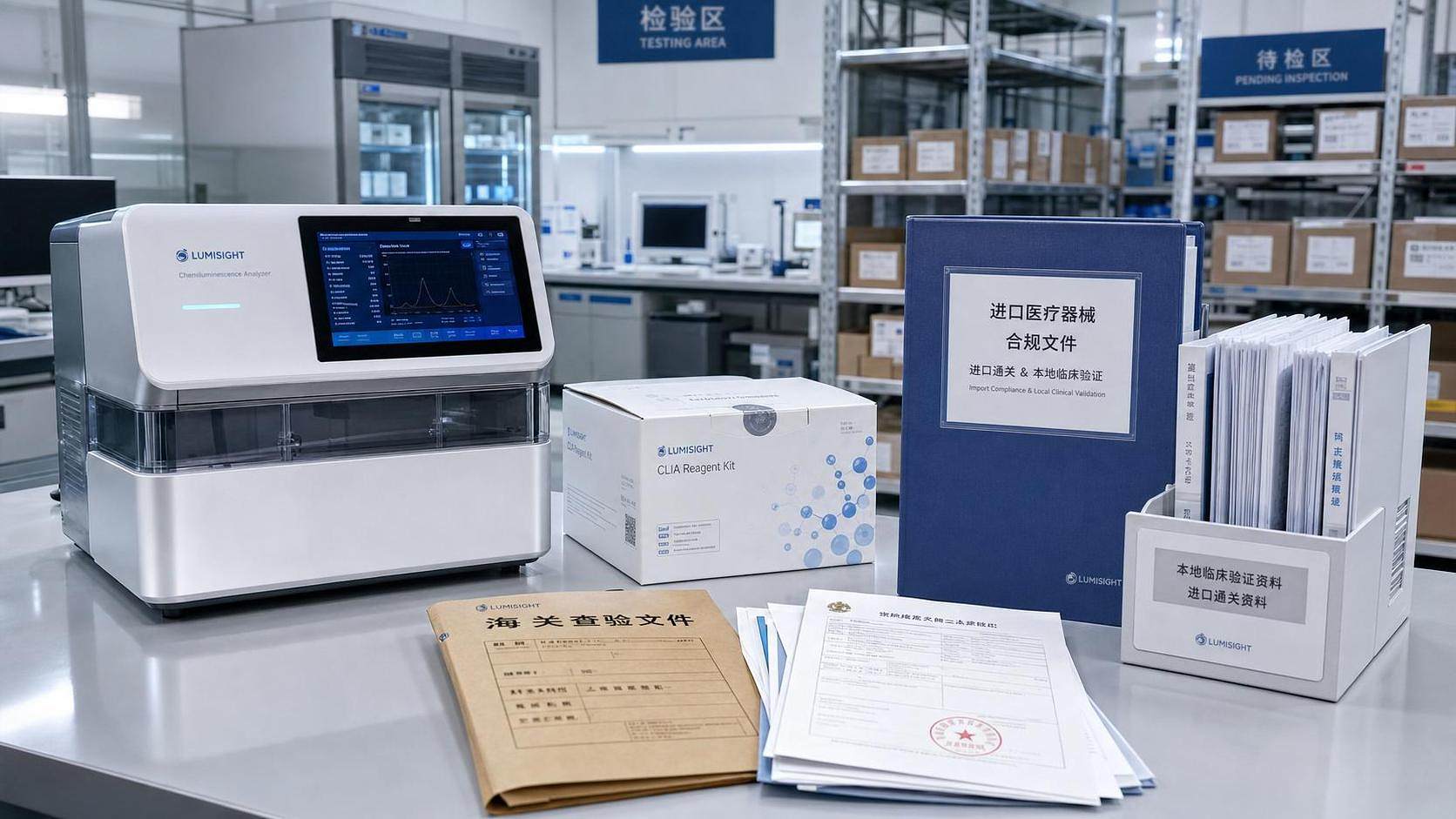




On July 10, 2026, the Saudi Food and Drug Authority (SFDA) issued an urgent notice suspending customs clearance for Chemiluminescence testing instruments that have not completed the authority-designated local clinical comparison study. The move matters beyond a single shipment issue: it directly affects importers, licensed distributors, customs-stage deliveries, and downstream users relying on compliant instrument-reagent combinations. For the in vitro diagnostics trade, the development is worth close attention because it shows that local validation has become an immediate market-access condition rather than a procedural formality.
What the SFDA Notice Confirms
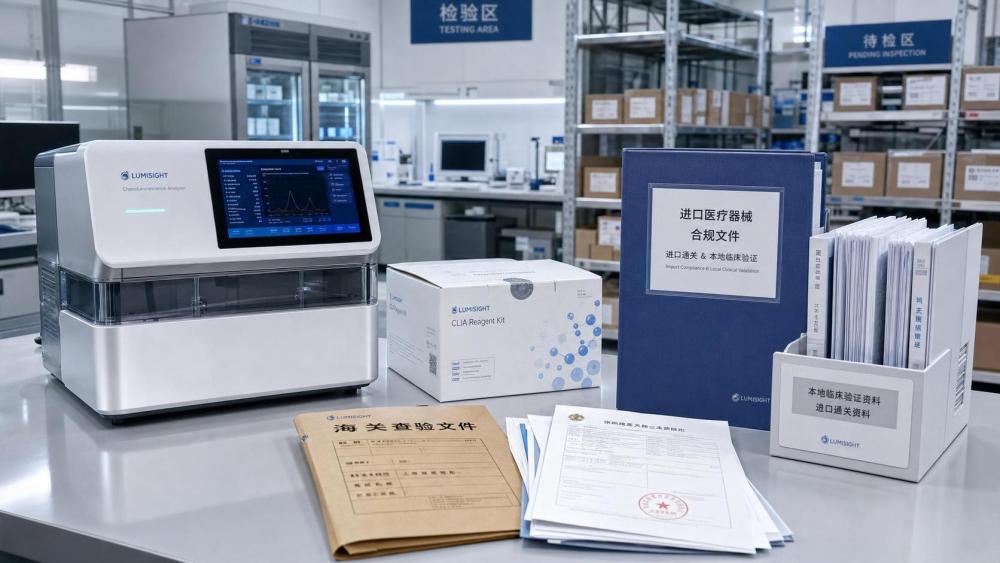
According to the information provided, the SFDA's urgent notice took effect on July 10, 2026 and stops the import clearance of all Chemiluminescence instruments that have not completed an SFDA-specified clinical comparison trial. The required comparison must include at least 150 real samples from local hospitals.
The measure applies to all importers and licensed distributors. For goods that have already been declared, shipments without a valid comparison report may be returned or destroyed.
The stated trigger for the action was a series of recent misdiagnosis incidents linked to reagent-instrument matching deviations.
Where the Pressure Will Be Felt First
Imported device trade faces an immediate documentation threshold
From an industry perspective, import-focused businesses are likely to feel the impact first because the restriction is tied directly to customs clearance. The main disruption point is no longer only product availability, but whether each shipment is backed by the required local comparison evidence. What deserves closer attention is the transition from product registration logic to shipment-level document readiness.
Licensed distributors now carry higher delivery risk
Licensed distributors are explicitly covered by the measure, which means their exposure is practical as well as regulatory. The most immediate effects may appear in delivery scheduling, customer commitments, and the handling of already declared goods. Businesses in this position need to pay close attention to whether valid comparison reports are complete and usable before delivery milestones are reached.
Hospitals and procurement teams may need to reassess supply continuity
For end users and procurement-side stakeholders, the issue is less about policy interpretation and more about continuity of instrument supply. Analysis shows that any interruption at customs can quickly affect installation timing, replacement planning, or procurement execution. The key point to watch is whether suppliers can demonstrate compliance in a way that supports stable delivery.
Supply chain service providers face a tighter clearance environment
Customs brokers, logistics coordinators, and related service providers may also encounter a more demanding operating environment. Their risk lies in handling shipments that have already entered the declaration process but lack valid supporting reports. Observably, documentation review and shipment screening become more important when the stated consequence includes return or destruction.
What Companies Should Track Now
Watch for any further official clarification
Analysis shows that the current notice is already operationally significant because it takes effect immediately. Companies should closely track whether the SFDA issues additional wording on implementation scope, document expectations, or procedural clarification, especially where customs treatment and report validity are concerned.
Separate market access from shipment readiness
What deserves closer attention is the difference between being commercially active in the market and being ready for import clearance under this notice. In practical terms, companies need to verify whether the required local comparison study has been completed and whether the supporting report is available in a form that can support clearance without delay.
Review goods already in the customs pipeline
For shipments already declared, the stated risk is unusually direct because the consequence may be return or destruction if no valid comparison report is available. This makes immediate case-by-case review important for importers, distributors, and logistics teams handling in-transit or customs-stage goods.
Prepare for tighter customer communication
Businesses supplying Chemiluminescence instruments should also review how they communicate with buyers, hospitals, and channel partners. The practical concern is not only regulatory status, but whether delivery timelines, documentation status, and compliance conditions are being communicated clearly enough to manage procurement expectations.
Why This Looks Bigger Than a Routine Import Check
Analysis shows that this development is not just a narrow customs action. It is more appropriate to understand it as a regulatory response tied to diagnostic accuracy concerns, specifically after misdiagnosis incidents associated with reagent-instrument matching deviations. That makes the signal more serious than a paperwork update.
At the same time, it would be premature to treat this as a complete long-term market reset based only on the information provided. Observably, the current message is strongest at the enforcement level: local comparison evidence is now decisive for import clearance. Whether this evolves into a broader and more detailed compliance framework remains something the industry needs to keep watching.
How This Should Be Read for Now
At this stage, the most balanced reading is that the SFDA has moved local clinical comparison from a compliance expectation into an immediate operational gate for Chemiluminescence instrument imports. The immediate significance lies in customs, documentation, and delivery execution. The broader significance lies in the regulatory emphasis on validated instrument-reagent performance under local comparison conditions.
It is more appropriate to understand this as both a short-term disruption and a longer-term signal. The disruption is already explicit in customs treatment. The longer-term meaning still requires observation, especially in how future guidance may define practical compliance expectations.
Basis of This Report
This article is based on the user-provided news title, event date, and event summary regarding the SFDA notice issued on July 10, 2026.
For developments of this type, relevant source categories usually include official regulator notices, company disclosures, industry association updates, authoritative media coverage, and standard-setting or compliance-related documents. A specific official source link was not provided in the input, so continued verification is still necessary.
Further observation should focus on any additional SFDA clarification, how the comparison-report requirement is applied in practice, and whether subsequent notices refine the scope or documentation expectations for affected imports.
Recommended News
 Oct 09, 2026Critical Care Cardiac Monitoring: Key Parameters for ICU System SelectionCritical care monitoring cardiac care: discover how to select ICU systems with reliable ECG, intelligent alarms, hemodynamic insight, interoperability, and resilience.
 Oct 08, 2026Operating Room Systems: Selection Criteria for Integrated Surgical WorkflowsOperating room systems selection guide for integrated surgical workflows—improve safety, interoperability, lifecycle value, and scalable clinical performance.
 Oct 07, 2026Hospital Diagnostic Equipment Procurement: A Framework for Comparing Cost, Capacity, and RiskHospital diagnostic equipment procurement made clearer: compare lifecycle cost, usable capacity, clinical fit, and operational risk to make confident, sustainable buying decisions.
 Oct 06, 2026How to Evaluate an Operating Room Technology Distributor for Hospital ProjectsOperating room technology distributor evaluation guide for hospitals: assess integration, compliance, lifecycle costs, service capacity, and delivery confidence before award.
 Oct 05, 2026Global Medical Procurement Planning: How Hospitals Can Reduce Supply Risk and CostGlobal medical procurement planning helps hospitals reduce supply risk, control lifecycle costs, and protect care continuity through smarter sourcing, service, and compliance strategies.
 Oct 03, 2026How Detection Algorithms Improve Sensitivity and Workflow in Medical ImagingMedical imaging algorithms detection improves sensitivity, manages false positives, and streamlines clinical workflows. Explore validation, integration, and governance essentials.
 Oct 02, 2026High-Flow ICU Ventilators: Key Selection Criteria for Acute Respiratory CareICU ventilators high flow: discover key selection criteria for accurate gas delivery, NIV performance, humidification, alarms, reliability, and safer acute respiratory care.
 Oct 01, 2026How to Evaluate Medical Equipment Intelligence Suppliers for Hospital ProcurementMedical equipment intelligence suppliers: learn how hospitals can assess evidence quality, total cost, compliance, interoperability, and cybersecurity for smarter procurement decisions.
 Sep 30, 2026ISO 13485 Requirements for Blood Testing Instruments: A Buyer’s ChecklistBlood testing instruments ISO 13485 buyer’s checklist: verify certification scope, traceability, installation, consumables, and supplier support before you buy.
 Sep 29, 2026How to Evaluate Integrated Operating Room Systems for Workflow, Imaging, and IT IntegrationIntegrated operating room systems: evaluate workflow, imaging, IT integration, cybersecurity, and lifecycle value to select a scalable surgical solution.
 Sep 28, 2026How to Evaluate a Genetic Testing Equipment Supplier for PCR Lab ProcurementGenetic testing equipment supplier evaluation guide for PCR labs: compare performance, compliance, workflow, service, supply resilience, and total cost.
 Sep 27, 2026How to Specify Custom Benchtop Diagnostic Instruments for Your Assay WorkflowCustom diagnostic instruments benchtop guide: specify optics, fluidics, automation, software integration, and support to build a reliable assay workflow.
 Sep 26, 2026How Cardiac Imaging Analysis Tools Turn CT and MRI Data into Clinical MetricsMedical imaging analysis cardiology tools transform cardiac CT and MRI into reliable metrics. Explore segmentation, validation, workflow integration, and AI review.
 Sep 25, 2026How Iterative Image Reconstruction Algorithms Balance CT Dose, Noise, and DetailIterative image reconstruction algorithms help CT teams balance dose, noise, and diagnostic detail. Explore practical insights for confident imaging decisions.
 Sep 24, 2026What Drives the Total Cost of Medical Technology Solutions Over Their Lifecycle?Medical technology solutions cost goes far beyond purchase price—explore lifecycle drivers from installation and service to software, training, compliance, and downtime.
 Sep 24, 2026Diagnostic Imaging Technology: How Modalities Support Different Clinical DecisionsDiagnostic imaging technology supports smarter clinical decisions across CT, MRI, ultrasound, and nuclear imaging. Explore modality strengths, workflows, and selection factors.
 Sep 22, 2026How Life Science Labs Can Select Biomedical Research Equipment by Workflow and ThroughputBiomedical research equipment life science labs can select with confidence by aligning workflow, throughput, automation, data integrity, and scalable support.
 Sep 21, 2026How to Plan LIS Connectivity for Chemiluminescence Analyzers Without Data GapsChemiluminescence analyzers LIS connectivity: learn how to prevent data gaps with field mapping, exception workflows, end-to-end validation, and reliable go-live planning.
 Sep 20, 2026Selecting Fluorescence PCR Instruments: Detection Channels, Sensitivity, and Workflow FitPCR diagnostic instruments fluorescence detection guide: compare channels, sensitivity, multiplexing, and workflow fit to select a reliable platform.
 Sep 19, 2026Biomedical Signal Processing: From Sensor Data to Clinical Decision SupportBiomedical signal processing transforms sensor data into reliable clinical decision support. Explore AI, imaging, IVD, ICU monitoring, and compliance-ready MedTech insights.
 Sep 18, 2026How to Evaluate a Diagnostic Imaging Platform for Multi-Modality Workflow IntegrationDiagnostic imaging platform evaluation guide: assess multi-modality workflows, interoperability, AI integration, image integrity, security, and scalability for safer clinical decisions.
 Sep 17, 2026ISO 13485 for Medical Imaging Equipment: What Manufacturers Must DocumentMedical imaging equipment ISO 13485: discover essential documentation for design controls, risk management, traceability, software, and post-market quality.
 Sep 16, 2026Robotic MIS Equipment: What Hospitals Should Evaluate Before AdoptionMinimally invasive surgical equipment robotic adoption guide: evaluate workflow, safety, imaging, costs, cybersecurity, and service readiness.
 Sep 15, 2026How to Evaluate Biomedical Signal Processing Suppliers for Clinical Device ProjectsBiomedical signal processing supplier evaluation guide for clinical device teams—compare signal fidelity, regulatory evidence, cybersecurity, integration, and lifecycle support.

















Related News
- 00
0000-00
How to Plan LIS Connectivity for Chemiluminescence Analyzers Without Data Gaps - 00
0000-00
FDA Draft IVD Rule Raises Clinical Evidence Bar - 00
0000-00
EU Extends MDR Transition, Tightens Rules for Chemiluminescence IVDs - 00
0000-00
EU MDR Transition Ends, Hitting 1,200+ Chinese IVD Firms - 00
0000-00
EU MDR Transition Ends, 1,200+ China IVD Firms at Risk
Weekly Insights
Stay ahead with our curated technology reports delivered every Monday.