
FDA Clears Devise Med’s AutoVision AI as First Base-Model IVD Software
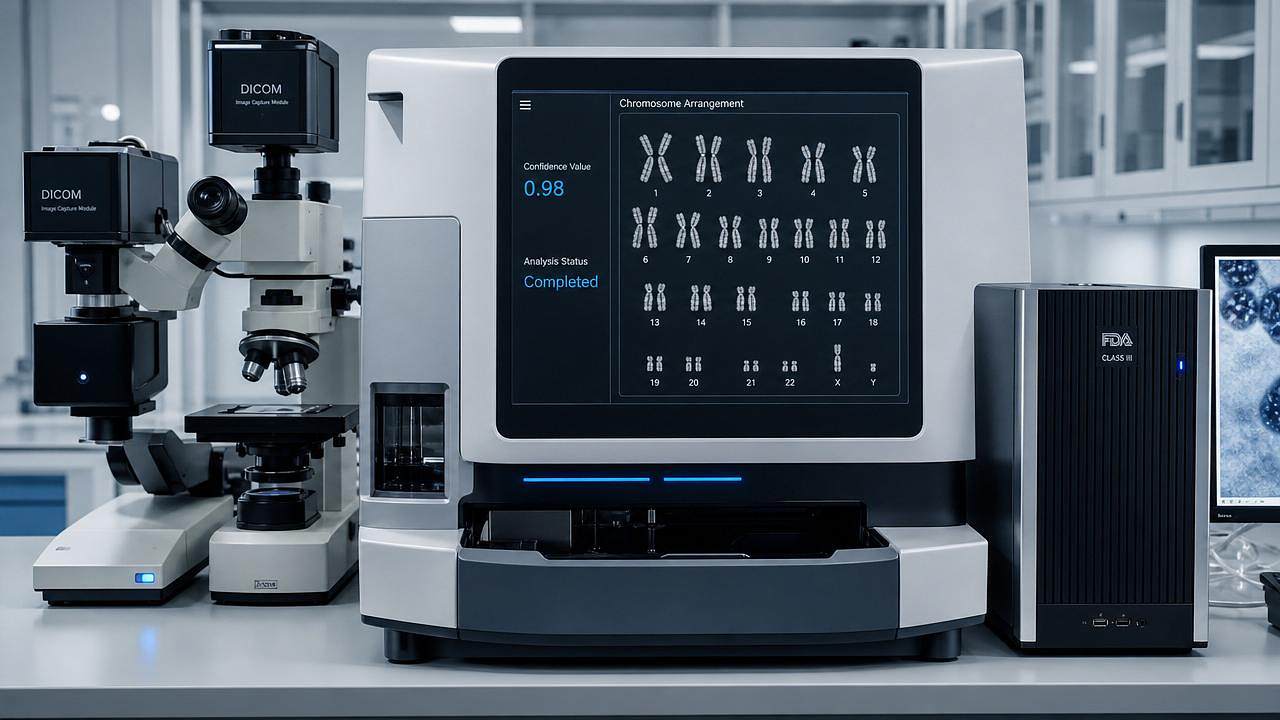




On May 22, 2026, the U.S. Food and Drug Administration (FDA) granted De Novo clearance (K260001) to Devise Med’s AutoVision software — a Class III AI-based tool for fully automated chromosomal karyotype analysis. This regulatory milestone directly impacts molecular diagnostics laboratories and global birth defect prevention initiatives, driven by the product’s integration of the iMedImage medical imaging foundation model.
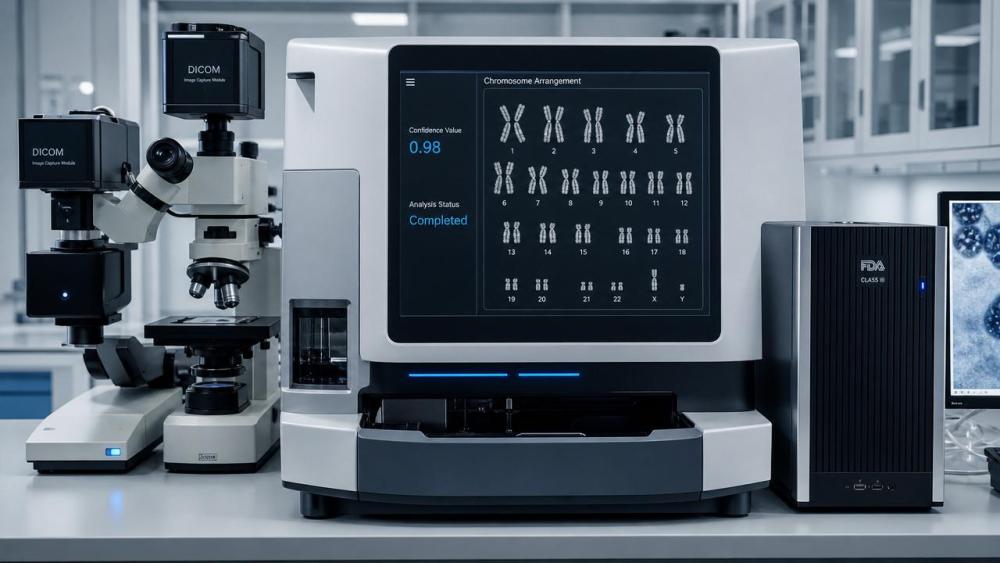
FDA Clearance Confirmed for First Foundation-Model–Driven IVD AI
The FDA approved Devise Med’s AutoVision software via the De Novo pathway on May 22, 2026, assigning it Class III device status under regulation K260001. The software performs fully automated chromosomal karyotype analysis and is built upon the iMedImage medical imaging foundation model. It is designated for use in molecular diagnostic laboratories. To date, it is the world’s first in vitro diagnostic (IVD) AI application powered by a foundation model to receive FDA Class III clearance.
Impacts Across the Diagnostic Equipment Value Chain
Export-Oriented Diagnostic Device Manufacturers
Manufacturers supplying PCR and karyotyping combination systems face rising demand from international labs seeking FDA-cleared AI-integrated workflows. Their export planning must now account for alignment with AutoVision’s interoperability requirements and validation documentation standards.
Raw Material and Component Suppliers
Suppliers of high-precision imaging sensors, computational modules, and certified medical-grade hardware may see increased order volume — particularly for components meeting FDA-aligned performance thresholds for AI-assisted cytogenetic analysis.
Medical Device Contract Manufacturers
OEMs producing AI-ready cytogenetics platforms must ensure their manufacturing processes support traceable software-hardware integration, including version-controlled firmware and audit-ready design history files aligned with FDA’s De Novo expectations.
Regulatory and Compliance Service Providers
Third-party consultants and testing labs supporting FDA submissions will need to expand expertise in foundation-model validation frameworks — especially regarding explainability, generalizability across karyotype variants, and real-world performance monitoring protocols.
Strategic Priorities for Industry Stakeholders
Verify Compatibility with FDA-Cleared AI Workflows
Lab equipment vendors should assess whether their current PCR or karyotyping platforms can interface with AutoVision — including data format compliance (e.g., DICOM-SR for cytogenetic images), API readiness, and cybersecurity architecture alignment per FDA guidance.
Update Technical Documentation for Tender Submissions
When responding to international tenders referencing AI-augmented diagnostics, manufacturers must explicitly address how their devices meet interoperability, validation, and post-market surveillance expectations implied by the AutoVision clearance.
Prepare for Accelerated Procurement Cycles
Given the anticipated uptake in birth defect screening programs, procurement timelines for combined PCR/karyotyping systems may shorten. Suppliers should review lead times for AI-compatible compute modules, certified image capture hardware, and associated technical support capacity.
Strengthen Supplier Qualification for AI-Ready Components
Vendors integrating AutoVision into turnkey solutions must reassess supplier qualification criteria — prioritizing those with ISO 13485-certified development processes, documented algorithmic validation reports, and experience supporting FDA Class III software-as-a-medical-device (SaMD) integrations.
Industry Observation: A Turning Point for AI Validation Paradigms
Analysis shows that the AutoVision clearance marks a pivotal shift: FDA has moved beyond narrow, task-specific AI algorithms toward accepting foundation-model–based SaMD — provided rigorous clinical validation, robust uncertainty quantification, and transparent deployment controls are demonstrated. From an industry perspective, this signals growing regulatory acceptance of scalable, multi-task AI architectures in high-risk diagnostic contexts. What deserves closer attention is how future De Novo submissions for foundation-model–driven tools may influence harmonization efforts under IMDRF and impact CE marking pathways for similar products in the EU.
Broader Significance for Global Diagnostic Innovation
This clearance does not merely authorize a single product — it establishes a precedent for regulatory evaluation of AI foundation models in clinical diagnostics. It affirms that well-validated, purpose-built medical foundation models can meet the evidentiary bar for Class III clearance, thereby lowering barriers for subsequent AI-enhanced IVD applications in cytogenetics and beyond — while underscoring the continued importance of clinical-grade data curation, real-world performance monitoring, and lifecycle governance.
Source Attribution and Verification Notes
This article was generated exclusively from the user-provided information: title, event date (May 22, 2026), and summary description. Specific official source links were not provided in the input and should be verified continuously. Stakeholders are advised to monitor updates from the FDA’s Center for Devices and Radiological Health (CDRH), the International Medical Device Regulators Forum (IMDRF), and national competent authorities for evolving implementation guidance, tender specification revisions, and field feedback on AutoVision’s deployment in routine laboratory settings.
Recommended News
 Oct 07, 2026Hospital Diagnostic Equipment Procurement: A Framework for Comparing Cost, Capacity, and RiskHospital diagnostic equipment procurement made clearer: compare lifecycle cost, usable capacity, clinical fit, and operational risk to make confident, sustainable buying decisions.
 Oct 06, 2026How to Evaluate an Operating Room Technology Distributor for Hospital ProjectsOperating room technology distributor evaluation guide for hospitals: assess integration, compliance, lifecycle costs, service capacity, and delivery confidence before award.
 Oct 05, 2026Global Medical Procurement Planning: How Hospitals Can Reduce Supply Risk and CostGlobal medical procurement planning helps hospitals reduce supply risk, control lifecycle costs, and protect care continuity through smarter sourcing, service, and compliance strategies.
 Oct 03, 2026How Detection Algorithms Improve Sensitivity and Workflow in Medical ImagingMedical imaging algorithms detection improves sensitivity, manages false positives, and streamlines clinical workflows. Explore validation, integration, and governance essentials.
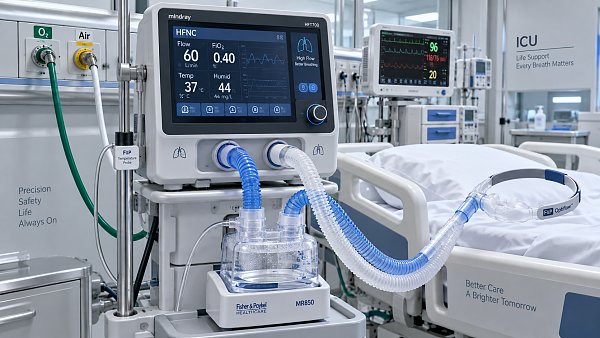
 Oct 02, 2026High-Flow ICU Ventilators: Key Selection Criteria for Acute Respiratory CareICU ventilators high flow: discover key selection criteria for accurate gas delivery, NIV performance, humidification, alarms, reliability, and safer acute respiratory care.
 Oct 01, 2026How to Evaluate Medical Equipment Intelligence Suppliers for Hospital ProcurementMedical equipment intelligence suppliers: learn how hospitals can assess evidence quality, total cost, compliance, interoperability, and cybersecurity for smarter procurement decisions.
 Sep 30, 2026ISO 13485 Requirements for Blood Testing Instruments: A Buyer’s ChecklistBlood testing instruments ISO 13485 buyer’s checklist: verify certification scope, traceability, installation, consumables, and supplier support before you buy.
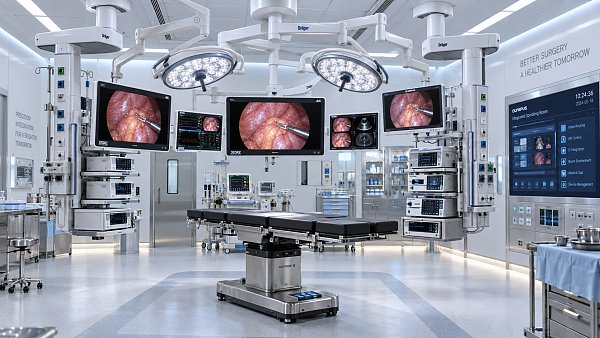
 Sep 29, 2026How to Evaluate Integrated Operating Room Systems for Workflow, Imaging, and IT IntegrationIntegrated operating room systems: evaluate workflow, imaging, IT integration, cybersecurity, and lifecycle value to select a scalable surgical solution.
 Sep 28, 2026How to Evaluate a Genetic Testing Equipment Supplier for PCR Lab ProcurementGenetic testing equipment supplier evaluation guide for PCR labs: compare performance, compliance, workflow, service, supply resilience, and total cost.
 Sep 27, 2026How to Specify Custom Benchtop Diagnostic Instruments for Your Assay WorkflowCustom diagnostic instruments benchtop guide: specify optics, fluidics, automation, software integration, and support to build a reliable assay workflow.
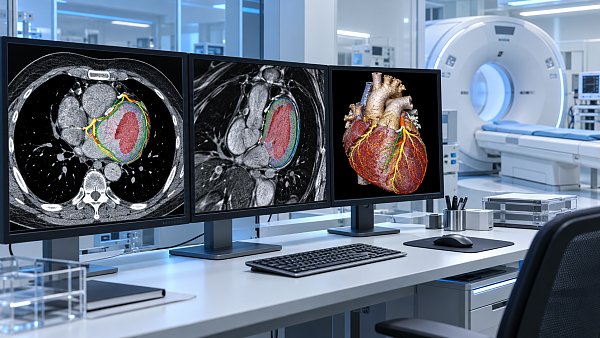
 Sep 26, 2026How Cardiac Imaging Analysis Tools Turn CT and MRI Data into Clinical MetricsMedical imaging analysis cardiology tools transform cardiac CT and MRI into reliable metrics. Explore segmentation, validation, workflow integration, and AI review.
 Sep 25, 2026How Iterative Image Reconstruction Algorithms Balance CT Dose, Noise, and DetailIterative image reconstruction algorithms help CT teams balance dose, noise, and diagnostic detail. Explore practical insights for confident imaging decisions.
 Sep 24, 2026What Drives the Total Cost of Medical Technology Solutions Over Their Lifecycle?Medical technology solutions cost goes far beyond purchase price—explore lifecycle drivers from installation and service to software, training, compliance, and downtime.
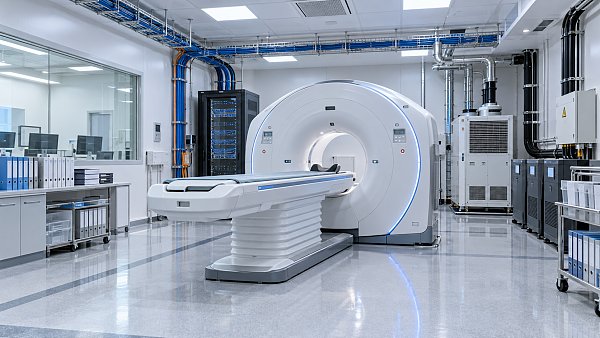
 Sep 24, 2026Diagnostic Imaging Technology: How Modalities Support Different Clinical DecisionsDiagnostic imaging technology supports smarter clinical decisions across CT, MRI, ultrasound, and nuclear imaging. Explore modality strengths, workflows, and selection factors.
 Sep 22, 2026How Life Science Labs Can Select Biomedical Research Equipment by Workflow and ThroughputBiomedical research equipment life science labs can select with confidence by aligning workflow, throughput, automation, data integrity, and scalable support.
 Sep 21, 2026How to Plan LIS Connectivity for Chemiluminescence Analyzers Without Data GapsChemiluminescence analyzers LIS connectivity: learn how to prevent data gaps with field mapping, exception workflows, end-to-end validation, and reliable go-live planning.
 Sep 20, 2026Selecting Fluorescence PCR Instruments: Detection Channels, Sensitivity, and Workflow FitPCR diagnostic instruments fluorescence detection guide: compare channels, sensitivity, multiplexing, and workflow fit to select a reliable platform.
 Sep 19, 2026Biomedical Signal Processing: From Sensor Data to Clinical Decision SupportBiomedical signal processing transforms sensor data into reliable clinical decision support. Explore AI, imaging, IVD, ICU monitoring, and compliance-ready MedTech insights.
 Sep 18, 2026How to Evaluate a Diagnostic Imaging Platform for Multi-Modality Workflow IntegrationDiagnostic imaging platform evaluation guide: assess multi-modality workflows, interoperability, AI integration, image integrity, security, and scalability for safer clinical decisions.
 Sep 17, 2026ISO 13485 for Medical Imaging Equipment: What Manufacturers Must DocumentMedical imaging equipment ISO 13485: discover essential documentation for design controls, risk management, traceability, software, and post-market quality.
 Sep 16, 2026Robotic MIS Equipment: What Hospitals Should Evaluate Before AdoptionMinimally invasive surgical equipment robotic adoption guide: evaluate workflow, safety, imaging, costs, cybersecurity, and service readiness.
 Sep 15, 2026How to Evaluate Biomedical Signal Processing Suppliers for Clinical Device ProjectsBiomedical signal processing supplier evaluation guide for clinical device teams—compare signal fidelity, regulatory evidence, cybersecurity, integration, and lifecycle support.
 Sep 14, 2026How Integrated Clinical Diagnostics Solutions Reduce Turnaround Time Across Lab WorkflowsIntegrated clinical diagnostics solutions reduce lab turnaround time by connecting workflows, automation, and data. Discover practical strategies for faster, traceable results.
 Sep 13, 2026ECMO System Market Outlook: Demand Drivers, Investment Risks, and Growth OpportunitiesECMO system market outlook explores demand drivers, investment risks, regulatory factors, and growth opportunities shaping critical-care innovation and adoption.








Related News
- 00
0000-00
Hospital Diagnostic Equipment Procurement: A Framework for Comparing Cost, Capacity, and Risk - 00
0000-00
How to Evaluate an Operating Room Technology Distributor for Hospital Projects - 00
0000-00
Global Medical Procurement Planning: How Hospitals Can Reduce Supply Risk and Cost - 00
0000-00
How Detection Algorithms Improve Sensitivity and Workflow in Medical Imaging - 00
0000-00
High-Flow ICU Ventilators: Key Selection Criteria for Acute Respiratory Care
Weekly Insights
Stay ahead with our curated technology reports delivered every Monday.