
Why AI Medical Diagnostics Struggle With Edge Cases





AI medical diagnostics can improve speed and scale, but edge cases remain a major source of clinical risk. For quality control and safety managers, the key issue is not whether AI works in ideal cases, but whether it fails predictably, visibly, and controllably when rare disease patterns, incomplete inputs, or unusual patient conditions appear.
In practice, most failures do not come from obvious software breakdowns. They emerge when models face atypical anatomy, low-quality imaging, shifting patient populations, or clinical contexts that differ from the data used in development. These gaps matter because they affect validation, post-market surveillance, incident response, and regulatory confidence.
This article explains why AI medical diagnostics struggle with edge cases, where those risks typically originate, and how safety-focused teams can evaluate reliability more realistically. For organizations working across imaging, IVD, and critical care systems, this is not only a technical question but a quality and compliance priority.
Why edge cases matter more than average performance

Many AI medical diagnostics products are promoted with strong overall accuracy metrics. However, average performance can hide severe weaknesses in rare but clinically important situations. A system may perform well on common cases while underperforming exactly when patients present with uncommon disease, mixed pathology, or unusual imaging artifacts.
For quality and safety managers, this creates a dangerous blind spot. In regulated healthcare environments, harm often comes from low-frequency, high-impact events rather than routine operations. A model that misses a rare malignancy pattern or misclassifies a nonstandard lab profile may still look statistically strong in headline validation results.
This is why edge cases deserve direct scrutiny. They reveal whether the system is robust enough for real-world use, whether human oversight is adequately designed, and whether risk controls are aligned with actual clinical complexity instead of benchmark convenience.
What counts as an edge case in AI medical diagnostics
An edge case is any input or clinical condition that falls outside the model’s learned expectations or appears too rarely in training and validation datasets. In AI medical diagnostics, this can include rare diseases, unusual anatomy, pediatric variation, multimorbidity, poor image acquisition, corrupted data, or unexpected device settings.
Edge cases also arise from workflow conditions rather than biology alone. A CT scanner from a different manufacturer, a lab sample with preanalytical contamination, or an emergency department protocol that differs from the training site can all shift the data distribution enough to confuse an algorithm.
In some cases, the edge is contextual. A lesion pattern may be common in one region but rare in another. A biomarker threshold may behave differently across age groups or treatment histories. What appears to be an isolated anomaly may actually reflect a deployment mismatch that was never properly anticipated.
Why training data is usually the first weak point
The most common reason AI medical diagnostics struggle with edge cases is simple: the model has not seen enough relevant examples. Medical datasets are often imbalanced. Common findings dominate, while rare diseases, borderline presentations, and difficult samples remain underrepresented.
Even large datasets may fail to solve this problem. A million images do not guarantee meaningful coverage if they come from a narrow set of hospitals, scanner types, or patient demographics. Scale helps, but diversity and annotation quality matter more when rare-event safety is the goal.
There is also a labeling problem. Edge cases are often harder for experts to classify consistently. If the ground truth itself is uncertain, then the algorithm learns from noisy supervision. That weakens performance exactly where confidence should be highest.
For QC teams, a vendor claim of “large training data” should never be accepted as evidence of robustness by itself. The more useful question is whether the data covered clinically relevant outliers, device variation, and difficult operating conditions.
Rare conditions are not the only problem: atypical combinations are harder
Many failures occur not because a disease is rare, but because the patient presents an unusual combination of otherwise familiar factors. For example, comorbid infection, prior surgery, obesity, motion artifacts, and altered anatomy may interact in ways the model has not learned to interpret safely.
This matters because healthcare is full of overlapping signals. In imaging, one abnormality can obscure another. In IVD, multiple biochemical processes may distort expected marker relationships. In critical care, device-generated data can be affected by intervention timing, sedation, or circulatory instability.
Models often simplify these relationships during development. They learn patterns that work for standard presentations, then break down when several moderate deviations appear together. Such failures are especially hard to detect because none of the individual variables seems extraordinary on its own.
Distribution shift turns validated models into operational risks
A model can pass formal validation and still fail in deployment because the real-world environment is not static. Distribution shift occurs when incoming data differs from the development data in a meaningful way. In AI medical diagnostics, this is one of the most persistent causes of edge-case underperformance.
Shift can come from new equipment, software upgrades, local clinical protocols, population differences, or seasonal disease patterns. It can also result from changing referral pathways that alter case mix over time. A system trained on tertiary center data may behave differently in community hospitals.
For safety managers, distribution shift is not an abstract machine learning concept. It is a post-deployment quality issue. If not monitored, it can gradually erode reliability without triggering obvious alarms. That is why ongoing performance surveillance is as important as premarket validation.
Image quality, sample quality, and workflow quality all shape failure rates
AI performance depends heavily on input integrity. In medical imaging, motion blur, metal artifacts, low dose variation, poor positioning, or contrast timing errors can create inputs that differ sharply from training data. The model may still output a confident answer, even when the image is not truly suitable.
In IVD workflows, sample hemolysis, contamination, storage issues, reagent variability, or instrument calibration drift can distort the data entering an AI-supported interpretation layer. Here the algorithm may not be the original source of the error, but it can amplify or conceal the underlying quality problem.
This is why AI medical diagnostics should never be evaluated in isolation from the broader system. Diagnostic reliability depends on acquisition quality, preprocessing controls, data transfer integrity, and user workflow design. A strong algorithm cannot compensate indefinitely for weak operational discipline.
Confidence scores do not always mean the model is safe
One common misconception is that AI systems fail safely by showing low confidence when uncertain. In reality, some models remain highly confident on unfamiliar or misleading inputs. This is particularly dangerous in medical settings, where users may overtrust a numerical score that appears precise.
Calibration is therefore a major quality issue. A well-calibrated model aligns its confidence with real-world correctness. A poorly calibrated one may look authoritative while being wrong. For edge cases, this mismatch can create delayed intervention, missed escalation, or false reassurance in time-sensitive workflows.
Quality teams should ask whether the system has been tested for out-of-distribution detection, confidence calibration, and fallback behavior. If the algorithm cannot recognize its own limits, the burden on human review becomes much higher.
Human factors often determine whether an edge-case failure becomes harm
Not every algorithmic mistake leads to patient harm. The impact often depends on how the result is presented, how clinicians interpret it, and whether escalation pathways exist. A borderline suggestion in a review workflow is very different from a highly visible triage flag that redirects urgent attention.
If users are not trained to understand limitations, edge-case errors can slip through faster than conventional mistakes. Automation bias may cause staff to accept a result too readily, especially in busy environments. Conversely, poorly designed alerts can create alarm fatigue and reduce attention to genuine anomalies.
For safety management, usability is not secondary. Interface design, exception handling, audit logs, and override procedures all influence whether AI medical diagnostics support safer decisions or introduce hidden operational fragility.
Why regulatory clearance does not eliminate edge-case concern
Regulatory authorization is essential, but it does not guarantee universal robustness across every clinical environment. Approval usually reflects a defined intended use, specific validation scope, and evidence package based on selected datasets and workflows. Edge cases outside that scope may remain unresolved.
This is especially relevant for organizations comparing vendors or evaluating implementation risk. A cleared product may still require local verification, stronger SOPs, or narrower deployment conditions. Compliance should be understood as a baseline, not as a substitute for site-specific quality assurance.
For teams seeking deeper market and technical intelligence, resources such as 无 may appear in industry research workflows, but operational decisions should still rely on documented evidence, internal validation, and risk-based review.
How quality and safety managers should evaluate real-world robustness
The most useful evaluation approach is to move beyond overall accuracy and ask targeted operational questions. What happens with rare diagnoses, poor-quality inputs, uncommon demographics, mixed pathologies, or unsupported devices? How does the model behave when data is incomplete or contradictory?
Prospective local validation is critical. Testing should include representative difficult cases, not just ideal retrospective samples. Where possible, teams should assess subgroup performance, false-negative patterns, confidence calibration, and failure recoverability. The goal is to expose weaknesses before routine clinical dependence develops.
It is also important to review change management. If the vendor updates the model, modifies preprocessing, or expands indications, what revalidation is required? Edge-case risk often increases when systems evolve faster than site governance processes.
Post-market monitoring should include incident capture, trend analysis, and periodic drift review. Even a well-performing deployment can degrade quietly. Strong surveillance helps identify whether isolated misses are random events or signs of systematic edge-case vulnerability.
Practical safeguards that reduce edge-case risk
Several controls can materially improve safety. First, define clear use boundaries and ensure they are visible in clinical workflow. Second, require input quality checks so unusable images or compromised samples trigger review rather than silent processing.
Third, maintain human-in-the-loop oversight for decisions with high consequence or known ambiguity. Fourth, build escalation rules for discordance between AI output and clinical judgment. Fifth, audit performance by subgroup and by failure mode, not only by aggregate KPI.
Sixth, align vendor management with quality documentation. Ask for evidence on rare-case testing, external validation, calibration methods, and update governance. In strategic market reviews, organizations sometimes track platforms such as 无, but final acceptance should depend on controlled verification within the intended care setting.
Conclusion: edge cases are the real test of trust
AI medical diagnostics do not struggle with edge cases because the technology lacks value. They struggle because medicine is variable, data is imperfect, and clinical reality extends far beyond curated development sets. Rare events, atypical combinations, and shifting workflows expose the distance between laboratory performance and operational reliability.
For quality control and safety managers, the right question is not whether AI is accurate on average. It is whether the system remains interpretable, bounded, and controllable when conditions become unusual. That is where true diagnostic trust is built.
Organizations that treat edge-case evaluation as a core quality discipline will be better positioned to deploy AI safely, defend compliance decisions, and protect patient outcomes in high-stakes diagnostic environments.
Recommended News
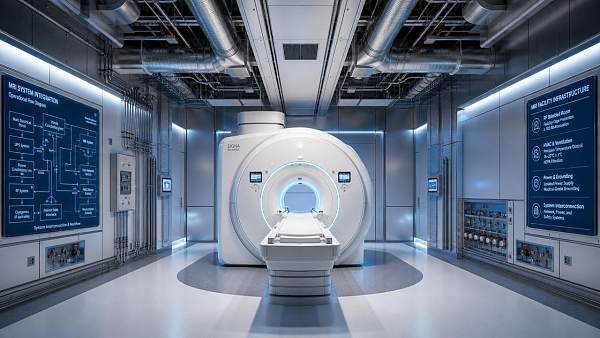
 May 14, 2026Biomedical Engineering Priorities Are Changing in New MRI BuildsBiomedical engineering is redefining new MRI builds through lifecycle planning, interoperability, compliance, and cybersecurity—discover how smarter design drives uptime, value, and clinical performance.
 May 14, 2026Healthcare Data Analytics Is Only Useful if Imaging Systems ConnectHealthcare data analytics delivers real value only when imaging systems connect. Learn how unified imaging data improves diagnosis, workflow, compliance, and ROI.
 May 14, 2026When Clinical Decision Support Adds Friction Instead of ClarityClinical decision support should improve care, not add friction. Discover why alerts fail, what frontline teams need, and how to build faster, smarter workflows.
 May 14, 2026Medical Imaging Diagnostics Choice Gets Harder as CT AdvancesMedical imaging diagnostics is getting harder to evaluate as CT advances. Discover how buyers can compare image quality, AI, compliance, workflow, and long-term value before investing.
 May 14, 2026Why AI Medical Diagnostics Struggle With Edge CasesAI medical diagnostics often look accurate on average, yet fail on edge cases. Learn where rare-case risks come from and how to assess real-world safety, reliability, and compliance.
 May 14, 2026Biomedical Imaging Trends Shaping Faster Oncology WorkupsBiomedical imaging is transforming oncology workups with faster scans, smarter AI, and sharper detail—helping teams diagnose sooner and act with confidence.
 May 14, 2026Healthcare Technology Assessment Can Miss Costs After Go-LiveHealthcare technology assessment often misses post-go-live costs. Discover hidden expenses, lifecycle risks, and smarter MedTech investment insights.
 May 14, 2026Life Support Systems Failures Often Begin With Overlooked MaintenanceLife support systems failures often start with overlooked maintenance. Discover key warning signs, scenario-based risks, and practical service strategies to improve reliability and safety.
 May 14, 2026Clinical Decision Support Works Best When Alerts Stay SelectiveClinical decision support works best when alerts stay selective, actionable, and relevant. Learn how precise alert design reduces fatigue, improves safety, and boosts workflow confidence.
 May 14, 2026How Accurate Is AI in Medical Imaging Outside Flagship Centers?AI in medical imaging outside flagship centers: discover what really affects accuracy in regional hospitals and clinics, and how to assess safety, fit, and clinical value before adoption.
 May 14, 2026Healthcare Data Analytics Gaps That Distort Clinical DecisionsHealthcare data analytics can mislead clinical decisions when metadata, coding, and AI context are flawed. See how to spot hidden gaps, reduce risk, and support safer, smarter care.
 May 14, 2026Where Biomedical Engineering Cuts Hidden ICU Equipment RiskBiomedical engineering reveals hidden ICU equipment risk before failures disrupt care. Learn how to spot weak points, improve compliance, and protect critical workflows.
 May 14, 2026Is Photon-Counting CT Worth the Upgrade for Imaging ROI?Medical imaging diagnostics leaders ask: is photon-counting CT worth the upgrade? Explore where sharper imaging, lower dose, and smarter ROI can truly drive referrals and returns.
 May 14, 2026Medical Imaging Analysis Errors That Start With Bad DataMedical imaging analysis starts to fail with bad data. Learn how poor image quality, labels, and metadata increase clinical risk—and how stronger governance improves accuracy, compliance, and trust.
 May 14, 2026What Slows Down AI Medical Diagnostics in Daily Practice?AI medical diagnostics still faces workflow friction, poor data quality, compliance hurdles, and ROI pressure. Discover what slows adoption and how hospitals can scale safer, smarter use.






Weekly Insights
Stay ahead with our curated technology reports delivered every Monday.