
FDA Sets ICU Ventilator Cybersecurity Deadline
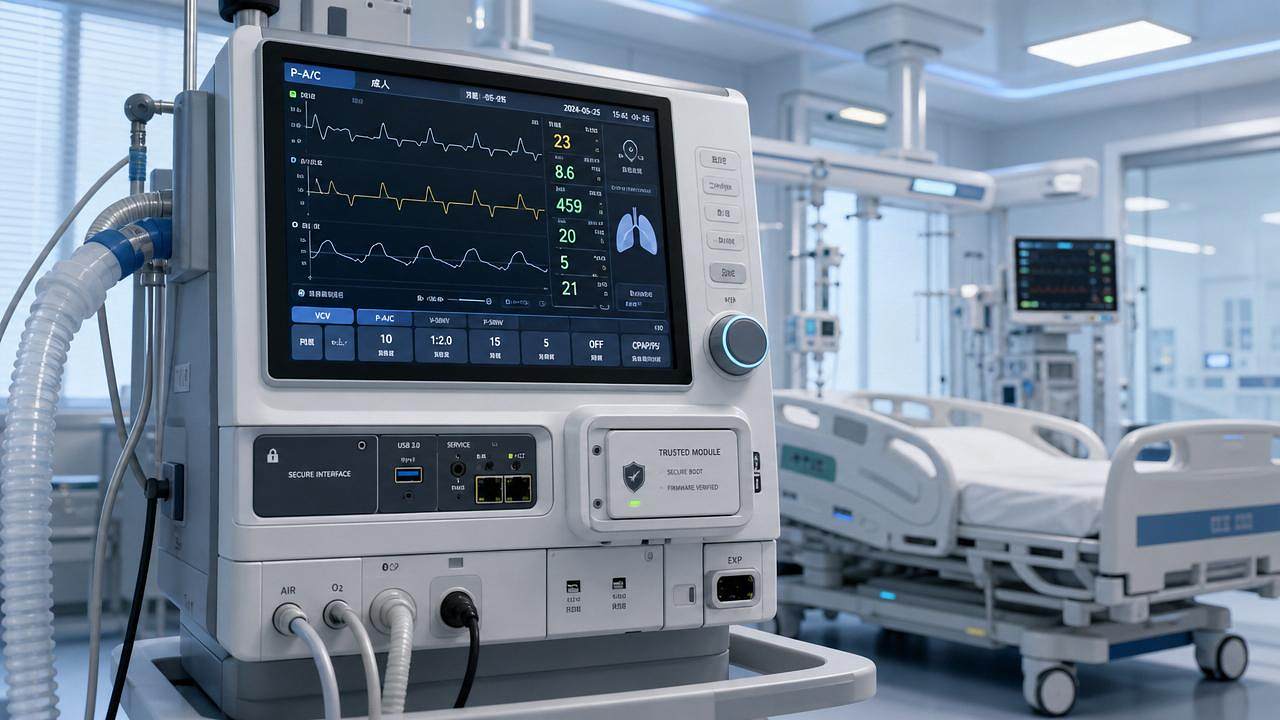




On June 5, 2026, the FDA issued new cybersecurity guidance for critical care ventilators, setting a clear compliance deadline for ICU ventilators marketed in the United States. The update centers on remote management security and firmware integrity, and it matters not only to ventilator manufacturers but also to regulatory teams, hospital-facing sales channels, service providers, and procurement functions that depend on product registration continuity in the U.S. market.
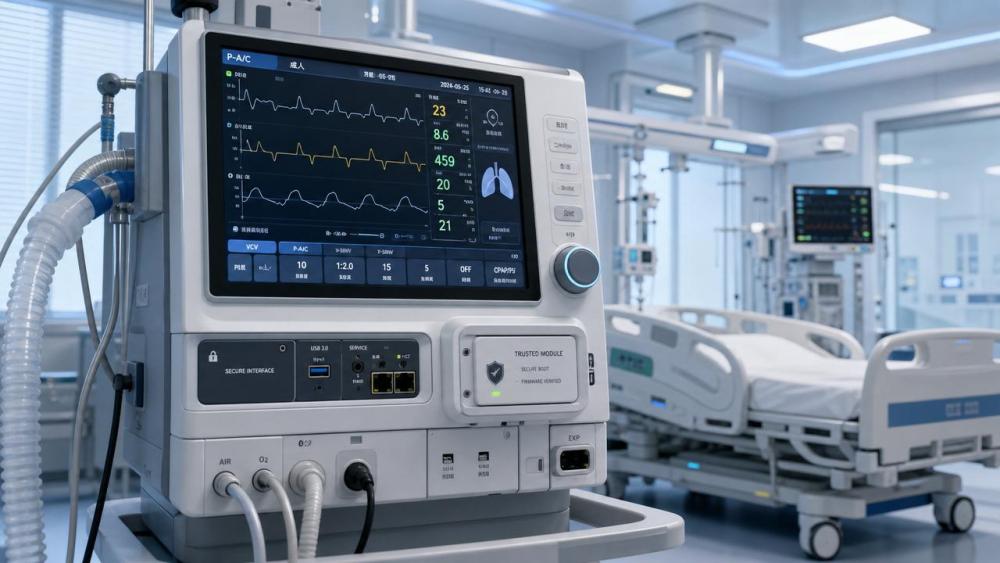
What the FDA has now required
According to the information provided, the FDA released the Critical Care Ventilator Cybersecurity Guidance on June 5, 2026.
The guidance requires all ICU ventilators sold in the United States to support two specific mechanisms starting on December 1, 2026: two-factor authentication (2FA) for remote management interfaces and digital signature verification for firmware.
The same information states that devices that do not meet these requirements will not be able to update registration through the 510(k) or De Novo pathway.
Where the pressure is likely to appear first
Manufacturers with U.S.-listed ICU ventilators
From an industry perspective, this group is the most directly affected because the guidance is tied to continued regulatory update pathways. The immediate pressure is likely to fall on product design, software and firmware development, regulatory documentation, and update planning for devices already positioned for the U.S. market.
Teams responsible for remote management functions
Analysis shows that any business function connected to remote access capabilities may need closer review, because the requirement explicitly targets remote management interfaces. This makes interface control, access workflows, and supporting technical documentation more relevant in day-to-day compliance work.
Registration, market access, and customer-facing operations
Observably, the issue is not limited to engineering. Regulatory affairs, commercial teams, distributors, and hospital account managers may all need to monitor whether affected models can maintain a smooth registration update process, since non-compliance is linked to 510(k) or De Novo update restrictions.
Service and support partners in the delivery chain
What deserves closer attention is the operational side of post-market support. Where remote management is part of service delivery, support organizations may need to track how authentication and firmware validation requirements affect maintenance workflows, deployment timing, and customer communication.
What companies should be watching now
Separate confirmed requirements from possible implementation details
The confirmed facts are narrow but consequential: 2FA is required for remote management interfaces, and firmware must support digital signature verification. Companies should avoid assuming additional technical conditions beyond the text provided here, while still preparing internal reviews around those two explicit controls.
Map the requirement to affected product lines and filings
For companies active in the U.S. ICU ventilator segment, a practical priority is to identify which listed products, pending updates, or planned registration activities may intersect with the December 1, 2026 date. The key business issue is not only product capability, but also whether future registration updates could face friction.
Prepare documentation and supplier coordination early
Analysis shows that compliance work may extend beyond the device maker alone. Where firmware components, access-control modules, or related technical inputs involve outside suppliers or service partners, companies may need earlier coordination on validation materials, technical evidence, and delivery timing.
Keep customer communication aligned with regulatory status
Hospital customers and channel partners may focus less on policy wording and more on continuity, service impact, and registration status. That makes it important for commercial and service teams to keep messaging consistent with the device's actual compliance position and filing timeline.
Why this reads as more than a routine notice
Observably, this development is best understood as a targeted regulatory signal rather than a broad market narrative. The FDA has connected cybersecurity controls to a concrete regulatory consequence, which raises the practical importance of remote access protection and firmware integrity for ICU ventilators in the U.S. market.
Analysis shows that this is also not yet a complete industry outcome on its own. The confirmed information establishes the requirement and the deadline, but the broader operational impact will still depend on how companies assess affected products, prepare filings, and align support functions over the coming months.
How to read the current stage
At this stage, it is more appropriate to understand the guidance as a near-term compliance change with longer-term signaling value. In the short term, it introduces a defined requirement tied to registration updates. In the longer view, it suggests that cybersecurity controls for connected critical care devices are becoming harder to treat as secondary documentation issues.
A neutral reading is that the immediate impact is clearest for ICU ventilator stakeholders already active in the U.S. market, while the wider industry significance still warrants continued observation rather than overstatement.
Basis of this article
This article is generated from the user-provided news title, event date, and event summary concerning the FDA's June 5, 2026 ventilator cybersecurity guidance.
For this type of industry update, relevant source categories typically include official agency notices, company disclosures, industry association updates, authoritative media reporting, and standards-related documents. A specific official source link was not provided in the input, so the exact publication record should continue to be verified. Continued attention should focus on any follow-up FDA wording, implementation clarification, and how affected companies reflect the requirement in registration and product update activities.
Recommended News
 Sep 05, 2026Medical Device Interfacing: How to Connect Legacy Equipment Without Data LossMedical device interfacing for legacy equipment: preserve patient data, clinical context, audit trails, and reliability with secure, loss-free integration strategies.
 Sep 04, 2026Lead Glass Applications in Imaging Rooms: A Practical Buyer GuideAn application guide for lead glass in medical imaging rooms, covering viewing windows, shielding coordination, optical quality, packing, and acceptance checks.
 Sep 03, 2026How European Hospitals Assess Application-Specific Medical Solutions for Clinical FitApplication-specific medical solutions Europe: discover how hospitals assess clinical fit, workflow integration, compliance, value, and long-term resilience.
 Sep 02, 2026How Precision Diagnostics Technology Is Reshaping Pathology WorkflowsPrecision diagnostics technology pathology is transforming workflows through digital slides, AI, molecular testing, and interoperable data—see what drives reliable implementation.
 Sep 01, 2026What to Evaluate in AI Image Reconstruction Software for Clinical Imaging?AI image reconstruction software: learn how to evaluate diagnostic fidelity, workflow integration, safety, and change control for confident clinical imaging decisions.
 Aug 31, 2026Clinical Imaging Innovation: Which Technologies Deliver Measurable Diagnostic Gains?Clinical imaging innovation delivers measurable diagnostic gains through photon-counting CT, AI reconstruction, and quantitative MRI—explore evidence-based selection insights.
 Aug 30, 2026How Surgical Navigation Technology Improves Accuracy in Complex Spine SurgerySurgical navigation technology spine surgery: discover how imaging, tracking, and workflow controls improve precision for complex procedures.
 Aug 29, 2026How to Select a Hematology Analyzer With Reliable Reticulocyte CountingHematology analyzers retic selection guide: compare precision, flags, workflow, QC, and connectivity to achieve reliable reticulocyte counting.
 Aug 28, 2026Planning Operating Room Technology for a High-Throughput Surgery CenterOperating room technology for a surgery center: plan workflows, integration, uptime, and safety to boost throughput and create future-ready surgical rooms.
 Aug 27, 2026Building Medical Compliance Analytics for Middle East Market AccessMedical compliance analytics Middle East: build device-specific evidence maps, align local requirements, and accelerate market access with confidence.
 Aug 26, 2026How Surgical Equipment Digitalization Is Reshaping Hospital Investment in Latin AmericaSurgical equipment digitalization Latin America is reshaping hospital investment, from smart ORs to ROI-driven upgrades. Explore what buyers now value most.
 Aug 25, 2026How to Evaluate a Medical Compliance Intelligence Provider for Global Market AccessMedical compliance intelligence provider selection can make or break global market access. Learn how to assess technical depth, update quality, and commercial fit before choosing.
 Aug 24, 2026How Advanced Clinical Imaging Is Improving Cardiology Diagnosis and Treatment PlanningAdvanced clinical imaging cardiology is transforming diagnosis and treatment planning with clearer anatomy, tissue insight, and procedural guidance. Discover how it reduces uncertainty and supports smarter cardiac decisions.
 Aug 23, 2026How to Source Medical Devices in North America: Supplier Vetting and Market Access RisksMedical device sourcing North America made practical: learn how to vet suppliers, reduce compliance risks, and protect market access with smarter procurement decisions.
 Aug 22, 2026What Are Integrated Critical Care Systems and How Do Hospitals Evaluate Them?Critical care systems integrated: learn how hospitals assess ICU platforms for interoperability, alarm safety, workflow efficiency, and long-term value before buying.
 Aug 21, 2026How to Evaluate High-Resolution Diagnostic Imaging Systems for Detail-Critical ExamsDiagnostic imaging systems high resolution: learn how to compare detail-critical performance, workflow fit, dose efficiency, and ROI to choose the right system with confidence.
 Aug 20, 2026How to Evaluate Medical Equipment Performance Before Purchase?Medical equipment evaluation performance starts before purchase. Learn how to assess safety, workflow fit, compliance, uptime, and total cost to choose devices that truly perform.
 Aug 19, 2026How to Evaluate Small-Footprint Laboratory Diagnostic Equipment for Space-Limited LabsLaboratory diagnostic equipment small footprint choices require more than size checks. Learn how to assess workflow, throughput, compliance, and service access for smarter lab buying.
 Aug 18, 2026Biochemical Molecular Diagnostics Explained: Methods, Clinical Uses, and Lab Selection CriteriaBiochemical molecular diagnostics explained: compare key methods, clinical applications, and lab selection criteria to choose reliable, compliant testing with confidence.
 Aug 17, 2026How to Choose Diagnostic Equipment Solutions for a Clinic: Key Factors That Affect Workflow and CostDiagnostic equipment solutions clinic buyers can use to improve workflow, control total cost, and avoid hidden service risks. Learn the key factors before you invest.
 Aug 16, 2026How to Choose a Blood Cell Analyzer for a Small Lab: Throughput, CBC Menu, and CostBlood cell analyzers small lab buyers can compare throughput, CBC menu, and total operating cost with confidence. Learn how to avoid waste, reduce downtime, and choose the right fit.
 Aug 16, 2026FDA Approval of AMDS Hybrid Prosthesis Removes IRB Step for Faster U.S. AccessFDA approval of AMDS Hybrid Prosthesis removes the IRB step, speeding U.S. access for acute aortic dissection care and reshaping hospital procurement and supporting equipment demand.
 Aug 15, 2026What Hospital Technology Infrastructure Is Needed for Reliable Interoperability?Hospital technology infrastructure interoperability depends on secure networks, integration engines, identity services, and governance. Discover what hospitals need for reliable, scalable connectivity.
 Aug 14, 2026What to Look for in an Advanced Diagnostic Systems Distributor Before You BuyAdvanced diagnostic systems distributor: learn what to check before buying, from compliance and technical depth to delivery reliability and after-sales support. Make a smarter procurement decision today.

















Related News
- 00
0000-00
How to Evaluate a Ventilator Systems ODM Partner for Performance, Compliance, and Scale - 00
0000-00
ISO 80601 for ICU Ventilators: What Technical Evaluators Should Check - 00
0000-00
Life Support Technology Ventilator: Which Parameters Matter Most in ICU Selection? - 00
0000-00
How to Evaluate an ICU Equipment Supplier for Ventilators, Monitors, and After-Sales Support - 00
0000-00
Ventilator Systems Medical Manufacturer Checklist: Key Specs, Service, and Compliance
Weekly Insights
Stay ahead with our curated technology reports delivered every Monday.