
EU MDR Transition Ends, Endoscope Re-Certification Becomes Urgent
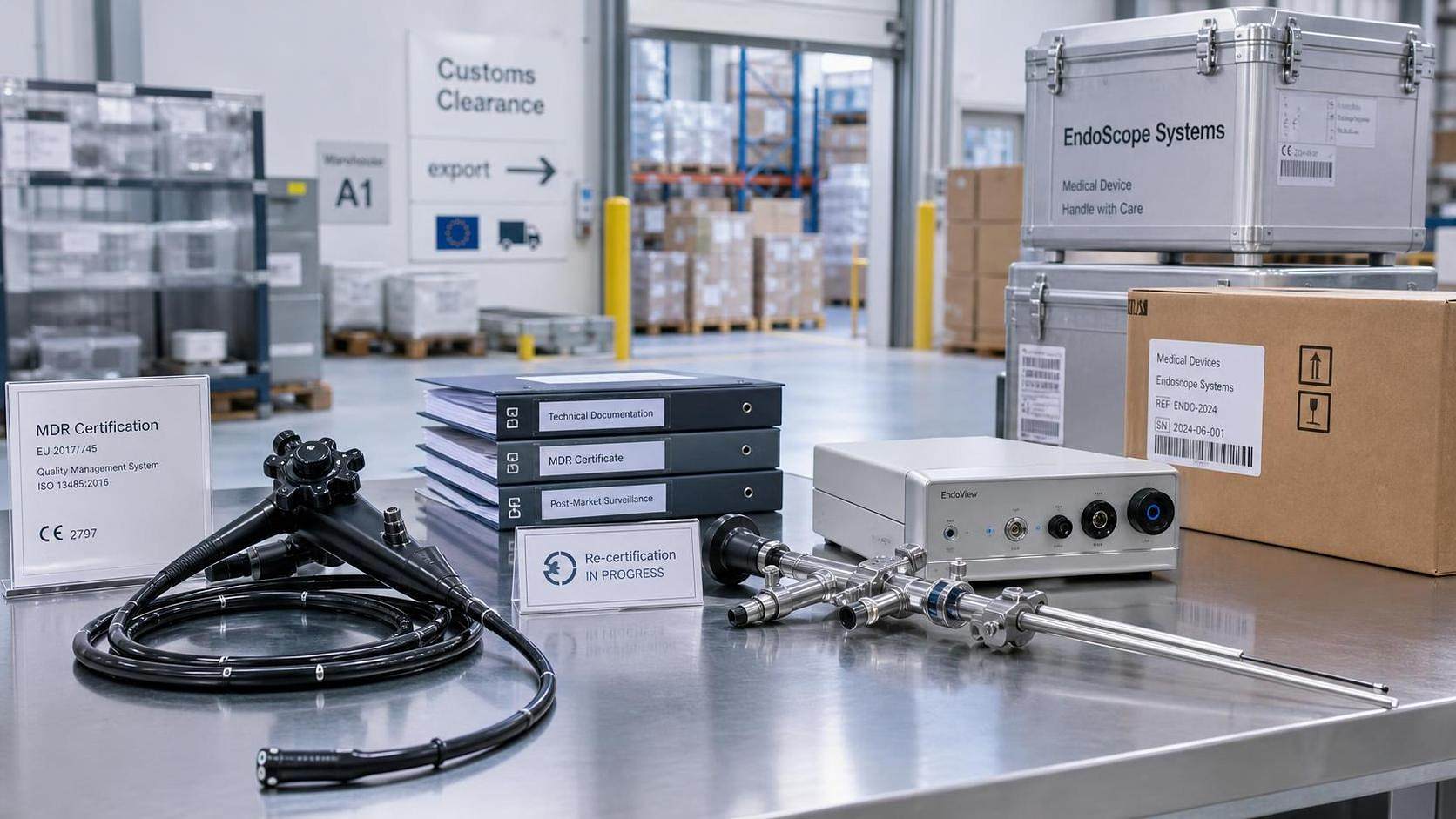




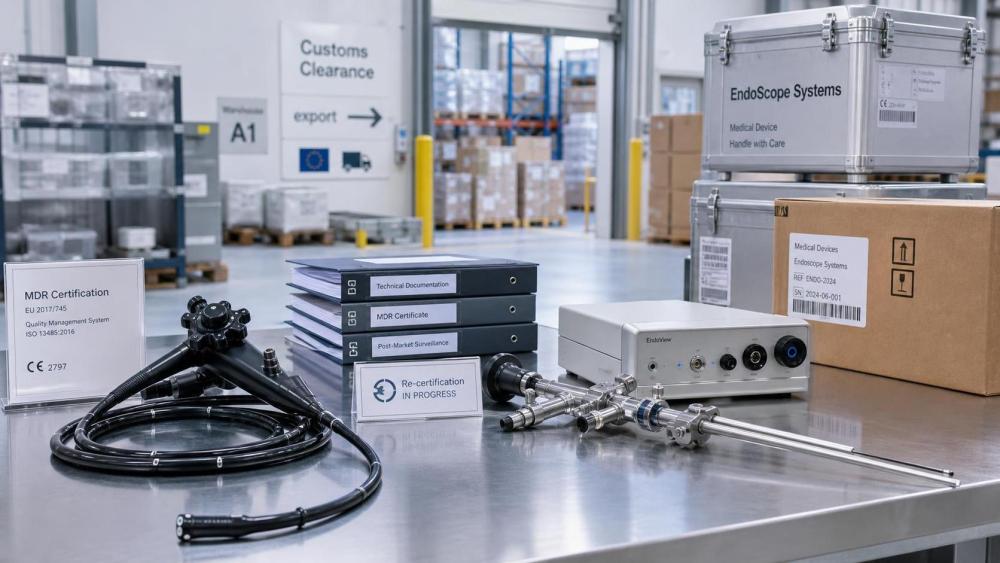
On August 2, 2026, the EU Medical Device Regulation (MDR) transition period fully ends for endoscope systems covered by the event summary, turning what had been a compliance preparation issue into an immediate market-access requirement. For exporters, importers, authorized representatives, and procurement and delivery teams handling flexible or rigid endoscopy systems, this development deserves close attention because it directly affects whether products can still be placed on the EU market or cleared through customs.
What the rule change now means in practice
According to the provided event summary, from August 2, 2026, flexible and rigid endoscope systems, including Flexible Videoscopes and Rigid Endoscopy Systems, that have not completed MDR Class IIa or higher certification can no longer continue to be placed on the EU market or cleared through customs. The same summary states that the change directly affects deliveries from Chinese exporters to Europe. Products that still hold legacy CE directive certificates but have not completed MDR technical documentation upgrades may have their Declarations of Conformity refused for signature by EU authorized representatives, while importers may face customs delays and the risk of inventory being removed from sale.
Where disruption is likely to appear first
Export deliveries face a documentation gate
From an industry perspective, exporters are likely to be affected first because shipment continuity now depends not only on legacy certification status but on whether MDR technical documentation has been completed at the required level. The immediate pressure point is the handoff between product certification status, Declaration of Conformity processing, and shipment release for EU-bound orders.
Importers and distributors carry customs and shelf-risk exposure
Importers and downstream channel operators may be affected at the customs clearance and inventory management stages. Where products are not aligned with MDR requirements described in the event summary, the concern is no longer limited to future tenders or new sales opportunities; it can extend to stalled clearance and the risk that stock already in channel cannot remain on the market.
Authorized representatives become a decisive control point
Observably, the role of the EU authorized representative becomes more operationally significant under this change. The event summary specifically notes the possibility of refusing to sign the Declaration of Conformity for products that remain on old CE directive certification without the required MDR technical documentation upgrade. That makes document readiness, rather than commercial urgency alone, a determining factor in whether deliveries can proceed.
Procurement and after-sales teams may need to re-check supply continuity
For buyers, hospital supply teams, and after-sales support functions, the practical impact may appear in delivery timing, replacement planning, and product availability. Analysis shows that any uncertainty around market placement or customs release can feed directly into procurement schedules and service arrangements, especially where specific endoscope system models are tied to ongoing supply commitments.
Immediate issues companies should review
Check whether legacy CE files have truly moved to MDR readiness
What deserves closer attention is whether products presented to the EU market still rely mainly on legacy CE directive status, or whether the technical documentation has been upgraded to support MDR certification at the required class level. This is a document and approval-readiness issue, not simply a labeling or shipment issue.
Reconfirm document paths with authorized representatives and import partners
Companies involved in export delivery should review how Declarations of Conformity, technical files, and product release documents are being handled in practice. The event summary indicates that refusal to sign the DoC is a live compliance risk for certain products, so coordination between manufacturer, authorized representative, and importer deserves immediate verification.
Reassess shipment timing and order commitments
Analysis shows that businesses with EU-bound orders should pay closer attention to whether pending deliveries could be affected by customs interruption or product ineligibility for market placement. Where execution details are not yet fully described in the input, it is more appropriate to treat this as a trigger for shipment-by-shipment review rather than assume uniform handling across all cases.
Watch for changes in tender, qualification, and traceability requirements
Observably, downstream commercial documents may also become more sensitive to MDR status. Companies should closely monitor whether procurement files, qualification reviews, technical submission packages, and traceability records begin to reflect stricter checks tied to MDR certification completion, even where the provided input does not specify a single uniform enforcement format.
Why this reads as an execution signal, not just a policy reminder
Analysis shows that this development is better understood as an implemented compliance threshold rather than a distant regulatory discussion. The transition period ending means the market is moving from grace-period logic to enforceable entry conditions for the affected product categories. At the same time, it would be premature to overstate downstream outcomes beyond the provided facts. Questions around detailed enforcement practice, document review intensity, and how procurement-side requirements evolve still need continued observation.
How the market should read this development now
At this stage, the event is most appropriately understood as a concrete market-access change for affected endoscope systems, with immediate consequences for certification status, documentation acceptance, customs handling, and delivery planning. It is not merely a background regulatory update. For industry participants, the practical takeaway is to read it as a live compliance and trade execution issue, while continuing to monitor how implementation language and market feedback develop.
Basis of this article and points that still need verification
This article is generated from the user-provided news title, event date, and event summary. For events of this type, relevant source categories typically include official regulatory notices, releases from supervisory authorities, customs or trade administration information, industry association updates, standards-related documents, and reporting by authoritative trade media. No specific official source link was provided in the input, so that point still requires ongoing verification. Further observation is also needed regarding detailed implementation language, certification review practice, procurement document changes, industry feedback, and how companies are executing compliance and delivery adjustments in response.
Recommended News
 Sep 17, 2026ISO 13485 for Medical Imaging Equipment: What Manufacturers Must DocumentMedical imaging equipment ISO 13485: discover essential documentation for design controls, risk management, traceability, software, and post-market quality.
 Sep 16, 2026Robotic MIS Equipment: What Hospitals Should Evaluate Before AdoptionMinimally invasive surgical equipment robotic adoption guide: evaluate workflow, safety, imaging, costs, cybersecurity, and service readiness.
 Sep 15, 2026How to Evaluate Biomedical Signal Processing Suppliers for Clinical Device ProjectsBiomedical signal processing supplier evaluation guide for clinical device teams—compare signal fidelity, regulatory evidence, cybersecurity, integration, and lifecycle support.
 Sep 14, 2026How Integrated Clinical Diagnostics Solutions Reduce Turnaround Time Across Lab WorkflowsIntegrated clinical diagnostics solutions reduce lab turnaround time by connecting workflows, automation, and data. Discover practical strategies for faster, traceable results.
 Sep 13, 2026ECMO System Market Outlook: Demand Drivers, Investment Risks, and Growth OpportunitiesECMO system market outlook explores demand drivers, investment risks, regulatory factors, and growth opportunities shaping critical-care innovation and adoption.
 Sep 12, 2026Where to Find Reliable Medical Device Information for Research and Due DiligenceMedical device information resource guide for due diligence: verify regulatory, clinical, safety, and technical evidence to make confident decisions.
 Sep 11, 2026Medical Equipment Intelligence: A Resource for Comparing Clinical TechnologiesMedical equipment intelligence resource for comparing clinical technologies by clinical fit, compliance, workflow, and total cost—make confident, evidence-led decisions.
 Sep 10, 2026How to Integrate Application-Specific Medical Solutions Into Existing Clinical WorkflowsApplication-specific medical solutions integration: learn how to align clinical workflows, interoperability, safety, and measurable outcomes for reliable deployment.
 Sep 09, 2026Medical Supplier Evaluation Checklist: How to Verify Quality, Compliance, and Delivery RiskMedical supplier evaluation checklist for verifying quality, compliance, service capacity, configuration accuracy, and delivery risk before purchase approval.
 Sep 08, 2026Selecting IVD Instruments With Automatic Sample Loading: Key Workflow CriteriaIVD instruments automatic sample loading: evaluate workflow capacity, traceability, STAT handling, LIS integration, and exceptions for smarter lab selection.
 Sep 07, 2026How to Evaluate a Clinical Diagnostic Systems Supplier for Hospital ProcurementClinical diagnostic systems supplier evaluation guide for hospitals: compare clinical performance, compliance, uptime, interoperability, cybersecurity, and lifecycle value.
 Sep 07, 2026How to Choose Critical Care Equipment for Emergency Room ReadinessCritical care equipment emergency room planning: discover how to select reliable, interoperable devices that strengthen readiness, safety, and lifecycle value.
 Sep 05, 2026Ventilator Comparison for ICU and Transport Use: Which Features Matter Most?Ventilator comparison for ICU and transport use: discover the features that support safer ventilation, reliable monitoring, battery planning, and seamless patient transfers.
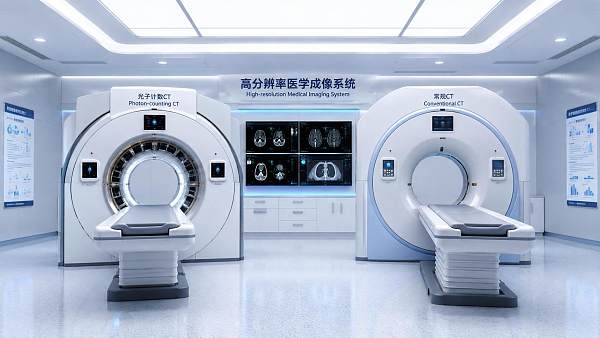
 Sep 14, 2026Is Photon-Counting CT Clinically Better Than Conventional CT for Exporters?Is photon-counting CT clinically better than conventional CT for exporters? Explore clinical use cases, compliance, ROI, and market-ready sales strategy.
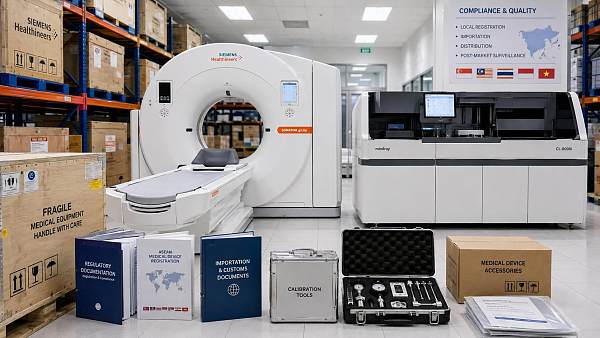
 Sep 14, 2026Do You Need a Local Distributor to Register Medical Devices in Southeast Asia?Do I need a local distributor to register devices in Southeast Asia? Learn how to separate regulatory ownership, import rights, and distribution for smoother market access.
 Sep 13, 2026How Should an MDR Clinical Performance Study Be Designed for IVD Products?How to design a clinical performance study for IVD products MDR: explore claim-driven endpoints, representative specimens, bias control, and audit-ready evidence.
 Sep 13, 2026What Validation Is Required for Medical Imaging Algorithms Under the MDR?What validation is required for medical imaging analysis algorithms MDR? Explore technical, clinical, risk, dataset, and post-market evidence requirements.
 Sep 12, 2026How Are AI Imaging False Positives Handled in Regulatory Review?How are AI imaging false positives handled under regulatory review? Explore FDA and EU MDR expectations for risk control, clinical validation, labeling, and post-market monitoring.
 Sep 12, 2026What After-Sales Technical Support Is Expected for Life-Support Exports?What after-sales technical support is expected for life support exports? Explore essential service, training, spare-parts, cybersecurity, and compliance requirements.
 Sep 11, 2026What Are the Trade-Offs Between Hematology Analyzer Technologies?What are the trade-offs between different hematology analyzer technologies? Compare impedance, optical, and fluorescence systems for accuracy, workflow, and cost.
 Sep 11, 2026Can One Registration Strategy Cover Imaging Devices in the EU and ASEAN?Can one registration strategy cover both EU and ASEAN for imaging devices? Discover how to build a core dossier, manage local approvals, and accelerate compliant market entry.
 Sep 10, 2026Where Can You Source Compliant Parts for Diagnostic Imaging Equipment?Where to source compliant parts for diagnostic imaging equipment: discover trusted OEM, approved distributor, and qualified supplier options for safer, traceable procurement.
 Sep 10, 2026What Pre-Market Testing Is Mandatory for Ventilator CE Marking?What pre-market testing is mandatory for ventilator system CE marking? Explore MDR requirements for performance, safety, EMC, alarms, software, usability, and clinical evidence.
 Sep 09, 2026Advanced Clinical Diagnostics in Oncology: Tests, Uses, and Selection CriteriaAdvanced clinical diagnostics oncology: explore test selection, imaging, molecular profiling, liquid biopsy, and practical criteria for confident cancer care decisions.















Related News
- 00
0000-00
EU MDR Transition Ends, Endoscope Re-Certification Becomes Urgent - 00
0000-00
EU MDR Annex XVI Now Requires Separate CE for Accessories - 00
0000-00
EU MDR Transition Ends for Endoscopy Device Imports - 00
0000-00
EU MDR Rule Triggers CER Updates for Endoscopy Devices - 00
0000-00
EU MDR Update Sets 12-Month CER Rule for Ultrasound and Endoscopy
Weekly Insights
Stay ahead with our curated technology reports delivered every Monday.